
There is nothing more frustrating than going on a diet, working out hard, only to find that nothing has changed. You’ve been showing up at the gym, eating well, and doing everything you were told to do.
Still nothing. The scales haven’t moved, and you’re beginning to feel like nothing will work. You put it down to age, and as you get older, it is harder to shift weight. And that’s certainly true. Everything is harder as you get older, but it’s not the full story.
You’re missing a few pieces of the puzzle, the missing link between losing weight and exercise, which is crucial to shedding those unwanted pounds. Here’s what’s actually going on, and more importantly, what you can do about it.
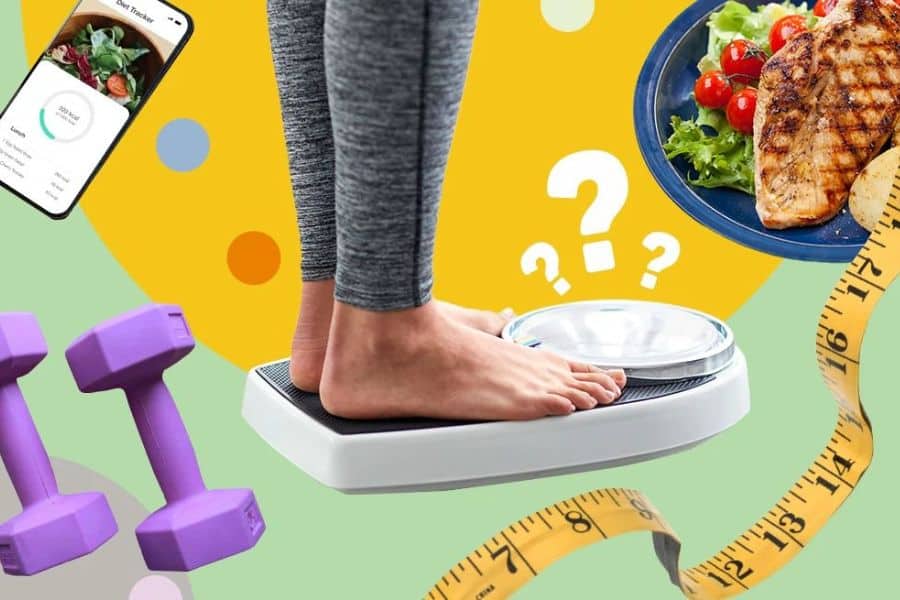
Your Calorie Burn Is Probably Lower Than You Think
That number on the treadmill or your fitness tracker? Take it with a pinch of salt. A Stanford University study tested seven popular fitness devices and found that even the most accurate one was off by an average of 27 percent when measuring calorie burn. The least accurate was off by 93 percent. So the 400 calories you think you burned in that spin class could be closer to 200 to 300 in reality.
There’s another layer to this. The harder and more regularly you exercise, the more efficient your body becomes at that specific workout. What burned 350 calories six weeks ago might burn significantly less now, because your body has adapted.
What to do: Stop relying on tracker numbers to justify eating more after a workout. Instead, focus on how your clothes fit, your energy levels, and your strength over time. These are far more reliable signals than a calorie estimate.
- Fitness trackers can overestimate calorie burn by up to 50 percent
- Your body adapts to exercise and becomes more efficient over time, burning fewer calories for the same effort
- Using exercise as permission to eat more is one of the most common reasons progress stalls
Eating Clean Doesn’t Always Mean Eating Less

Avocados, nuts, olive oil, nut butters, seeds, and whole-grain bread are all healthy foods. They’re also very high in calories. A generous handful of almonds is around 250 calories. A couple of tablespoons of peanut butter is similar.
A drizzle of olive oil can add 120 calories to a meal without you noticing. Healthy food is still food, and weight loss still requires a calorie deficit.
What to do: If you’ve been eating clean for weeks without results, spend five days tracking everything you eat using an app like MyFitnessPal. Just five days. Most people are surprised by what they find. Pay particular attention to oils, nuts, dressings, and anything you eat standing at the fridge.
- Healthy foods are often calorie-dense and easy to overeat
- A calorie deficit is still required for weight loss, regardless of food quality
- Hidden calories in oils, dressings, and snacks add up faster than most people realize
- Protein is often too low in clean diets, and it’s essential for feeling full and maintaining muscle
What You Do in the Other 23 Hours Matters More Than the Gym

Your gym session, even a solid 60-minute one, accounts for roughly 5 to 10 percent of your total daily calorie burn. The rest comes from something called NEAT, which stands for Non-Exercise Activity Thermogenesis.
This is every bit of movement you do outside the gym. Walking to the car, taking the stairs, doing the dishes, fidgeting at your desk. All of it counts, and collectively it adds up to far more than your workout.
Here’s the frustrating part. After a hard gym session, your body often unconsciously moves less for the rest of the day to compensate. You take the lift, you sit on the sofa earlier, you skip the walk after dinner. Your total movement for the day barely changes, which is why the gym alone rarely shifts the needle.
What to do: Set a daily step goal that is completely separate from your workout. Aim for 8,000 to 10,000 steps per day. Set a timer to stand up and move for five minutes every hour if you have a desk job. These small movements throughout the day are often more effective for fat loss than adding another gym session.
- Your formal workout accounts for only 5 to 10 percent of your total daily calorie burn
- The rest comes from everyday movement, walking, fidgeting, housework, and taking the stairs
- After a hard workout, your body often compensates by moving less for the rest of the day
- Daily step count is one of the most underrated tools for weight management
Stress Is Making Your Body Hold On to Fat

Work, family, finances, health concerns. It all adds up, and your body responds to every single source of it in the same way.
When you’re under sustained stress, your body produces a hormone called cortisol. In short bursts, cortisol is useful. It helps you perform. But when it stays elevated for days and weeks on end, as with chronic stress, it signals your body to store fat, particularly around the abdomen.
It also breaks down muscle tissue and drives cravings for high-sugar, high-fat foods at exactly the moment you’re trying to eat well.
Intense exercise is itself a physical stressor. If you’re doing long, hard cardio sessions five or six times a week on top of an already stressful life, you may be adding to the problem rather than solving it.
What to do: Swap one or two of your harder cardio sessions for something lower intensity. A brisk walk, a swim, a yoga class. These bring movement without spiking cortisol.
Also, look honestly at your non-exercise stress levels. Ten minutes of guided breathing, a short walk outside, or even a phone call with a good friend genuinely helps lower cortisol over time.
- Chronic high cortisol encourages the body to store fat, especially around the belly
- Sustained stress breaks down muscle and increases cravings for sugar and fat
- Intense exercise adds to the body’s stress load, which can work against fat loss
- Lower intensity movement, like walking and swimming, burns calories without the cortisol spike
Poor Sleep Sabotages Your Hard Work

You can have the best workout plan and the cleanest diet in the world, and poor sleep will undermine both of them.
One night of bad sleep is enough to spike your hunger hormone, ghrelin, while lowering leptin, the hormone that tells you you’re full. The result is that you wake up hungrier, crave higher-calorie foods all day, and feel less satisfied after eating.
Do that for several nights in a row, and staying in a calorie deficit becomes extremely difficult, not because of a lack of willpower, but because your hormones are working against you.
Poor sleep also raises cortisol, reduces your motivation to move, and impairs your body’s ability to recover from exercise. Research from the University of Chicago found that sleep-deprived dieters lost significantly less fat and considerably more muscle than those who slept well. That’s a double hit, making progress much harder.
What to do: Treat sleep as a non-negotiable part of your health routine. Aim for 7 to 9 hours of sleep and set a consistent bedtime, even on weekends. Keep your bedroom cool and dark, and cut screens an hour before bed. If stress is keeping you awake, address that directly rather than pushing through on less sleep and wondering why nothing is working.
- One night of poor sleep spikes hunger hormones and lowers the hormone that signals fullness
- Sleep deprivation raises cortisol, which drives belly fat storage and muscle loss
- Poor sleep reduces motivation and makes sticking to healthy habits much harder
- Seven to nine hours is the target, and consistency matters as much as duration
The Scales Are Lying to You
If you’ve been exercising consistently for weeks and the number on the scales hasn’t moved, this doesn’t mean nothing is happening. It means you’re measuring the wrong thing.
Your weight can shift by two to five pounds in a single day, depending on how much water you’re retaining, how much salt you ate yesterday, whether you’re at a certain point in your cycle, or simply how much food is currently in your digestive system.
None of that is fat. If you’ve added strength training, which you absolutely should have, you may be building muscle at the same rate you’re losing fat. The scales stay still, but your body is changing shape.
What to do: Put the scale away or limit it to once a week at most, at the same time of day. Take monthly progress photos instead. Measure your waist, hips, and upper arms. Notice how your clothes fit. Track how much weight you can lift and how your energy feels. These metrics tell the real story.
- Body weight can fluctuate by two to five pounds daily due to water retention, salt, and digestion
- Building muscle while losing fat keeps the scale steady, but changes your body shape
- Progress photos, measurements, and clothing fit are far more reliable indicators of progress
- Weighing daily creates unnecessary anxiety and rarely reflects real fat loss accurately
The Smarter Approach That Actually Works

Most of the advice around exercise and weight loss focuses on doing more. More sessions, more intensity, more restriction. As we get into our 50s, more often than not, more is not the answer. Smarter is.
Here’s what a better week actually looks like, and it’s simpler than you might think.
What Your Regime Should Look Like
Aim for two to three strength training sessions per week. Building and maintaining muscle is the single most effective thing you can do for your metabolism in midlife. Muscle burns more calories at rest than fat, and it keeps you strong, mobile, and independent as you age.
Add two to three brisk walks rather than extra cardio sessions. Walking at a pace where you can hold a conversation but feel slightly breathless builds your fat-burning capacity without spiking cortisol.
Hit 8,000 to 10,000 steps per day as a separate goal from your workouts. Movement throughout the day, not just in a gym session, is where the real calorie burn happens.
Prioritize sleep and stress management as seriously as you do your workouts. They are not lifestyle extras. They are the foundation on which everything else is built.
Disclaimer: The health and wellness content in this article is for informational purposes only and should not replace professional medical advice. Always consult your doctor or a qualified healthcare provider before making changes to your exercise routine, particularly if you have any underlying health conditions.