
I remember hearing my mom talk about not being able to do certain things as easily now she was older. At the time, I dismissed it and never for one second thought that would be me. But surprise, surprise, I’m now at the same age mom was and feeling exactly the same way.
Nobody wants to get older, but it’s a fact of life. However, you don’t just have to accept it and allow it to stop you from doing the things you love. Far from it. There are plenty of things you can do to fight the aging process, so you start to wind back the clock.
And the good news is that none of it involves spin classes, Zumba, or cardio. The missing piece of the anti-aging puzzle isn’t starting a running or jogging regime, or exercising till your cheeks burn bright red. It’s far simpler and much easier than you think.
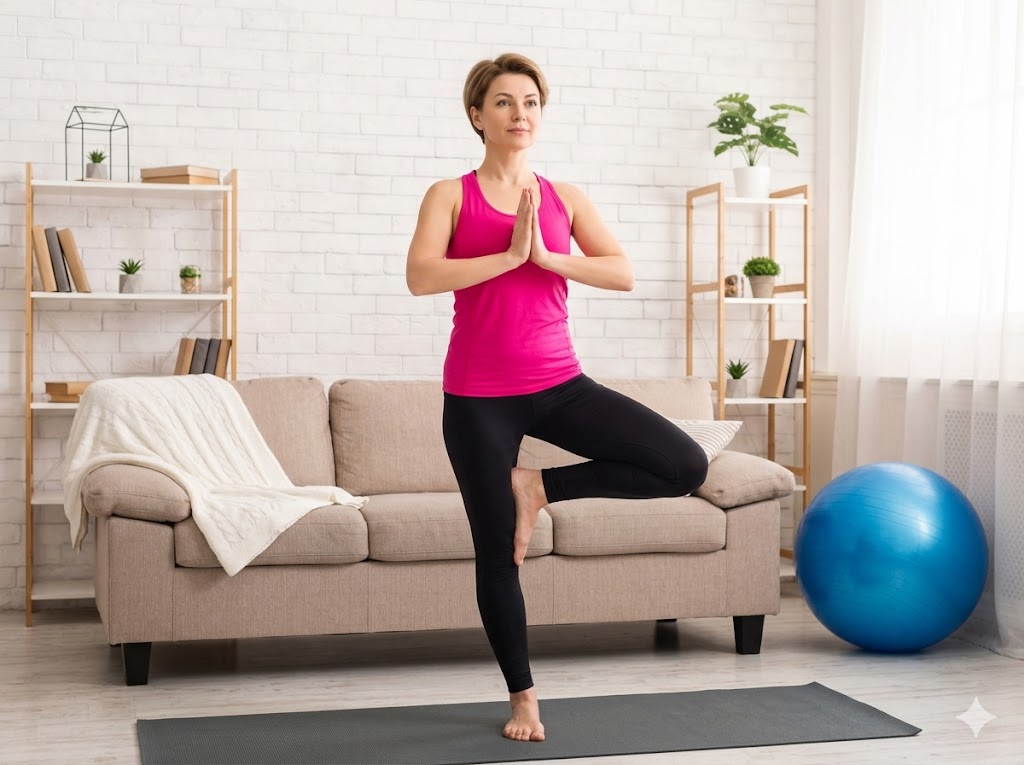
10 Anti-Aging Moves You Can Do At Home
So here are 10 functional moves I’ve come to think of as the real anti-aging exercises. Most of them require no equipment and take about 10 minutes in the morning.
1. Sit-to-Stands
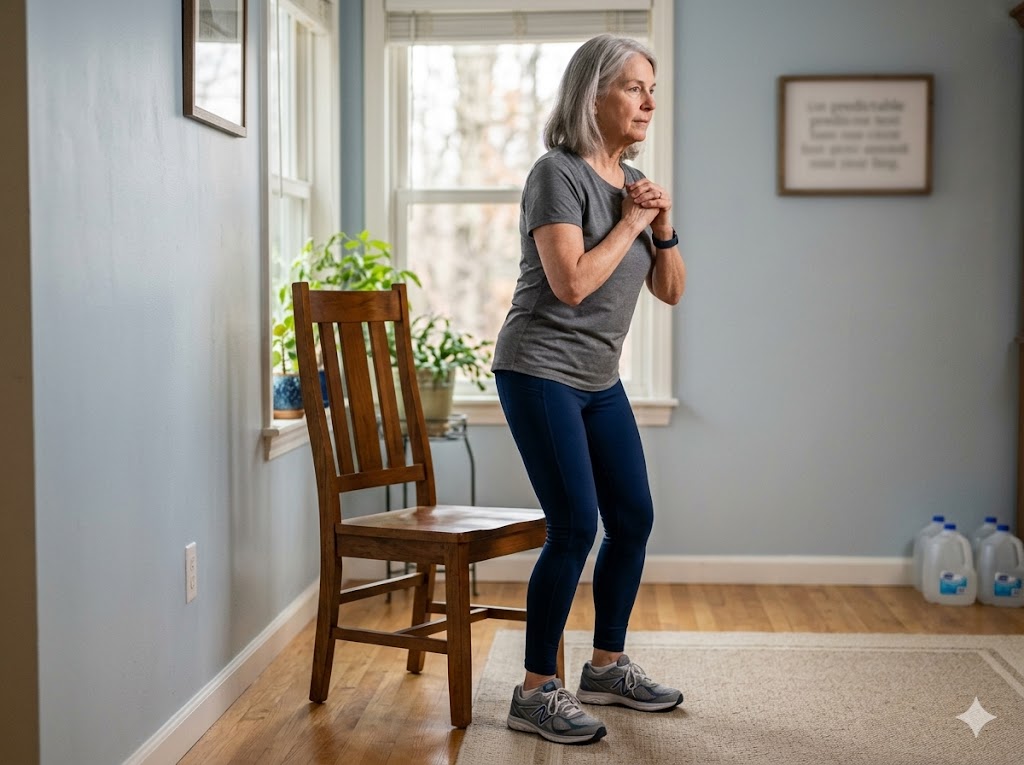
This is the move you do every time you get off the couch, out of the car, or up from the toilet. It builds the quads, glutes, and core in one go, and it’s been used for decades as a predictor of how well someone is aging. If you can stand up from a chair without using your hands, you’re doing better than a lot of people your age.
- Start with a sturdy dining chair against a wall.
- Sit toward the front edge, feet flat on the floor and hip-width apart.
- Lean forward slightly, push through your heels, and stand up without using your hands.
- Lower yourself back down with control, no plopping.
- Aim for 10 to 15 reps, two or three times through.
If you can’t manage it without your hands yet, that’s fine; use them less each week. Once 15 feels easy, try a lower seat or hold a gallon jug of water against your chest for resistance. The goal is to keep this skill sharp into your 80s and 90s because the day you can’t stand up unassisted is the day independence starts to slip.
2. Farmer’s Carries
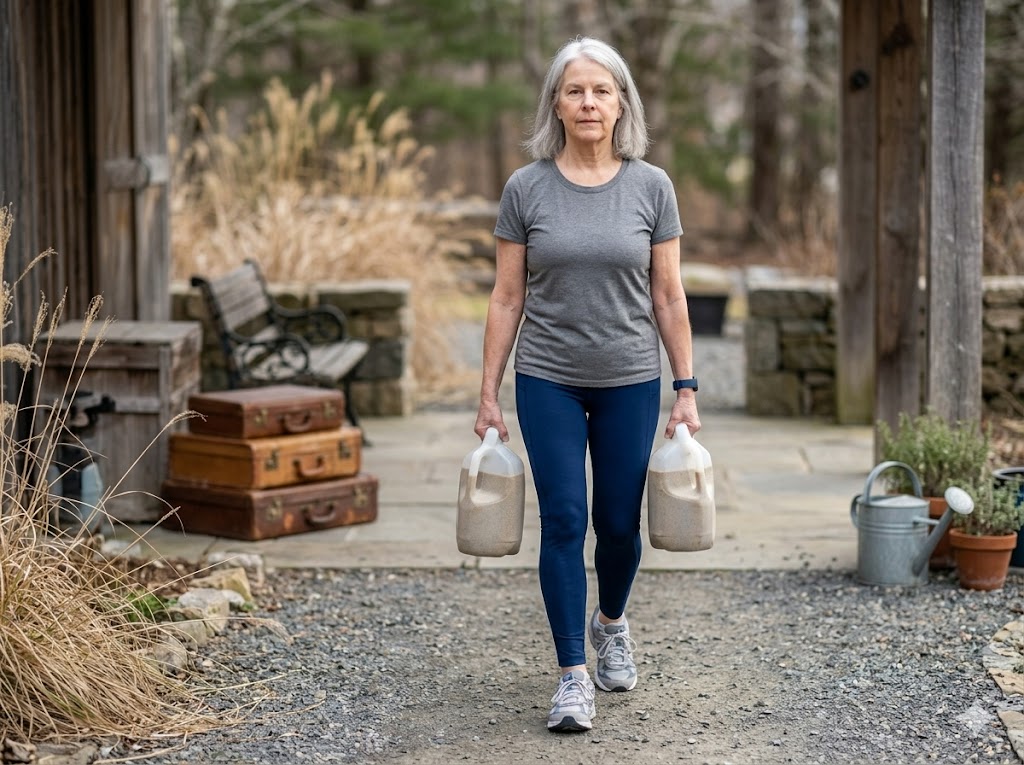
Carrying heavy things while walking is one of the most useful skills you can develop. Grocery bags, suitcases, a watering can, the laundry basket, a grandkid on your hip. Farmer’s carries hit your grip, shoulders, core, and legs all at once, and grip strength, specifically, is linked to longer life and lower fall risk.
- Pick up a dumbbell or a heavy jug in each hand.
- Stand tall, shoulders back, and walk slowly for 30 to 60 seconds.
- Don’t lean, don’t shuffle, just walk like you’re balancing a book on your head.
- Set the weights down, rest a minute, and go again. Three or four rounds are plenty.
Start lighter than you think you need to. A pair of 8-pound dumbbells is a sensible starting point for most people, and you can work up from there. If your grip gives out before your legs do, that’s the whole point: you’ve found the weak link, and you’re training it.
3. Step-Ups
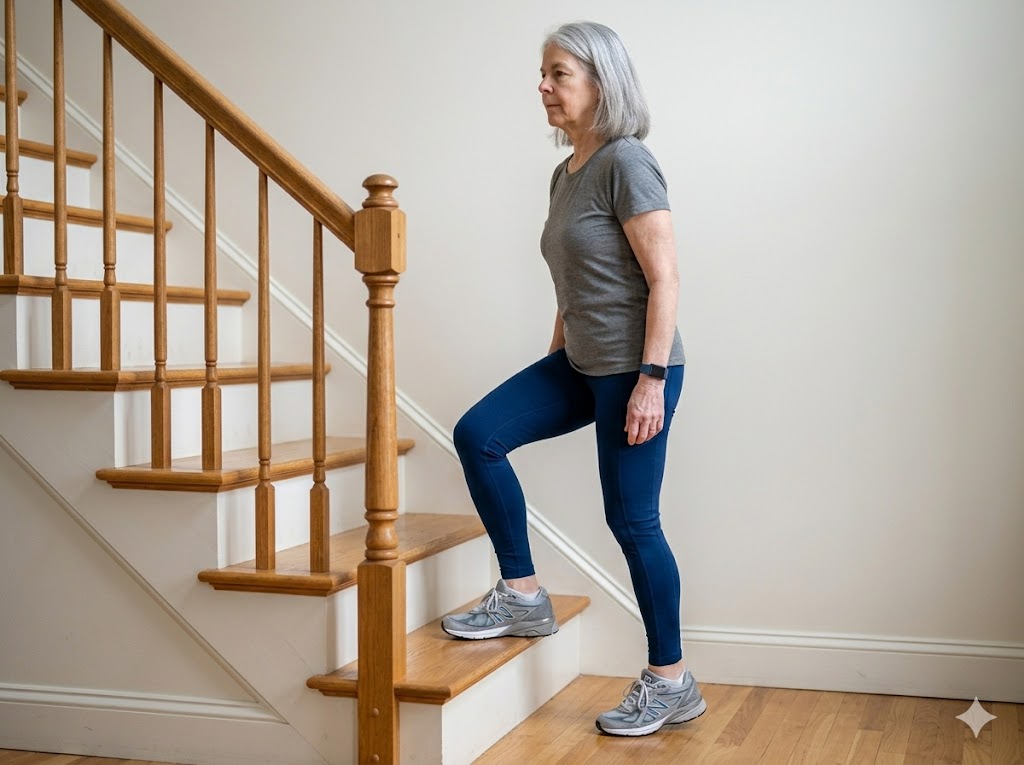
Stairs and curbs are where many falls occur, and the muscle pattern used for them differs from that of flat walking. Step-ups train the single-leg strength and balance you need to climb confidently, without grabbing the rail in a death grip.
- Use the bottom step of your staircase or a sturdy aerobic step.
- Place your whole right foot on the step, push through your heel, and stand all the way up, bringing your left foot to meet it.
- Step back down with the left foot first, then the right.
- Do 10 on each side, alternating which foot leads. Keep your chest up and don’t let the knee cave inward.
No pushing off the back foot, that’s cheating, and your body knows it. If 10 feels too easy, hold a dumbbell in each hand, or use a higher step. This one transfers to real life faster than almost any other exercise; you’ll feel it within a couple of weeks when you climb stairs at a friend’s house and don’t have to pause halfway.
4. Hip Hinges
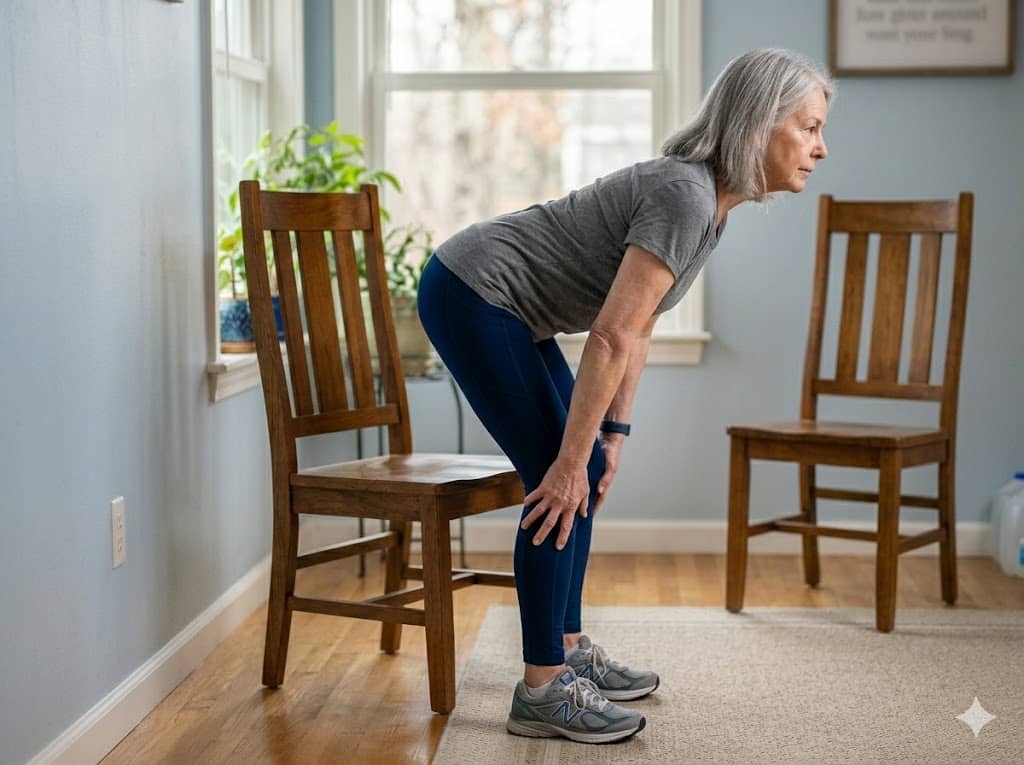
The hip hinge is how you should pick anything up off the floor, from a dropped pen to a bag of mulch. Most back injuries after 60 come from bending incorrectly, rounding the lower back instead of folding at the hips. Train the hinge, and you’ll save yourself a world of trouble.
- Stand with feet hip-width apart, soft bend in the knees.
- Put your hands on the front of your thighs.
- Push your hips backward like you’re closing a drawer with your butt, and let your hands slide down your thighs toward your knees.
- Keep your back flat, chest proud, and feel the stretch in the back of your legs.
- Stand back up by pushing your hips forward and squeezing your glutes.
- Do 10 to 15 slow reps. Once the pattern feels natural, hold a light kettlebell or dumbbell with both hands and let it hang in front of you as you hinge.
This is the foundation for deadlifts, and it’s also what you should be doing every time you bend down to load the dishwasher.
5. Wll Push-Ups
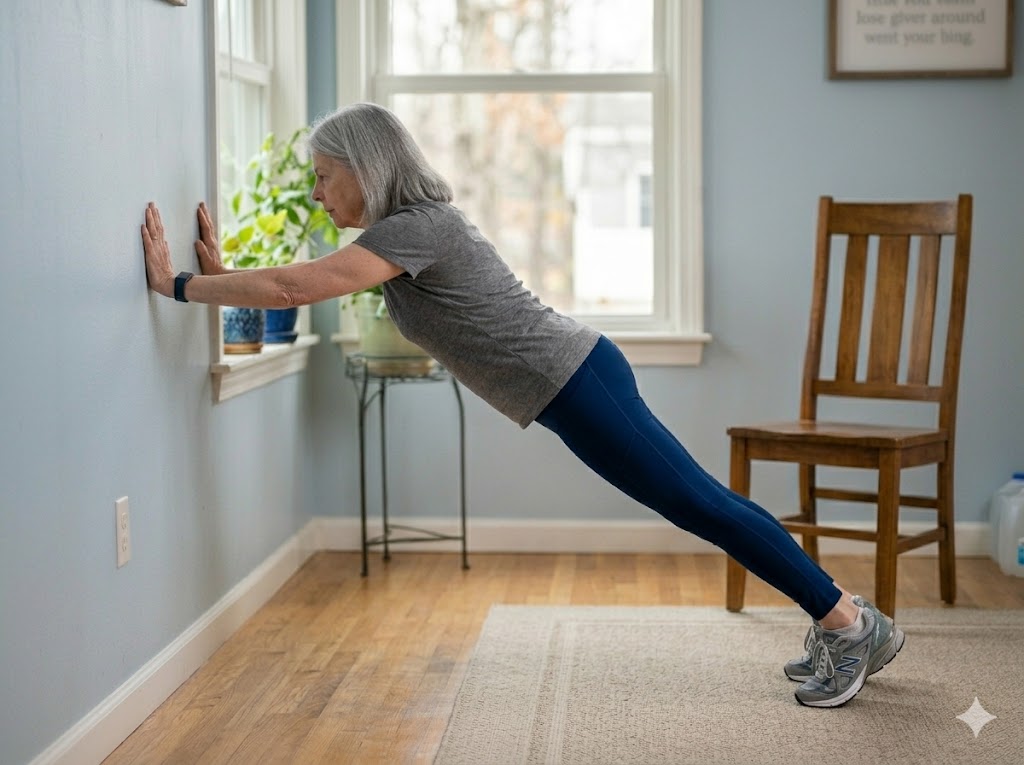
Upper body strength matters more than people realize after 60. You need it to push yourself up off the floor, to lower into a chair safely, and to break a fall with your arms instead of your face. Standard push-ups are tough for a lot of people, but wall push-ups are accessible to almost anyone, and they still build real strength.
- Stand an arm’s length from a wall.
- Place your palms flat on the wall at shoulder height, slightly wider than your shoulders.
- Keep your body in a straight line from head to heels, bend your elbows, and lower your chest toward the wall.
- Push back to the start.
- Aim for 10 to 15 reps.
When wall push-ups feel too easy, move to the kitchen counter, then to a sturdy bench, then to the floor on your knees. Each step down is a new challenge. The progression is the point; you should always be working toward something slightly harder than what you can already do.
6. Single-Leg Balance
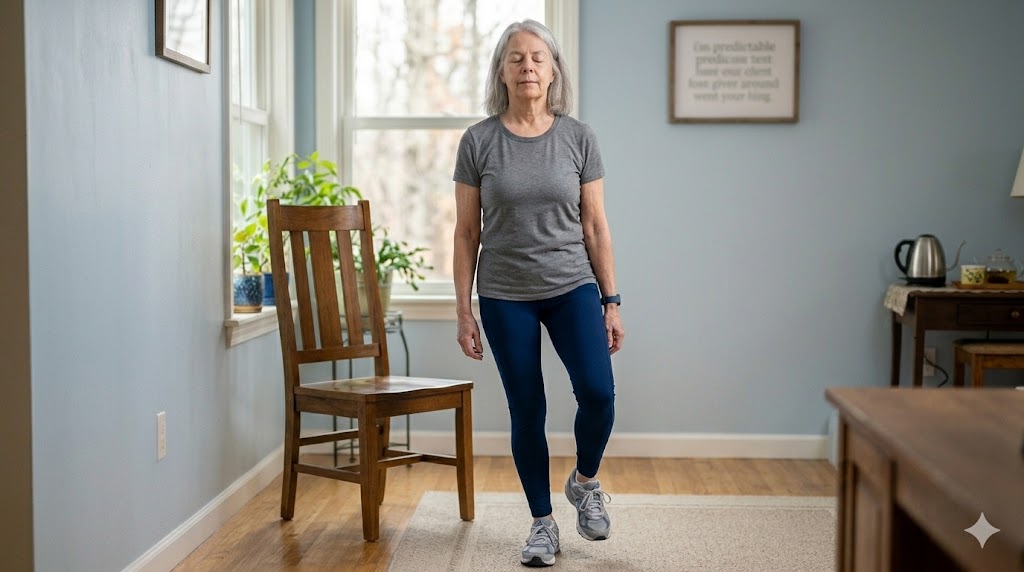
Falls are the leading cause of injury in adults over 65, and balance is the skill that prevents most of them. The bad news is that balance fades fast if you don’t use it. The good news is it comes back fast, too, within a few weeks of practice.
- Stand next to a counter or sturdy chair you can grab if needed.
- Lift one foot off the floor, just an inch or two, and hold for 30 seconds.
- Switch sides.
- That’s it. Once 30 seconds feels stable, try it with your eyes closed, which is much harder than it sounds. Then try it while brushing your teeth, or while waiting for the kettle.
Work balance into the small moments of your day. Standing on one leg while you brush your teeth, then alternating, is a really easy way to do this twice a day. The whole point is to wire your nervous system to react fast when something unexpected happens.
7. Getting Up From the Floor
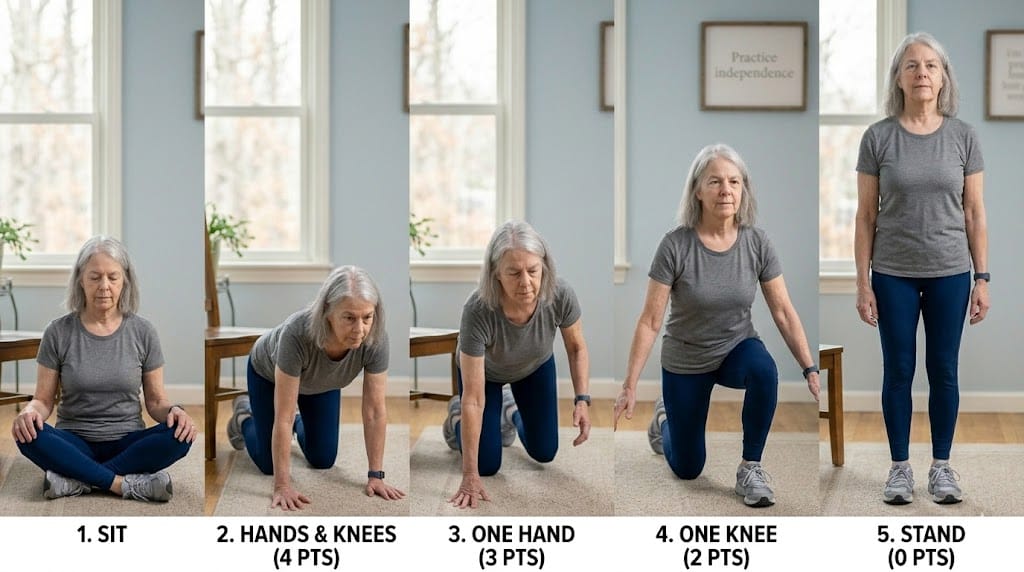
There’s a well-known test where you sit cross-legged on the floor and stand back up without using your hands, knees, or any other support. People who score well on it tend to live longer than people who don’t. Being able to get up off the floor unassisted is physical independence.
- Sit down on the floor any way you can.
- Then figure out the most efficient way to stand back up.
- Hands and knees are allowed at first. Over time, try using one less point of contact each week, one hand, one knee, then no hands at all.
- Do it 5 times in a row when you have the floor space.
If this feels scary at the moment, do it next to a couch or solid chair, so you’ve got something to grab. Don’t skip it because it feels hard; hard is exactly why it’s worth doing.
8. Overhead Reach and Press
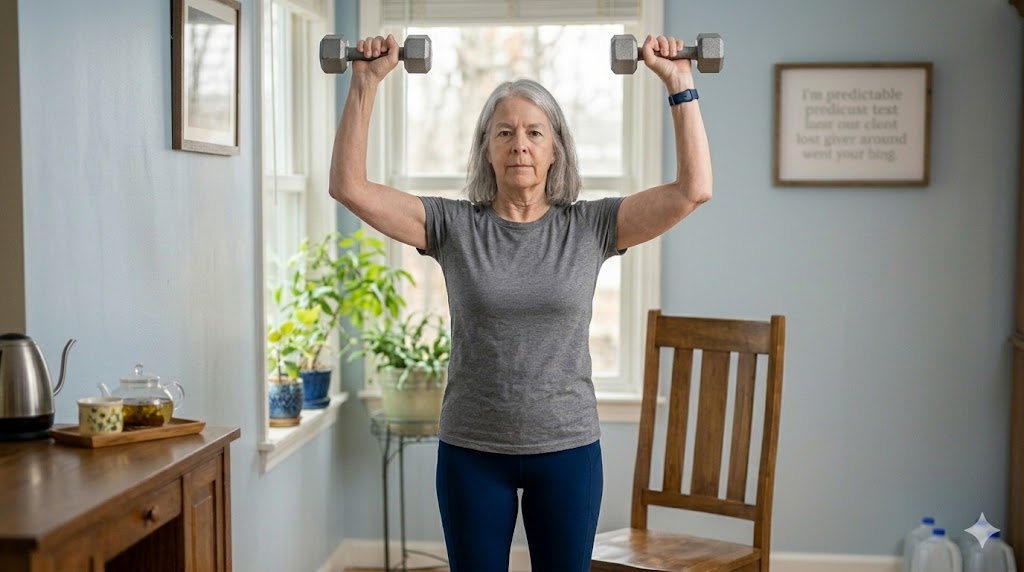
Reaching the top shelf, putting a suitcase in the overhead bin, hanging a picture, shutting the trunk of an SUV. All overhead work and all things people start to struggle with after 60, as the shoulders stiffen and weaken. Train this pattern, and you keep your world bigger.
- Stand tall with a light dumbbell in each hand, held at shoulder height with palms facing forward.
- Press both weights straight up overhead until your arms are fully extended, then lower with control.
- Keep your ribs down so you don’t arch your back.
- Do 8 to 12 reps.
If your shoulders are cranky, start without weight, just reach toward the ceiling one arm at a time. Add resistance only when the movement feels smooth and pain-free. Mobility comes first, strength second. A good test: Can you touch the top of a kitchen cabinet flat-footed without grimacing?
9. Side Steps and Lateral Movement
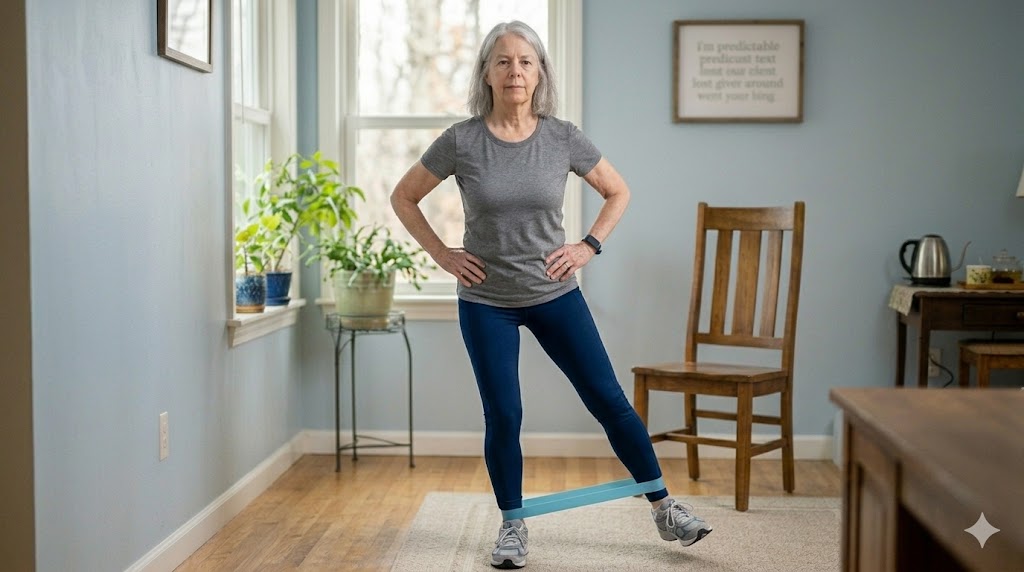
Almost all cardio is forward motion. Walking forward, jogging forward, cycling forward. But real life happens in every direction. You sidestep around the dog, you twist to grab something off the back seat of the car, you shuffle sideways to let someone pass in a grocery store aisle. Lateral strength keeps the hips strong and reduces the risk of falls.
- Stand with feet together, hands on hips.
- Take a wide step to the right, then bring the left foot to meet it.
- Take another step right, and another.
- Do 10 steps one way, then 10 back.
- Keep the knees soft and the chest tall. Once that feels easy, loop a light resistance band around your ankles for some pushback.
Lateral lunges work the same pattern with more intensity. Step out to the right, bend the right knee while keeping the left leg straight, then push off the right foot to return to standing. The inner and outer thighs are usually weak in people who only walk for exercise, and that weakness shows up as wobbly hips and a less stable stride.
10. Carries Across Uneven Ground
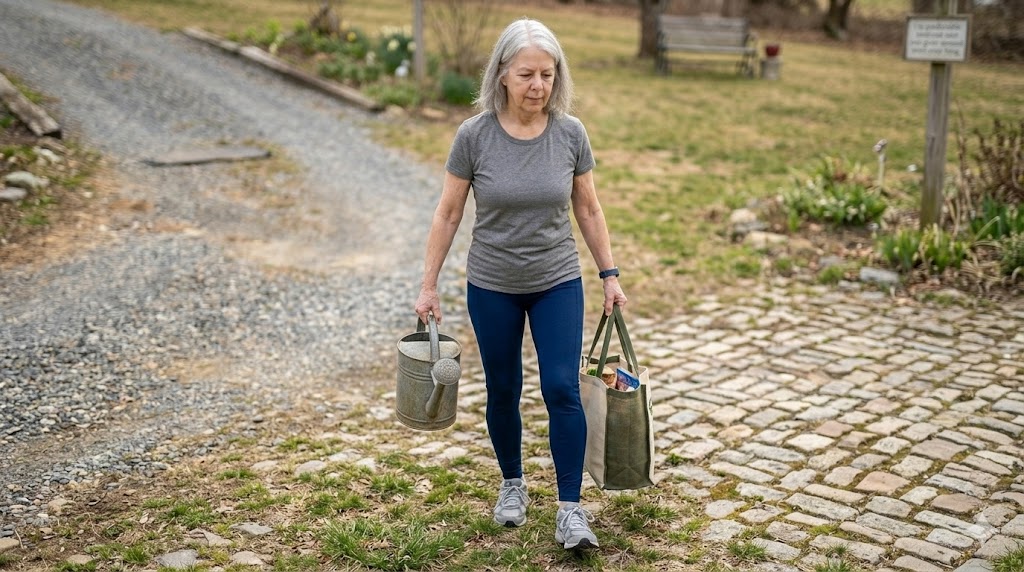
Walking on a flat sidewalk is easy. Walking across a gravel driveway with a bag of groceries in each hand, in slightly uneven shoes, is a totally different demand on the body. The ankles, hips, and core have to constantly adjust, and that adjustment is what trains real-world stability.
- Find a patch of uneven ground, a grassy yard, a gravel path, or a sloped driveway.
- Carry something with weight, a couple of grocery bags or a watering can in each hand.
- Walk slowly across the surface for two or three minutes.
- Pay attention to where your feet land.
This kind of practice trains your body to handle the unpredictable surfaces of real life: cracked pavement, wet leaves, a loose rug in the hallway. Treadmills are flat and predictable on purpose, which is fine for cardio but lousy for stability. A few minutes a week on uneven ground beats hours on a flat belt for keeping you on your feet.
Disclaimer: This article is for general information only and isn’t a substitute for personalized medical advice. Talk to your doctor before starting any new exercise routine, especially if you have existing health conditions or haven’t been active for a while.