
As I’ve gotten older, I’ve noticed my knees aren’t as strong as they used to be, and certain exercises can cause quite a bit of pain. Now I’ve never been a runner, but running is a big no-no. I ran up the stairs the other day and immediately regretted it as my knee twisted and was then aggravated for a good week afterward.
However, I don’t want knee pain to stop me exercising. As a woman in her fifties, it’s easy enough to put on weight, but not so easy to keep it off, and I don’t want to use my knee as an easy excuse. Knee pain affects millions of people, and the frustrating part is that the extra weight itself puts more pressure on your joints.
The good news is you don’t have to run, jump, squat, or do anything that makes your knees flare up. There are some extremely effective low impact exercises for seniors that help you burn fat and work toward a healthy weight that are also kind to your joints.

9 Low Impact Exercises for Seniors
These nine exercises strengthen the muscles that support and protect the knee joint without increasing compressive load. Water, slow movement, floor work, and low-impact machines all allow your body to build real functional strength while giving your joints the breathing room they need to recover and stabilize.
Tai Chi
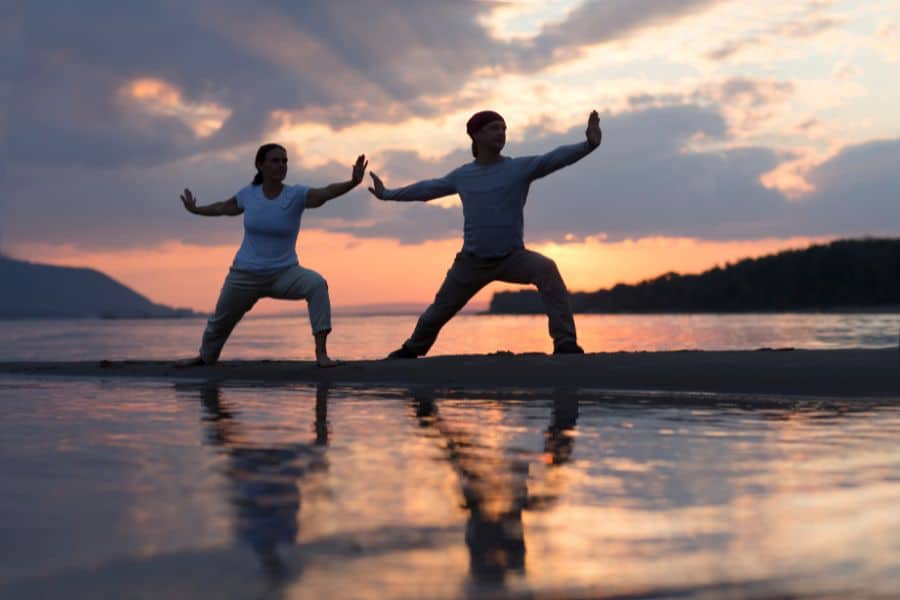
Tai chi is new to me, and I joined a local class where, in good weather, we are outside, overlooking the beautiful Charente countryside in southwest France. That in itself makes me feel good.
The slow, deliberate movement builds real strength without loading your joints. Each pose flows into the next in a continuous sequence, and your legs, hips, and core are working the entire time. It looks effortless from the outside, but your muscles know otherwise.
Because the movements are slow and controlled, your knees bend only as far as feels comfortable, so you work the joint without pain. Stick with it, and the muscles around your knees get stronger. They take some of the load off the cartilage, and everyday things like climbing the stairs or getting up from a low chair get a lot easier.
It also helps your balance and stability, and you want that as you get older, when one wobble on an uneven sidewalk can turn into a fall.
If you’re new to it, start with a local class. An instructor can check your posture and correct how you move before any bad habits set in. Lots of community centers run beginner sessions that won’t cost you a fair whack, either. Aim for three 30- to 45-minute sessions a week, and you should feel a real difference in your knees within a few weeks.
Swimming

I’m quite lucky as one of my neighbors has a pool and has invited me to use it whenever I want, so in the warmer months I’ll often go for a swim first thing in the morning. Swimming works your entire body without straining your knees.
The water holds up most of your weight, so your hips and knees can move freely without the jolt you get from walking on a hard sidewalk. Pushing against the water works your heart and your muscles at the same time. Because the water slows every movement down, there’s very little chance of hurting yourself, which makes it one of the kindest ways to get fit if your joints give you grief.
Backstroke and breaststroke are particularly gentle on the joints and good places to start if you haven’t swum regularly in a while. Freestyle works well, too, once you feel more confident. The repetitive rhythm of swimming has a calming, almost meditative quality that makes 30 minutes pass quickly.
Aim for two to three sessions a week to build fitness and watch the benefits accumulate over time.
Water Aerobics
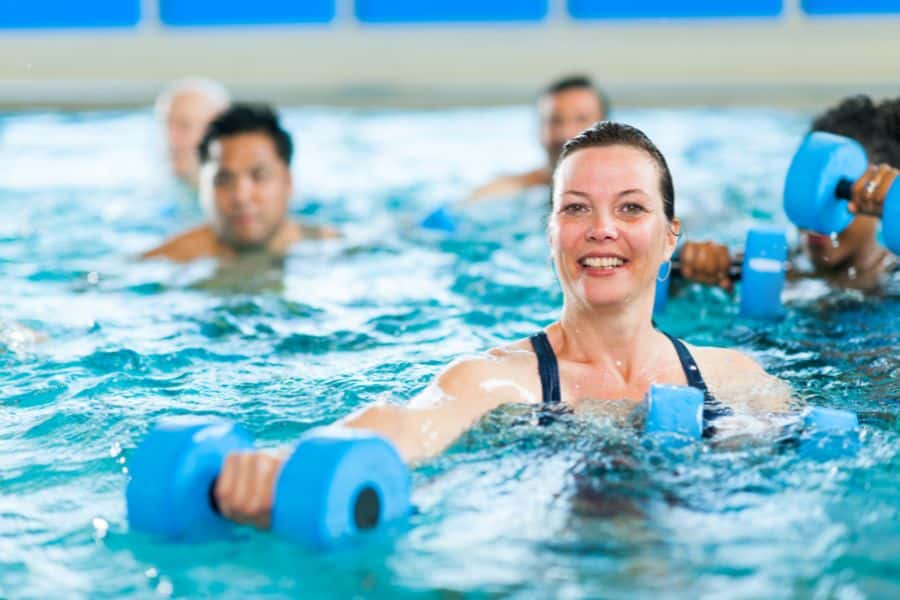
As I mentioned above, the pool relieves pressure on your joints in a way nothing else can. Water supports up to 90% of your body weight, giving your knees a break while your muscles still work hard. Every movement requires more effort in water than on land, so you burn more calories without even realizing it.
An hour in the pool can burn about 240 to 340 calories, depending on your weight and how hard you work. That’s the range Harvard Health gives for water aerobics.
Your heart rate goes up, your core works to keep you steady, and your legs get stronger as they push against the water, all without the pounding on your knees that you get on dry land. Because it doesn’t hurt, it’s much easier to keep going for longer than you would on a treadmill or an exercise bike.
Most community pools and YMCAs run classes in the morning and evening, so you can find one that fits your schedule. Start with two sessions a week and build up from there. If you’re just getting started, even walking up and down in chest-deep water while you move your arms counts as a solid workout.
Found this useful? Get more like it in your inbox as a Lifestyle Library Insider.
Yoga
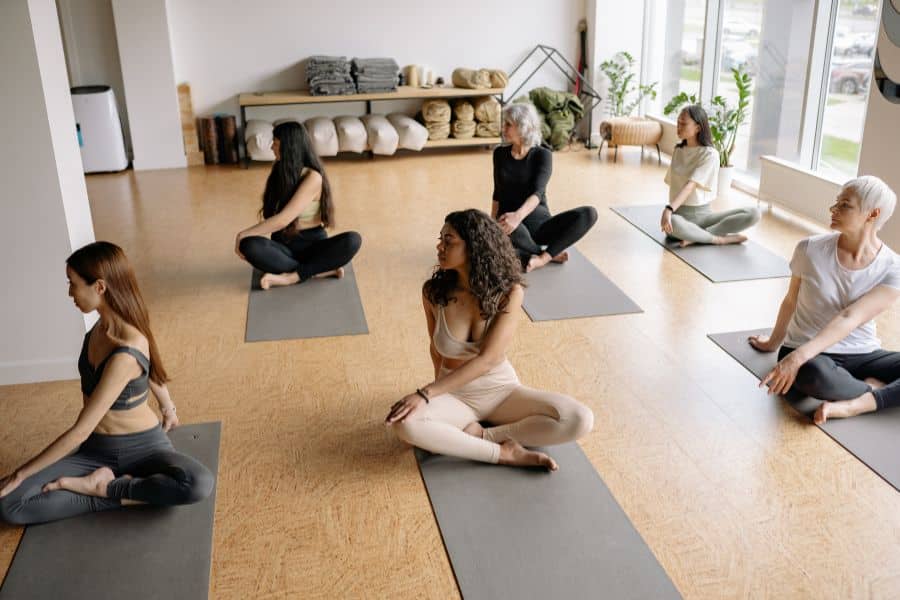
Yoga builds strength, flexibility, and body awareness in the same session, while most traditional workouts focus on one at a time. The poses work your muscles hard without the jarring that flares up sore knees. You move slowly and in time with your breath, so you tend to stay within a range that feels safe.
If you have knee pain, hatha and restorative yoga are the easiest styles to start with. Blocks, straps, and a folded blanket under your knees let you adjust any pose to how your body feels that day. You’ll still feel your legs, hips, core, and back working, but without the pain.
Many people find that a consistent yoga practice shifts the way they carry themselves throughout the day, which has a knock-on effect on how their knees feel during everything else they do.
Leg Lifts

Leg lifts are floor-based and among the most effective exercises for building the muscles that protect your knees. Because you’re lying down the entire time, your joints are under no stress at all. Your hip flexors, lower abdominals, glutes, and lower back are doing all the work.
When the muscles around your knees are stronger, they absorb more of the jolt from walking, climbing stairs, and getting in and out of the car, so less of it goes through the joint itself.
How many: Start with 10 repetitions, rest briefly, and work up to two or three sets.
Switch it up: Lift one leg at a time and swap sides, so both legs get the same amount of work.
Make it harder: Lower your leg more slowly as you get stronger.
Step-Ups

Step-ups build functional leg strength using nothing more than a stair, a low step, or a sturdy box. You step one foot up, press through the heel to lift your body, and lower back down with control. That controlled lowering is where most of the strengthening happens, so don’t rush it.
Because you control the range of motion and there’s no jumping or impact, step-ups are commonly used in rehabilitation settings for people recovering from knee injuries. They strengthen the quads, glutes, and hamstrings at the same time, which is the combination your knees need most for long-term support.
A four-to six-inch step is the right starting height for most people. Three sets of ten repetitions on each leg is a solid starting point. As you get stronger, a higher step or light hand weights will keep you challenged without changing the movement’s joint-friendly nature.
Plank

The plank doesn’t involve your knees, making it a perfect addition to any knee-conscious routine. Hold your body in a straight line on your hands and toes, and let your core, shoulders, arms, and back do the work. It’s a full-body strengthening exercise that builds the stability your joints rely on during every other movement.
You control how far your knee bends, and there’s no jumping or pounding, which is why physical therapists often use step-ups with people returning to activity after a knee injury. Every step works your quads, glutes, and hamstrings together, and these are the muscles that hold your knee steady.
Step height: Start with a step that’s 4 to 6 inches high.
How many: Do three sets of 10 on each leg.
Make it harder: Use a higher step or hold a light weight in each hand. The movement stays the same, so it’s still easy on your knees.
Elliptical Training
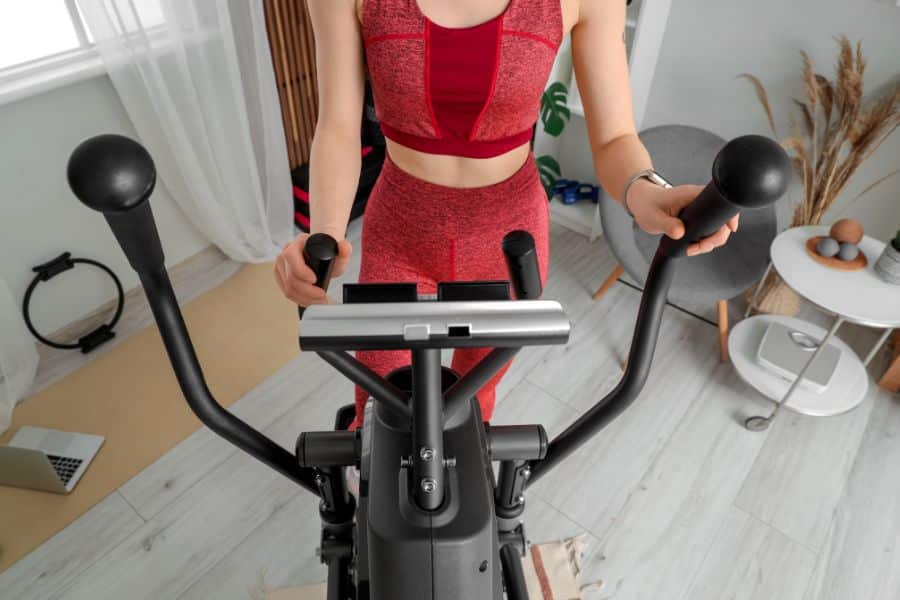
I don’t have any gyms near me, but I do have an old barn we’ve converted into a partial gym, and I treated myself to an elliptical machine. It gives you a cardio workout comparable to running, without any repeated impact on your joints. Your feet stay on the pedals the whole time, so there’s no pounding and no jolt going up through your knees with each step.
The gliding motion works your quads, hamstrings, glutes, and calves together, and if you push and pull the arm handles too, your upper body joins in. You can also pedal backward, which works your leg muscles a little differently.
In a study of 39 people with knee injuries, the group who pedaled backward on treadmills and ellipticals gained more strength in their quads and hamstrings than the group who went forward. Most machines also let you change the resistance and the incline, so you can make it harder as you get fitter.
Calories: A moderate 30-minute session burns about 270 to 380 calories, depending on your weight. That’s the range in Harvard Health’s chart.
Good form: Keep your heels flat on the pedals, as this takes pressure off the front of your knees.
Stationary Cycling
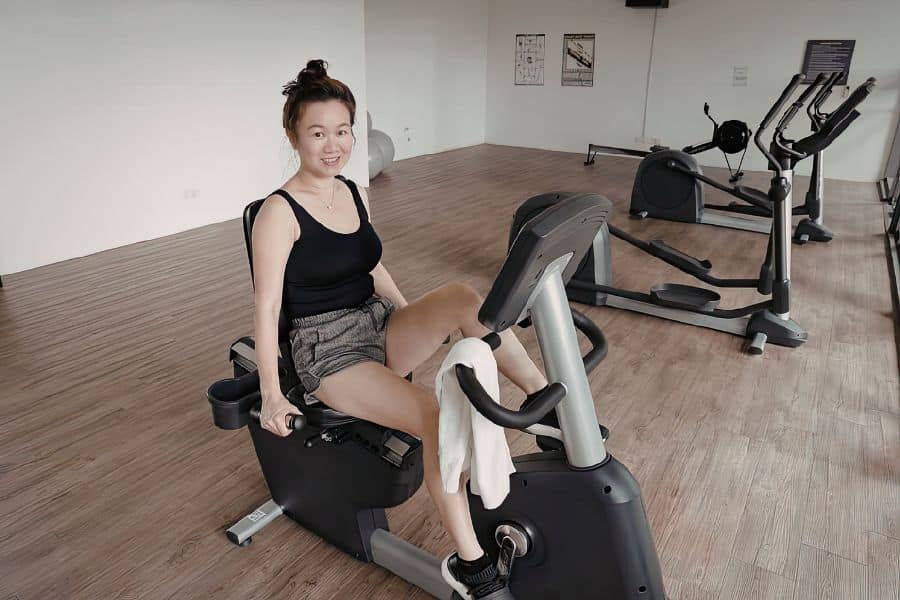
The bike is another piece of equipment in my home gym, and it’s perfect for rainy days when I can’t get out for a walk. Stationary cycling puts almost no stress on your knees while delivering a great cardiovascular and calorie-burning workout.
Every turn of the pedals moves your knee through its full range, and this helps the joint make more synovial fluid, the natural oil that keeps it moving smoothly. Ride regularly, and your knees feel looser for the rest of the day.
The big plus of a stationary bike is that you’re in charge. You choose the resistance and the speed, and you can stop whenever you want, without hills, traffic, or rain to worry about. It’s the same workout every time, so it’s easy to fit into your week.
Seat height: Set the seat so your knee is still slightly bent when the pedal is at the bottom. If the seat is too low, it strains your knee, and if it’s too high, your hips rock from side to side.
How often: Ride for 20 to 30 minutes, three times a week.
Bad back or hips? Try a recumbent bike, where you sit back in a seat with your legs out in front of you.
Disclaimer: This article is for general information only and is not professional advice. It may contain affiliate links. Please see our full Editorial Policy for details.
Become a Lifestyle Library Insider
Health tips, money know-how, travel deals and garden ideas for life after 50, straight to your inbox.

Kylie Lang is a nationally syndicated travel journalist with bylines on the Associated Press Wire & more, a lifestyle writer, and the founder and editor of Your Lifestyle Library (yourlifestylelibrary.com). She holds a BA (Honours) in History from the University of Kent and is a member of the British Guild of Travel Writers.