
Wouldn’t we all love a crystal ball that tells us exactly how long we’re going to live? I know I would. That’s not possible, of course, but there are certainly things, such as the 10-second balance test, that can hint at your longevity, and I, for one, want to know. If for no other reason than being able to work on whatever might be affecting my health and shortening my time here.
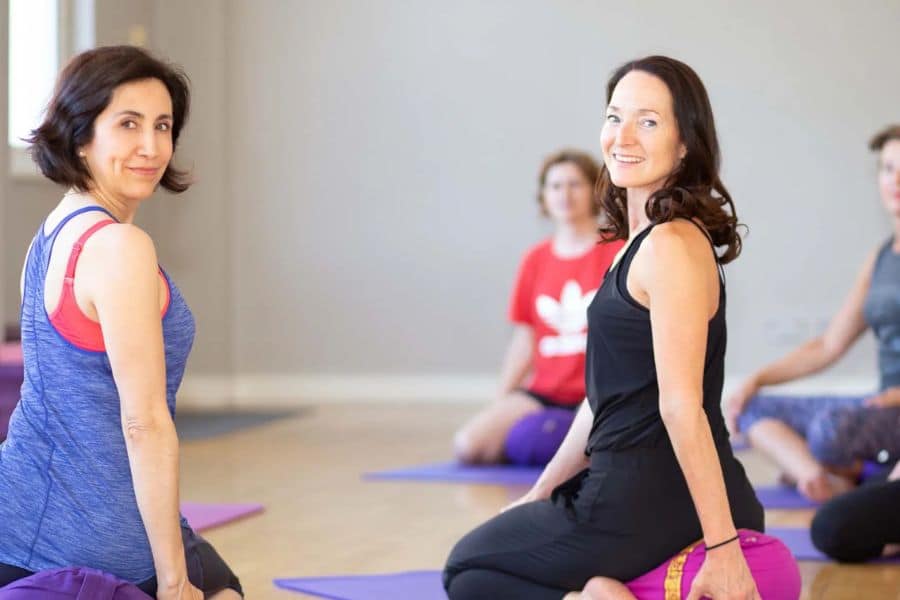
My friend Becky is a yoga teacher. Once a week, on Mondays, she comes to my home, and we do yoga together because I’d be no good in a group class, having never done a scrap of yoga before.
But the reason for my sudden yoga interest was that I’d started to notice how hard I found it to get up off the floor now that I’m older. So, after a good chat, Becky put together a plan for my balance, movement, and flexibility.
In my first lesson, we did the 10-second balance test together. The results were really interesting, and, honestly, a bit of a wake-up call. The test is what doctors and researchers use as a surprisingly good predictor of how well you’re aging. Here’s what it is, and how to try it yourself at home.
What Is the 10-Second Balance Test?
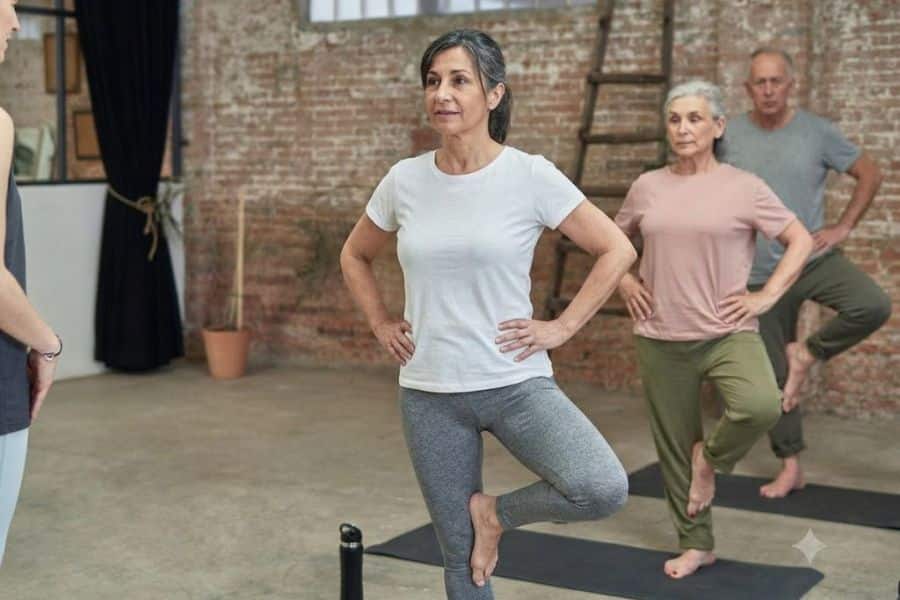
The 10-second balance test is simple. You stand on one leg, unsupported, and see if you can hold it steady for ten seconds.
Here’s how Becky had me do it. Stand tall, place the top of one foot against the back of the opposite calf, fold your arms across your chest, and fix your eyes on a spot ahead of you. Then lift and hold. No wall, no chair, no cheating. Ten seconds is the mark.
Do give yourself a couple of practice goes first, and have something sturdy within arm’s reach in case you wobble, which you undoubtedly will.
Why Can Balance Predict How Well You’ll Age?
Because balance pulls together almost everything that ages. Your muscle strength, your inner ear, your joints, your eyesight, and the messaging between your brain and your body all have to work together for you to stand on one leg.
When one of them starts to slip, your balance is often the first thing to show it. A study followed more than 1,700 adults aged 51 to 75. Those who couldn’t stand on one leg for ten seconds had an 84% higher risk of dying from any cause over the next decade, even after the researchers accounted for age, weight, and existing health conditions.
Then, in 2024, another study found that how long you can stand on one leg is a better measure of aging than either muscle strength or the way you walk. Your balance, it turns out, declines faster than almost anything else, which is exactly why it’s such a useful early warning.
It’s the canary in the coal mine of getting older.
How Long Should You Be Able To Balance for Your Age?
The short answer is that hitting ten seconds after 65 is a good, reassuring result. Thirty seconds means you’re doing very well indeed.
The longer answer is that it drops with age, and knowing the rough benchmarks helps you see where you stand. In the study, about 95% of people aged 51 to 55 could manage 10 seconds. By 61 to 65, that fell to 82%, and by 71 to 75, fewer than half could do it.
If you can’t hold your balance for even five seconds, that’s a recognized sign of a higher risk of falls, and it’s worth mentioning to your doctor. And that’s not to frighten you, but just so you can do something about it while it’s easy to fix.
What My Results Told Me
I’ll be honest with you. I wobbled. I got past five seconds without much trouble, but ten was a proper effort, and my left leg was noticeably worse than my right. I did it, and I’m now practicing every day to get better and hold it for longer. But I was surprised to find it so hard. I thought I’d breeze past 10 seconds without a problem.
Becky wasn’t the least bit surprised. She sees it all the time, she said, in people who feel perfectly fit but never actually challenge their balance from one week to the next.
The good news, and there is plenty of it, is that balance is one of the most trainable things in the body. Which brings me to the part that actually matters.
How To Improve Your Balance After 65
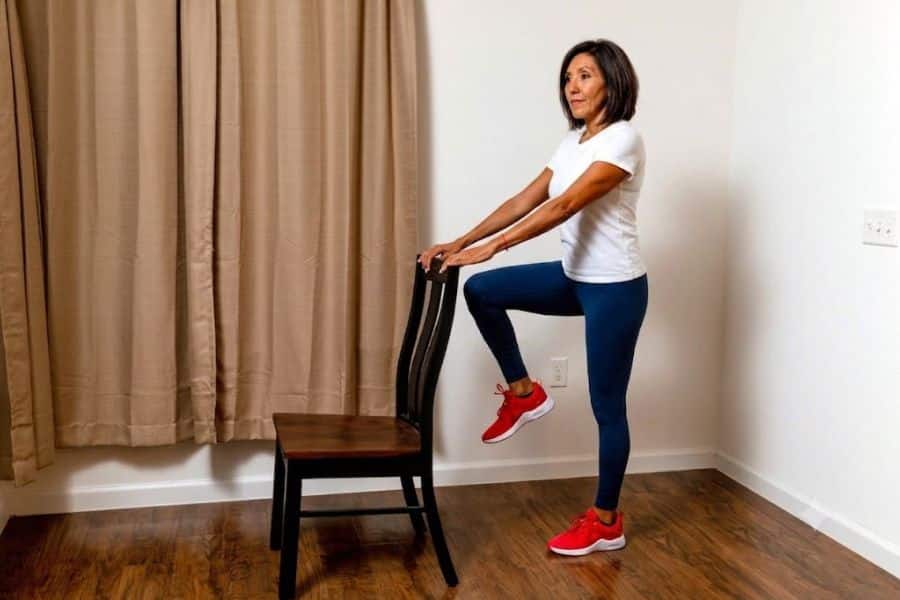
Becky started me on the simplest thing imaginable. Standing on one leg while I brushed my teeth, one leg per session, holding the sink only if I truly needed it. Two minutes a day, morning and night.
She also had me practice standing up from a chair without using my hands, and rising from the floor in different ways, because that was my real weak spot.
From there, a bit of gentle strength work makes an enormous difference, since strong legs are what hold you steady.
A few easy standing exercises that rebuild the muscle you lose in your fifties gave me the leg strength to hold steadier within a month, and the yoga has been doing wonders, too.
The same yoga moves that loosened my stiff, achey back turned out to free up the hips and ankles that keep you upright in the first place.
The trick is consistency, not intensity. A few minutes every day beats an hour once a fortnight, every single time.
One Test, Not the Whole Story
Before you go standing on one leg in a panic, a word of perspective. This is one simple measure, not a diagnosis, and it certainly can’t tell you when your number’s up.
The famous study was observational, which means it shows a link between poor balance and earlier death, not that one directly causes the other. Plenty of things affect both.
What it does give you is a nudge and an instant way to check in on your body and catch a decline early, while there’s every chance to turn it around.
Balance is only one thread in the bigger picture, alongside the everyday habits that help you live longer and steering clear of the mistakes that age you faster.
So go on. Stand up, fold your arms, and give it a try. Whatever your number, you now know exactly what to work on. And unlike that crystal ball we all wish for, this is one glimpse of the future you can actually change.
Disclaimer: This article is for general information only and isn’t medical advice. The balance test isn’t a diagnosis, and results vary from person to person. Always check with your doctor before starting new exercises, especially if you have a history of falls, dizziness, or any condition affecting your balance, and have something sturdy nearby whenever you test yourself.
Disclaimer: The content in this article is for informational purposes only and is not intended to replace professional medical advice, diagnosis, or treatment. Always consult your doctor, physical therapist, or healthcare provider before starting a new exercise program, particularly if you have existing joint, cardiovascular, or balance conditions.

Kylie Lang is a nationally syndicated travel journalist with bylines on the Associated Press Wire & more, a lifestyle writer, and the founder and editor of Your Lifestyle Library (yourlifestylelibrary.com). She holds a BA (Honours) in History from the University of Kent and is a member of the British Guild of Travel Writers.