
I only recently heard about somatic healing. I think I stumbled across it because one of my friends was raving about it on social media. It got me curious. And once I watched a video explaining how it worked, it was all over my own feeds.
I’m always a little sceptical about this type of thing, especially when it’s celebrity-endorsed. Knowing someone has been paid to say they like something isn’t really going to entice me.
However, I am a big fan of alternative therapies and have long since been an advocate for Bowen therapy, so I was interested to see what all the hype was about.

So What Exactly Is Somatic Healing?
The word somatic simply means “of the body.” So somatic healing is body-based healing.
Most therapies work from the top down. You talk, you analyze, you try to reason your way to a calmer, healthier state. And for many people, that works well. But for others, there’s a gap. You can understand your anxiety in perfect detail, explain it brilliantly in a therapy session, and still feel it sitting in your chest every morning like it never got the memo.
That’s because stress and trauma don’t just live in your thoughts; they live in your nervous system, your muscles, your breathing patterns, and your posture. Your body has been keeping score long before Bessel van der Kolk wrote the book with that very title.
Somatic healing works the other direction, starting with what the body is actually doing right now and using physical sensation as the pathway to emotional healing.
The approach was developed by Dr. Peter Levine, a researcher in biophysics and psychology who spent decades studying why animals in the wild don’t develop trauma symptoms the way humans do. He observed that after a life-threatening event, animals shake, move, and physically discharge the stress from their systems. Then they move on.
His research, published in peer-reviewed journals, showed that humans have this same capacity built in. We’ve just stopped using it.
Why It Works
Your nervous system has two main modes: safe and activated. When you’ve been through prolonged stress or trauma, it can get stuck in activated mode, scanning for danger even when none exists. Your body is still braced for something that already happened, sometimes years or even decades ago.
Research shows that somatic approaches produce meaningful results for trauma-related symptoms, with positive effects on anxiety and other conditions that often travel alongside it. A randomized controlled trial found improvements in both PTSD and chronic pain that held up at a 12-month follow-up.
What this means practically is that by working with the body rather than just the mind, you can start to teach your nervous system that you’re actually safe right now. Not by telling it so, but by physically demonstrating it through breath, movement, and body awareness.
This is also why somatic healing tends to connect so strongly with women in midlife. By this point, many of us have been running on empty for years. We’ve absorbed stress, swallowed our feelings, and pushed through. The body remembers all of it.
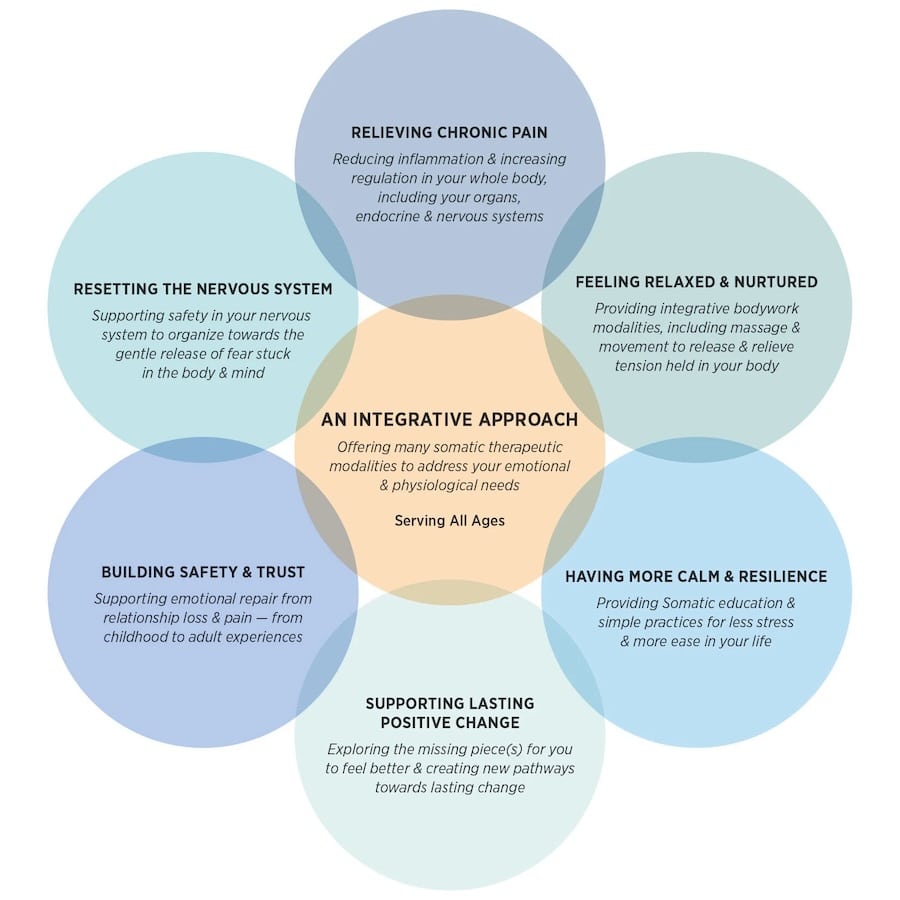
Is This Something You Need?
You don’t need a trauma history to benefit from somatic healing. Not even close.
If any of these feel familiar, it’s worth paying attention:
- You carry tension that feels like it has taken up permanent residence in your shoulders or jaw
- Your mind races before bed, even when you’re exhausted
- You feel disconnected from your body, pushing through pain, hunger, or tiredness without noticing
- Anxiety shows up physically as a tight chest, a churning stomach, or a restless, jittery energy
- You feel wound up even when life is objectively fine
- You’ve done talk therapy and understand your patterns well, but still feel stuck in your body
For everyday stress and anxiety, the techniques below are safe for most people to try at home.
If you’re dealing with complex or severe trauma, working alongside a qualified practitioner is worth considering. Somatic Experiencing International has a directory of certified practitioners. Look for someone trained in Somatic Experiencing or Sensorimotor Psychotherapy.
Simple Somatic Exercises to Try at Home
Some of the most effective somatic practices only take five minutes. Start with one technique, practice it for a week, and pay attention to how you feel.
Box Breathing
This is the fastest route to calming your nervous system when stress spikes. It works because slow, controlled breathing sends a direct signal to your body that the threat has passed.
- Breathe in through your nose for a count of four
- Hold for four counts
- Breathe out through your mouth for four counts
- Hold empty for four counts
- Repeat four to eight times
In two minutes, most people feel a noticeable shift. Use it before a difficult conversation, when you wake at 3 am with a racing mind, or any time you need to reset quickly.
Body Scanning
Most of us are walking around with no real awareness of what’s happening physically below the neck, until something hurts badly enough to demand attention. A daily body scan builds that awareness without pressure or effort.
- Sit or lie down comfortably and close your eyes
- Start at the top of your head and move your attention slowly downward
- Work through your forehead, jaw, neck, shoulders, chest, arms, stomach, lower back, hips, legs, and feet
- Don’t try to fix or change anything, just notice
- Is your jaw clenched? Are you holding your breath slightly? Is there tension you weren’t even aware of?
Over time, you start to spot patterns and catch stress before it sets in. Five minutes is plenty.
Grounding
When anxiety spikes and your thoughts start spiraling, grounding pulls you back into the present moment and out of your head.
- Name five things you can see
- Find four things you can touch and feel the texture of
- Notice three things you can hear
- Identify two things you can smell
- Find one thing you can taste
You can also press your feet firmly into the floor, hold something cold or textured, or splash cool water on your face. None of this is complicated. That’s the point.
Conscious Shaking and Gentle Movement
Shaking helps discharge stored tension in the nervous system in a way that breathing and talking alone often can’t.
- Stand with your feet hip-width apart and soften your knees slightly
- Let your body begin to shake gently, starting from your legs and allowing it to travel upward
- Keep it soft and easy, not forced
- Continue for one to two minutes
You can also try slow shoulder rolls, gentle neck stretches side to side, or walking while paying deliberate attention to the sensation of each step. Movement combined with awareness is what makes the difference.
Self-Touch
Safe, intentional touch helps your nervous system access its sense of calm. It can feel unusual at first, but your body responds to safety signals whether or not they feel familiar.
- Rub your hands together until warm, then place them over your heart
- Give yourself a proper hug and hold it for several seconds
- Gently massage the back of your neck or your hands
- Squeeze your arms slowly from shoulder to wrist
Small acts of self-comfort send real signals to the nervous system. Try it and see.
Apps That Help
If you want guided support while you build a somatic practice, these are worth your time.
NEUROFIT is one of the more research-grounded options, built specifically around nervous system regulation and somatic exercises. It tracks your responses and personalizes its recommendations over time. Available on iOS and Android.
SomaShare offers over 200 practices led by qualified somatic practitioners, covering nervous system regulation, anxiety relief, emotional healing, and more. The free version is substantial enough to get started without committing to a subscription.
Othership focuses on breathwork with live guided sessions and somatic movement integration. A solid choice if you find it easier to practice alongside others in real time rather than alone.
Down Dog is perfect for those who want to combine somatic movement with yoga. It generates a unique sequence each session, fully customizable in duration and difficulty, with a trauma-informed approach to movement.
If You Want to Go Deeper
Two books have done more than anything else to bring somatic healing into mainstream awareness.
Waking the Tiger by Peter Levine is where the clinical foundation for modern somatic therapy began. Readable, grounded in science, and genuinely illuminating on why the body holds stress and how to help it let go.
The Body Keeps the Score by Bessel van der Kolk explains in clear, accessible terms how trauma affects the brain and body, and what approaches actually produce results. It became one of the most talked-about wellness books of the past decade for good reason.
The Somatic Experiencing International website also has research articles, introductory videos, and practitioner resources if you want to understand the clinical background before you dive in.
Disclaimer: The information in this article is for educational purposes only and is not a substitute for professional medical or mental health advice. If you are dealing with trauma, anxiety, or any other mental health concern, please speak with a qualified healthcare provider before starting any new therapeutic practice.