
Retirement is meant to be the reward for decades of hard work. My mom is the queen of savings and tracks her money in a way that would make any accountant proud. She’s only too aware that once that paycheck stops and your savings have to stretch across the rest of your life, every dollar counts.
The good news? There are dozens of completely legal programs, loopholes, and hacks that can put real money back in your pocket. Things that retirees are entitled to, but most people never hear about because they aren’t heavily advertised, but hidden in plain sight if you know where to look.
I’ve been looking into these more and more myself, because retirement is creeping up faster than I’d like to admit. And the more I read, the more I realize how much money is sitting on the table waiting for you to claim it.

9 Big Savings for Retirees You Don’t Want To Miss
Ready to put some money back into your retirement pot by taking advantage of the help that’s been created to help you relax in your golden years?
No. 1 Medicare Extra Help
If you’re on Medicare and your income is modest, this is the first one to check.
Extra Help, also called the Part D Low-Income Subsidy, pays for most of your prescription drug costs. Social Security estimates the average value at around $6,200 per person per year.
Here’s what you get if you qualify in 2026:
- Your Part D plan premium is waived
- Your deductible is waived
- Brand-name drugs are capped at $12.65 each
- Generics are capped at $5.10 each
- Once your total drug costs hit $2,100, you pay $0 for the rest of the year
- No late enrollment penalty
For 2026, you can qualify if your monthly income is up to $2,015 as a single person or $2,725 as a married couple. Asset limits apply, too, but your home and one vehicle don’t count.
The frustrating part? An estimated 2 million Medicare enrollees are eligible but haven’t signed up. Apply through the Social Security Administration website or call 1-800-772-1213. There’s no cost to apply.
No. 2 The Medicare Savings Programs

This one is separate from Extra Help, and most people have no idea it exists.
If you qualify for a Medicare Savings Program, your state’s Medicaid agency pays your Medicare Part B premium for you. In 2026, that premium is $202.90 a month. Over a year, that’s more than $2,400 back in your account.
There are three main versions:
- QMB (Qualified Medicare Beneficiary): Covers Part A and Part B premiums, plus deductibles, copays, and coinsurance. The monthly income limit is around $1,350 for individuals and $1,824 for couples.
- SLMB (Specified Low-Income Medicare Beneficiary): Covers your Part B premium only. The income limit is around $1,616 single, $2,184 married.
- QI (Qualifying Individual): Also covers the Part B premium, with income limits of about $1,816 single and $2,455 married. This one is first-come, first-served, so apply early in the year.
The bonus? Enrolling in any of these automatically signs you up for Extra Help, too. Two big savings stacked on top of each other. You apply through your state Medicaid office.
No. 3 The 90-Day Prescription

My mom told me about this one. It’s a tiny tweak to the way you order your prescriptions that pays off every single month for the rest of your life.
A 90-day supply of a maintenance medication, the kind you take every day for things like blood pressure, cholesterol, or thyroid, typically costs 20 to 30% less per pill than buying the same drug in monthly batches. Most insurance plans push you toward 90-day fills through mail-order pharmacies for exactly this reason.
You also stop paying three separate copays a quarter. One copay, three months of medicine.
Ask your doctor to rewrite your prescription for 90 days at your next visit. Then ask your insurance plan whether mail-order or a preferred retail pharmacy gives the better price. Both options usually beat monthly retail fills.
Bonus tip: don’t refill too early. Most insurance plans require you to use 75-80% of your current supply before they’ll approve the next fill. Refill on day 22 of a 30-day script, or day 68 of a 90-day script, to keep things smooth without triggering rejections.
No. 4 Compare Cash Prices Before You Use Insurance
It sounds counterintuitive, doesn’t it? But for many generic medications, paying cash through Mark Cuban’s Cost Plus Drugs or using a GoodRx coupon is cheaper than your insurance copay.
Cost Plus Drugs operates on a transparent 15% markup over the manufacturer’s price, plus a small dispensing fee. No middlemen, no pharmacy benefit manager taking a cut. Generics that might cost $50 to $100 with insurance often drop to $10 to $30 through Cost Plus or GoodRx.
This matters most in two situations:
- Early in the year, before you’ve hit your deductible
- For high-priced generics where the copay is inflated
How to check: pull out your last pharmacy receipt. Look up the same medication on Cost Plus Drugs and GoodRx. Whichever is cheapest wins. If you’re a Costco member, check their pharmacy too. You don’t need to be a member to use the Costco pharmacy.
One thing to remember: cash payments outside insurance usually don’t count toward your deductible or out-of-pocket maximum. So if you’re close to hitting those caps, using insurance might still be smarter for that month.
No. 5 The Senior Property Tax Exemption

Property taxes are one of the highest ongoing costs of owning a home in retirement. And almost every state offers some form of property tax relief for homeowners 65 and older, which you have to apply for. They don’t kick in automatically when you turn 65.
A few examples worth knowing:
- Texas: Seniors get an extra $60,000 school district exemption stacked on top of the standard homestead exemption, plus a school tax ceiling that freezes the school portion of your bill.
- Florida: The standard homestead exemption, Save Our Homes assessment cap, and a low-income senior exemption can stack together. Long-term residents 65+ who’ve lived in the same home for 25 years may qualify for an exemption worth up to $250,000 on assessed value.
- Illinois (Cook County): The Senior Freeze locks in the equalized assessed value of your home if your household income is under $65,000.
- New York: The Enhanced STAR program for 2026 reduces school taxes for seniors with income up to $110,750. Some localities also offer the Senior Citizen Homeowners’ Exemption, which can reduce the assessed value by up to 50%.
- New Jersey: The Stay NJ program reimburses up to 50% of property tax bills for homeowners 65+, capped at $6,500 annually.
- Tennessee: Once you qualify, your property tax is frozen at that year’s amount, even if rates go up later.
In Texas alone, an estimated 15% of eligible homeowners haven’t filed for their homestead exemption, leaving roughly $1,500 a year on the table each.
Call your county assessor’s office and ask: “What property tax exemptions am I eligible for as a senior?” Then ask the same question every two or three years, because the rules keep changing in retirees‘ favor.
No. 6 Defer Your Property Taxes

This one is for retirees with significant home equity, but cash flow is a little tight.
Several states offer property tax deferral programs that allow qualifying seniors to defer paying property taxes entirely. The deferred amount becomes a lien on the home and gets paid back when the property is sold or transferred, usually with simple interest.
Examples:
- Oregon: Seniors and disabled homeowners can defer property tax payments. The state pays the county on your behalf, and 6% simple interest accrues until repayment.
- Texas: Homeowners 65+ can defer property tax on their homestead indefinitely. Unpaid tax accrues 5% annual interest.
- California: The Property Tax Postponement Program is open to seniors with at least 40% equity in their home and income under about $55,000.
- Illinois: The Senior Citizens Real Estate Tax Deferral Program is open to homeowners 65+ with household income under $65,000.
- Massachusetts: Clause 41A lets qualifying seniors defer all or part of their property tax.
Why is this such a useful tool? For many retirees, this is a far safer and cheaper option than a reverse mortgage. The interest rates are lower, there are no big upfront fees, and you keep more equity in the home for your heirs.
It’s not the right move for everyone. If you plan to leave the home to your kids and they’d prefer a clean inheritance, this isn’t ideal. But if your goal is to stay in your home and ease pressure on your monthly budget, it’s worth looking into.
No. 7 Subscribe to a Community Solar Project

If you’ve ever wanted solar panels but couldn’t justify the cost, the wrong roof angle, or you’re renting, community solar is an option most people have never heard of.
Here’s how it works. A solar farm gets built somewhere in your area, often on a closed landfill, a field, or a commercial rooftop. You sign up to subscribe to a share of that farm based on your annual electricity usage. You don’t install anything or pay upfront. There are no credit checks.
The energy your share generates flows into the local grid. Your utility credits the value of that energy to your electricity bill. Then the community solar provider sends you a separate bill for those credits, but at a discount.
Most subscribers save between 5% and 20% on their annual electricity costs. Programs operate in 44 states, and Washington, D.C. New York alone has more than 1,300 active projects.
Things to check before signing up:
- Is there a termination fee or exit penalty? Reputable programs shouldn’t have either
- What’s the actual discount? 10-15% is typical
- Are you locked in for a set term?
- Does your state have consumer protection rules for community solar?
If you’re paying $200 a month for electricity, even a 10% savings adds up to $240 a year. Over 20 years of retirement, that’s nearly $5,000 just for filling in a form.
No. 8 LIHEAP and Free Home Weatherization
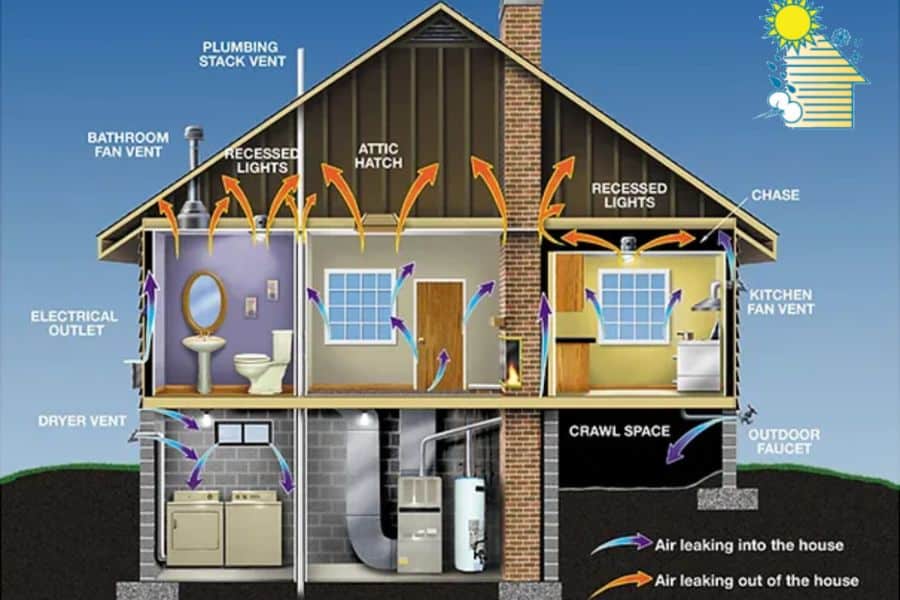
Two more federal programs that fly completely under the radar.
The Low Income Home Energy Assistance Program (LIHEAP) helps pay heating and cooling bills. Households with anyone 60 or older typically receive priority. Benefits go directly to your utility company, so they appear as a credit on your bill. In 2026, LIHEAP received about $4.05 billion in federal funding, with state benefits ranging from a few hundred to several thousand dollars per household per year.
The Weatherization Assistance Program (WAP) is the one most retirees miss completely. WAP pays for free home energy upgrades. Real upgrades, not gimmicks. Things like:
- Attic insulation
- Air sealing around windows and doors
- Heating system repair or replacement
- Hot water tank insulation
- Energy-efficient lighting
The average subsidy is around $6,500 per home. Eligibility is usually based on income at or below 200% of the federal poverty level.
Apply through your local Community Action Agency or your state’s energy assistance office. If you apply for LIHEAP, most agencies will automatically screen you for weatherization, too.
No. 9 Search for Unclaimed Money in Your Name

The National Association of Unclaimed Property Administrators estimates roughly 1 in 10 Americans has unclaimed property waiting for them. Forgotten bank accounts. Old utility deposits. Uncashed paychecks. Stock dividends. Insurance refunds. Tax refunds. Even old 401(k) accounts from jobs you barely remember.
When companies lose touch with you, they’re legally required to turn the money over to the state’s unclaimed property office. It sits there until someone claims it. There’s no time limit and no fee.
Go to MissingMoney.com, which is the official multi-state search tool endorsed by the National Association of Unclaimed Property Administrators. It’s free.
How to search well:
- Try your full legal name
- Try your maiden name if applicable
- Try common misspellings
- Search every state where you’ve lived, worked, or held an account
- Search for deceased relatives if you’re an heir
If you find something, follow the link to the state’s official unclaimed property website. Never pay a “finder’s service” to recover money for you. The state will return it to you for free with proof of identity.
For old savings bonds, search TreasuryHunt.gov. For old 401(k) accounts, try the National Registry of Unclaimed Retirement Benefits at unclaimedretirementbenefits.com.
One reader I know found $4,200 from an insurance refund from 12 years earlier. You never know what money you have out there that you’ve forgotten.
Disclaimer: This article is for informational purposes only and does not constitute medical, financial, tax, or legal advice. Eligibility for programs, exemptions, and benefits varies by state, county, and individual circumstance, and rules change frequently. Always verify current requirements with the relevant government office, and consult a qualified professional, whether that’s your healthcare provider, financial advisor, tax preparer, or attorney, before making decisions that affect your health, prescriptions, or retirement finances.