
We’ve had a brutal summer this year with searing heat and weeks of temperatures well over 100 degrees. My poor garden looks like it’s been in a war zone, and you can see it’s feeling rather sorry for itself.
Most of my plants have given up. We had a little bit of rain the other day, which perked a few of them up, but it was short-lived. So suffice it to say, my borders are looking a wee bit bare with practically no color. Add that to my straw-like grass, and it’s not a garden I’m enjoying looking out at right now.
However, there is one little gem that keeps going no matter what. It doesn’t care about heatwaves, rain, or even being trampled on by my border collie Lottie. If there’s one thing I’d tell you to plant, it’s this one.

Cosmos Is the Hardiest Plant You Can Grow
Cosmos is a Mexican native, and that’s the whole reason it does what it does. It evolved in warm, dry conditions with poor soil, so a slightly parched late-summer border in Europe or North America is pretty much ideal.
It’s also an annual and has one job in its short life: to make seeds before frost kills it, and the more flowers it produces, the better its chances. So it keeps pumping them out.
If you deadhead regularly, you’re basically telling the plant it hasn’t succeeded yet, and it responds by making more flowers.
Most cosmos will start flowering around July from a spring sowing and carry on until the first proper frost knocks them back. In my part of southwest France, that’s usually mid-November, which gives me a solid 4 months of flowers from one packet of seeds costing about $3. I can’t think of another plant that gives me that kind of bang for my buck
The Cultivars That Hang On the Longest
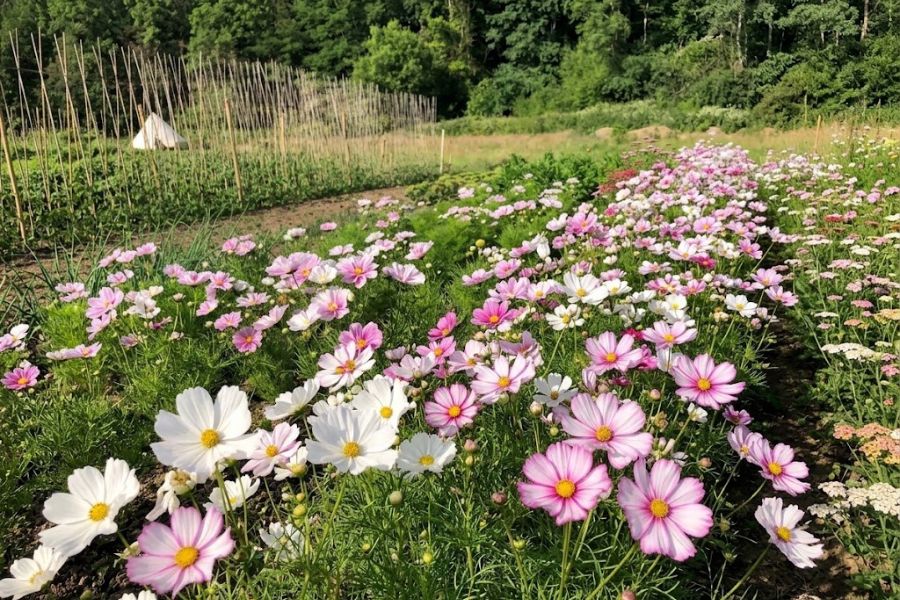
Not every cosmos is created equal when it comes to late-season staying power. Some of the fancier doubles and picotees look wonderful in July but run out of steam by September, while the plainer single-flowered varieties will still be pushing out blooms in October.
If you want the long haul, the classic Cosmos bipinnatus varieties are the ones to go for.
‘Purity’ is the tall white one everyone knows, and it’s a workhorse. It gets to about 4 feet, self-supports pretty well if you plant it close to its neighbors, and it flowers from midsummer until it’s stopped by frost.
‘Dazzler’ is the deep magenta version and behaves the same way. ‘Sensation Mixed’ is the packet you probably picked up at the hardware store, and it’s cheap, cheerful, and reliable.
For something a bit different that still flowers hard into fall, ‘Rubenza’ opens a rich ruby red and fades to dusky rose as the flowers age, so you get two colors on the plant at once.
‘Xanthos’ is a soft lemon yellow, shorter at around 2 feet, and useful if you want cosmos at the front of a border rather than flopping over everything.
The chocolate cosmos, Cosmos atrosanguineus, is a different beast altogether. It’s a tender perennial rather than an annual, and it smells like actual chocolate on a warm afternoon.
Keeping Them Going Right Up to the Frost
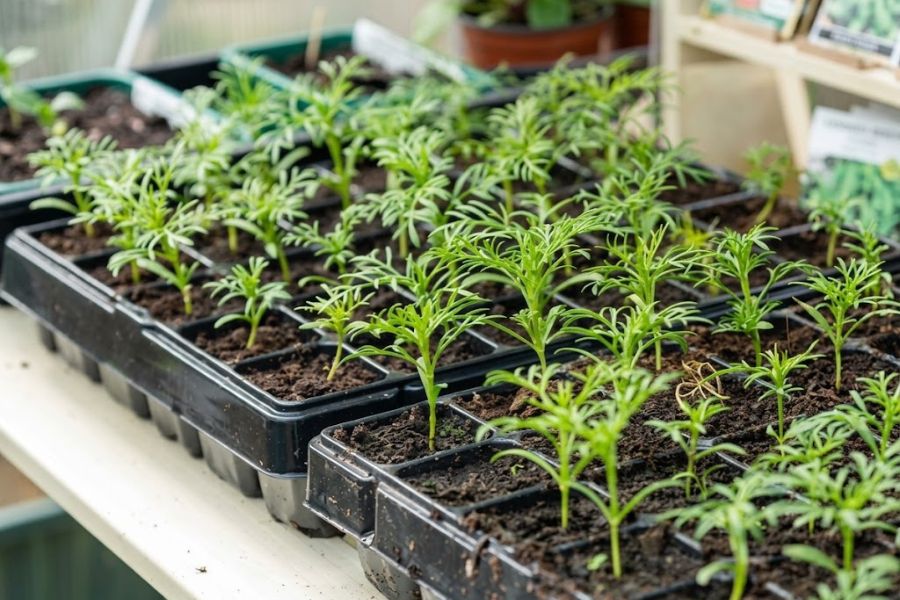
The single biggest thing you can do for a late-flowering cosmos is deadhead it. It takes about 10 minutes once a week, and it doubles your flowering season. Snip off the spent flowers just above the next set of leaves, and the plant will branch and produce more buds from that point.
If you want to cut them for the house, do it. You can’t pick too many cosmos, and the more you pick, the more the plant makes. They last about 5 to 7 days in a vase if you cut them when the buds are just showing color rather than fully open.
Give them a good soak once a week, especially in a dry spell. Aim at the base of the plant so you don’t wet the leaves, because cosmos can get powdery mildew when it’s stressed and damp.
And don’t overzealous and start feeding them. It does better on poor soil, so if you’ve been tempted to throw a handful of general-purpose fertilizer around, resist. You’ll get a plant that’s 6 feet tall, floppy, and covered in leaves with hardly a flower in sight. I’ve done this. It was a lot of foliage for very little reward.
Staking is worth considering if you’re growing tall varieties in an exposed spot. I use pea sticks or twiggy prunings pushed in around the plants when they’re about a foot tall, and by the time the cosmos are 4 feet tall, the sticks have disappeared into the growth and are doing their job invisibly.
Leave the Seed Heads Standing for the Birds
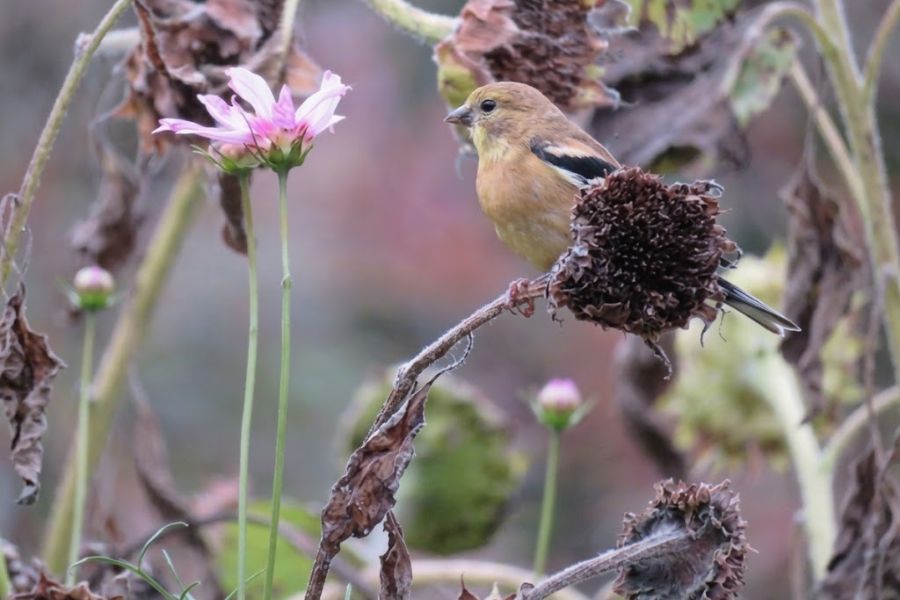
Once the frost finally does knock the cosmos back, please don’t tidy them straight away. I know the instinct is to get in there with the pruning shears and clear the border before winter, but those spent cosmos plants are one of the best free bird feeders you’ll ever have in your yard.
The seed heads are packed with small black seeds that finches love.
The hollow stems also give shelter to overwintering insects, including some of the solitary bees and hoverflies you actually want in your garden next year. If you cut everything down in November and cart it off to the compost pile, you’re throwing away a whole ecosystem’s worth of winter housing.
What I do is leave the plants standing until February or March, when the seed heads are properly empty, and the stems are starting to break down anyway. Then I pull the whole lot out, which is easy because the roots have rotted, and I chop the stems up for the compost.
Some of the seed will have dropped where the plants stood, and I usually get a few volunteer seedlings coming through in April. They’re never quite as good as the ones I sow deliberately, but they’re free, and they’re early, and I take what I can get.
Saving Seed for Next Year
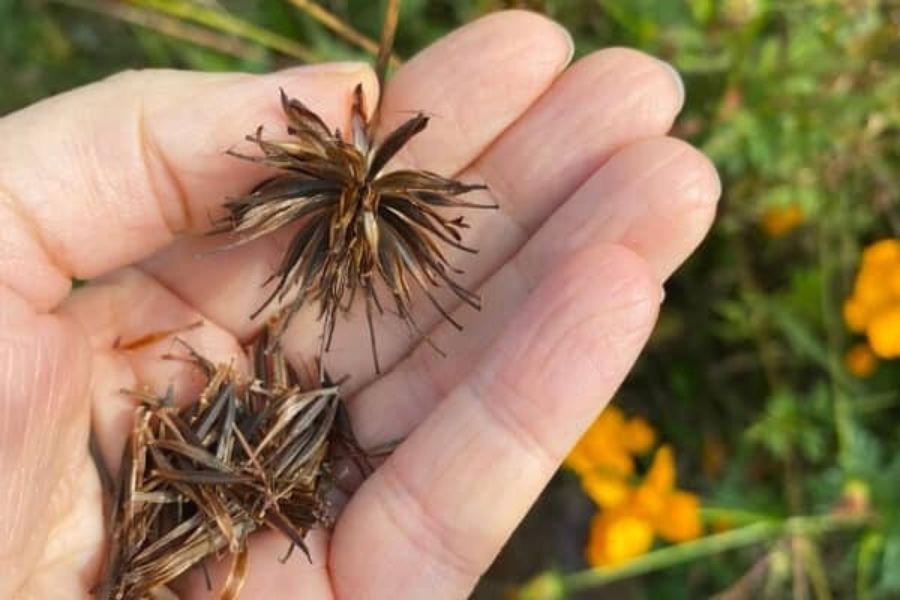
If you’ve got a variety you love, save the seed. It’s one of the easiest plants to save seed from, which is probably why cosmos has stayed cheap and available for so many decades. Wait until the flower heads are completely brown and dry on the plant, then snip them off and put them in a paper bag on a dry day. You want them properly dry, not the slightest bit damp, or they’ll go moldy in storage.
Rub the seed heads between your fingers over a bowl, and the seeds will fall out. They’re long, thin, and dark, a bit like tiny black grass seeds, and you’ll get anywhere from 10 to 30 seeds per flower head.
Store them in a paper envelope somewhere cool and dry, and label it with the variety and the year, because next April you’ll open a drawer and find 4 unlabeled envelopes and no idea what any of them are.
One thing to know: if you’re growing more than one variety of cosmos in the same garden, they’ll cross-pollinate happily, and the seed you save might not come true to type. Your ‘Purity’ might produce pink babies, and your ‘Rubenza’ might throw out a few whites.
I find it quite fun, and every spring I sow a tray of mixed saved seed alongside a fresh packet of something specific, so I get both.
Sow them indoors in March or April, about 6 to 8 weeks before your last frost date, or direct-sow outside once the soil has warmed up and there’s no more risk of frost. They germinate in about a week, grow fast, and don’t like being potted on too many times, so I usually start them in modules and plant them straight out when they’re 4 to 6 inches tall. From that point on, they mostly look after themselves, so perfect for the lazy or time-poor gardener.