
After a summer as we’ve had with no less than six heatwaves, the minute autumn hits, all you want to do is attack what’s left of your garden. I’m itching to get out my secateurs and deadhead everything in sight.
If any of this sounds familiar, then hold your horses. Put down those shears and take a minute. Many of those plants that look like they’re either dead or on their last legs don’t need your well-meaning help.
Some of them will self-clean and shed their own spent blooms; others are shrubs that flower once, and that’s it. A few probably have heads full of seeds you’ll want to collect. So let’s sort them out, because deadheading is only worth doing on some plants.
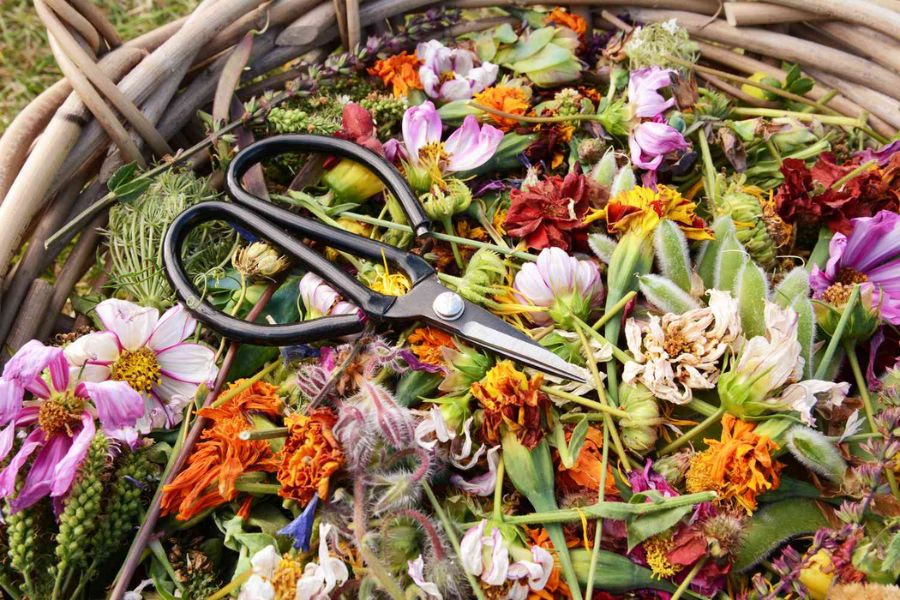
Deadheading 101
The basic idea of deadheading is simple enough. From the plant’s point of view, a flower’s job is to make seed, and once it’s done, the plant relaxes and stops producing more flowers because the mission’s accomplished.
If you snip the spent flower off before it can set seed, some plants will keep trying, and you get another flush of blooms. That only works on plants wired to keep flowering across a long season, though.
A lot of shrubs and perennials have one flowering window, and no amount of snipping is going to convince them to have a second go.
Lilacs, peonies, wisteria, most rhododendrons: they bloom, they’re done, and you deadheading them will do nothing except tidy the look. Which is fine, but let’s not pretend it’s giving you more flowers.
And then there’s a whole category of modern bedding plants that have been bred to drop their own spent blooms without any help. The plant breeders have done the work for you, which is very kind of them.
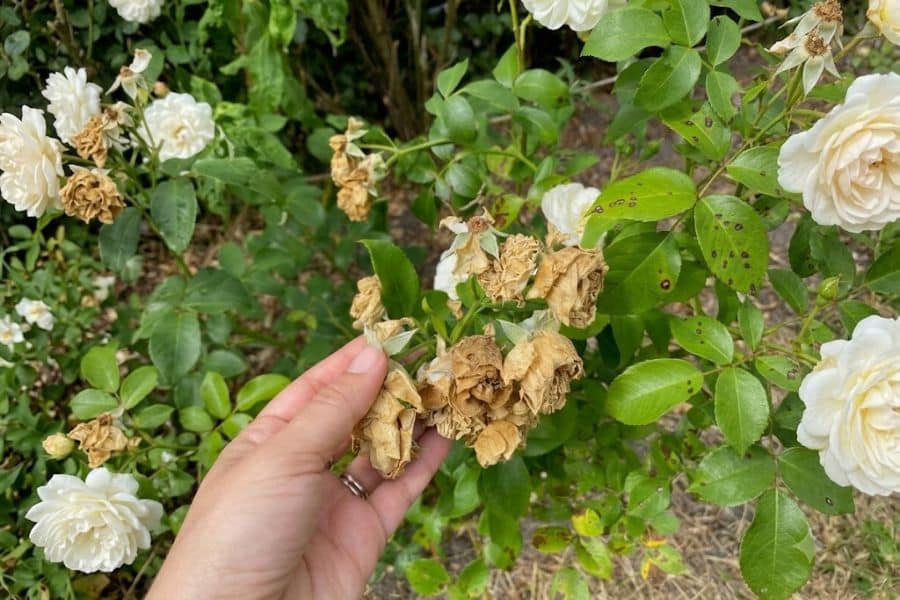
The Flowers That Reward You for Deadheading
Naturally, there are plenty of flowers where the snipping pays off, and if you’re going to spend time on any of them, spend it here.
Roses, especially repeat-flowering ones, will give you more blooms if you keep taking the spent ones off through summer. Same with a lot of the classic long-season annuals and perennials, the kind bred to keep flowering as long as you keep pushing them.
The plants where it’s worth the effort:
- Repeat-flowering roses: cut back to the first set of five leaflets below the spent bloom and you’ll get another flush in a few weeks.
- Dahlias: worth learning the trick of the pointed cone (spent) versus the round bud (coming). Once you can tell them apart, your dahlias will flower well into fall.
- Cosmos: snip off the finished flowers, and they’ll keep going right up to the first frost. Ignore them, and they’ll set seed and slow down within a couple of weeks.
- Zinnias: same story, and they cut beautifully for the kitchen table, so you’re deadheading and picking flowers at the same time.
- Sweet peas: pick them constantly, whether you want the flowers in the house or not. The second one sets a seed pod; they take that as their cue to stop.
- Snapdragons: cut the whole spike off once most of it’s faded, and you’ll get side shoots with new spikes. They can flower right through until it gets cold.
- Salvia (the annual bedding types and some perennial ones): cut back the finished spikes, and they’ll push out more.
- Geraniums (the pelargonium kind, in pots): pinch off the whole stem of finished flowers, not just the petals, and they’ll keep going all summer.
- Marigolds and pansies: give them a quick pinch with your fingers, and they’ll flower for months instead of weeks.
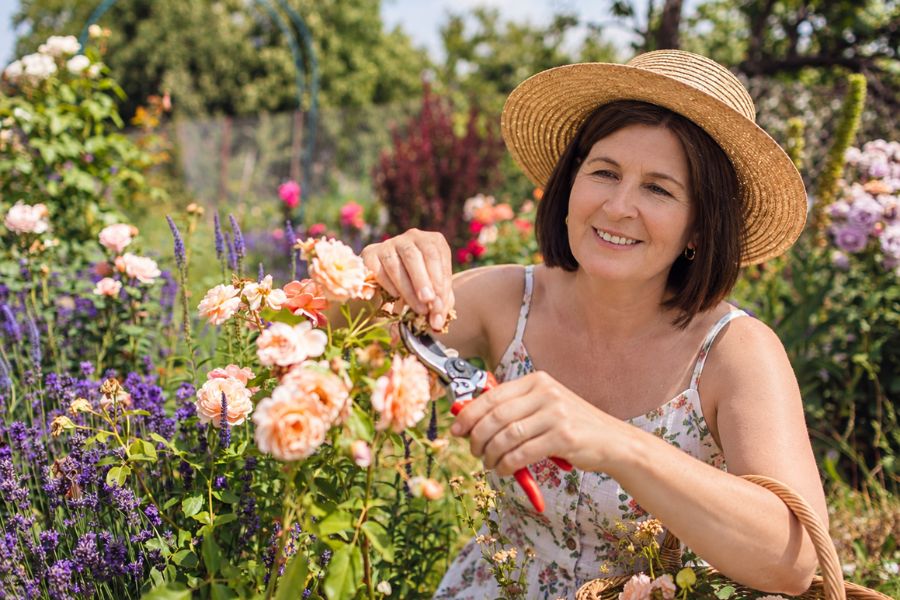
Flowers That Do the Job for You
If you’re growing any of the newer trailing or spreading petunias (the Wave series, Supertunias, the Surfinia types), they’re what’s called self-cleaning.
The old flowers drop off on their own, and the plant carries on flowering without any input from you.
The old-fashioned upright petunias still benefit from a bit of tidying, but if you bought yours from a garden center flat marked Wave or Supertunia, put the pruning shears down.
Modern impatiens are the same. Bedding begonias too. They’ve been bred to drop their spent blooms and keep flowering, and picking at them makes no difference.
If a plant is described as self-cleaning on the tag, believe the tag.
Then there are the plants that only flower once a season. Peonies, for instance, will flower for a couple of weeks in early summer and then they’re finished for the year. You can cut off the spent flowers if you don’t like the look of them, and that’s fine, but you’re not getting more flowers.
Same with lilacs, forsythia, weigela, mock orange, and most spring-flowering shrubs.
The ones where you can put your feet up:
- Wave-type petunias, Calibrachoa (Million Bells), and modern impatiens are all self-cleaning, so walk on by and let them do their thing.
- Bedding begonias drop their own spent blooms and don’t need any help from you, which is a relief when you’ve got 40 of them in a window box.
- Peonies, lilacs, forsythia, weigela, and mock orange all flower once and then rest, so deadhead only if you don’t like the look of the spent flowers.
- Lavender doesn’t need deadheading through the season at all. Give it one proper cut back after the main flush, and it’ll be happy.
- Hardy geraniums (the cranesbill kind, not the pot kind) can be sheared right back after their first flush with a pair of shears, no fussy pinching required, and they’ll often reflower.
The Flowers That Don’t Need Deadheading
Many perennials produce seedheads in late summer and fall that are lovely to look at, feed the birds through winter, and give the yard something to look at when everything else has gone brown.
Echinacea (coneflowers) are the classic example. The spent flowers turn into dark, spiky seedheads that finches, especially goldfinches, will sit on for hours picking at through fall. Rudbeckia does the same. If you deadhead these back in August, you’re throwing away the winter garden and the free bird feeder.
The list of plants worth leaving:
- Coneflowers (Echinacea) and Rudbeckia have dark seedheads that the finches love, so leave them standing and cut back in early spring.
- Sedum ‘Autumn Joy’ turns from pink to rusty red to brown and holds its shape all through winter, right through frost, which is one of the loveliest things a plant can do for you in January.
- Ornamental grasses (Miscanthus, Panicum, feather reed grass) look their best from September onwards and catch the low winter light in a way that flowering plants can’t touch. Cut them back to a few inches in late winter.
- Alliums leave sculptural round seedheads on tall stems that look like a piece of modern art, and I’ve dried them for indoor arrangements, too.
- Sunflowers left standing will feed every songbird within half a mile, and if you can bear the untidy stems in October, you’ll be rewarded with a lot of visitors.
How to Actually Deadhead a Plant
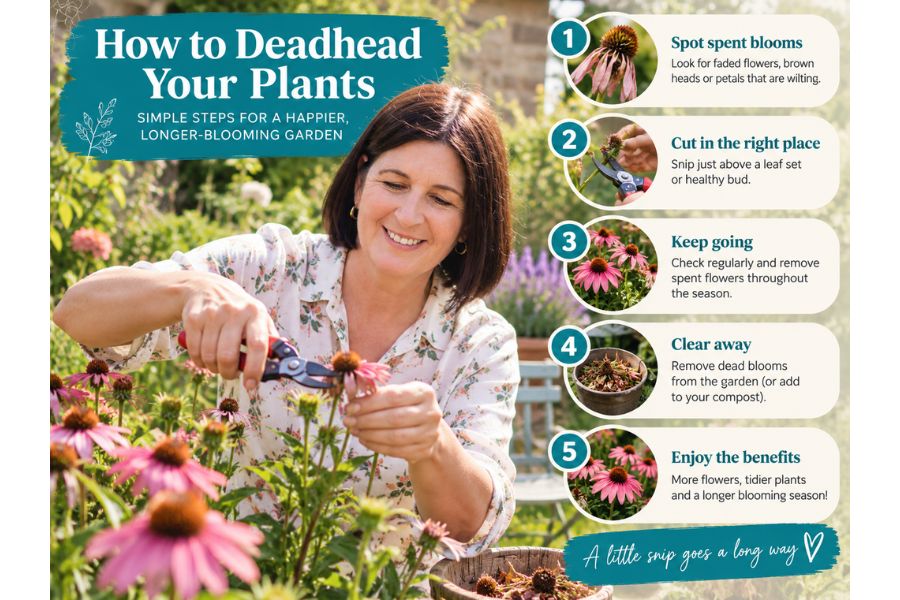
Right, before you march out there with your secateurs, let’s talk technique for a minute. I spent my first few years doing this wrong, snipping off just the flower head and leaving a sad bare stalk poking up behind it. Not a disaster, but it didn’t do the plant any favors either.
The trick is to cut back to the next bud, leaf, or set of leaves down the stem, not just the flower itself. That’s where the plant’s energy is already heading, so you’re giving it a clean point to push new growth from instead of a dead stick to work around.
For anything with a soft, fleshy stem, like your marigolds, pansies, and pelargoniums, you don’t need tools at all. Pinch the whole flower stalk off between your finger and thumb, right down where it meets the main stem. Simple as that.
For anything woodier or thicker, roses and dahlias especially, reach for a clean pair of secateurs or scissors. Cut just above a strong, outward-facing bud or the first full set of leaves below the spent bloom, angling the cut slightly so water runs off rather than sitting on the wound.
Bulbs are the one exception. With daffodils, tulips, and the like, snip off just the spent seed head and leave the green stem and leaves standing. It looks untidy for a few weeks, but that foliage feeds the bulb for next year’s flowers. Cut it back too early, and you’ll pay for it with a sorry show next spring.
Disclaimer: This article is for general information only and is not professional advice. It may contain affiliate links. Please see our full Editorial Policy for details.

Kylie Lang is a nationally syndicated travel journalist with bylines on the Associated Press Wire & more, a lifestyle writer, and the founder and editor of Your Lifestyle Library (yourlifestylelibrary.com). She holds a BA (Honours) in History from the University of Kent and is a member of the British Guild of Travel Writers.