
Living in rural France, I have a front-row seat to bee life. My lavender borders are practically a bee motorway from June onwards, and watching them work their way methodically from flower to flower is wonderful.
Every garden, however small, is part of a wider network of green space that bees navigate every day. What you plant, what you spray, and what you leave alone all feed into that network and help to attract bees into your garden.
There are plenty of simple things you can do to make your garden a haven for bees. Small changes make a difference, and bees are remarkably good at finding patches of garden that welcome them.
Simple Ways to Make Your Garden a Place Bees Want to Be
The most impactful thing you can do is plant more native flowers. Bees co-evolved with native plants over thousands of years, which means they’re specifically adapted to feed from them. A patch of wildflowers, even a container on a balcony, gives local bees exactly what they need. Borage, foxglove, red clover, and wild marjoram are all brilliant choices depending on where you live.
Avoid pesticides wherever possible. Many common garden pesticides are toxic to bees even at low levels, and systemic pesticides that get absorbed into plant tissue can contaminate pollen and nectar. If you have a pest problem, look for organic alternatives.
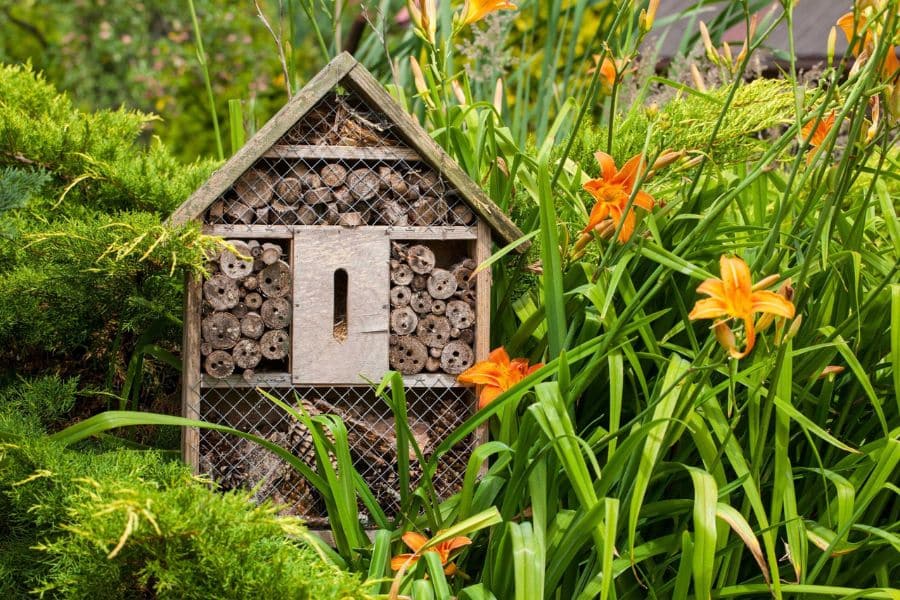
Provide habitats. Solitary bees need somewhere to nest, and they’re not fussy. A simple bee hotel made from hollow bamboo canes or a block of wood with drilled holes gives mason bees and leafcutter bees exactly what they’re looking for. Leave a patch of bare soil in a sunny spot for mining bees, which nest underground. Let a small area of your garden grow a little wilder with leaf litter and undisturbed ground.
Leave the dandelions. I know, I know. But dandelions are one of the earliest and most important sources of pollen in spring, when bees are coming out of winter, and there’s almost nothing else flowering. Tolerating them for a few weeks in early spring can make a real difference to local bee populations.
The Three Bees You’re Most Likely to See
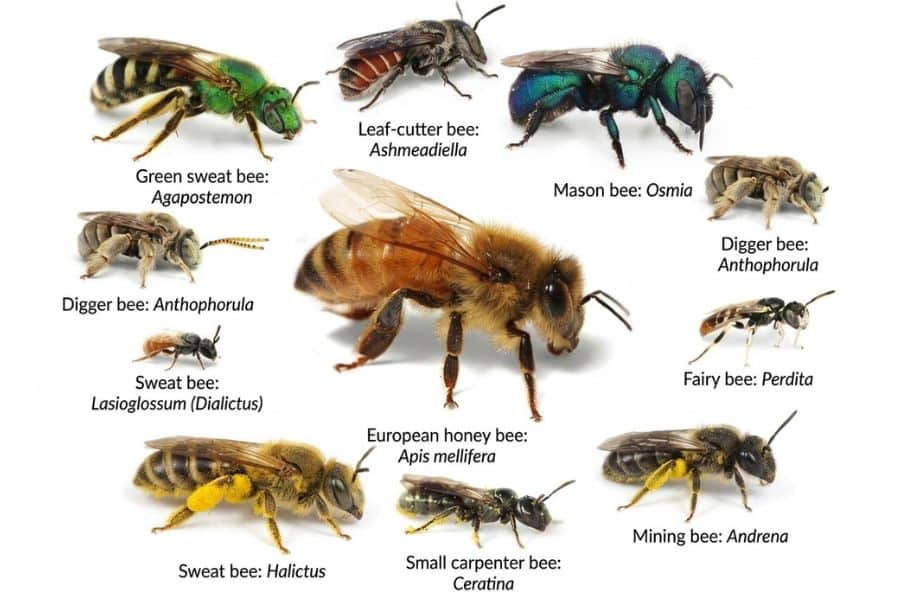
The honeybee is the one everyone thinks of first. Amber-striped, industrious, living in hives. Honeybees are social bees, which means they live in colonies of up to 60,000 individuals with a strict division of labor. Worker bees, drones, and a queen all play specific roles to keep the colony running.
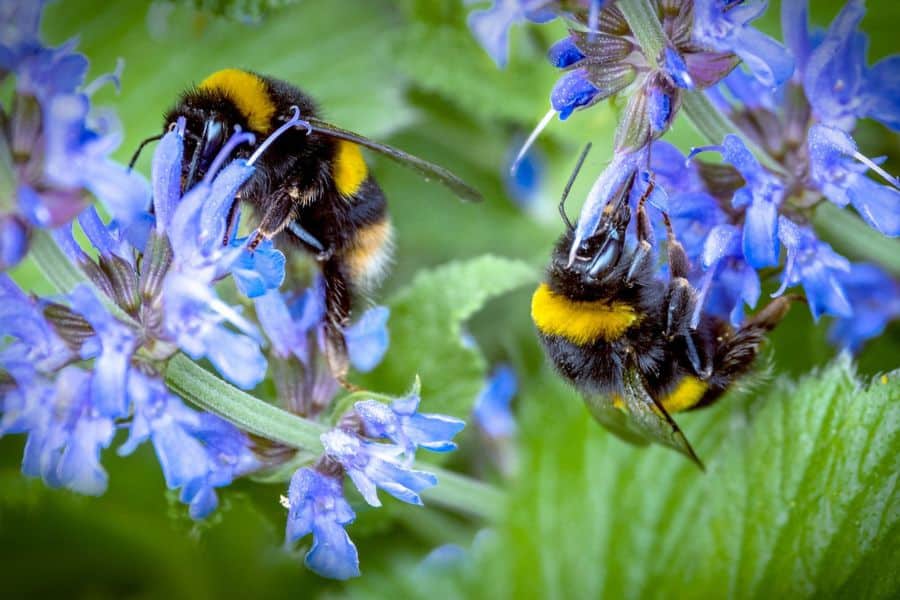
Bumblebees are the round, fluffy ones that look slightly too big and heavy to be airborne. They shouldn’t work aerodynamically. Bumblebees are also social, but their colonies are much smaller, typically a few hundred bees rather than tens of thousands. They’re particularly good pollinators because they practice something called buzz pollination, vibrating their flight muscles at just the right frequency to shake pollen loose from flowers.
Then there are solitary bees. No queen, no colony, no honey. Just a single female bee making a nest and laying her eggs. Mason bees, leafcutter bees, and mining bees all fall into this category. They’re often better pollinators than honeybees because they’re less efficient, meaning more pollen ends up on flowers rather than carefully packed into pollen baskets to take home.
Why Bees Are Working Harder Than You Realize
Did you know that a single bee can visit over 1,000 flowers in a single day?
Now multiply that across an entire colony. Then multiply that across every bee colony in your neighborhood, your town, your country. That’s an almost incomprehensible amount of pollination happening around us every day.
Around 75% of the world’s flowering plants depend on pollinators like bees to reproduce. That includes most of the fruits, vegetables, and nuts we eat. The almond industry in California alone requires the pollination services of roughly 1.8 million honeybee colonies every single spring.
Bees didn’t evolve to feed us. They’re doing this extraordinary work entirely for their own reasons, collecting pollen and nectar to feed themselves and their young. The fact that it also keeps human civilization running is just a brilliant accident of nature.
The Best Flowers to Plant for Bees
Lavender
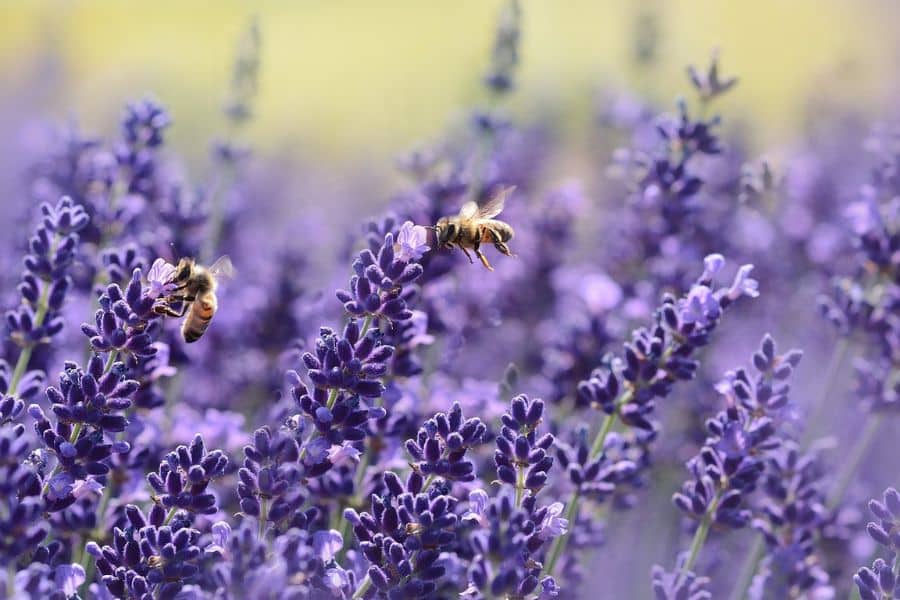
Lavender is probably the single most valuable plant you can put in the ground for bees. If you’ve ever stood near a lavender border on a warm afternoon, you’ll know what I mean.
The noise is extraordinary. Bees are drawn to it because it produces nectar continuously over a long season, and the flowers are perfectly shaped for them to land and feed. It’s also practically indestructible, which suits those of us who don’t always remember to water things.
Sunflowers
Sunflowers are another powerhouse, and we have fields and fields of them here in my part of southwest France. Those wide, open faces are essentially landing pads, giving bees easy access to both nectar and pollen in enormous quantities.
They bloom in late summer, when other sources are starting to wind down, making them particularly important for bees as they build up reserves before winter.
Marigolds
Bees love marigolds. They have a long flowering season, they’re easy to grow from seed, and the single-flowered varieties, rather than the densely packed double ones, give bees proper access to the center. Plant them in gaps, in containers, anywhere you have a spare bit of space.
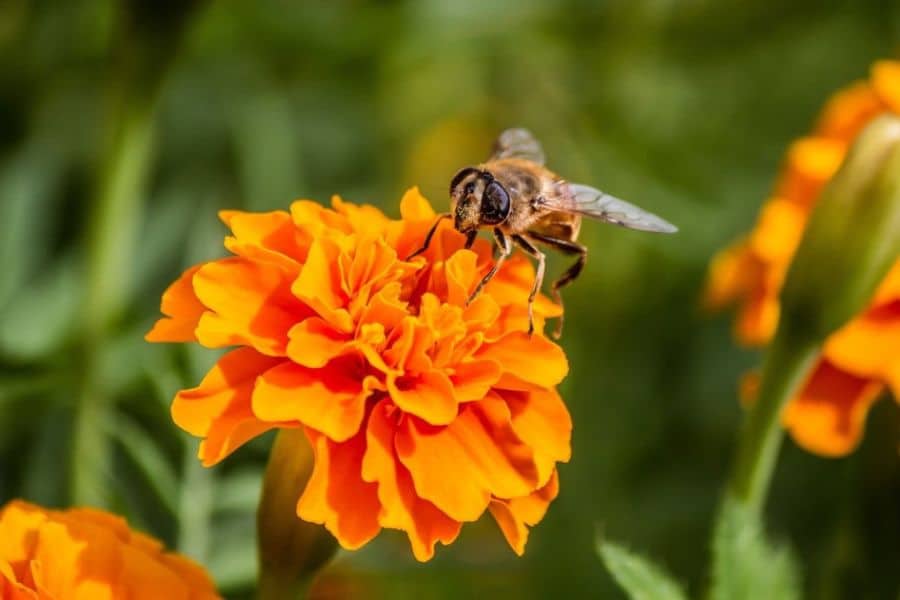
Coneflower
Echinacea, or coneflower, is a bee magnet that also happens to be beautiful. Those raised, spiky centers are perfectly designed for bees to cling to while they feed, and a single plant can flower for weeks.
They’re perennials, which means once you plant them, they come back year after year with very little effort on your part.
The general principle with bee-friendly planting is to choose flowers with accessible centers, plant in drifts rather than single specimens, and aim for a succession of blooms from early spring through to late autumn.
Bees need food across the whole season, not just in July when everything is in flower at once.
What Bees Actually Collect (It’s Not Just Honey)
Bees collect two very different things from flowers. Nectar is the sugary liquid produced by flowers specifically to attract pollinators. Bees sip it up, store it in a special honey stomach separate from their digestive stomach, and carry it back to the hive. There, other bees process it, evaporate the water content by fanning it with their wings, and seal it in wax cells. That’s honey.
Pollen is the other thing. Bees pack it into special structures on their back legs called pollen baskets or corbiculae, creating those vivid yellow or orange lumps you can sometimes spot as bees fly past. Pollen is protein, the equivalent of bee baby food, fed to developing larvae back at the hive.
As bees move between flowers collecting all of this, pollen sticks to their fuzzy bodies and gets transferred from one flower to the next. That transfer is pollination, the process that allows plants to reproduce and produce fruit and seeds.
The bee is entirely focused on collecting food. Plant reproduction happens almost by accident.
A single honeybee will produce around one-twelfth of a teaspoon of honey in its entire lifetime. So, every jar of honey in your kitchen represents thousands of bees working their entire lives.