
My poor garden hasn’t been getting much love recently. Between the insane heatwaves and the never-ending stream of visitors (one of the beauties of living in France), I haven’t felt like gardening, and it’s starting to look a bit sorry for itself.
But that’s going to change this weekend because October is one of the best planting months. The soil is still warm from summer, the air has cooled off, and you can actually spend an afternoon in the garden without wilting.
And depending on what you choose to plant, you could even be pulling up some veg before Christmas, while the rest will start showing its face in early spring.
Before you buy anything, though, remember to check your USDA hardiness zone and find out roughly when your first frost is due so you know what to plant in October for your region.
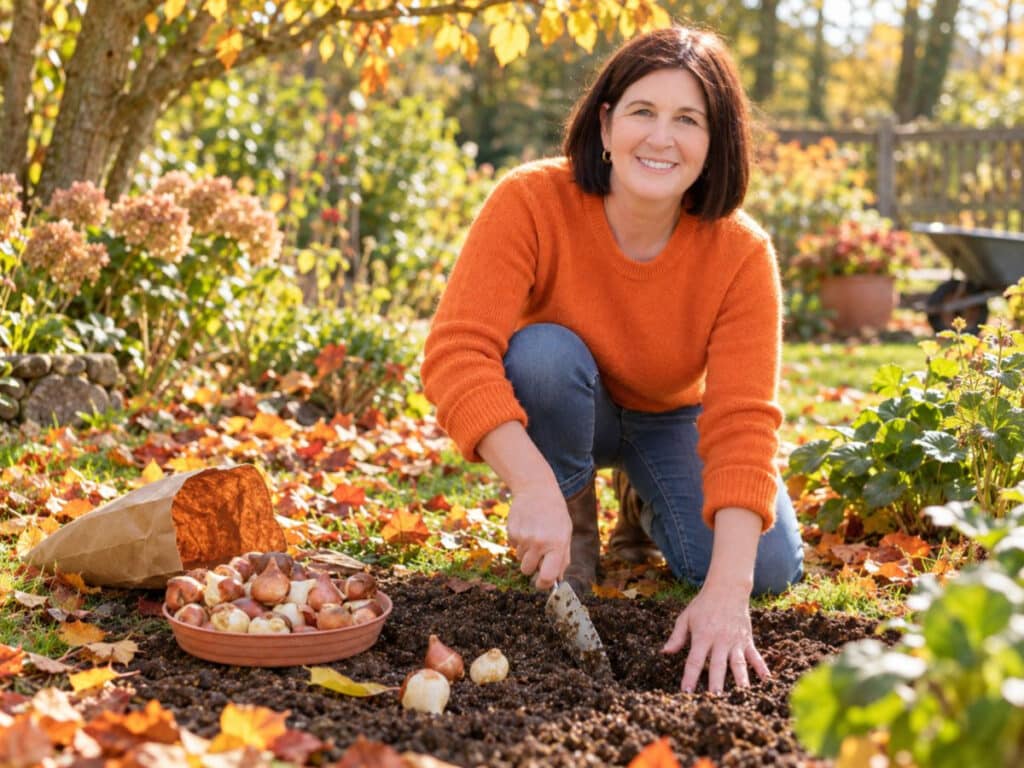
Vegetables You Can Still Get in the Ground
One of the best fall veggies to plant is beets. They want to go in about 4 to 6 weeks before your first frost, and they’ll be ready to pull in roughly 50 to 65 days.
Cold weather sweetens the roots, and the pests that plagued everything back in July have largely given up and gone home.
Kale is another easy win. It handles cold well, and a hard frost improves the flavor rather than ruining the plant. The window is six to eight weeks before the first frost, and you start picking when the leaves are about the size of your hand. Leave the plant in the ground, and it will keep giving you more.
Arugula is worth a go if you’re in a milder zone, with young leaves ready to cut in six to eight weeks. Pick it while the leaves are small; older leaves turn tough and peppery and not very edible.
Top Tip: Sow a short row of beets or arugula every two weeks through October rather than the whole packet at once. You get a steady supply then instead of a huge haul that you don’t know what to do with. Plus, if one sowing gets caught by an early cold snap, the next one is right behind it.
The Alliums: Garlic, Shallots and Onions
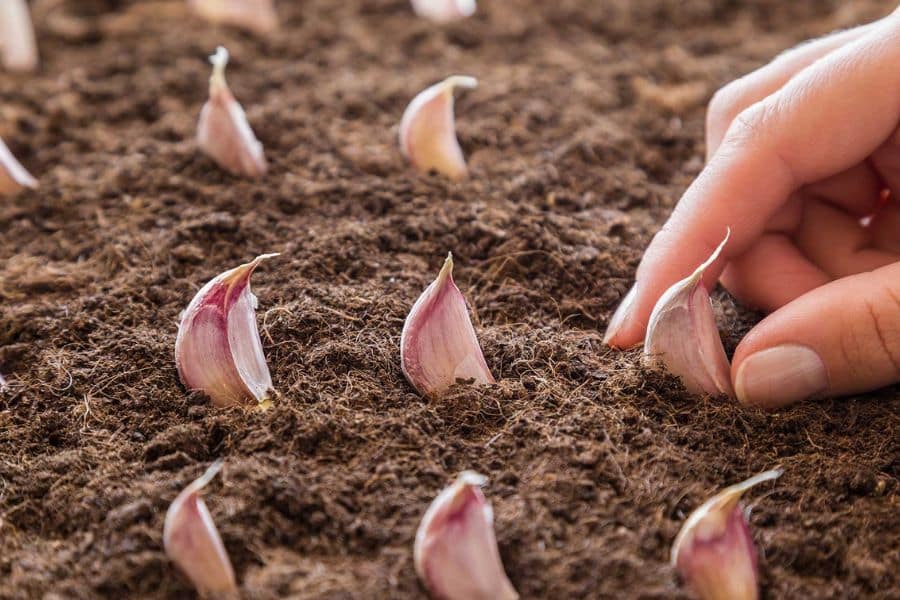
Garlic is another one to grow at this time of year, and once you’ve grown your own, you won’t want to go back to the supermarket kind.
Break the bulb into cloves the day you plant, push each one pointed-end up about 2 inches deep and 6 inches apart, and cover with a bit of mulch, like old straw, grass, or leaves.
The roots develop through fall, the plant sits through winter, and you dig fat bulbs the following summer.
Aim for a row that gets six to eight hours of sun a day, in soil with the weeds pulled out and a bit of compost worked in. Grocery store garlic will grow, but much of it is treated to stop it from sprouting, and the varieties aren’t chosen for your climate. A pound of seed garlic from a decent supplier costs about $15 to $25 and plants a good long row.
Plant shallots the same way: push cloves in with the pointy end just poking above the soil line, thicker end down. They like soil temperatures somewhere between 35 and 90 degrees Fahrenheit, so October suits them across most of the country. You’ll know they’re ready when the tops brown off next summer.
Overwintering onion sets like Radar, Electric and Shakespeare can also go in from late September through October. They sit as small green shoots through winter and bulb up in May and June, which gets you onions six to eight weeks earlier than anything you plant in spring.
Found this useful? Get more like it in your inbox as a Lifestyle Library Insider.
Spring-Flowering Bulbs to Plant Now
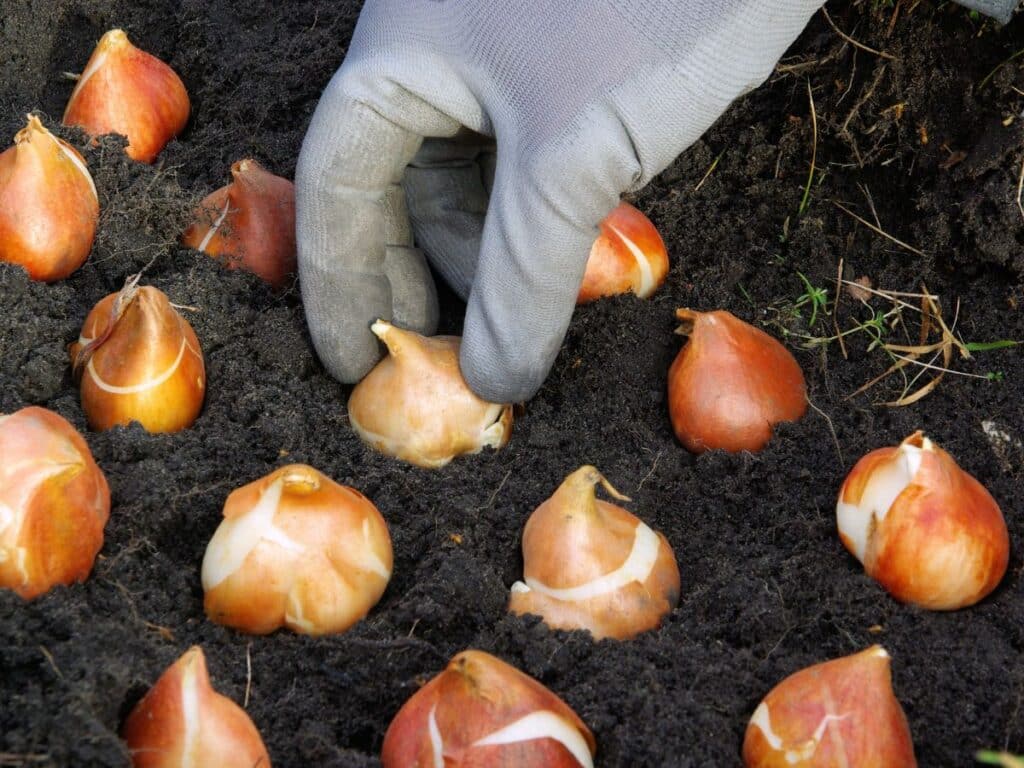
This is the month for tulips, daffodils, and alliums, and if you don’t get them in now, you don’t get them in the spring.
Tulips want cold soil to set their roots, so wait until nighttime temperatures are sitting between 40 and 50 degrees Fahrenheit before you plant them. Push the bulbs in pointy-end up, about 6 inches deep, and avoid any spot where the soil stays soggy through winter. Wet feet through the cold months rot the bulbs, and there’s no coming back from that.
Daffodils are the ones for anyone who thinks they’ll kill everything they touch. Get your bulbs in a couple of weeks before the ground freezes, in full or partial sun, and forget about them. They come back year after year; they multiply, and the deer and squirrels won’t touch them.
Top Tip: If you cut daffodils for the house, put them in their own vase and leave them there for a few hours before combining with anything else. The stems ooze a sap that wilts other flowers.
Alliums, which are the tall purple pom-pom cousins of your onions, go in after the first frost but before the ground actually freezes. They flower in late spring on tall stems that pollinators love, and they look particularly good coming up through a border of low, leafy perennials.
Perennials for Color That Comes Back

Iris is a good October job in most zones. Plant the rhizomes when temperatures are between 40 and 50 degrees Fahrenheit, in a sunny spot with well-drained soil. The one mistake people make is planting them too deep.
The rhizome should sit almost at the soil surface with just a light covering; otherwise it sulks and refuses to flower.
Hellebores are the plant to put in now if you want something flowering in February when nothing else is. The Christmas rose has white flowers and does better in milder climates; the Lenten rose comes in pinks and purples and is tougher.
Both want shade or partial shade and well-drained soil, and both will sometimes push flowers up through snow, which is a lovely thing to walk out and find in the middle of winter.
Pansies are the workhorse of fall color. They go straight into pots, window boxes, or the front of a border and keep flowering through mild spells all winter, then push out fresh flowers again in early spring.
They prefer potting soil and love the morning sun. If they start to droop and look miserable, they’ll need more water. Pansies are notorious for wilting when they’re underwatered.
Getting the Timing Right for Your Zone
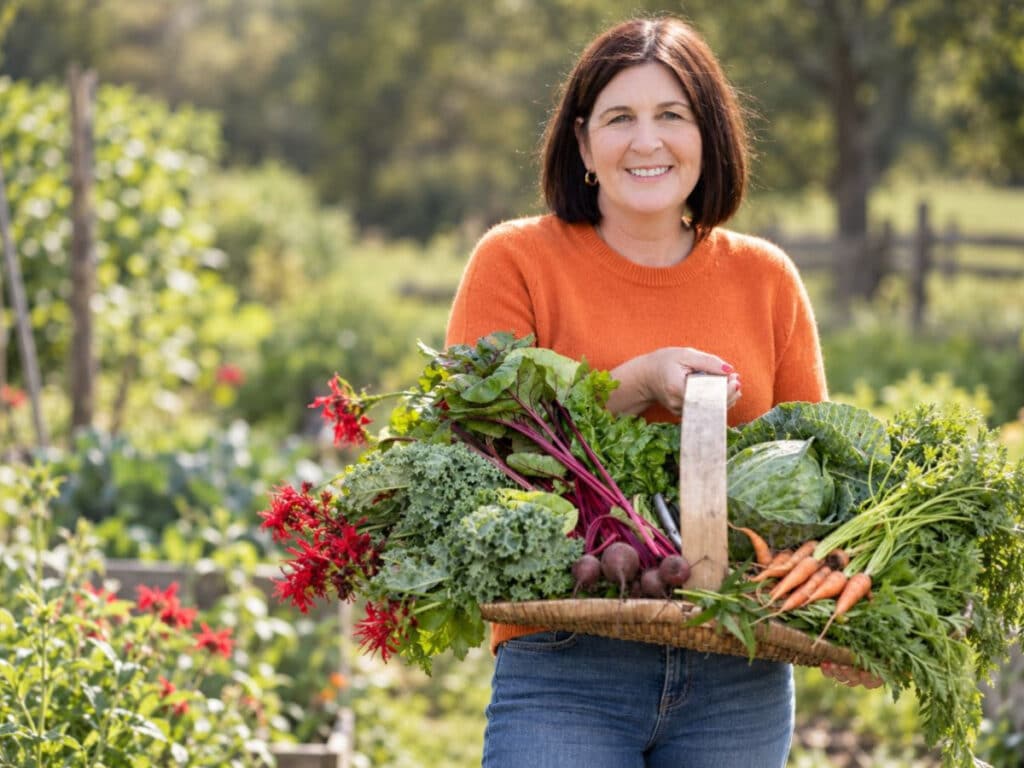
The single most useful thing you can do before you plant anything is find out when your first frost is likely to arrive. The USDA hardiness zone map gives you the broad picture, and your local extension service or a nursery in your town will give you the specific date range.
From there, most of the vegetable timing works backward: six to eight weeks before frost for kale, four to six weeks before frost for beets, and so on.
For bulbs, you’re waiting for the opposite signal. Tulips, daffodils, and alliums want soil that has cooled to around 55 degrees Fahrenheit, and if you plant them too early into warm soil, they can start growing when they shouldn’t.
If you’re not sure what does well where you live, walk into a local independent nursery and ask. The staff knows what has been coming in and out of the door for years, what dies in your particular soil, and what the last frost tends to do to a young plant.
Disclaimer: This article is for general information only and is not professional advice. It may contain affiliate links. Please see our full Editorial Policy for details.
Become a Lifestyle Library Insider
Health tips, money know-how, travel deals and garden ideas for life after 50, straight to your inbox.

Kylie Lang is a nationally syndicated travel journalist with bylines on the Associated Press Wire & more, a lifestyle writer, and the founder and editor of Your Lifestyle Library (yourlifestylelibrary.com). She holds a BA (Honours) in History from the University of Kent and is a member of the British Guild of Travel Writers.