
I love to travel; I always have. I went to live in Spain for a year when I was 20 years old, and that started a lifelong love affair with experiencing other countries’ cultures. Back then, bearing in mind I’m 55 now, there were very few work options available other than working in a bar or restaurant.
Today, if you want to get paid to travel, the options are endless. This is where our technology world comes into its own because if you’ve got access to the internet, you can work from pretty much anywhere. I write for a living, and my laptop comes everywhere, but there are dozens of jobs out there that will pay you while you’re on the road.
Although I no longer move from country to country, as I’m settled in rural France, I still travel a lot and can’t imagine being stuck with only 3 weeks of vacation time a year. By working remotely, I never have to worry about sticking to my allotted vacation time.

Get Paid To Travel With These 9 Jobs
If you’re thinking about different ways to fund travel in your retirement or simply wondering how to keep the money coming in while you see more of the world, here are some options to try, what they pay, and what you’re signing up for.
1. Cruise Ship Crew

TV shows like Below Deck and Might Cruise Ships make you wonder what it would be like to work on a cruise ship. Well, for a start, your accommodation, food and travel are all included, so almost every dollar you earn goes straight into savings.
Contracts usually run 4 to 9 months, and roles range from bar staff and waiters to entertainers, kids’ club leaders, spa therapists, photographers and guest lecturers.
I was recently asked to come on board an exclusive cruise line to give two or three presentations on France in return for $1,500 and all food and accommodation for 7 days on board. Naturally, I said yes, and I was able to take my husband as well.
You don’t have to talk about travel. If you can hold a room for 45 minutes on a subject like history, wildlife, photography, or watercolor painting, guest lecturer gigs on smaller expedition ships will get you free passage, a modest daily fee, and a lot of free time in port.
Pay varies widely by role and cruise line, but bar and restaurant staff on the big lines typically earn $2,000 to $3,500 a month after tips, and specialist roles like nurses or IT officers can earn $4,000 to $6,000.
Apply directly through the cruise line careers pages (Royal Caribbean, Carnival, Princess, MSC, Norwegian) rather than paying an agency.
2. Teaching English Online

Teaching English over a video call is one of the most flexible jobs on this list because all you need is a laptop, a headset, decent Wi-Fi, and a quiet corner.
Platforms like Cambly, Preply, iTalki and Palfish let you set your own hours, which means you can teach a few evening classes to Japanese students from a rental in Lisbon, then have your whole day free.
Rates run from about $10 an hour on the entry-level platforms up to $30 or $40 an hour on Preply or iTalki once you’ve built up reviews and can charge what you’re worth.
A TEFL certificate (around $200 to $400 for a reputable online course) opens more doors and leads to better pay, though Cambly and Palfish will take you on without one if you’re a native speaker.
The catch is time zones. If your students are in China, Japan, or South Korea and you’re in Europe, you’re teaching early mornings or late nights. If you’re in South America, the hours line up perfectly with Asia in the evenings. Something to think about before you book that flight to Bali.
3. Freelance Writing, Editing or Design

This is my own route, so I can talk about it with a bit more authority than the others. Freelance work in writing, editing, graphic design, illustration, or web design travels with you because the whole job lives inside your laptop.
Clients don’t care where you are as long as the work lands on time and you can jump on a call when they need you.
Rates vary enormously depending on your niche and experience. New freelance writers on Upwork might start at $30 to $50 for a blog post; established writers in a specialist field (finance, health, B2B tech) charge $500 to $2,000 per piece.
Editors typically bill $40 to $90 an hour. Graphic designers with a strong portfolio can hit six figures if they’re picky about clients.
The other option is what I do: maintaining my own blogs and running ads on my site that pay you. This takes far longer to build up, but you’re then dancing to the beat of your own drum rather than other people’s deadlines. Plus, you get to write about what you love rather than a topic you’ve been given by someone else.
The hardest part isn’t the work; it’s building a client pipeline before you leave. Give yourself 6 to 12 months to line up 3 or 4 steady clients while you’re still at home with a safety net, then take the leap. Trying to cold-pitch from a hostel in Vietnam with wobbly wifi is more than a little frustrating.
Make sure your rental has proper internet before you book it. I’ve had trips almost derailed by an Airbnb that advertised wifi and delivered a signal so slow I couldn’t send an email attachment.
4. Seasonal Work In Ski Resorts and Summer Camps
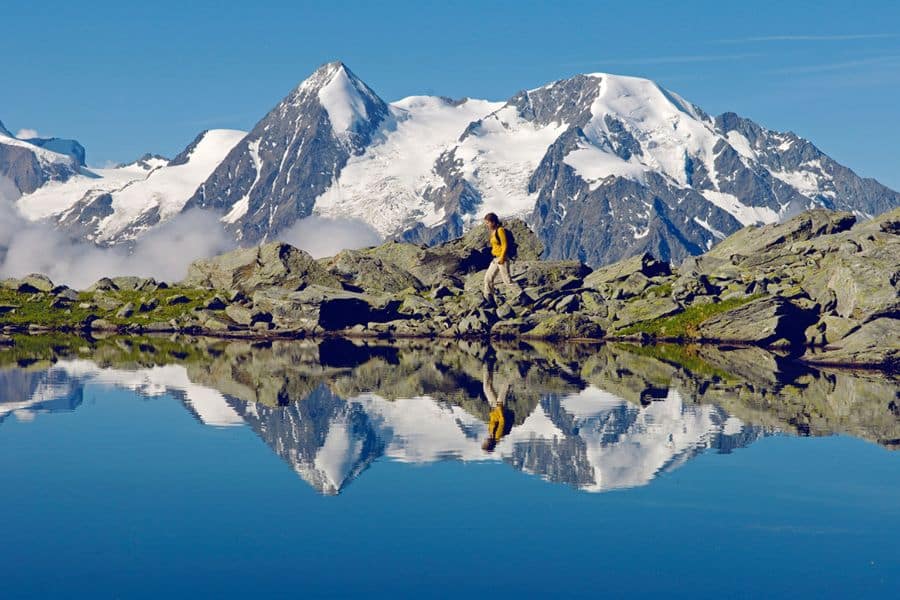
Seasonal resort work is how many people fund a year abroad in their 20s, and it works just as well in your 40s or 50s if you have skills the resort needs. Ski resorts in the Alps, Rockies, Japan and New Zealand hire chalet hosts, ski instructors, lift operators, chefs, drivers and childcare staff for the winter season, roughly November to April in the Northern Hemisphere.
Pay is modest, usually $250 to $500 a week on top of accommodation, meals and a lift pass, but the lift pass alone is worth $1,500 or more, and you get to ski or snowboard every day off. The summer season at the same resorts (or Mediterranean beach clubs, US national park lodges, and dude ranches) runs May to September and pays similarly.
US national parks hire thousands of seasonal staff every year through the concessioners who run the lodges: Xanterra, Aramark, and Delaware North. You can work a summer at Yellowstone, Yosemite, Grand Canyon, or Glacier, live in staff housing for around $100 a week, and finish the season with $4,000 to $7,000 in the bank plus a lot of trail miles.
Apply 4 to 6 months before the season starts. The good positions in the best locations fill by early spring for summer and by late summer for winter.
5. Yacht Crew

Superyacht crewing is the well-kept secret of the travel job world. The big private and charter yachts based out of Antibes, Palma, Fort Lauderdale, and Auckland need stewardesses, deckhands, chefs, engineers, and captains, and the pay is unreal because you have zero living costs.
Entry-level stew or deckhand on a 100-foot yacht starts around $2,500 a month plus tips, which on a busy charter yacht can double your income. Move up to chief stew, bosun, or chef, and you’re looking at $4,500 to $8,000 a month.
Captains on larger yachts clear well over six figures.
You’ll need a STCW Basic Safety Training certificate (about $1,000 for the 5-day course), an ENG1 medical, and ideally the time and cash to spend 2 to 4 weeks in Antibes or Palma during the March to May recruitment window doing dock walks and meeting crew agencies. It’s a real job with long hours during charters, but you cross oceans on someone else’s dime and dock in the Mediterranean, the Caribbean, and the South Pacific.
The crew agencies to try are Bluewater, Dockwalk, YPI CREW, and Viking. Register with all of them.
6. Remote Corporate Work (Take Your Day Job With You)

Ever since COVID made working from home the norm, many regular office jobs are now doable from anywhere with a decent internet connection.
Software developers, accountants, project managers, marketers, HR people, customer support staff, virtual assistants and consultants are all working from beaches, mountain villages and city apartments they don’t live in permanently.
If you already have a job you like, the first move is a conversation with your employer about going fully remote and, ideally, about their policy on working from another country. Some are relaxed about it for short stretches; others have tax and legal reasons to say no beyond 30 or 60 days. Get the answer in writing before you book anything.
If you need to find a remote role from scratch, the sites worth your time are We Work Remotely, Remote OK, and Working Nomads. Focus on companies that are remote-first (fully distributed teams) rather than remote-friendly (mostly office with a few remote hires), because remote-first companies are set up for people in different time zones.
7. Housesitting and Pet Sitting

Housesitting won’t make you rich, but it will slash your accommodation costs to zero, which, for a lot of long-term travelers, is the same as earning money. In exchange for looking after someone’s home and pets while they’re away, you get a free place to stay, often in beautiful locations, sometimes with a car included.
The main platforms are TrustedHousesitters (about $150 a year for full membership), MindMyHouse, HouseCarers, and Nomador. TrustedHousesitters has the best selection in the US, UK, Australia, New Zealand, and Western Europe, with sits ranging from a weekend in a city apartment to 3 months in a farmhouse with chickens, dogs, and an orchard.
Building your first few reviews is the hardest part. Start with short local sits before you leave home, get 3 or 4 glowing references, then aim for the longer international ones. The month-long summer sits in Provence, Tuscany, or the Cotswolds book up 6 to 12 months in advance and go to sitters with established profiles.
8. Adventure Guide, Dive Instructor or Yoga Teacher

Turning a hobby into a portable qualification is one of the most enjoyable ways to fund travel. Scuba diving is the classic example: work through your PADI certifications to Divemaster (around $2,500 in cheap dive destinations like the Philippines or Honduras) and then Instructor ($3,000 to $4,000 more), and you can walk into a job at any dive resort from the Red Sea to Fiji.
Dive instructor pay is modest, typically $1,000 to $1,800 a month plus accommodation and diving, but you’re living in flip-flops on a tropical island and eating fresh fish for dinner.
Similar setups exist for surf instructors, rock-climbing guides, sea kayak leaders, ski instructors (BASI Level 2 or PSIA Level 2 open international doors), and horse-trekking guides.
Yoga teacher training (200-hour certification, around $2,000 to $4,000 depending on location) will get you work at retreats, resorts, and studios worldwide.
Bali, Costa Rica, Portugal, Thailand, and Mexico all have thriving yoga scenes with a constant demand for teachers. Retreat work often comes with room, board, and a share of retreat fees, which can add up to $2,500 to $5,000 for a week of teaching.
9. Content Creation, Blogging and Affiliate Income

I touched on this earlier when talking about freelance writing, but it deserves its own slot as there is so much more available than just blogging, and it isn’t just for the young. I know quite a few people in France with their own YouTube Channels who are killing it, and they’re in their 60s.
So what are the options? Building a blog, YouTube channel, Facebook page, Instagram account, or TikTok. But, and it is a big but, it takes time to build a following that pays your bills. Anywhere from 2 to 4 years of consistent work before the money is reliable, and a lot of people quit at month 8 after making $47.
That said, the people who do stick with it can build income streams that travel with them forever. I certainly have, and it took me around two years to get my blog to pay me a decent wage.
Display ads on a good travel blog pay $15 to $40 per 1,000 sessions once you’re on a premium ad network like Mediavine or Raptive (30,000 to 50,000 sessions a month to qualify).
Affiliate income from hotel bookings, tours, gear, and insurance can multiply that. Sponsored posts from tourism boards and brands range from $500 to $5,000 depending on your audience size and niche.
YouTube travel channels monetize through ads (roughly $2 to $8 per 1,000 views on travel content), affiliate links, and brand deals. The channels that break through tend to niche down hard: overlanding in Africa, budget train travel in Europe, van life in Portugal, digital nomad life in specific cities.
My advice, having done this for years, is to treat it as a long-term second income while you fund your travel with one of the other 9 jobs on this list. If it takes off, brilliant, you can quit the day job. If it doesn’t, you’ve still built a portfolio, learned skills you can sell as a freelancer, and had a lot of fun writing about places you love.
Disclaimer: This article is for general information only and is not professional advice. It may contain affiliate links. Please see our full Editorial Policy for details.

Kylie Lang is a nationally syndicated travel journalist with bylines on the Associated Press Wire & more, a lifestyle writer, and the founder and editor of Your Lifestyle Library (yourlifestylelibrary.com). She holds a BA (Honours) in History from the University of Kent and is a member of the British Guild of Travel Writers.