
Carbs have had a serious bashing over the last decade, and I always feel guilty eating pasta, rice, or potatoes. But then I think about how my parents grew up and what they ate. Both of them were children during WW2 and lived off the humble spud. Both have lived to a ripe old age with very few health issues.
So it does beg the question, are potatoes really that bad for you? It’s hard to know what’s right and what’s wrong when it comes to what we should and shouldn’t eat. Butter or margarine? Salt or no salt? A glass of red wine with dinner?
So which is it, friend or foe? The answer, it turns out, depends almost entirely on what you do to the potato before it hits your plate. A long-running analysis that tracked health and eating habits for nearly 40 years pointed a finger at one specific form and let the rest off the hook. It wasn’t the potato, but the way it was cooked.

What the Long Harvard Analysis Actually Found
The analysis pulled together data from three huge ongoing cohorts run out of Harvard: the Nurses’ Health Study, Nurses’ Health Study II, and the Health Professionals Follow-Up Study.
Hundreds of thousands of people, food questionnaires every few years, decades of follow-up. The analysis of potato intake and type 2 diabetes was published in the BMJ and examined how different forms of potato consumption were associated with diabetes risk over time.
People eating three or more servings a week of French fries had about a 20 percent higher risk of developing type 2 diabetes compared with people eating less than one serving a week. Baked, boiled, and mashed potatoes at the same frequency were tied to a much smaller bump in risk, around 4 percent, which the authors didn’t treat as a meaningful finding on its own.
We’re talking about the same vegetable, sometimes the same variety, prepared four different ways. Three of those preparations sat roughly where every other starchy food sits on the risk curve.
One of them, the deep-fried one, jumped well above the other, and when the researchers ran the numbers on swapping fries for whole grains, the projected risk dropped noticeably.

Why Frying Changes the Whole Equation
A potato on its own is mostly water, starch, some fiber if you keep the skin, and a respectable amount of potassium, vitamin C, and vitamin B6. Boil it or bake it, and you’ve still got pretty much all of that, give or take a little vitamin C that leaches into the cooking water.
Drop that same potato into a vat of hot oil, and a few things happen at once. The water boils off and is replaced with fat, so the calorie load per ounce goes up two or three times. The surface starches caramelize and form compounds like acrylamide, which forms when starchy foods are cooked above 250 degrees Fahrenheit.
The oil itself, especially if it’s been used and reused in a commercial fryer for a shift, is usually a refined seed oil that’s been heated past its stability point.
Then there’s what fries come with. Salt, ketchup, a burger, a soda, a milkshake. Almost nobody eats a side of fries with a piece of grilled fish and a salad. The food itself sits inside a pattern of eating that’s tied to weight gain, blood sugar swings, and the slow march toward insulin resistance.
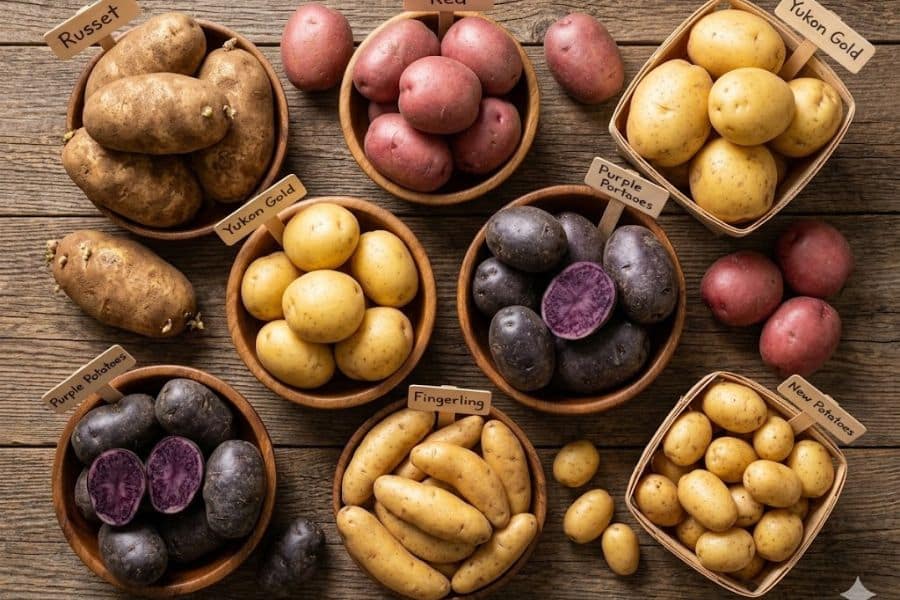
The Potato Itself Has Been Unfairly Judged
Let me say this plainly because nobody seems to anymore. A baked potato with the skin on is a perfectly reasonable food. One medium spud has around 160 calories, 4 grams of fiber, more potassium than a banana, and a decent hit of vitamin C.
It fills you up, it’s cheap, and it keeps for weeks in a cool cupboard. My mom used to buy spuds from the green grocers in a huge hessian sack and store them in the larder for weeks.
The glycemic index thing is where people get tangled up. Yes, a hot mashed potato spikes blood sugar faster than lentils, but so do white rice, white bread, and most breakfast cereals. The glycemic index also varies depending on what you eat with the potato, how cool it is when you eat it, and whether it’s been cooked and then chilled.
A cold potato salad behaves very differently from a fresh-baked potato straight out of the oven, because some of the starch reforms into a type called resistant starch that your gut handles more like fiber.
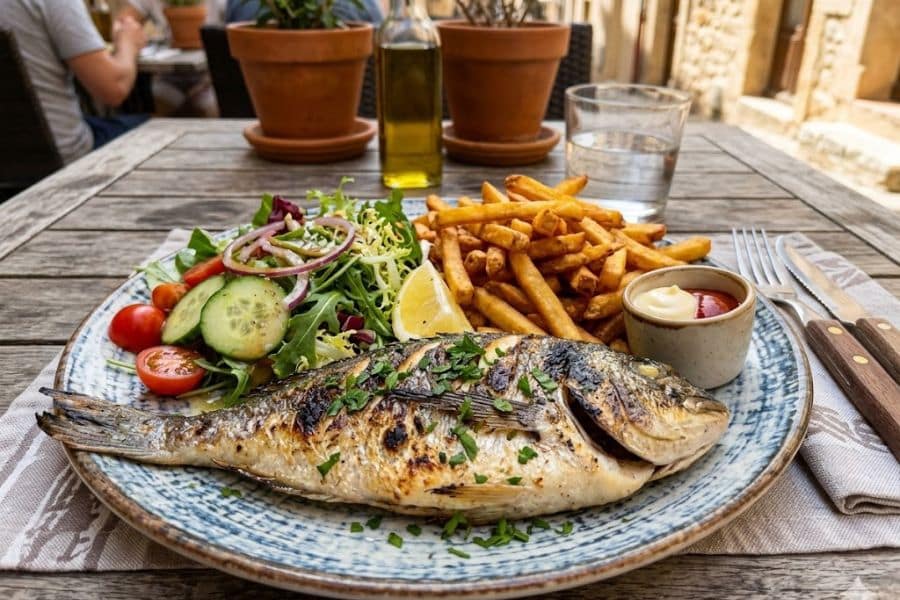
How to Keep Fries on the Plate Without the Damage
I’m not about to tell you to never eat fries again. I love them, too, and there is no way I’m never going to visit the fish and chip shop when I travel back to the UK. You’ve not lived if you haven’t had chips from the chippie with malt vinegar.
Frequency is the lever that actually matters here. Once every couple of weeks puts you nowhere near the risk territory described in the study. Three times a week, every week, for years, is a different story.
A few ways to keep fries in your life:
- Make them a treat tied to a specific outing, not a default side, such as my infrequent trips to the fish and chip shop. Probably only happens 3-4 times a year.
- Try the air fryer for the home version. A potato cut into wedges, tossed with a teaspoon of olive oil and some salt, and air-fried at 400°F for 20 minutes gives you something close to the real thing with a fraction of the fat.
- Eat them alongside something high in protein and fiber, not another refined carb. Fries with a piece of grilled fish and a slaw enter your bloodstream very differently than fries with a burger in a processed white bun and a soda.
- Watch the portion. A small order at most American chains is around 230 calories. A large is closer to 500.
- Skip the dipping sauces loaded with sugar. Ketchup is fine in a smear. Honey mustard, barbecue sauce, and most fast-food specialty dips are sugar bombs that double the blood sugar spike.

What to Cook Instead When You Want That Potato Feeling
The hardest part of cutting back on fries, for me, was the texture craving. Crispy, salty, hot. That’s what we’re really after, but there are plenty of ways to get there without standing over a deep fryer.
Roasted potato wedges in the air fryer, as I already mentioned, and roasted baby potatoes, smashed flat after boiling, Jamie Oliver-style, which gives them a huge surface area that crisps up like nothing else. I bake these in a hot oven at 425°F for about 25 minutes, and they’re to die for.
If you want to mix it up, sweet potatoes baked in their skins tend to be better for blood sugar than white potatoes, partly because of their higher fiber and slower-digesting starch. Roasted carrots and parsnips scratch a similar itch. Even a baked potato split open with some Greek yogurt, chives, and black pepper on top is a real meal, not a sad diet substitute.
Disclaimer: This article is for general information and isn’t medical advice. If you have diabetes, prediabetes, or any concerns about blood sugar or your diet, please speak to your doctor or a registered dietitian who knows your history.