
If you’re anything like me, you try to live a relatively healthy life. You eat plenty of protein, fruit, and veg, you exercise, and try not to consume too much ultra-processed food. You stay active, keep your brain alert, and do all the things.
So why then do you still have those afternoon slumps where you feel like getting up from your chair is an effort? Or those awful sleepless nights where nothing you do helps, and you get three hours of dozing at best.
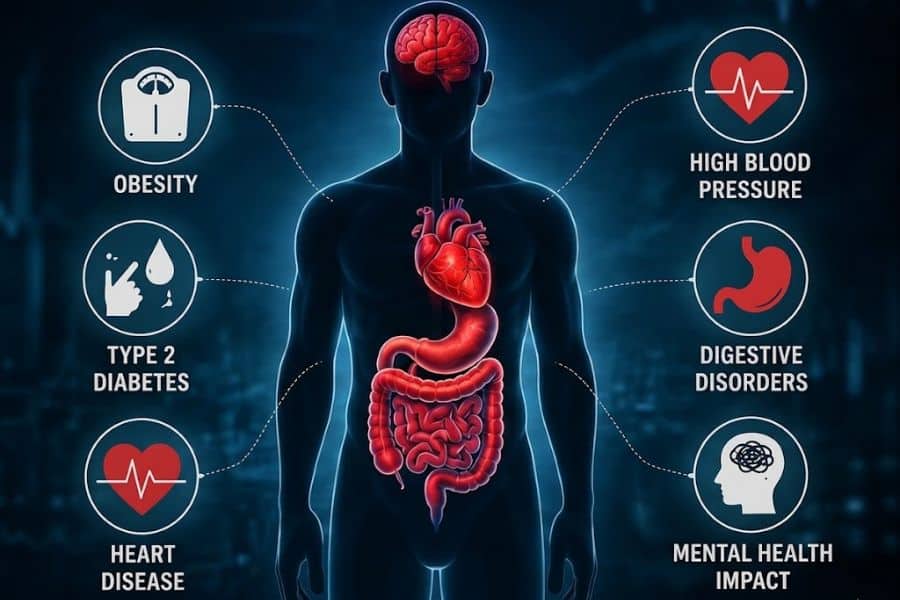
More often than not, it comes down to the food we put in our bodies. So many so-called healthy foods aren’t. They might be labeled as such, but when you take a closer look, they are far from being a healthy option.
The So-Called Healthy Food Culprits
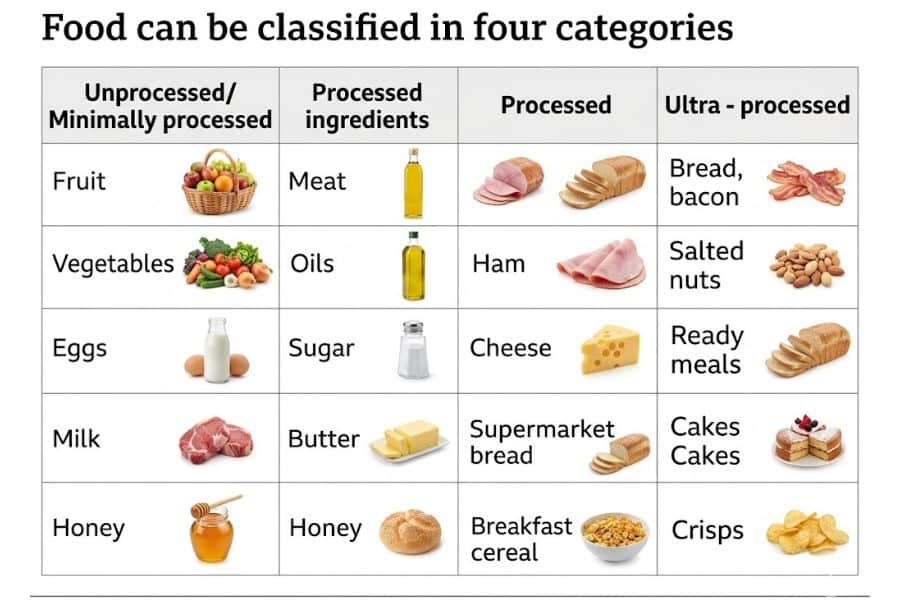
It’s the oldest trick in the book. Call something a protein bar, and your brain immediately believes it’s healthy and therefore good to eat as part of your healthy eating plan. And before you know it, a box of those bars has gone into your trolley, and you’ve fallen hook, line, and sinker for one of the best marketing tactics out on the market.
Don’t feel bad, we’ve all done it, and that’s just one item. Times that by the hundreds of others out there, such as many cereals, yogurts, juices, and breads, and those so-called healthy snacks and food options suddenly aren’t looking so healthy anymore.
9 Signs of Ultra-Processed Food Affecting Your Body
So those energy dips, mood swings, and the broken sleep aren’t necessarily about getting older or being busy. But how do you know what to look out for and what to do about it? Here’s what you need to look out for, along with the culprits that might be causing it.
1. The 3 pm Energy Cliff
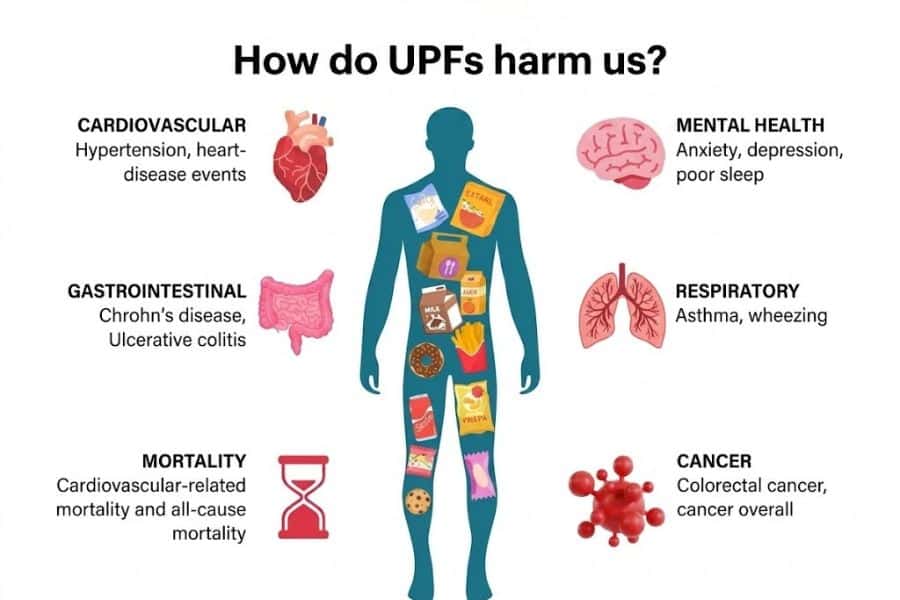
That mid-afternoon crash where your eyelids feel weighted and you’d happily put your head on the desk is one of the loudest signals. Ultra-processed foods tend to be high in refined carbs and added sugars with very little fiber or protein to slow them down, so your blood sugar spikes and then drops harder than it would with a whole-food meal. The drop is what you feel as the slump.
Watch the lunches that set this off. A grab-and-go sandwich on soft white bread, a sugary granola bar, a sweetened latte, all classics. You might think you ate a sensible lunch when, in fact, most of what was on your plate was engineered to digest fast.
A simple test: for a week, swap your usual lunch for something with real protein (eggs, chicken, beans, fish), a fist of veg, and some fat (avocado, olive oil, cheese). If the 3 pm slump softens or disappears, you’ve found one of your culprits.
A 2024 review linked higher intake of ultra-processed foods to a range of metabolic outcomes, including changes in blood glucose regulation that closely align with the energy roller coaster many people describe.
2. Brain Fog That Doesn’t Lift With Coffee
If you find yourself rereading the same email three times, losing your train of thought mid-sentence, or feeling like you’re thinking through cotton wool, food is worth a look before you blame your age, menopause, or your workload. A 2025 study found that higher consumption of ultra-processed foods was associated with faster cognitive decline, even after adjusting for overall diet quality.
The big drivers are sugary cereals, sweetened coffees, breakfast pastries, and the white-flour-and-sugar combo that sits behind most quick breakfasts. Even porridge, if it comes in a packet with added fruits, is usually refined and processed within an inch of its life.
Try stacking your first meal with protein, healthy fat, and a piece of real fruit. A two-egg omelet with spinach and feta, or full-fat Greek yogurt with berries and walnuts, will hold your head together until lunch in a way a cereal bar never will.
Found this useful? Get more like it in your inbox as a Lifestyle Library Insider.
3. Cravings That Show Up Even After You’ve Eaten
This is my husband down to a tee. You finish dinner, you’re full, and 20 minutes later, you’re standing at the pantry looking for something sweet. That hunting feeling is a hallmark of meals built around ultra-processed ingredients.
They tend to be calorie-dense and nutrient-light, so the body keeps asking for more even when the plate is empty. And this isn’t down to my cooking, I hasten to add, but more down to the fact he doesn’t eat properly despite what I cook.
Flavorings, emulsifiers, and the soft, easy-to-chew texture of UPFs also make it harder for your fullness signals to catch up. You eat faster, you eat more, and the satisfaction lags behind.
Front-loading protein at breakfast, around 30 grams, helps reset cravings for most people within a few days.
So does adding more fiber: beans, lentils, oats, vegetables, and whole fruit. If you still want something sweet after dinner, have it, but pair it with protein (a few squares of dark chocolate with a handful of almonds, say) so it doesn’t send your blood sugar on another loop.

4. Sleep That Looks Fine on the App but Leaves You Tired
One of my guilty pleasures is checking out my sleep patterns on my Fitbit. It fascinates me all the different cycles there are for sleeping. Anyway, this might sound familiar. You went to bed at a reasonable hour, the sleep app says you got 7 hours and 40 minutes, and you wake up feeling like you wrestled a bear.
The culprits, late-night UPF snacks, crackers, cereal, ice cream, chips, can wreck sleep quality even when they put you under faster. I’m a sucker for a bowl of mint chocolate chip ice cream before bed, but it’s one of the worst things you can do. Blood sugar swings during the night, especially after sugary or starchy snacks, are a common reason people wake at 3 am and lie there for an hour. Alcohol is the other big sleep-quality wrecker in this category.
A workable rule: stop eating 2 to 3 hours before bed, and if you do need a late snack, make it something with protein and fat (a small bowl of plain yogurt with a few berries, a boiled egg, a square of cheese with an apple). The fact it isn’t as appealing might help your cravings, too.
5. Mood Dips and a Short Fuse
Snapping at your partner over loading the dishwasher, feeling weepy for no obvious reason, low motivation that comes and goes with your meals, food can be a driver of all of these. The gut produces a large share of the body’s serotonin, and what you feed your gut shapes what it produces. UPFs tend to feed the less helpful bacteria and starve the ones you want.
A 2024 BMJ review found that higher ultra-processed food intake was associated with a meaningfully higher risk of common mental disorders, including anxiety and depressive symptoms.
You don’t need to overhaul everything. Add fermented foods (plain kefir, real sauerkraut, kimchi, live yogurt) a few times a week, get more plants on your plate, and notice whether the days after a takeout-and-soda evening feel different from the days after a home-cooked one. For most people, they do.
6. Bloating, Gas, and Bathroom Trips That Don’t Make Sense
If your stomach swells by evening, you’re gassy after meals, or your bathroom habits swing between extremes, the additives in UPFs could be the problem. Emulsifiers like polysorbate 80 and carboxymethylcellulose, common in ice cream, sauces, plant milks, and packaged baked goods, have been shown to disrupt the gut barrier in animal models.
Artificial sweeteners are another common trigger. Diet sodas, sugar-free gum, low-calorie flavored waters, and protein powders sweetened with sucralose or aspartame can leave sensitive guts churning.
For a couple of weeks, cut emulsifier-heavy products and artificial sweeteners and see what changes. Read labels for ingredients you wouldn’t cook with.
7. Skin Breakouts and Dullness
Adult acne, sudden spots along the jawline, skin that looks tired no matter how much water you drink, your skin reflects what’s going on in your gut and your blood sugar. High-UPF diets push both in the wrong direction, with refined sugars and seed-oil-heavy snacks fueling the kind of low-grade inflammation that shows up on your face.
Dairy from heavily sweetened sources (flavored yogurts, milkshakes, ice cream) is a common breakout trigger, as are sugary cereals and the everyday energy bars marketed as healthy that I mentioned at the start.
For clearer skin, aim for oily fish (salmon, sardines, mackerel) twice a week for omega-3s, plenty of colorful vegetables for antioxidants, and water as your default drink. Give it 4 to 6 weeks, since skin is slow to turn over, and judge by how it looks then, not after a few days.
8. Joint Aches and Stiffness That Move Around
Knees that ache after a normal day, a stiff lower back, and fingers that feel puffy in the morning can have many causes, but diet-driven inflammation is one of the most overlooked. Diets heavy in ultra-processed foods are high in refined oils, added sugars, and refined carbs, all of which drive inflammation.
The usual suspects are pastries, packaged cookies, fried snacks, processed meats (hot dogs, deli ham, sausage with long ingredient lists), and the sweetened drinks that go with them.
A more anti-inflammatory pattern: olive oil instead of refined seed oils, oily fish a couple of times a week, leafy greens daily, berries, nuts, and herbs and spices like turmeric, ginger, and rosemary used generously.
9. Weight That Won’t Budge Even When You’re Eating Less
My weight is the bane of my life, along with half the female population. I’ve tried cutting back, skipping meals, and choosing the lower-calorie option, but the scale still won’t move. This is one of the most frustrating signals, and UPFs are often the reason.
A study found that people ate around 500 more calories per day on an ultra-processed diet than on a whole-food one, even when the meals were matched for calories, sugar, fat, fiber, and macronutrients.
In other words, the UPF format itself, soft, calorie-dense, fast to eat, easy to overconsume, drives intake up. Counting harder doesn’t override that. Changing what’s on your plate does.
Focus on meals that include roasted vegetables, whole grains, beans, eggs, simply cooked meat or fish, and fruit eaten whole rather than blended or juiced. You’ll feel fuller on fewer calories without trying, and the scale tends to start moving on its own.
Disclaimer: This article is for informational purposes only and should not replace professional medical advice. Always consult with your healthcare provider before making any changes to your diet, exercise routine, or medical treatment. The health information provided is based on research studies, but individual results may vary.
About this article: Our health articles are based on published studies and advice from experts such as physiotherapists and dietitians, and the sources are linked in the article.
Disclaimer: The content in this article is for informational purposes only and is not intended to replace professional medical advice, diagnosis, or treatment. Always consult your doctor or healthcare provider before making changes to your diet, supplements, medication, or health routine. This article may contain affiliate links.
Become a Lifestyle Library Insider
Health tips, money know-how, travel deals and garden ideas for life after 50, straight to your inbox.

Kylie Lang is a nationally syndicated travel journalist with bylines on the Associated Press Wire & more, a lifestyle writer, and the founder and editor of Your Lifestyle Library (yourlifestylelibrary.com). She holds a BA (Honours) in History from the University of Kent and is a member of the British Guild of Travel Writers.