
I’ve killed more plants than I’d like to admit over the years. Most of them died on a sunny kitchen windowsill in July, where I left them to fend for themselves for a week while I was off doing other things, and came back to a row of crispy brown stems that had once resembled a variety of herbs.
Fast forward about ten years, and I’m now a keen gardener and pottering around my veggie patch, or potager as it’s known here in France, is my happy place. But I’m also a journalist, so as part of my remit, I keep my finger on the pulse of what’s trending and what’s not. It’s all part of a writer’s job, and one I rather enjoy.
And one of the latest garden trends doing the rounds is the tabletop vegetable garden. It’s the perfect setup for anyone who hasn’t got a yard to dig up, or who has one but isn’t really into gardening, but would like some of the benefits without the hard work.
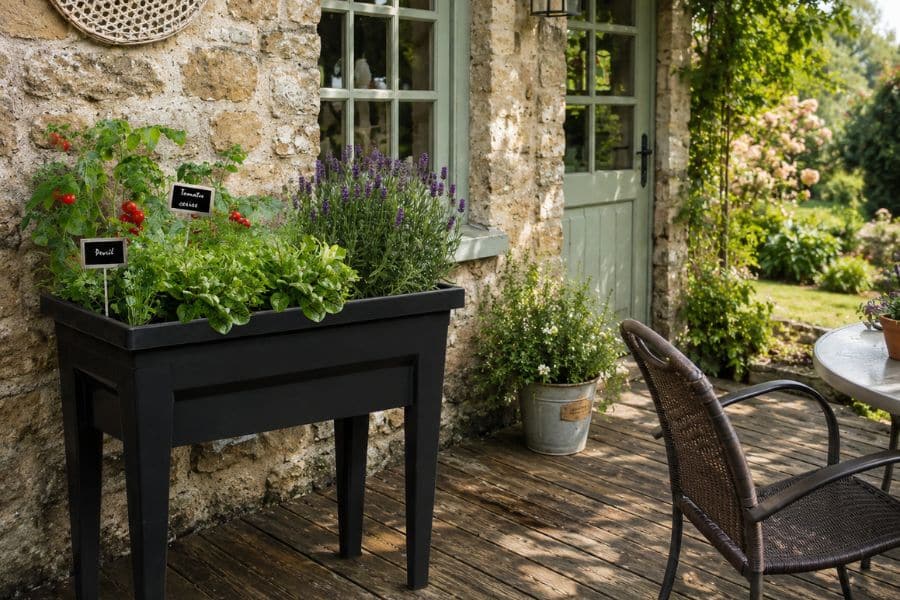
What is a Tabletop Vegetable Garden
The whole point of growing veg on a table is that it’s at eye level, or close to it, and that changes everything. When the plants are 3 feet off the ground instead of down in a bed, you actually look at them.
You notice the cherry tomatoes are blushing, and that your chili plant is drooping a bit and needs a drink. That’s why a tabletop veggie garden is so much easier to have success with. They’re in your eyeline, not out of sight, out of mind.
The other thing is, slugs find it harder to climb a table leg than to slither across a flower bed. Not impossible, the determined ones will give it a go, but harder. And rabbits, if you’ve got those, which I do, are simply out of luck. The whole setup tilts the odds in your favor without you having to do anything clever.
There’s also the matter of your back, which is a bit of an issue for me, as I have an old back injury from years of event management, lifting, and carrying things I shouldn’t have. So, bending over a row of pots on the ground for half an hour to pick beans or pinch out tomato shoots is a workout. Standing at a table to do the same thing is just pottering. I know which one I’d rather be doing on a Sunday morning.
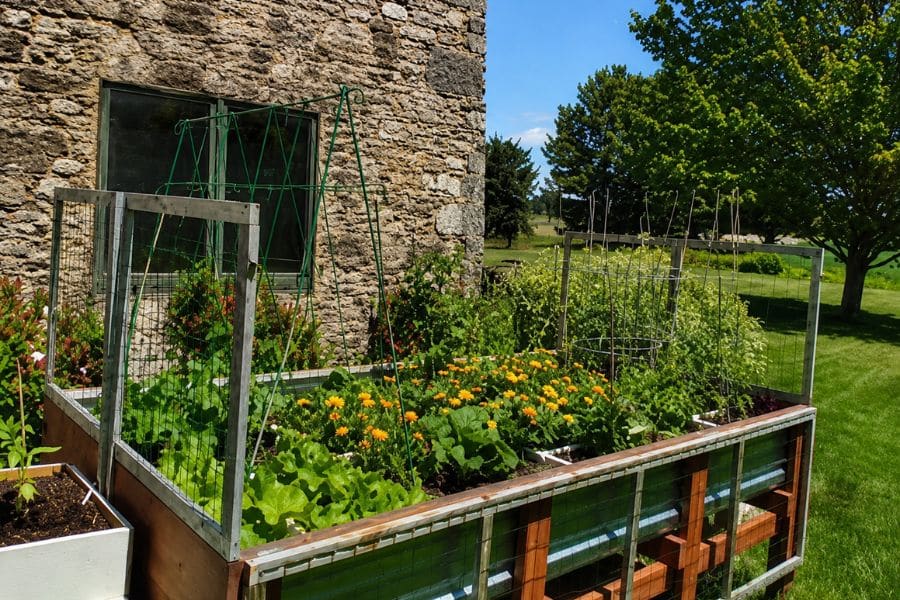
Pot Size for a Tabletop Garden
Cute little 6-inch terracotta pots from the garden center look adorable on a table, but they’ll murder your tomato plant within a fortnight. Roots want room, and water-hungry vegetables in shallow pots dry out in a single hot afternoon. By the time you notice, the plant has given up.
For anything you actually want to eat, including cherry tomatoes, chili peppers, eggplant, and bush zucchini, aim for at least 18 inches deep and 18 inches across. Bigger is better.
A 20-gallon fabric pot will hold one happy tomato plant and a couple of basil plants tucked in around the edges, and it won’t dry out the second you turn your back. Try using fabric pots because they’re light, they breathe, they don’t crack in a frost if you leave them out, and they collapse flat for storage over the winter.
Plastic works fine too if you’ve got drainage holes at the bottom, and the heavier the pot, the less likely it is to blow over.
Herbs and salad leaves are more forgiving. Arugula, lettuce, cut-and-come-again mixes, parsley, chives, all of those will be fine in something shallower, around 8 to 10 inches deep. But the fruiting plants need real root room, so bigger is most definitely better.
Put a saucer or a tray under each pot if your table is wood or anything you care about. Water will leak out, and you’ll get rings and rot. But remember, plants don’t like sitting in water. It would be like asking you to sit on the couch with your feet in a bowl of cold water, and know I’m not talking about a foot bath. Treat your plants the way you’d want to be treated, no soggy bottoms.
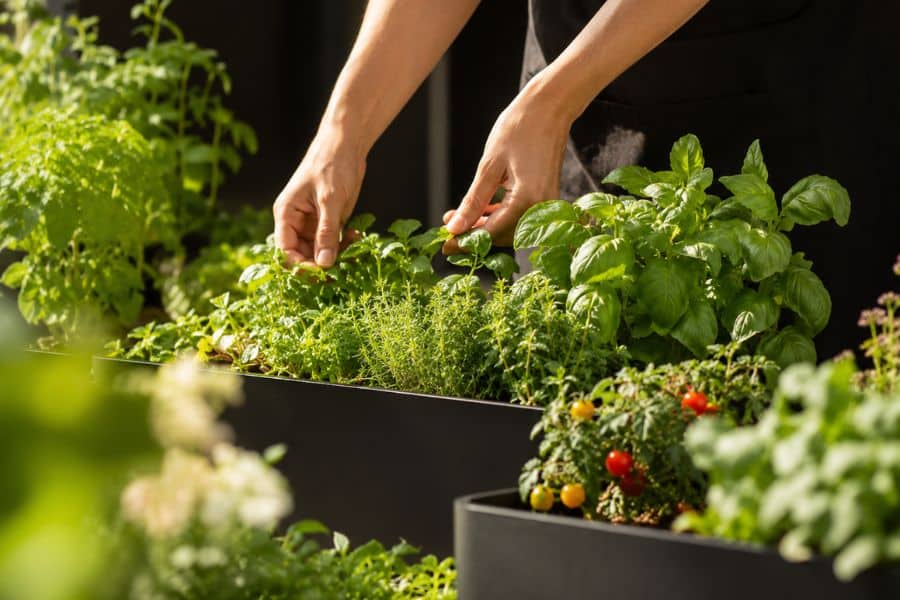
The Mix You’ll Need
Potting mix is one of those things where you absolutely get what you pay for. The bargain bags from the discount store are usually full of bark chips and not much else, and your plants will not perform well if you use them.
Go for a good peat-free potting mix. Peat-free is good because peat bogs are some of the best carbon stores we’ve got, and there’s no real reason to be digging them up to grow a few tomatoes when there are perfectly good alternatives now.
Most of the big brands offer a peat-free version, and the quality has improved a lot in the last few years. Look for one labeled for containers or vegetables, not seed-starting mix, which is too fine for big pots.
I mix in a couple of handfuls of my own compost when I’ve got it, as the plants love it and produce more. This year, I went to the farmer up the road and, for a bottle of red, got four trailer loads of manure, and my plants have never looked so good.
If you haven’t got homemade compost, a bag of well-rotted manure or worm castings will do the same job. And then a slow-release organic fertilizer scattered on top at planting time, the kind you buy in a tub that looks like brown pellets, will keep things ticking over for a few months.
After that, once the plants are flowering and fruiting, they’ll want a liquid feed every week or two. Tomato feed works for pretty much everything, not just tomatoes. I keep a watering can with diluted feed by the back door and remember to use it about half the time, which seems to be enough.
Where to Put the Table
Put your table where it will get the most sun. Tomatoes, chilies, eggplant, and peppers all need 6 to 8 hours of direct sun a day to actually produce anything. A shady corner will give you a healthy-looking plant that never sets a single fruit.
South-facing is the dream. West-facing is fine. East-facing will work for the salad-and-herbs end of things, but probably not enough for a chili. North-facing, honestly, save yourself the heartbreak and grow leafy stuff or move the table.
Think about wind, too. A balcony that catches the wind will dry pots out twice as fast and can snap a tall tomato plant clean off at the stem. If your spot is breezy, push the table against a wall, use a heavier pot, and properly stake anything tall. A bamboo cane and a bit of soft twine are all it takes.
And don’t forget to give yourself some room. Cramming a table into a spot that looks great but is awkward to reach is a mistake many people make, and the plants suffer because you can’t easily reach them with a watering can. If you have to climb over a planter and squeeze past a barbecue to water your tomatoes, you won’t, and they’ll die. Make it easy on yourself.
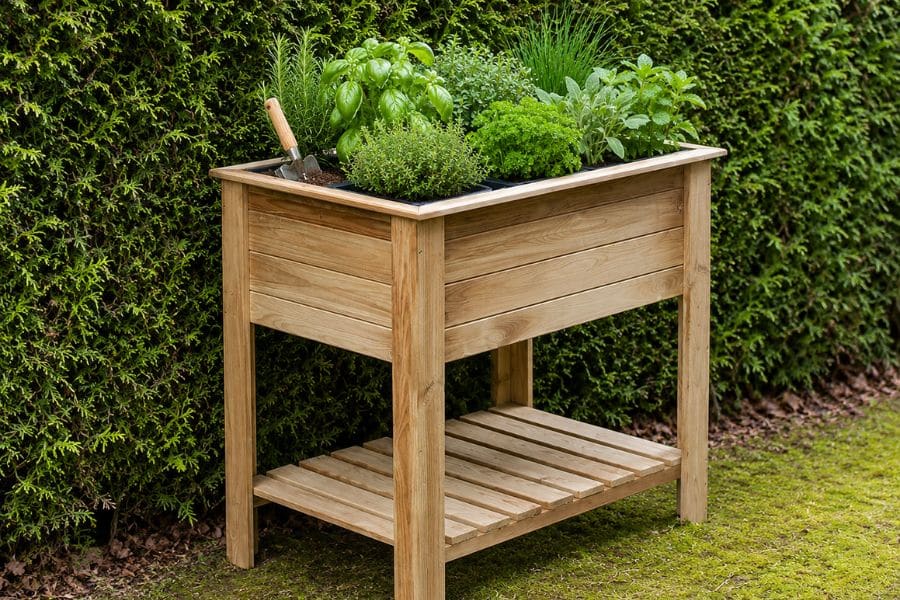
What to Plant First If You’re New to This
I’d start small. Pick 3 or 4 things, not a whole vegetable patch’s worth. The temptation when you’re new to growing food is to plant everything you’ve ever eaten, and then you’re overwhelmed by July, and half of it has bolted. Better to grow a few things well than 12 things badly.
Here’s what I’d actually plant on a beginner tabletop setup:
- Cherry tomatoes. Get a bush variety, also called a determinant, so you don’t have to faff about pinching out side shoots. Tumbling Tom or Tiny Tim are both good. One plant per 18-inch pot. Water deeply every day or two in hot weather, and stop watering for a couple of days when the fruit starts to ripen if you want them sweeter.
- Chili peppers. These actually like being pot-bound and a bit dry, so they’re a good lazy-gardener pick. Jalapeño or cayenne is an easy starter chili. They want heat, so put them in the sunniest spot you’ve got.
- Salad leaves. A wide, shallow pot of mixed leaves is the best return-on-effort thing you’ll ever grow. Sow a sprinkle of seeds, cover lightly, water, and snip them with scissors when they’re a few inches tall. They’ll regrow 3 or 4 times. You’ll never buy a bag of supermarket salad in summer again.
- Basil. Plant it near the tomatoes, both because they’re good neighbors and because it’s nice to reach for both at the same time when you’re making dinner. Pinch the top out regularly to stop it flowering, and it’ll bush up.
- Bush zucchini. One plant in a big pot will keep you in zucchini all summer, possibly more zucchini than you actually want. Patio Star is a compact variety made for containers. Water a lot. They wilt dramatically when thirsty and bounce back the second you water them.
- Chives or parsley. Both are perennials or near enough. If you only grow one herb, make it chives. They come back every spring without you doing anything. They flower beautifully in early summer, and you can snip them right down, and they’ll just regrow. Mine are 4 years old and going strong.