
I lost my Dad in 2022, and about three weeks after the funeral, my mom started getting phone calls from a credit card company asking when she planned to pay off his balance. She was already running on fumes, sorting through paperwork, dealing with the house, trying to keep herself afloat emotionally.
Now, some stranger was telling her she owed almost six thousand dollars, and by the time I’d stepped in, she’d already paid some of it off. It’s not an easy conversation to have over the dinner table, but actually, it’s an important one because it can save so much unwanted stress at a time that’s already stressful enough.
Families and people like my mom end up making expensive mistakes during the worst time in their lives.

What Happens to Your Debt When You Die
The short version is that your debts don’t automatically vanish, and they don’t automatically transfer to your kids or your spouse either. What happens is your estate, meaning everything you owned at the moment you died, becomes responsible for paying off what you owed.
A court-appointed executor (or whoever you named in your will) goes through the assets, pays the valid debts in a specific legal order, and whatever is left over goes to your heirs.
If there’s not enough money in the estate to cover everything, the debts that can’t be paid usually get written off. The creditor takes the loss. The surviving spouse or children aren’t responsible.
The complications start when debt is shared, when assets are titled a certain way, or when you live in one of the nine community property states. That’s where families get caught off guard, and that’s where a little planning now saves enormous headaches later.
Mortgages, Car Loans, and Anything Tied to a Physical Thing
Mortgages are the debt people worry about most, and the rules here are actually kinder than you’d think. If you leave your house to your spouse or your kids, federal law (specifically the Garn-St. Germain Act) protects them from having the loan called due just because you died.
They can keep making the payments on the existing mortgage and stay in the house. They don’t have to refinance, they don’t have to qualify all over again, they just keep paying.
What they cannot do is stop paying. If the payments stop, the bank will foreclose, the same as if you’d stopped paying while you were alive. So if you’re leaving a house to someone, make sure they know whether there’s a mortgage on it, what the payment is, and where the statements come from. I cannot stress this enough.
When Dad died, my mom handed me a folder with every account number and login written down. It was one of the most helpful things because Dad had always done all that sort of thing, but luckily, he’d had the foresight to write everything down just in case the worst happened.
Car loans work similarly. Whoever inherits the car generally inherits the loan with it. They can keep paying and keep the car, sell the car and pay off the loan, or hand the keys back to the lender (a voluntary repossession) if the loan is worth more than the car.
The same logic applies to anything else that’s collateral for a loan, like a boat or an RV. The debt is attached to the thing. Keep the thing, keep the debt.

Credit Cards, Personal Loans, and the Calls Your Family Will Get
Credit card debt in your sole name is paid by your estate if there’s money to pay it, and written off if there isn’t. Your spouse is not personally responsible for a card that was only in your name, unless you live in a community property state, where things get murkier.
The nine community property states are Arizona, California, Idaho, Louisiana, Nevada, New Mexico, Texas, Washington, and Wisconsin. In those states, debts taken on during the marriage can be considered shared even if only one spouse’s name was on the account.
Authorized users are different from joint account holders, and this trips people up constantly. If your wife were an authorized user on your card, meaning she had a card with her name on it but never signed the original credit agreement, she is not responsible for the balance when you die. If she were a joint account holder, meaning she co-signed and is equally on the hook, she absolutely is. People mix these up all the time, and debt collectors are not going to volunteer the distinction.
If a collector calls after a death, they should not agree to pay anything, not even a small amount, until they’ve confirmed in writing that the debt is valid and that they’re personally liable for it. Making a payment can sometimes be treated as an acceptance of responsibility for the debt.
They have the right to request written verification and to tell the collector to stop calling. The Fair Debt Collection Practices Act covers this, and it applies after a death just like it does any other time.
Medical Bills, Which Are Their Own Strange Beast
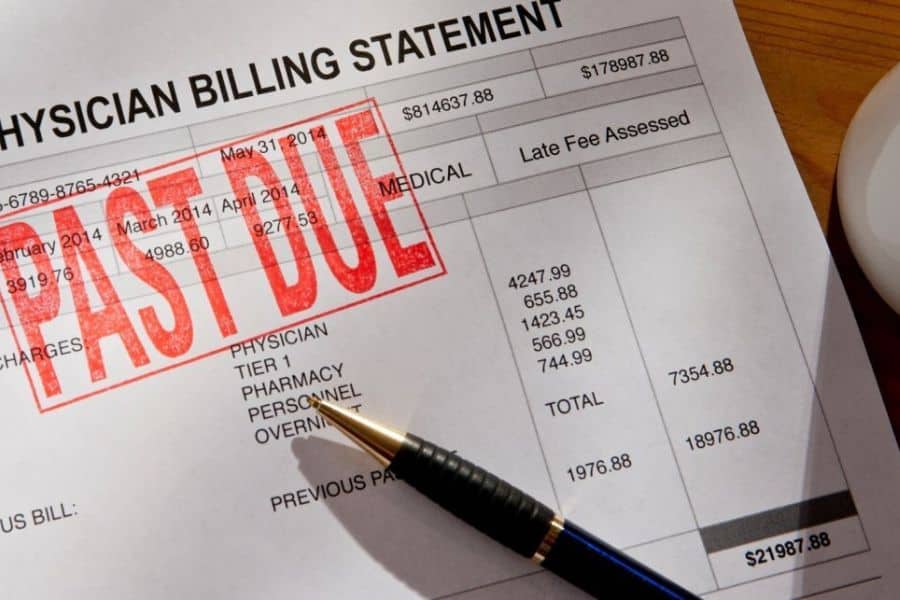
Medical debt is often the biggest surprise. People assume hospitals will write off bills after a patient dies, and sometimes they do, but not always, and not without being asked. The bill goes to the estate first, like any other debt. If the estate can’t cover it, that’s usually the end of it, but there’s a wrinkle called filial responsibility laws that exists in about thirty states.
These are old laws, rarely enforced, that technically allow nursing homes and other care providers to come after adult children for a parent’s unpaid medical bills. Pennsylvania is the state most famous for actually enforcing them.
Medicaid is its own situation. If your parent received Medicaid benefits for long-term care after the age of 55, the state can try to recover those costs from the estate through a process called Medicaid Estate Recovery.
This usually means a claim against the house, which is why so many families are caught off guard when they go to sell mom’s place and find out the state wants a chunk of the proceeds. There are protections (for a surviving spouse, a disabled child, and certain hardship exemptions), but they aren’t automatic. Someone has to file for them.
I’d say that, of all the debt categories, medical debt is the one most worth discussing with an elder law attorney while everyone is still healthy. A one-time consultation, even just an hour, can save a family tens of thousands of dollars and a lot of grief later.
Student Loans and a Few Other Things Worth Knowing
Federal student loans are discharged when the borrower dies. The family submits a death certificate, and the balance is wiped out. Parent PLUS loans, which a lot of parents take out for their kids, are also discharged if either the parent borrower or the student dies. This is one of the rare bits of good news in this whole conversation.
Private student loans are a different story and depend entirely on the lender. Some discharge the debt at death, some don’t, and if there’s a co-signer, that co-signer is usually still on the hook.
If you co-signed a private student loan for your kid years ago and then forgot about it, that loan doesn’t go away if your kid dies before you. It becomes your loan. I know that’s grim, but it’s the kind of thing worth knowing before it happens.
A few other quick ones. Tax debt owed to the IRS survives death and is paid by the estate; if the estate doesn’t cover it, the IRS can sometimes pursue specific beneficiaries who received assets.
Joint debts of any kind generally pass to the surviving signer. And business debts depend heavily on whether the business was a sole proprietorship, an LLC, or a corporation, which is a whole separate conversation.

What to Actually Do To Help Your Family
If you’re the one with the debts, the kindest thing you can do for your family is leave them a map. Not a complicated estate plan necessarily, although that’s worth having too, but a simple document that lists what you owe, to whom, and where the statements come from.
Include account numbers, the type of account (sole, joint, authorized user), and any co-signers. Update it once a year. Stick it in a folder with your will, or in a password manager that your spouse knows how to access.
If you’re the one likely to be left behind, have the conversation now. I know it’s awkward, but it saves a lot of grief and stress further down the line.
Questions to ask:
- Whether the mortgage has any kind of life insurance attached to it, and whether it’s actually a good policy. Go into the details
- Which credit cards are joint versus authorized user (this is the big one)
- Whether they’ve ever co-signed a loan for anyone, including grandkids
- Whether they have long-term care insurance, and where the policy lives
- Who their attorney is, if they have one, and where the will is kept
I keep a copy of my own version of this list in a folder labeled “if something happens,” and my husband knows where it is. When Dad died, I realized what was involved and wanted to make sure I was as prepared as he was, so my mom wasn’t left scratching her head and wondering what to do.
And if you’re in the middle of dealing with a death right now, the most important thing I can tell you is to slow down. Debt collectors will push for prompt payment because it benefits them. You are allowed to take your time, ask for everything in writing, and consult an attorney before you pay a dollar for anything that wasn’t clearly yours to begin with.
Disclaimer: This article is general information and not legal or financial advice. Laws vary by state, and individual situations differ, so please talk to an estate attorney or financial advisor about your specific circumstances.