
Back pain red flags chiropractors warn about include numbness or weakness down a leg, loss of bladder or bowel control, saddle numbness around the groin or inner thighs, fever, unexplained weight loss, or pain after a fall or crash.
This type of pain isn’t the kind you can grin and bear and wait for to settle; it’s the kind you should get checked immediately. No waiting, straight to emergency.
Most ordinary back pain settles down on its own with gentle movement and a bit of patience. I’ve certainly suffered with a fair amount of that sort of back pain; luckily none of it was serious. So what’s the difference between serious pain and pain you can put up with until it wears off?

When Is Back Pain Serious?
Back pain is serious when it stops acting like a pulled muscle. Everyday backache is a dull ache. It stays in one spot and eases a little once you move or sit with a hot water bottle against it.
The pain chiropractors worry about does the opposite. It gets sharper when you move. It shoots or burns down one leg, or it comes with pins and needles or weakness. Or it gets worse each day instead of slowly settling down. If yours sounds like that, get it checked.
Pain that wakes you at night and won’t settle in any position is another one. A strained back has a history, and that’s where I fall. My back pain comes from working in the events industry and straining it badly by carrying things I shouldn’t have been carrying.
Pain without a story or history like this is completely different, especially in someone over about 50, or in anyone with a history of cancer.
If, after 2 or 3 days of taking it easy, your pain is the same or worse, if it’s traveling further down your leg than it was, or if new symptoms are joining in, you have passed the point where pushing through helps.
How to Tell Muscle Soreness From Something Worse
You probably know the feeling. It’s a tight, achy band across your lower back, or sometimes up between your shoulder blades, and it’s sore if you press on it. It’s usually worst when you first get out of bed or climb out of the car after a long drive.
Give it ten minutes of moving around, though, and it starts to let go. A hot shower helps. So does a heating pad.
Something worse behaves differently. The pain travels. It runs down into the buttock, the back of the thigh, past the knee, into the calf or foot, and that line of pain often brings numbness, tingling, or weakness.
That’s nerve pain, usually from a disc pressing on a root in your lower back. Pain that spikes every time you cough, sneeze, or sit down on a hard chair is not. And pain that’s worse when you lie down and won’t let you find a comfortable position is the kind chiropractors want you to get checked out.
What Are the Back Pain Red Flags?
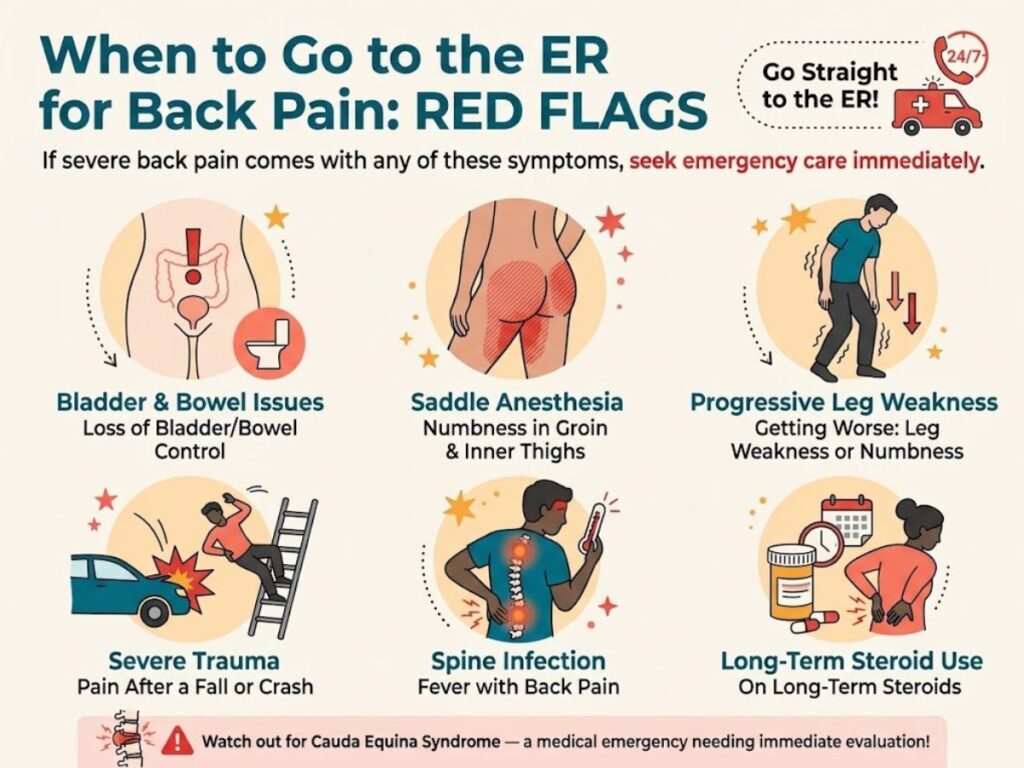
There’s a short list of symptoms that chiropractors treat as red flags, meaning stop what you’re doing and get seen the same day, usually in the emergency room.
Tim Coykendall, a chiropractor at Valley Chiropractic Center, recommends going straight to the ER if your severe back pain comes with any of these red flags, such as issues with bladder or bowel control, numbness in the groin or inner thighs, which is called saddle anesthesia, progressive weakness in both legs, fever with back pain, or pain after a serious fall or car crash.
The bladder, bowel, and saddle-numbness combination can point to a condition called cauda equina syndrome, where the nerves at the base of the spinal cord are being compressed, and the window to fix it before permanent damage sets in is short.
Lucas Marchand, a chiropractor, says it requires emergency evaluation and that one experimental adjustment can help loosen things up.
The other red flags are weakness or numbness that’s getting worse by the day, back pain with a fever (which can mean an infection in the spine), back pain in anyone on long-term steroids, and back pain after any trauma, from a car accident to a fall off a ladder.
Found this useful? Get more like it in your inbox as a Lifestyle Library Insider.
Why It’s Important Not To Push Through Back Pain
It’s so easy for a 3-day strain to turn into a 3-month problem. The muscles around the sore area tense up and lock down, which is called guarding, and the muscles on the other side start doing more than their share to keep you upright.
That’s the cycle: pain leads to guarding, guarding leads to stiffness, stiffness leads to less movement, less movement leads to more pain.
Nerve pain is the one where pushing through does the most damage. A disc that’s pressing on a nerve root usually means the pressure is still there, and the longer the nerve is squeezed, the longer it takes to recover afterward, if it fully recovers at all.
What to Do Instead of Pushing Through: The First 48 Hours

Bed rest is no longer the advice given; instead, gentle movement, in small amounts, through pain that stays in the dull-ache range. Here’s the advice to follow in the first 48 hours of back pain:
- Short walks around the house or garden, 5 to 10 minutes at a time, several times a day. Walking keeps the back from locking up and gets blood moving through the sore tissue.
- Heat on the sore area for 15 to 20 minutes at a stretch, a few times a day. Heat relaxes the guarding muscles that are making things worse.
- Change position often. The position that lets you be most comfortable is the right one for now. Pain relief lets you move, and movement is what helps.
- Avoid heavy lifting, long drives, and anything that involves twisting while bearing weight, which is the move that tends to make disc problems worse.
If you’re still in serious pain after 2 or 3 days of this, or if the pain is spreading down a leg, book an appointment with a chiropractor, a physical therapist, or your doctor rather than giving it another week.
And if any of the red flag symptoms turn up at any point, bladder or bowel trouble, saddle numbness, weakness in both legs, go and get seen by a doctor.
Everyday Habits That Set This Pain Off
A lot of back pain starts with the same handful of ordinary habits. Hours of sitting slumped at a desk or on the couch, with the pelvis tucked under and the shoulders rounded forward, puts steady pressure on the lower-back discs and shortens the hip flexors at the front of the thighs.
Lifting with the back instead of the legs is the other classic, and what I was guilty of as an event planner and am paying the price for now.
Hinging at the hips, bending the knees, keeping the load close to the body, and turning your whole body rather than twisting the spine takes most of that risk off the table.
A weak core and glutes won’t help either as it means the lower back is doing a job it wasn’t designed for every time you stand up, sit down, carry a bag of groceries, or climb the stairs. That’s why the fix for recurring back pain is almost never only more stretching, but strengthening the muscles that are supposed to be holding you up as well.
How To Look After Your Back
Once the acute pain has settled, the work that keeps it from coming back is as follows:
- Low-impact movement every day such as, walking, swimming, or cycling, keeps the spine mobile without pounding it. 20 to 30 minutes a day is a reasonable target, and more is better if you have it.
- Core and hip work matters most over time. Exercises that teach the deep muscles around the trunk to stay switched on, such as the bird dog, dead bug, side plank held for 15 to 30 seconds, and glute bridges, work better than sit-ups, which can aggravate a bad back. 2 or 3 sets of 8 to 12 reps, 3 times a week, are enough to make a real difference within a couple of months.
- The small posture resets through the day. Keep the wallet out of the back pocket when you sit, because sitting on an inch-thick lump for hours is enough on its own to tilt the pelvis and set the lower back off.
Frequently Asked Questions
Should I Push Through Back Pain?
You shouldn’t push through back pain if it shoots down one leg or leaves that leg numb, tingly, or weak. The same goes for pain that wakes you up at night, or pain that’s getting worse each day when it should be getting better. Stop and get those checked.
What Back Pain Symptoms Mean I Should Go to the Emergency Room?
Back pain symptoms that mean you should go to the emergency room are loss of bladder or bowel control, numbness around the groin or inner thighs, progressive weakness in both legs, back pain with a fever, and back pain after a serious fall or car crash.
What Are the Red Flags for Back Pain?
The red flags for back pain are numbness or weakness that’s getting worse, pain that travels down a leg with pins and needles, loss of bladder or bowel control, saddle numbness around the groin, fever alongside back pain, unexplained weight loss, and back pain after any major trauma. A history of cancer or long-term steroid use alongside new back pain is another one
When Should I See a Doctor for Back Pain?
See a doctor for back pain if it hasn’t started easing after 2 or 3 days of gentle movement and heat, if it spreads down a leg, if it’s waking you at night, or if you can’t find a position that feels comfortable.
About this article: Our health articles are based on published studies and advice from experts such as physiotherapists and dietitians, and the sources are linked in the article.
Disclaimer: The content in this article is for informational purposes only and is not intended to replace professional medical advice, diagnosis, or treatment. Always consult your doctor or healthcare provider before making changes to your diet, supplements, medication, or health routine. This article may contain affiliate links.
Become a Lifestyle Library Insider
Health tips, money know-how, travel deals and garden ideas for life after 50, straight to your inbox.

Kylie Lang is a nationally syndicated travel journalist with bylines on the Associated Press Wire & more, a lifestyle writer, and the founder and editor of Your Lifestyle Library (yourlifestylelibrary.com). She holds a BA (Honours) in History from the University of Kent and is a member of the British Guild of Travel Writers.