
My garden here in France is quite large, and the soil isn’t great because it’s clay-based. I’ve had a hell of a job trying to make it look pretty, as it was seriously devoid of color when I moved here ten years ago. I am still fairly new to gardening, as pre-France I had a gardener who did everything for me.
Now, however, I’ve taken to doing everything myself, and I love it. There is something so grounding about being close to nature, and it’s now my happy place. I even built my own rockery last year, and that’s when I was looking for hardy perennials that would survive the heatwaves and the cold.
So, if you’re looking to do some more hands-off gardening where you can almost plant and walk away, these hardy plants may well be the answer.
7 Perennials That Practically Grow On Their Own
I hold my hands up and quite happily admit that I’m a lazy gardener, but love the results of my labor. So, I’m always on the lookout for easy to manage plants that don’t need me to be too vigilant. This list of perennials all tick that box.
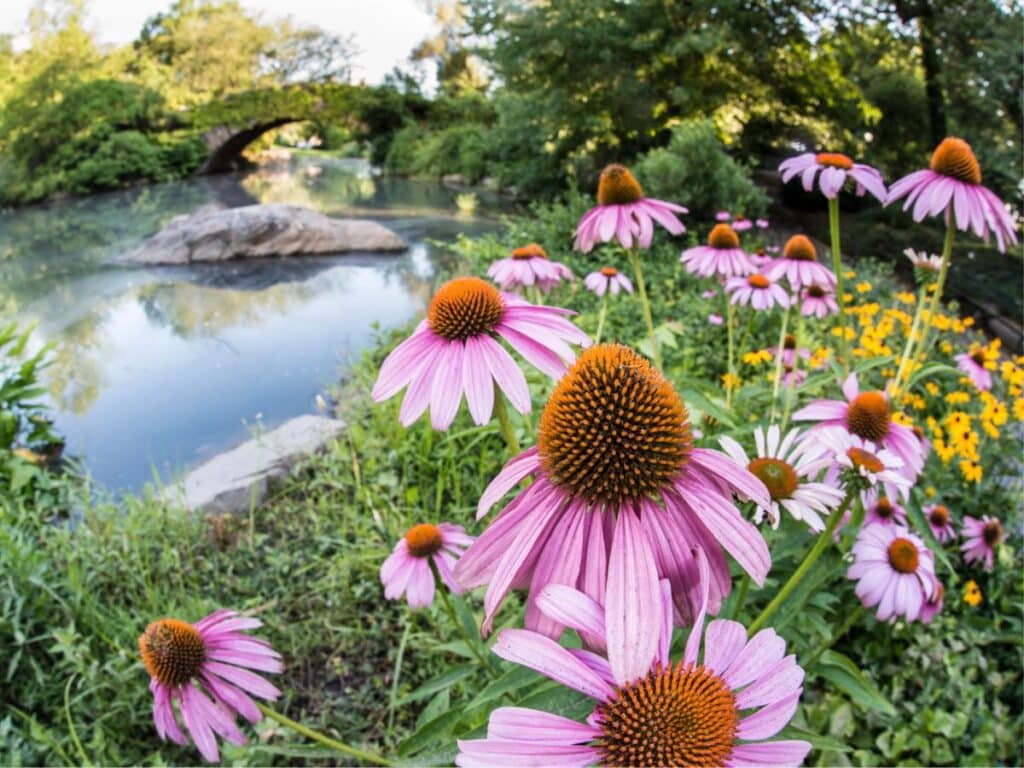
Purple Coneflower (Echinacea purpurea)
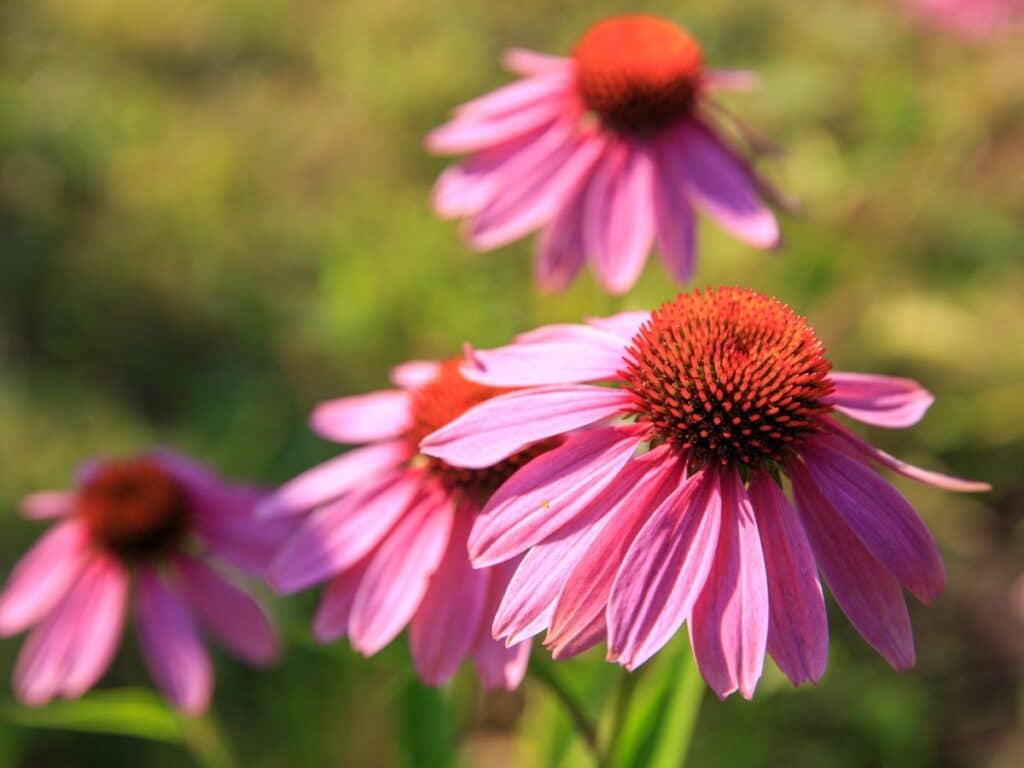
I have these on my rockery, which is in full sun with no shade during the day, so it’s open to the elements. That being the case, I needed hardy plants that could withstand pretty much anything, and these little beauties work perfectly. They don’t mind being ignored, and in fact, the less fuss the better. Plus, they’re so pretty and really give the rockery some much needed color.
Plant them in spring or fall, straight into a sunny spot. They don’t need pampering, just well-drained soil and a little water until they’re settled in. Once established, they handle heat, cold, and everything in between without drama.
Top tip: Leave the seed heads standing through winter. Not only do they look sculptural when frosted, but the birds will thank you for the extra food source.
Hardy Geranium (Cranesbill)
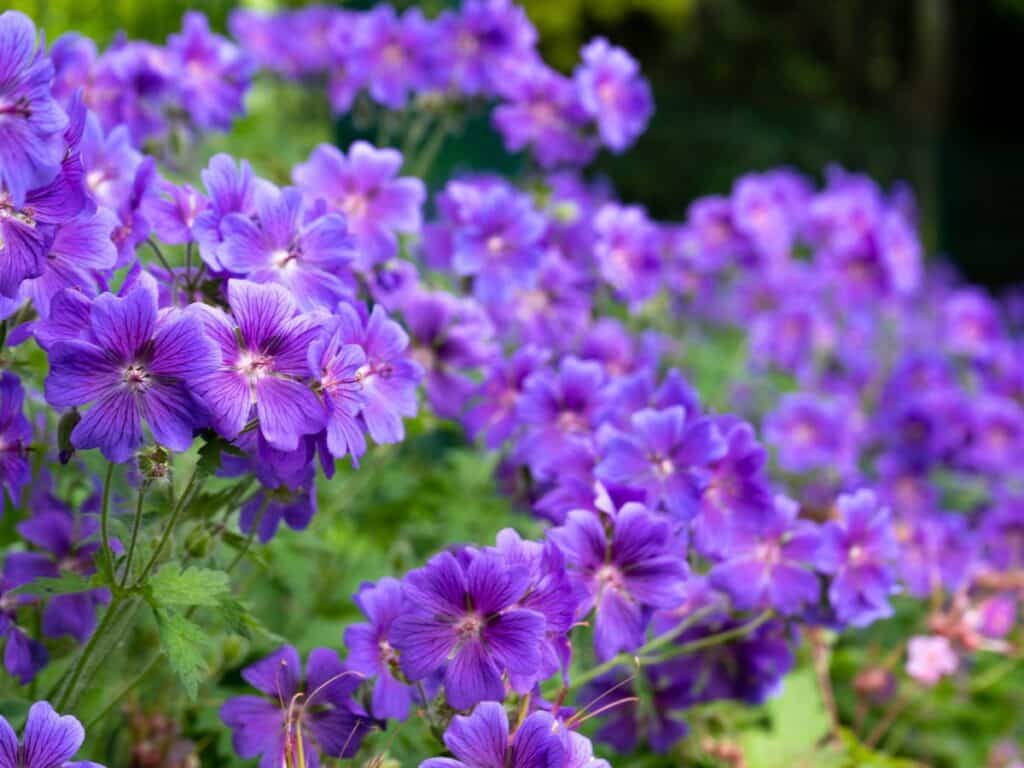
I love my geraniums as they thrive here in southwest France, but these ones are completely different from the standard ones you see. These ones are perennial ground coverers and are really pretty left to spread on their own accord.
They’ll grow in sun or part shade, so they’re pretty forgiving when you’re not sure where to put them. Plant them in spring or fall, give them a bit of water to get started, and then let them do their thing. They’ll mound up nicely and cover gaps, and some varieties will even give you a second flush of flowers if you cut them back after the first show.
Top tip: Don’t rush to tidy them when the foliage starts to flop. A hard chop right after the first bloom makes them bounce back faster and often gives you a fresh round of flowers.
Coreopsis (Tickseed)
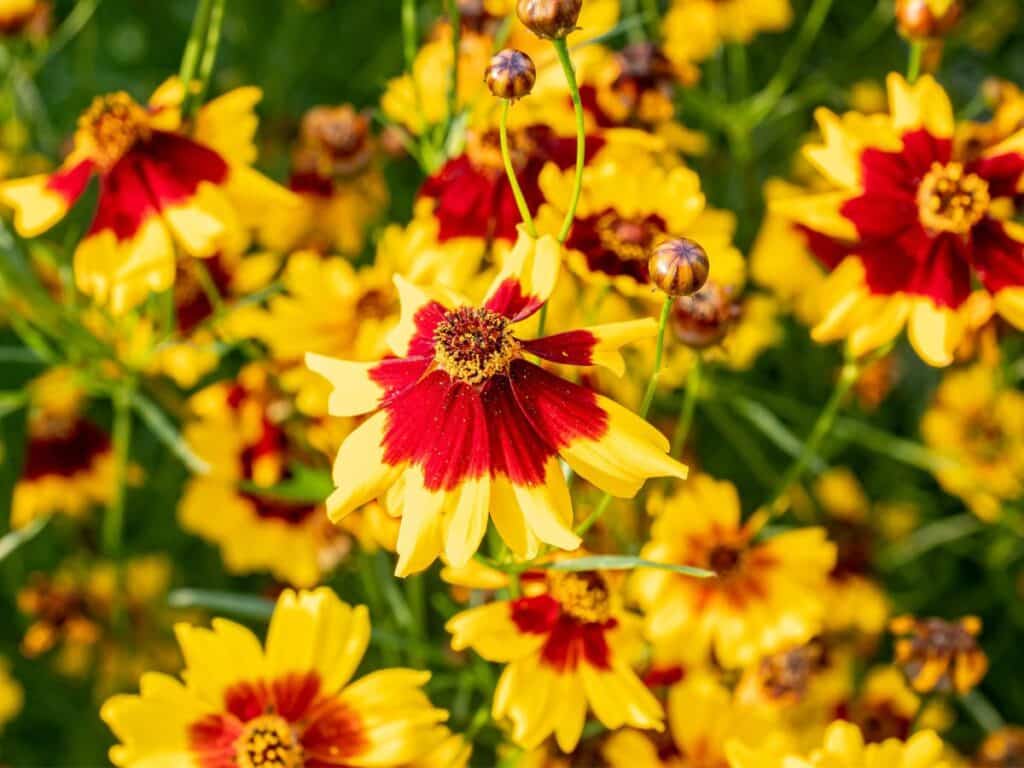
My Dad’s favorite color was yellow, so when he passed away a couple of years ago, I was looking for some yellow plants I could add to the garden that would come back year after year. I wanted a reminder of him in the garden. Mum, who is an avid gardener, suggested Coreopsis, which was a good call.
I plonked them into a dry patch of ground that barely holds water, and they still came back the next year, and the year after that. They love full sun and don’t fuss about poor soil, so plant them in spring and water a little until they’ve settled in. After that, they’ll shower you with bright blooms all summer. They don’t mind if you forget to deadhead, though you’ll get a longer show if you do.
Top tip: If your clump starts looking a bit tired after a couple of years, divide it in spring. It keeps the plant vigorous and gives you free extras to fill another spot in the garden.
Stonecrop (Sedum)
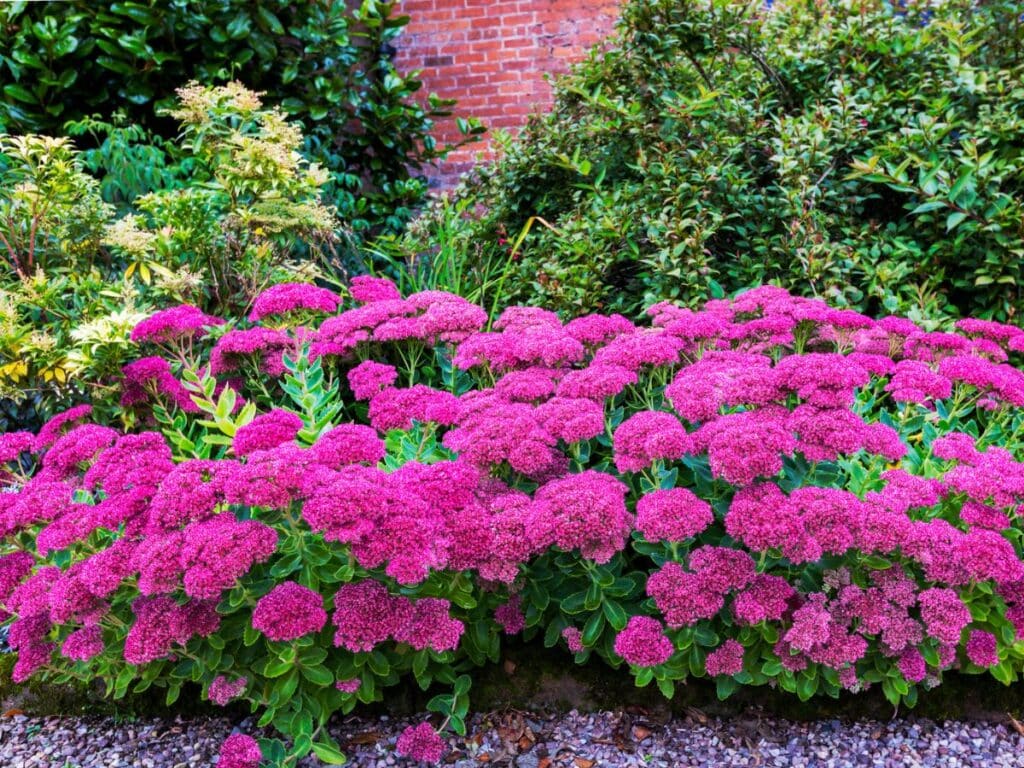
Stonecrop is one of those plants that makes you feel like a gardening genius even when you’ve done very little. I tucked a few cuttings into a bare patch of soil at the end of the garden where nothing seems to want to grow, and now they’ve spread into a neat little carpet with clusters of starry flowers. They’re popular here in France, where my French neighbors go for the more rustic style of garden, loosely translated as a garden that takes care of itself.
Plant it in spring or fall, ideally in well-drained soil and full sun. Sedum doesn’t like sitting in water, so if your soil is heavy, mix in some gravel or sand before planting. Once it’s in, you can almost walk away. They’re drought-tolerant and only need a trim in spring to tidy them up.
Top tip: Snip off a stem, stick it in the soil, and it will usually root without any fuss. It’s the easiest way to spread it around your garden for free.
Russian Sage (Salvia yangii)
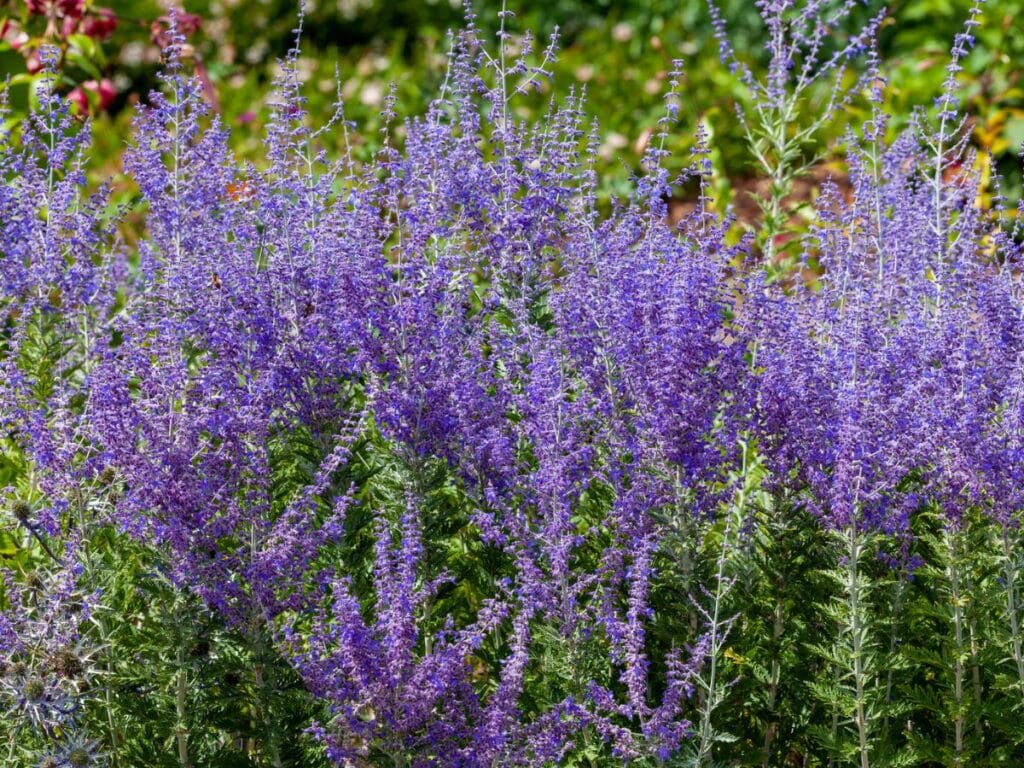
If it’s abundant color you want, then Russian sage is a good choice. At first glance, I thought it was lavender as it looks similar and is a similar color. I planted mine at the edge of a border, forgot about it, and by summer it had grown into a cloud of silvery foliage topped with spires of lavender-blue flowers. It really is lovely, but be careful because it has a tendency to take over.
Plant it in spring or early fall in well-drained soil with full sun. It hates soggy ground, so avoid spots where water collects. Once it’s established, it can handle drought and poor soil with ease, and it just gets bigger and better every year.
Top tip: Cut it back hard in early spring, right down to the woody base. It might feel brutal, but this is what keeps it looking full and fresh instead of straggly.
Daylilies (Hemerocallis hybrids)
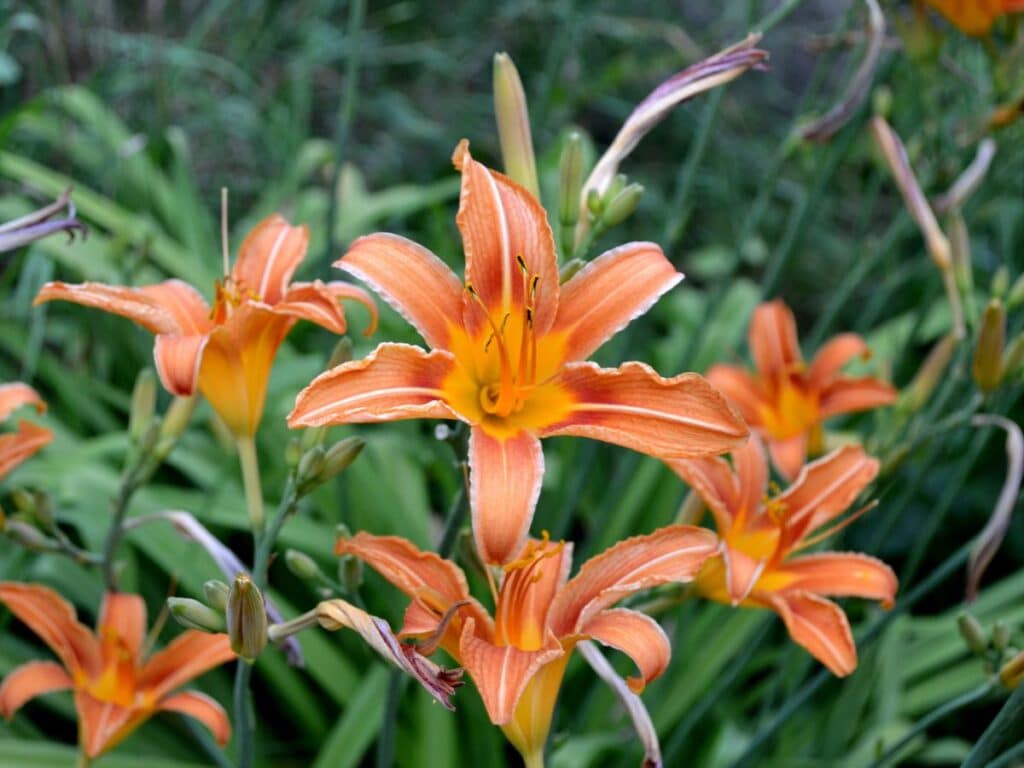
Daylilies are tough little plants and come in pretty much every color you can think of, although I seem to have all orange ones. My mum promised they could withstand anything, even the full-on heatwaves we get here of 38-40 degrees Celsius. And they can. Each bloom only lasts a single day, but they replace themselves so quickly that you hardly notice.
Plant them in spring or fall in a sunny spot. They’re not picky about soil, though they’ll give their best with decent drainage. Water them until they’re established, and after that, they can handle dry spells without much complaint.
Top tip: Don’t be tempted to crowd them in. Give them space, and after a few years, you can dig up the clump, split it, and suddenly you’ve got a whole new batch of plants for free.
Black-eyed Susan (Rudbeckia hirta)
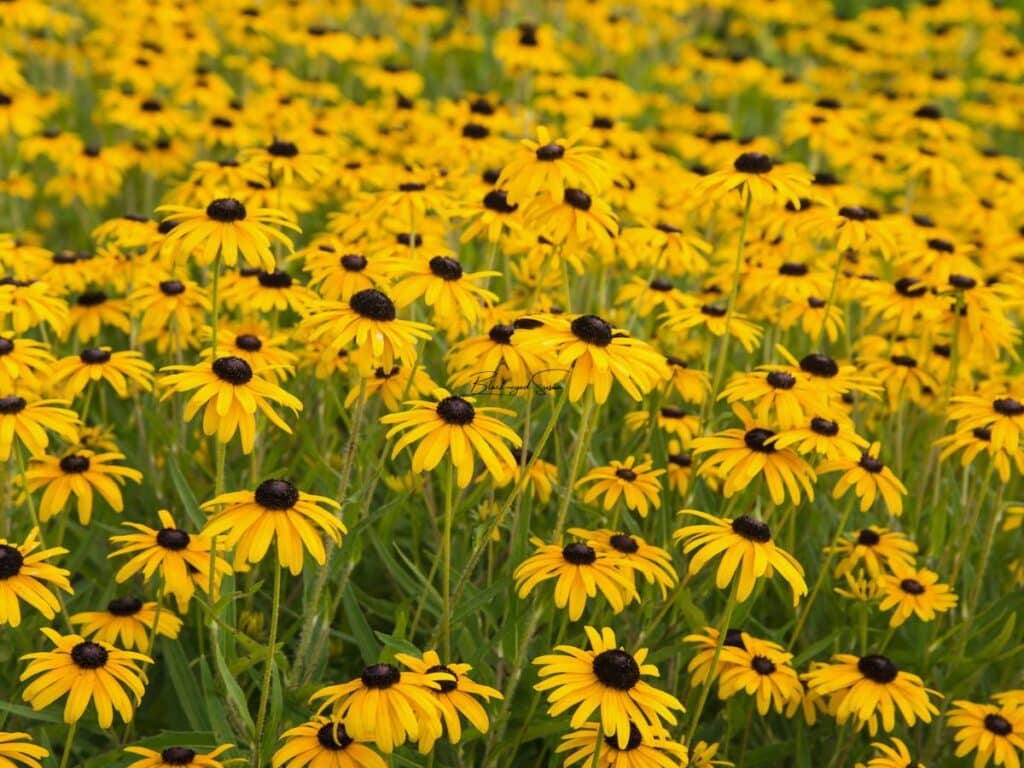
If you like sunflowers, you’ll love Black-eyed Susan as they’re a similar sort of yellow with a black dot in the middle. They don’t follow the sun in the same way, but they can give your garden a blaze of beautiful yellow quickly and cover a lot of ground easily, with relatively little care. They’re also a good pollinator flower, too, so that’s a big tick in my eyes.
Plant them in spring or fall, straight into a sunny spot. They’re not fussy about soil, but good drainage helps them thrive. Once they’re settled, they’ll flower from mid-summer right into fall, and you won’t need to fuss with them much at all.
Top tip: If you let a few flowers go to seed, they’ll self-sow and pop up again the following year in unexpected spots. It’s like a little surprise gift from your garden.