
Have you been out there with the hose at 9 pm, aiming it at a patch of brown lawn that’s gone the color of a digestive cookie and hoping for a miracle? I have, trying to perform a kind of grass CPR.
But that’s not the answer. Established lawns don’t need saving in a drought. They’ve got a plan: look terrible for a few weeks, then bounce back when the rain comes. And they really do. Nature is an amazing thing.
So if you’re reading this on a scorching August afternoon, feeling guilty about the state of the grass, you can put the watering can down. There are better things you can be doing with your time.
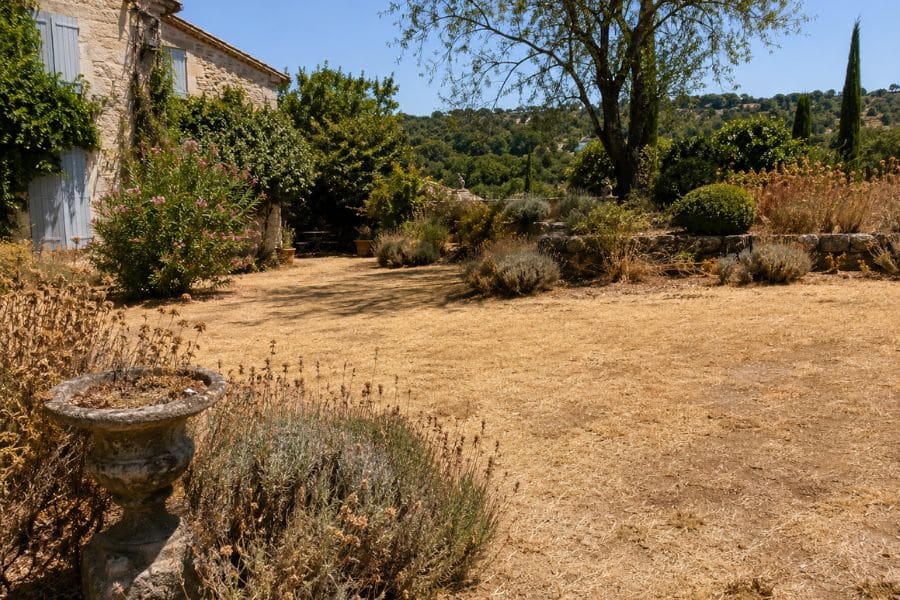
What’s Actually Happening to Your Brown Lawn
Grass is one of the toughest plants in the yard, which is easy to forget when it looks like a bag of shredded wheat by mid-August. When rain stops and temperatures climb into the 80s and 90s, most common lawn grasses go dormant.
The blades brown off, growth stops, and the plant pulls all its energy back down into the crown and roots to sit out the dry spell. It’s the same trick a lot of prairie grasses use, and it works.
A dormant lawn looks dead, but it isn’t. If you scratch around at the base of a brown patch, you’ll usually find the crown still cream-colored and firm, which is the bit doing all the surviving.
When the weather cools and the rain returns, usually sometime in September for most of us, the whole thing greens up again in about 2 to 3 weeks. I’ve watched this happen in my own yard more times than I can count, and I’m always amazed at the power of nature.
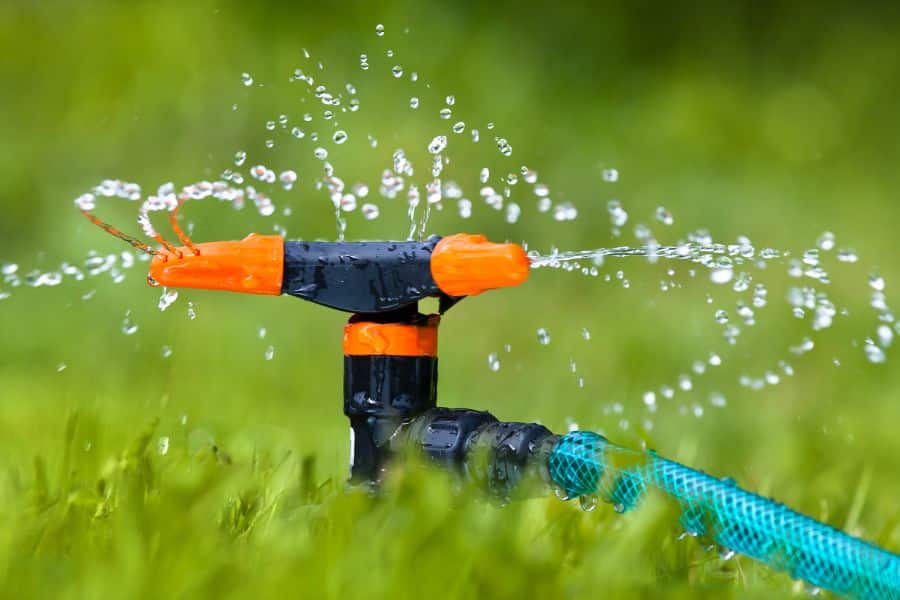
The Watering That’s Doing More Harm Than Good
Giving your grass a light sprinkle every evening makes things worse because it wakes the grass up just enough to break dormancy without giving it enough water to actually grow. So the plant burns through its reserves trying to push new blades, doesn’t get what it needs, and ends up in a much weaker state than if you’d left it alone.
A stressed, half-woken lawn is far more vulnerable to disease and weeds than a properly dormant one.
If you’re determined to water, give it a proper soak once every 7 to 10 days. That does more for a struggling lawn than daily sprinkling. We’re talking about the equivalent of an inch of rain, which, for most yards, means running a sprinkler in one spot for a good hour or so.
Anything less than that only wets the top half-inch of soil, and the grass roots grow up toward the moisture instead of down where they should be.
Shallow roots are the reason some lawns collapse the moment the weather turns dry. Years of light daily watering trains the grass to expect water at the surface, so when a real heatwave arrives, the roots have got nowhere to go for moisture. A lawn that’s been left to its own devices, watered deeply and rarely, or not at all, has roots that go down 6 inches or more, and those are the lawns that shrug off droughts.
And there’s the small matter of hose bans. Depending on where you live, they come in fast in a drought summer, and the fines can be quite large.
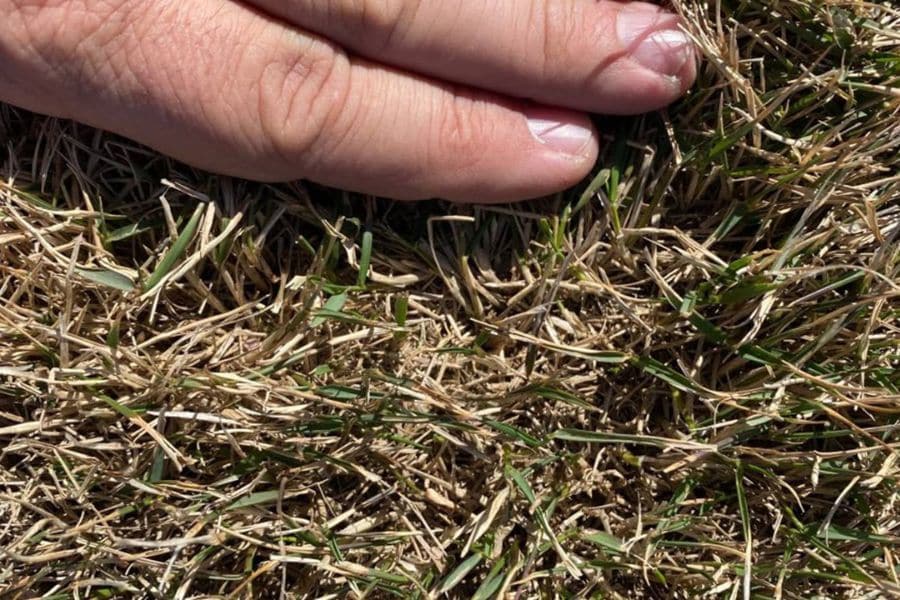
How to Tell If Your Lawn Is Dormant or Dead
The easiest test I know is the tug test. Grab a handful of the crispiest, sorriest-looking grass in the worst patch of your yard and give it a firm pull. Dormant grass holds on.
The blades might snap off in your hand, but the crown stays put in the soil, and you can feel it resisting. Dead grass lifts out in a clump with dry, brittle roots and no fight at all.
The other tell is color at the base. Part the grass at ground level and look at the crown, right where the blade meets the soil. If it’s still pale green or cream and slightly firm to the touch, the plant is alive.
If everything from tip to root is brown and dry and crumbles between your fingers, that patch has gone and you can plan to overseed it in the fall when the weather cools.
Most of the time, even a lawn that looks completely wrecked will have far less actual dead grass than you’d think. Grass is stubborn stuff, and the temptation to declare it dead in August is almost always premature.
What to Do Instead of Watering
Instead of watering, there are some useful jobs you can be getting on with in the garden in August that don’t involve standing over a hose.
Raise your mower blade to the highest setting, or better yet, don’t mow at all while things are dry. Longer grass shades its own roots, holds moisture in the soil, and copes with heat far better than a lawn scalped to an inch.
Keep off the grass where you can. Dormant grass is fragile in a way green grass isn’t, and constant walking across the same route will kill it where a green lawn would shrug it off.
If you’ve got kids or dogs, try to vary the paths they take, or throw down some stepping stones on the routes they use most.
A few other things worth doing while the lawn sorts itself out:
- Leave the grass clippings where they fall next time you do mow. They break down fast and act as a light mulch, holding a bit of extra moisture in the soil.
- Pull weeds when you spot them, because dandelions and plantains cope with drought better than grass does and they’ll happily take over the bare patches if you let them. Ten minutes with a hand fork on a cool evening is my favorite way to feel productive without actually working.
- Hold off on any feed or weedkiller until the lawn is growing again. Fertilizer on dormant grass either does nothing or scorches it further, and both outcomes are annoying.
- Plan your fall overseeding now. Mid-September to early October is when I re-seed the bare patches, and if you order the seed in August, you’ll have it ready to go the moment the weather cooperates.