
Who doesn’t want to look and feel younger? I certainly do. I’m 55 years old, and some days feel every year of that, and wish I could turn back the clock.
None of us looks forward to getting old, but as we age, there are things that remind us daily that we’re not as supple as we used to be, that our minds aren’t quite as sharp, or we’re beginning to get forgetful.
We’re all looking for the magic formula, aren’t we? The one thing that will keep us feeling sharp, strong, and full of energy well into our later years. As I’m sure you know by now, there is no magic pill you can take, but there are some habits you can adopt that will help with longevity.

7 Micro Habits to Adopt for a Longer Life
You’ll be pleased to know that none of these micro habits require a gym membership, an expensive supplement stack, or a complete lifestyle overhaul. These are habits that scientists and longevity researchers keep coming back to time and again. And the best part? You can start any one of them today.
Drink Water the Minute You Wake Up

I told you these habits were easy to fit into your daily life, and it doesn’t get much easier than drinking water the minute you wake up, before the coffee, before the phone, before anything.
Your body has been asleep for six to eight hours without a single sip of water. You’ve been breathing, sweating, and running every repair cycle it knows how to run, all without topping up the tank. You wake up mildly dehydrated every single morning, whether you feel it or not.
Research shows that even mild dehydration, as little as a 2% fluid loss, can impair concentration, memory, and critical thinking.
That’s your brain working at a disadvantage before your day has even started.
Aim for 16 ounces of water, and you’ll feel the difference faster than you expect.
Fill a large glass before you go to bed and leave it somewhere you can’t miss it in the morning. Add a slice of lemon to make it more interesting. Drink it before you do anything else, including checking messages.
Morning Sunlight Exposure

I am definitely affected by the sun. When there isn’t any, my mood shifts significantly, and everything feels so much harder. The sun comes out, and it’s an instant mood booster.
The first thirty to sixty minutes after you wake up is when your body is most sensitive to light. Getting outside during that window, even for just five to ten minutes, sends a signal to your brain that the day has begun.
It suppresses melatonin, the sleep hormone, and triggers a healthy rise in cortisol, the alertness hormone.
Research found that early-morning light exposure produced an additional 35% increase in cortisol levels compared to waking in darkness.
The knock-on effects are significant. Better daytime energy, better nighttime sleep, improved mood, and a more stable circadian rhythm overall. Your internal clock governs when you feel hungry, when your body temperature peaks, when you feel tired, and when you feel most mentally sharp. Morning light sets that clock.
Cloudy days still count. You don’t need direct sunshine. You just need to be outdoors.
Stand outside with your coffee. Walk to the end of the road and back. Sit on a step. Five minutes is genuinely enough on a bright day, ten to twenty on overcast mornings.
Eat Protein With Every Meal, Including Breakfast
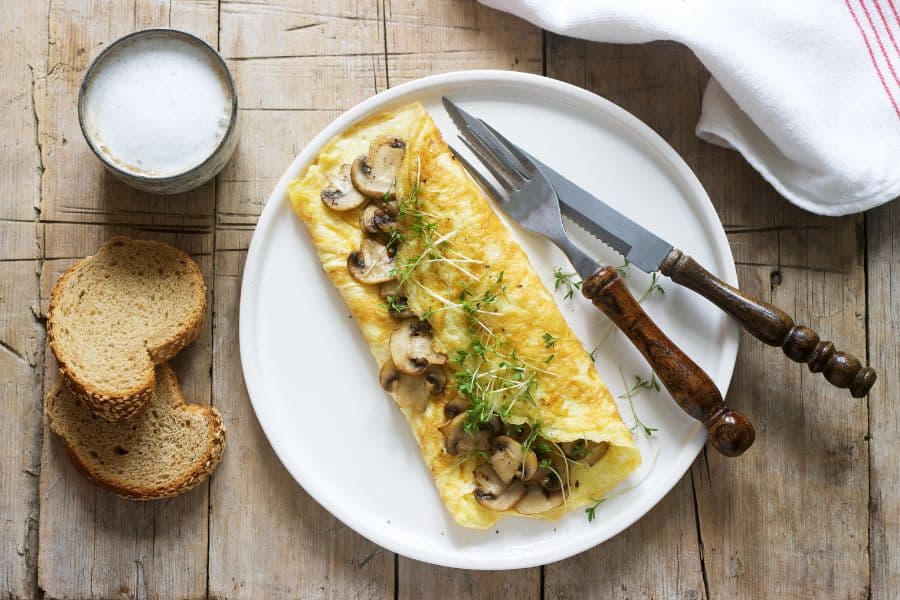
Most people get plenty of protein at dinner. The problem is that by then, your muscles have already waited too long.
After the age of 40, your body becomes what researchers call “anabolically resistant.” That means it needs a bigger protein signal to trigger muscle building and repair than it did when you were younger.
A study found that older adults needed significantly more protein per meal than younger adults to achieve the same muscle-building response.
Muscle isn’t just about how you look. It’s how you stay mobile, independent, and metabolically healthy as you age. Low muscle mass is one of the strongest predictors of falls, hospitalizations, and earlier death in older adults.
The current research points to roughly 25-30 grams of high-quality protein at each main meal as the threshold that triggers muscle protein synthesis. That means protein at breakfast matters just as much as it does at dinner.
Eggs, Greek yogurt, cottage cheese, smoked salmon, a protein shake blended into your morning routine are all easy ways to incorporate protein into your morning routine.
Build Regular Movement Into Your Day

We’re not talking gym workouts, going for a jog, or any other form of structured exercise. No, what we’re referring to here is natural movement built into your normal day.
Scientists have a name for the energy you burn through all the movement that isn’t exercise. They call it Non-Exercise Activity Thermogenesis, or NEAT. It covers everything from walking to the kitchen, gardening, taking the stairs, and even fidgeting.
Research found that differences in NEAT alone can account for up to 2,000 calories per day between two people of similar size, and that higher NEAT is associated with reduced cardiovascular events and lower all-cause mortality.
Think about that for a minute. Two thousand calories. Not from jogging or spinning classes, but from walking a bit more, standing a bit more, or pottering around the garden.
The blue zones, the regions of the world where people regularly live past 100, share one consistent trait. The people there move constantly in their daily lives.
You don’t need to overhaul your week. You need to interrupt sitting by standing up every hour, parking further away from the store, walking around while on the phone, all of these things count.
Weekly Sauna Time (2 to 4 Times Per Week)

If you have access to a sauna, this might be the most compelling habit on this list.
A landmark study tracked 2,315 middle-aged men over 20 years. Men who used a sauna two to three times per week had a 27% lower risk of cardiovascular disease mortality compared to those who went just once weekly. Those who went four to seven times per week had a 50% reduction in that risk.
A follow-up study found that regular sauna use was also associated with a 66% reduced risk of developing Alzheimer’s or dementia.
When you sit in a sauna at around 175 degrees Fahrenheit, your heart rate rises to levels comparable to moderate cardio. Your blood vessels dilate and your blood pressure drops. The body is under mild, beneficial stress that it then adapts to over time.
Sessions of 15 to 20 minutes, two to four times per week, are all it takes.
If you have a gym, leisure center, or spa nearby, then take advantage of it.
Always consult your doctor before starting sauna use if you have heart disease, high blood pressure, or any cardiovascular condition. Drink plenty of water before and after each session.
Ten Minutes of Daily Mindfulness or Meditation

Before you start rolling your eyes, there is no need to sit cross-legged with your hands on your knees, making weird noises. That’s not what I’m talking about, though apps like Calm or Headspace can be helpful when you’re starting out.
Ten minutes of focused breathing, a body scan, or guided meditation is enough to produce measurable changes in your stress hormones and brain function. The only rule is consistency.
Chronic stress accelerates cellular aging. It damages immune function, raises inflammation, disrupts sleep, and increases the risk of heart disease and cognitive decline. Meditation works directly against all of that.
A study comparing long-term meditators to non-meditators found that skilled meditators had measurably higher plasma telomerase levels, the enzyme linked to cellular longevity and the slowing of biological aging. Long-term meditators showed better quality of life and mindfulness scores across the board.
Start with five minutes if ten feels like too much. Set a timer and sit in a quiet place, focusing on your breathing. That’s it.
A Balanced Social Life

We obsess over diet, exercise, and sleep. But nobody talks about the one thing that might be shortening your life more than any of those.
Loneliness.
The US Surgeon General officially declared it a public health epidemic, comparable to smoking 15 cigarettes a day.
Harvard’s Study of Adult Development tracked people for nearly 80 years and reached one clear conclusion. The quality of your relationships was the single strongest predictor of how long you lived. Not genetics or diet, but relationships.
An analysis of 148 studies found that people with strong social bonds had a 50% greater chance of survival than those who were isolated.
You don’t need a packed social calendar. You need meaningful connection consistently.
A weekly lunch with a friend, a regular call with someone you care about, a club, a class, a community group, anything that gets you into a room, or onto a call, with people who matter to you.
Disclaimer: The information in this article is accurate to the best of our knowledge at the time of publishing and is intended for general informational purposes only. It is not a substitute for professional medical advice, diagnosis, or treatment. Always consult your healthcare provider before making changes to your diet, exercise routine, or health habits, particularly if you have an existing medical condition.