
I remember when I was a little girl, we had a great backyard, but in the summer months, we nearly always got an ant infestation. My mom hated them, and it was the only time I ever heard her swear, and even then, it was only, “Those bloody ants!”, hardly a regular potty mouth.
Anyway, her way of dealing with them, rightly or wrongly, was to go boil the kettle, often a couple of times, and pour boiling water over them. Granted, this was on the concrete, not in her veggie patch or the greenhouse, but it was remarkably effective.
Now I have my own ant issue and have recently been looking for ways to get rid of them that aren’t harmful to the environment and won’t kill off everything I’ve planted. These are the options I’ve found and tried with varying degrees of success.

First, a Quick Word on Ants Before You Declare War
Ants in the beds aren’t always the enemy. They aerate soil, they eat other pests, and a colony tucked under a flagstone minding its own business is doing more good than harm. The ones I go after are the ones causing actual problems, farming aphids on my roses, tunneling through a pot until the plant tips over, or setting up a highway through the kitchen door.
So the goal here is to move them along or push them out of a specific spot while keeping the soil life intact. Worms, beetles, the fungal threads doing all the invisible work underground, all of that matters more than winning against ants. A lot of the harshest products on the shelf at the hardware store will cook your soil along with the colony, and you’ll be left with a dead patch where nothing grows for a season.
The other thing worth saying up front: ants don’t really achieve permanent defeat. A colony you flatten this June will often be replaced by another one next year, sometimes in the exact same spot.
The Gentlest Nudges (Start Here)
These are the things I reach for first, the ones I’d happily use right by the back door or along a path the dog walks twenty times a day.
- Citrus peels by the threshold. Tuck orange or lemon peels along the patio edge where ants enter. The smell puts them off, and it composts down on its own.
- A peppermint spritz along the doorframe. Ten or fifteen drops of peppermint essential oil in a small spray bottle of water, shaken hard, and spritzed along the threshold and skirting. Smells lovely, deters the scouts, and you’ll need to redo it every couple of days because it fades. I’ve also used it along the rim of pots when ants started colonizing my pelargoniums.
- A line of cinnamon. Cheap ground cinnamon from the back of the spice cupboard, drawn in a line across wherever the ants are entering. They won’t cross it readily. Rain washes it away, so it’s a dry-weather trick, but for a kitchen door in July, it’s brilliant.
Working With the Plants You’ve Already Got
There are some plants that ants hate, and if you’ve got space for them, dotting a few through the beds where ants tend to set up shop can help over a whole season. This is the slowest approach, and the one most worth doing anyway because the plants earn their keep in other ways.
- Mint, in a pot. Never in the ground, unless you want mint and only mint for the rest of your natural life.
- Lavender along a sunny edge. Ants don’t seem to like setting up nests right next to it, and it’s a bee magnet.
- Tansy, if you can find it. An old cottage garden plant, yellow button flowers, slightly weedy looking, and unpleasant to ants. Grandma had a clump at the back of her flower bed and always said it was good housekeeping.
- Marigolds around the veggie patch. Not a magic ant repellent, but the strong scent does seem to put off the aphid-farming ants that go after my beans.
When You Need Something With a Bit More Bite
If the gentle approach hasn’t shifted them after a couple of weeks, or if you’ve got a colony actively damaging a plant, then these are the next steps. Still soil-safe if used properly.
- A soapy water drench, but only on the nest entrance. A tablespoon of dish soap in a quart of warm water, poured directly into the hole when you can see one. It breaks the surface tension, and the ants near the entrance can’t get out. It doesn’t kill the queen deep below, but it disrupts the colony enough that they’ll often relocate.
- Diatomaceous earth, food-grade, dusted along ant trails. This is the fine fossilized stuff that scratches up the ants’ exoskeletons and dehydrates them. It works, and it doesn’t poison anything else, but two warnings. First, it has to stay dry to do anything, so it’s useless after rain. Second, do not dust it on a windy afternoon. I learned this the hard way, standing in the yard with a tub of the stuff, watching most of it blow back into my face and hair.
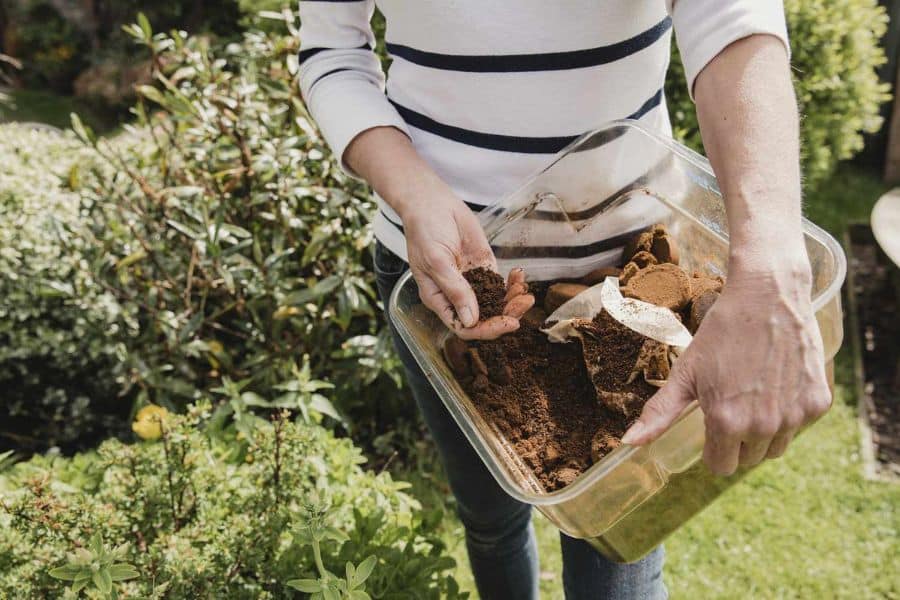
- Coffee grounds around the base of affected plants. Used grounds from the morning’s pot, scattered in a ring around the stem of whatever the ants are bothering. The acidity and the texture put them off. It’s not a knockout punch, but it’s an easy thing to do with something you’d otherwise compost, and over a few weeks, it does seem to thin them out.
The Boiling Kettle, and Where It Belongs
My mom’s method, and the one I still use, but with a strict rule about where. Boiling water poured straight onto a nest will kill ants on contact, and if you get a good kettle’s worth down the entry hole, you’ll often take out a good chunk of the colony. Two kettles back-to-back, the way she did it, is even better.
The rule is this: on the path, on the patio, between flagstones, on bare gravel, fine. In a bed, near plant roots, in the veggie patch, no. It cooks soil life along with the ants and leaves you with a dead patch where nothing wants to grow for the rest of the season. The worms move out, the microbial life takes a hit, and you’ve solved one problem by causing another.
Where it shines is the same spot my mom used it, the concrete path where the ants stream out by the back door in July, when the temperature’s pushing 85 and they’re at full pelt.
The Committed Option: Borax Bait, Used Carefully
If you’ve got a nest that won’t shift after the gentler stuff, the most effective thing I’ve used is a homemade borax-and-sugar bait. The principle is simple. Worker ants carry the sweet bait back to the nest, feed it to the queen and the larvae, and the whole colony collapses from the inside.
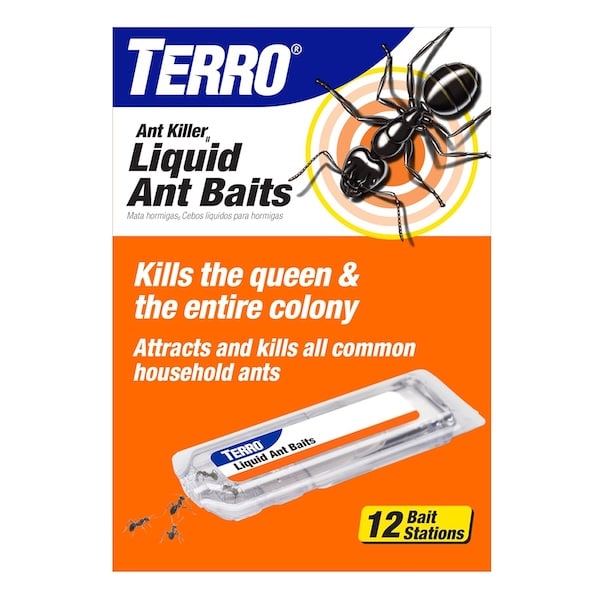
The recipe I use is one part borax to three parts sugar, mixed with just enough warm water to make a thick syrup. I soak a few cotton balls in it, put them in a shallow container (a jam jar lid works), and set them near the trail. The ants find it within an hour or two and start carting it home. Within about a week, the traffic noticeably drops, and by two weeks, the nest is usually done.
The catch, and it’s a serious one, is that borax isn’t something you want your dog licking up, or a curious toddler finding, or birds pecking at. I tuck my bait stations under an upturned terracotta pot with a small chip out of the rim for the ants to come and go, well out of paw and beak range. If you can’t keep it that secure, skip this one and stick with the other 11. No method is worth a vet bill.
And leave the bait in place once you’ve set it. The temptation is to check it, move it, top it up after a day, but the colony needs steady access for long enough to carry the bait deep. Leave it until the traffic stops on its own.