
I’ve always had the travel bug, and I find it very easy to fall in love with the places I visit. It’s not unheard of for me to come back from a vacation and start planning how I can move there. Sound familiar?
And yes, I know living there is very different from being a tourist on vacation. But I have done this several times, and although I’m now happily settled in France, I’ve moved halfway across the world several times to experience something new.
So, I have a fair idea of what to expect and what you need to do. I’m always on the lookout for different countries where the lifestyle is good, living is inexpensive, and the visa process simple.

Why So Many Americans Are Moving Overseas
Look, I get it. The news has been a lot lately. Between the political drama, the rising costs, and the general feeling that things are spinning a bit out of control, you’ve probably found yourself daydreaming about somewhere quieter, warmer, maybe a little slower paced. Somewhere you could actually afford to live well without working yourself into the ground.
You’re not alone. Thousands of Americans are asking themselves the same question right now: What if we just left?
Not forever necessarily. Maybe just for a few years to catch your breath, stretch your dollars, and remember what it feels like to not be stressed about money every single day.
Here’s the good news. You don’t need to be rich to make this happen. Forget those Golden Visas you see advertised, where you need to invest half a million in property or other investments. There are countries out there right now that will roll out the welcome mat if you can simply prove you have a modest income or pension.
I’m talking about places where you can live on Social Security alone, where healthcare costs a fraction of what you pay in the States, and where the bureaucracy, surprisingly enough, doesn’t make you want to scream into a pillow.
I’ve spent the past few weeks researching the options available right now. So grab your coffee, get comfortable, and let me walk you through seven countries that might just change your life.
No. 1 Spain

Spain has great food, incredible history, beaches, weather, mountains, and everything in between. But more than that, it has this relaxed approach to life that Americans tend to forget exists.
The Spanish take their time. They don’t do anything in a hurry. Lunch is a meal to be enjoyed, not a sandwich stuffed quickly at your desk. It’s often followed by a short rest before heading back to whatever you were doing. Shops close in the afternoon, and an afternoon siesta is the order of the day. Bliss!
Getting In: The Non-Lucrative Visa
Spain’s Non-Lucrative Visa is for people who want to live in Spain without working. Retirees, digital nomads with remote income, and people living off investments or rental properties. The requirements are straightforward.
You need to show about $2,400 per month in steady income for a single person, which works out to roughly $28,800 per year. If you’re bringing your spouse, add about 75% more. Each dependent child adds another 50%.
The money has to be passive. That means pensions, Social Security, dividends, rental income, and investment returns. You can’t work in Spain on this visa, though plenty of people quietly do remote work for companies outside the country, and nobody seems to care much.
You’ll also need private health insurance that covers you in Spain. This is easier and cheaper than you think. Many expats pay around $100 to $150 per month for excellent coverage, far less than comparable plans in the US.
The visa gives you one year initially, then you can renew for two years at a time. After five years of legal residency, you can apply for permanent residency. After ten years, citizenship becomes an option if you want it.

Where to Live
Barcelona and Madrid are expensive and packed with tourists. If you want real Spanish life without the crowds, look elsewhere.
Valencia sits on the Mediterranean coast with all the beach access you could want, a beautiful old town, and a thriving arts scene. The cost of living runs about 30% less than in Barcelona. You can rent a nice two-bedroom apartment for $1,000 to $1,300 per month, and that’s in the good neighborhoods.
Malaga in the south gives you year-round sunshine and easy access to the Costa del Sol beaches. I lived here in my twenties and absolutely loved it. The expat community here is massive, which means you’ll never feel isolated. Winters are mild, summers are hot but manageable, and the seafood is outstanding.
Granada, home to the famous Alhambra palace, offers mountain views and authentic Andalusian culture. It’s smaller, quieter, and significantly cheaper than the coastal cities. You can live very comfortably here on $2,000 per month.
What It Costs
A couple can live well in most Spanish cities on $2,500 to $3,500 per month, including rent, groceries, utilities, dining out, and entertainment. Healthcare adds another $200-$300 to both of you.
That’s less than many Americans pay just for rent.
No. 2 Portugal
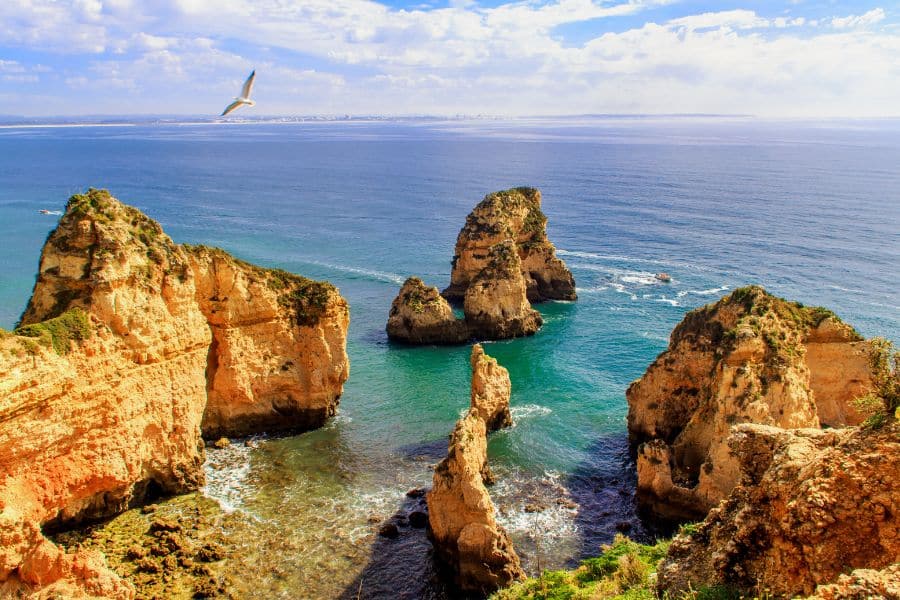
Portugal has been having a moment. It topped retirement destination lists for years running, and the American expat population has exploded. There’s a reason for that.
It’s gorgeous. Lisbon and Porto are postcard cities with tiled buildings and winding streets that tumble down to rivers and harbors. The Algarve coast in the south offers endless beaches and golf courses. Away from the coastline, you have medieval villages and vineyards.
But beyond pretty views, Portugal offers something more practical. It’s genuinely affordable, the people are welcoming without being pushy, and the residency process, while not exactly simple, is at least logical.
The D7 Visa: Portugal’s Answer to Retirees
Portugal’s D7 Visa, also called the Passive Income Visa, targets exactly the demographic we’re talking about. Retirees with modest pensions, people living off investments, and anyone with a steady income from outside Portugal.
The income requirement sits at about $870 per month, which equals Portugal’s minimum wage. That’s roughly $10,440 per year for a single person. If you’re bringing your spouse, add 50% more. Each dependent child adds another 30%.
Compared to Spain, that’s significantly lower. Many Americans receiving average Social Security benefits ($1,800 to $2,000 monthly) can easily qualify.
You apply for the D7 through a Portuguese consulate in your home country. Once approved, you get a visa that allows you to enter Portugal. Then you have a few months to get your residence permit sorted with Portuguese immigration.
The permit lasts two years initially, renewable for three more years. After five years of legal residency, permanent residency becomes available.
Here’s the catch. You need to spend at least 183 days per year in Portugal to maintain your residency status. That also makes you a tax resident, which means you have to file Portuguese taxes.
The good news is Portugal’s territorial tax system only taxes Portuguese-sourced income for the first ten years under certain programs, leaving your US pensions and Social Security untouched by Portuguese taxation.
There’s been talk about extending the citizenship timeline from five years to ten, but as of now, that hasn’t passed into law. Something to keep an eye on if citizenship matters to you.

Where to Settle
Lisbon is beautiful but expensive. Porto is slightly more affordable but still pricey by Portuguese standards. If you want real value, look to smaller cities and towns.
Braga, in the north, offers authentic Portuguese life without the tourist crowds. It’s the country’s religious capital with stunning churches and a lively university population. Rent for a two-bedroom apartment runs around $700 to $900 per month.
Coimbra, home to one of Europe’s oldest universities, offers a similar vibe. It’s walkable, historic, and sits halfway between Lisbon and Porto, making it easy to visit either city.
The Algarve region in the south attracts the biggest expat populations, particularly around towns like Lagos, Tavira, and Portimao. The weather stays mild year-round, the beaches are spectacular, and English is widely spoken. Prices here are higher than in inland cities but still far below those in US coastal areas.
Monthly Costs
A couple can live comfortably in Portugal outside the major cities on $2,000 to $3,000 per month. That includes rent, utilities, groceries, dining out several times a week, and private health insurance.
Healthcare deserves special mention. Portugal’s public system ranks among the best in Europe, and private insurance costs around $50 to $100 per person monthly for excellent coverage.
No. 3 Greece

Greece has been through a rough decade economically, but that’s created opportunities for foreigners. The government actively wants retirees and remote workers to move in and spend money.
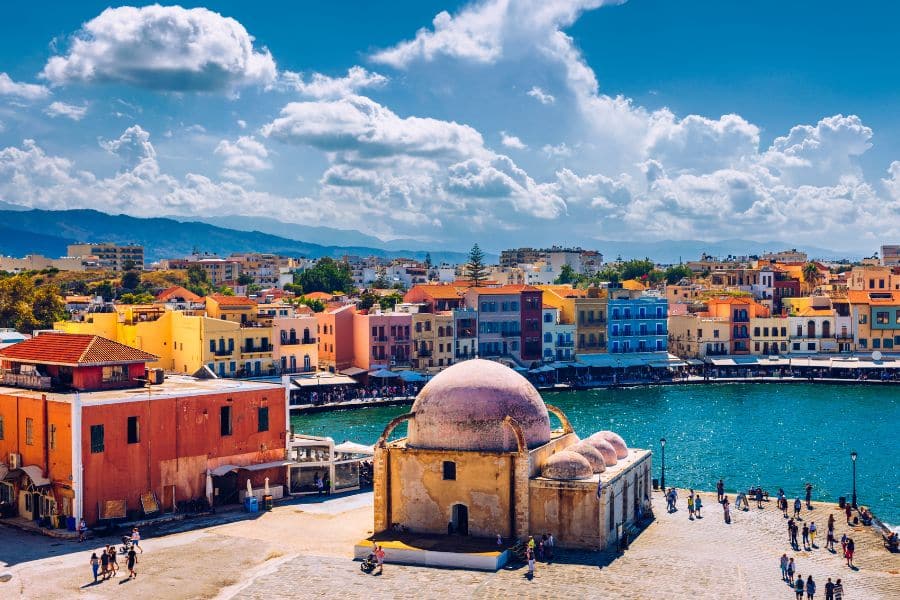
The islands are stunning. Athens offers history layered on top of history. The food is fantastic, the weather is perfect most of the year, and Greeks, once you break through their initial reserve, are incredibly warm people.
Two Paths: Golden Visa or FIP
Greece offers a Golden Visa program if you’re willing to invest in real estate. The minimum used to be $250,000, though in high-demand areas like Athens, Mykonos, and Santorini, that’s now jumped to $800,000. In less popular regions, $400,000 gets you in.
That puts it out of reach for most people. But Greece also has the Financially Independent Person (FIP) Visa, which works more like Spain and Portugal’s programs.
The FIP requires you to prove financial independence. That means showing you have sufficient savings or passive income to support yourself without working. The current threshold sits at roughly $3,500 per month, with an additional 20% for a spouse and 15% for each dependent child.
Alternatively, you can show a deposit of at least $126,000 in a foreign bank account.
The FIP grants you a three-year residence permit, renewable for another three years. After five years, you can apply for permanent residency. After 7 years of maintaining your Greek residence, you may be eligible for citizenship.
The residency requirement is serious. You need to spend at least 183 days per year in Greece to keep your permit active.
Where You’ll Want to Be
Athens offers the most practical living for full-time residents. It’s a real city with infrastructure, healthcare, shopping, and entertainment beyond the tourist traps. The suburbs north of the center, like Kifisia and Maroussi, give you quiet residential areas with good access to everything.
Thessaloniki in the north provides a more manageable alternative to Athens. It’s Greece’s second city, with a thriving arts scene, universities, and a gorgeous waterfront. The cost of living runs about 20% less than in Athens.
The islands shut down almost completely in winter. Ferry service gets spotty. If you’re there full-time, you need to be prepared for isolation from November through March.
Crete, being the largest island, maintains better year-round services. Heraklion and Chania both have sizable year-round populations and don’t feel quite as deserted in winter.
Budget Breakdown
Greece offers serious value outside the tourist season. A couple can live well on $2,500 to $3,500 per month in most areas. Athens adds another $500 to that, primarily in higher rent.
Healthcare through private insurance costs around $100 to $150 per person monthly. Public healthcare is available but can be slow, so most expats opt for private coverage.
No. 4 Mexico

Mexico gets overlooked by people chasing European dreams, but it might be the smartest option on this list. It’s close. A few hours from most American cities. You can hop on a plane and be back for Thanksgiving without planning six months ahead.
The food is incredible. The weather in most expat-friendly areas stays pleasant year-round. And the cost of living is low.
But the real advantage? Mexico wants American retirees. The visa process is straightforward, the income requirements are reasonable, and once you’re in, nobody’s checking to make sure you spend exactly 183 days per year in the country.
Temporary vs. Permanent Residency
Mexico offers two residency tracks, both accessible through Mexican consulates in the US.
The Temporary Resident Visa requires proof of approximately $4,000 monthly income over the past six months, or about $68,000 in savings or investments maintained for the past year. This visa lasts four years and is renewable.
The Permanent Resident Visa jumps those requirements to roughly $6,800 monthly income or $280,000 in savings. This visa never expires and doesn’t require renewals, though you should visit Mexico at least once every two years to maintain it.
Most people start with temporary residency and transition to permanent after four years. There’s no additional financial requirement when you convert, as long as you’ve maintained your temporary status.
The application process starts at a Mexican consulate. You’ll schedule an appointment, bring your financial documents (bank statements, Social Security award letters, pension statements), and pay the fee. If approved, you get a visa good for 180 days to enter Mexico and complete the process with Mexican immigration inside the country.
Where Expats Actually Live
San Miguel de Allende tops most lists for good reason. It’s a colonial city in the mountains with perfect weather, a massive expat community, world-class restaurants, and a thriving arts scene. The downside is that everyone knows about it now, so prices have climbed. You’ll need $2,500 to $3,500 monthly for a comfortable life there.
Lake Chapala, specifically the towns of Ajijic and Chapala, hosts one of the largest expat populations outside the United States anywhere in the world. The weather stays spring-like year-round. You’re an hour from Guadalajara when you need city amenities. Costs run lower than in San Miguel, with couples living well on $2,000 to $3,000 monthly.
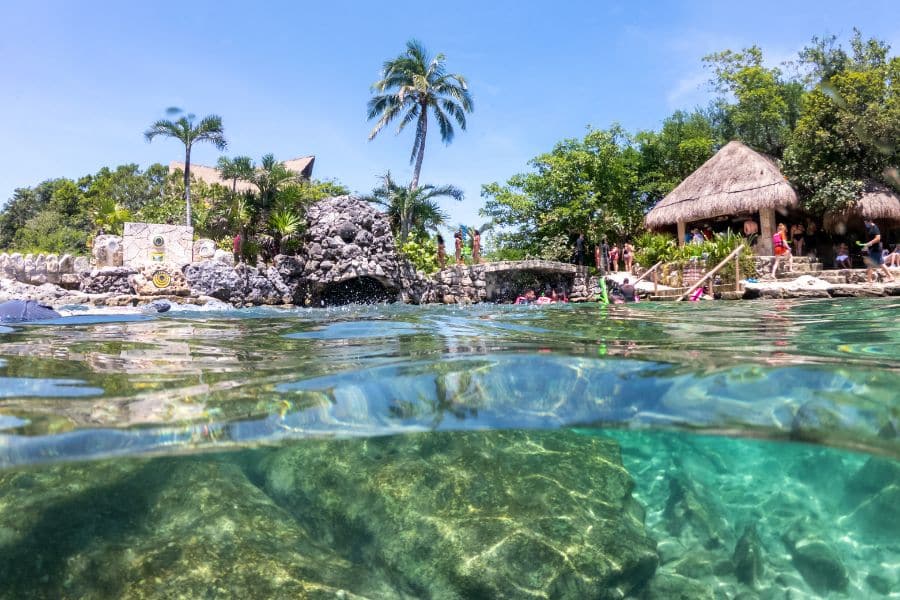
The Riviera Maya and Playa del Carmen give you beach life with modern infrastructure. Prices have risen here too, particularly in Playa, but you can still find good value if you live a few blocks inland rather than right on the beach.
Merida in the Yucatan has emerged as a favorite for people who want authentic Mexican culture without the tourist circus. It’s hot and humid from May through September, but the rest of the year is gorgeous. The cost of living stays low, the food is outstanding, and the crime rate is among the lowest in Mexico.
What Mexico Actually Costs
Here’s where Mexico shines. Outside the most popular expat areas, you can live very comfortably on $1,500 to $2,000 per month as a couple. That includes rent, utilities, groceries, dining out regularly, and entertainment.
Healthcare is excellent and cheap. A doctor’s visit runs $30 to $50. Dental work costs a fraction of US prices. Many Americans head to border cities specifically for medical care.
Private health insurance, if you want it, costs $100 to $300 per month, depending on your age and coverage level.
No. 5 Panama

Panama has one of the world’s most generous discount programs. The Pensionado program, established back in 1987, gives retirees substantial discounts on everything from utilities to entertainment. We’re not talking small percentages here. These are real savings that add up to thousands annually.
The Pensionado Visa
Panama’s Pensionado Visa requires proof of a lifetime pension of at least $1,000 monthly. That pension can come from government programs like Social Security, military pensions, or private company retirement plans.
If you buy property in Panama worth at least $100,000, the pension requirement drops to $750 monthly.
Each dependent adds $250 to the monthly requirement. So, a couple without property needs $1,250 per month. With property, that drops to $1,000.
The visa grants immediate permanent residency. You read that right. No temporary period, no waiting around. You apply, get approved, and you’re a permanent resident from day one.
The only physical presence requirement is visiting Panama once every two years. That’s it. You could theoretically spend most of your time elsewhere and just pop in every 24 months to maintain your status.
After five years as a permanent resident, you can apply for Panamanian citizenship if you want it.
Those Famous Discounts
You get 25% off utilities, including electricity, water, and gas. That’s 25% off your monthly bills, every month, forever.
Restaurants and fast food give you 15% to 25% off. Entertainment venues offer 50% discounts. Hotels give you 25% off. Airlines offer 25% off ticket prices. Medical consultations with private doctors come with 20% discounts. Prescription medications get 10% off.
These aren’t coupons you need to clip or loyalty programs requiring signup. Flash your Pensionado ID, and the discount applies automatically.
A couple living in Panama saving $300 to $500 monthly through these discounts is completely normal.

Where to Base Yourself
Panama City offers big city living with a modern skyline, excellent shopping and dining, and all the conveniences you’d expect from a capital city. It’s humid and hot, but the infrastructure is good. Rent for a nice two-bedroom apartment in a good neighborhood runs $1,200 to $1,800 monthly.
Coronado and the Pacific beaches attract retirees looking for ocean views and a more laid-back pace. You’re about 90 minutes from Panama City, close enough for weekend trips but far enough to feel separate from the urban chaos.
Boquete in the mountains offers cooler weather and spectacular scenery. It’s a small town, very expat-heavy, with a strong sense of community. If you like hiking and outdoor activities, this is your spot.
David, the third-largest city, gives you urban amenities without Panama City prices. It’s flat and hot, but practical for full-time living with good hospitals, shopping, and services.
The Financial Reality
A couple can live comfortably in Panama on $2,500 to $3,500 monthly outside Panama City. In the capital, add another $500 to $800 for higher rent.
Healthcare is excellent. Private insurance runs $100 to $200 per person monthly. Many procedures cost far less than in the US, even when paying out of pocket.
No. 6 Ecuador
Ecuador might be the best value for money on this entire list. The country uses the US dollar as its official currency, eliminating exchange-rate concerns. The cost of living is absurdly low. The weather in most expat areas stays perpetually spring-like. And the visa requirements are among the most accessible you’ll find anywhere.
The Pensioner Visa (Jubilado)
Ecuador’s retirement visa, called the Jubilado Visa, requires proof of a lifetime pension or guaranteed income of at least $1,410 monthly. That’s three times Ecuador’s minimum wage.
For each dependent, add $250 monthly.
The income can come from Social Security, private pensions, 401(k) distributions, IRA withdrawals, or rental income from owned property.
The visa starts as a two-year temporary permit. After 21 months of residence with no more than 90 days spent outside Ecuador, you can apply for permanent residency.
You’ll need to provide a background check from your home country and any country you’ve lived in for five years or more. You’ll need health insurance valid for at least 90 days. And you’ll need to show proof of accommodation in Ecuador, either rental or owned.
The process can be done from outside Ecuador through Ecuadorian consulates, or you can enter as a tourist and apply from within the country.
Where to Live
Cuenca dominates the expat conversation about Ecuador. It’s a beautiful colonial city in the southern highlands with perfect weather year-round. The expat community is enormous. You’ll find English-speaking doctors, American-style grocery stores, restaurants serving food from around the world, and plenty of activities geared toward foreigners.
The downside to Cuenca’s popularity is that it’s becoming more expensive and more crowded. Still affordable by US standards, but not the bargain it was a decade ago.
Quito, the capital, sits at over 9,000 feet in elevation and offers big city amenities. The historic center is stunning. The modern part of the city has everything you’d need. But the altitude bothers some people, and traffic is a nightmare.
For beach living, look at Salinas, Manta, or the smaller coastal towns. The coast is hot and humid, and the infrastructure isn’t as developed as the highlands, but you get ocean views and a completely different lifestyle.
Vilcabamba in the south has a reputation as a longevity hotspot with a very alternative vibe. It’s small, quiet, and attracts people looking to escape modernity.
What You’ll Spend
This is where Ecuador really shines. A couple can live very well in Cuenca on $1,500 to $2,000 monthly. That includes rent, utilities, groceries, dining out regularly, and entertainment.
Outside Cuenca, in smaller cities and towns, costs drop even lower. Some couples report comfortable living on $1,200 to $1,500 monthly.
Healthcare costs are remarkably low. A doctor’s visit runs $20 to $40. Prescription medications cost a fraction of US prices. Private health insurance costs $60 to $150 per month, depending on age and coverage.
The biggest adjustment for most Americans is the slower pace and less developed infrastructure in many areas. Ecuador is not Europe. Things break and take time to fix. The Internet can be spotty outside major cities. But if you’re willing to embrace a simpler lifestyle, the value is unbeatable.
No. 7 Costa Rica

Costa Rica has been a retirement darling for decades, and there’s a reason it keeps showing up on every best places to retire list. It’s genuinely nice here. The beaches are beautiful, the mountains are lush, the weather is perfect, and the people have built an entire culture around the phrase pura vida, which roughly translates to the pure life or the good life or just relax, everything’s fine.
Unlike some countries on this list, where you need to learn a whole new alphabet or navigate completely foreign cultural norms, Costa Rica feels accessible. There’s a massive American expat community. English is common enough in popular areas that you can get by. And the country abolished its military in 1948, making it one of the most peaceful places in Central America.
The Pensionado Visa
Costa Rica’s Pensionado Visa targets retirees with guaranteed lifetime pensions. The requirement is $1,000 per month, making it one of the most accessible programs anywhere.
That pension can come from Social Security, military retirement, private company pensions, or any other guaranteed lifetime source. The key word here is guaranteed. It needs to be income you’ll receive for life, not a retirement account you could theoretically drain.
There’s no minimum age requirement. If you’re 45 and have a monthly pension of $1,000, you qualify. If you’re 75, same deal.
The visa grants temporary residency for two years, renewable indefinitely as long as you maintain the income requirement and spend at least four months per year in Costa Rica. Those four months don’t need to be consecutive. You can visit for a month, leave, come back for two weeks, leave again. As long as the total adds up to four months annually, you’re fine.
After three years of temporary residency, you can apply for permanent residency. After seven years, citizenship becomes possible if you want it.
Here’s an interesting detail. The visa prohibits you from working as an employee for a Costa Rican company. But you can own a business. You can work remotely for companies outside Costa Rica. You can freelance. You just can’t take a traditional job with a local employer.
Healthcare and Caja
One requirement catches some people off guard. Once you’re approved for the Pensionado Visa, you must enroll in Caja, Costa Rica’s public healthcare system. You’ll pay between 9% and 11% of your declared monthly income into the system.
On $1,000 monthly, that’s roughly $90 to $110 per month. For a couple both receiving pensions, it adds up. But here’s what you get in return. Access to Costa Rica’s universal healthcare system, which covers the vast majority of medical care at little to no additional cost.
Many expats supplement Caja with private insurance for faster access to specialists and private hospitals, but the public system works, and it’s comprehensive. Doctor visits, hospitalizations, prescriptions, all covered.
Where to Live
The Central Valley, which includes the capital San Jose and surrounding towns like Escazu, Heredia, and Alajuela, offers the most developed infrastructure. You’re close to international airports, quality hospitals, shopping, and services. The climate stays spring-like year-round at elevation.
The downside is traffic. San Jose has serious congestion problems, and the surrounding areas aren’t much better during rush hours.
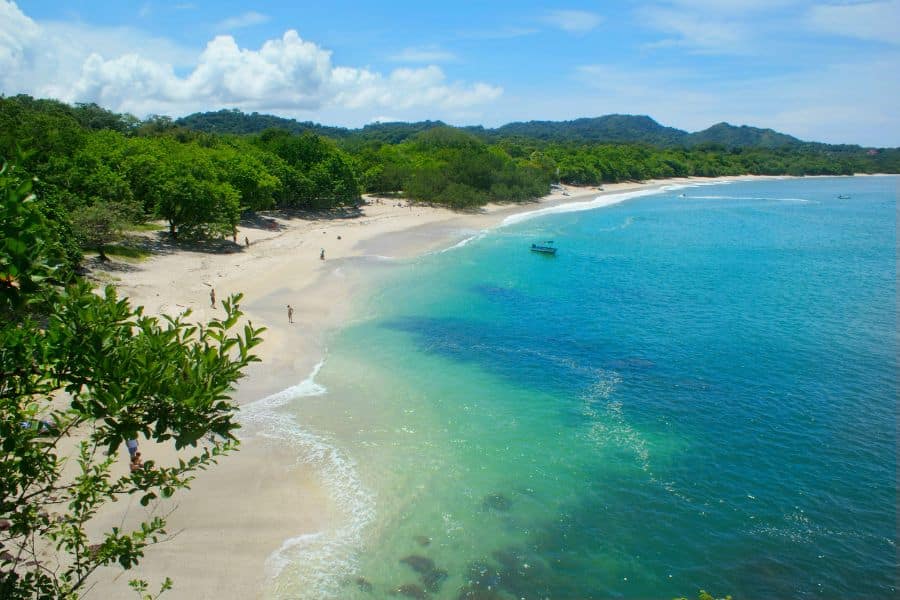
The Pacific coast draws beach lovers. Towns like Tamarindo, Jaco, Quepos, and the Nicoya Peninsula offer ocean access, surfing, fishing, and a more laid-back vibe. Prices here have climbed significantly as tourism has exploded, but you can still find value if you live a bit inland from the tourist strips.
The Caribbean coast around Puerto Viejo offers a completely different feel. It’s more remote, more Afro-Caribbean in culture, rainier, and significantly cheaper than the Pacific side. Infrastructure is less developed, which appeals to some people and frustrates others.
Monteverde and the cooler mountain towns attract people who want cloud forests and a genuinely peaceful atmosphere. These areas stay cooler year-round and offer spectacular nature without beach crowds.
The Financial Reality
Costa Rica used to be dirt cheap. It’s not anymore. Tourism and foreign investment have driven prices up significantly, especially in popular expat areas.
A couple can live comfortably on $2,000 to $3,000 monthly outside the most expensive tourist zones. In places like Tamarindo or Escazu, add another $500 to $1,000 for rent alone.
Groceries cost more than in Mexico or Ecuador but less than in the US. Dining out at local sodas, small family restaurants serving traditional food, stays cheap. Tourist restaurants charge tourist prices.
Utilities are reasonable. The Internet is good in most areas. Cell service covers the country well.
The biggest financial consideration beyond rent and healthcare is how you handle your pension deposits. Costa Rica requires you to transfer your pension income into a Costa Rican bank account. You’ll deal with exchange rates and transfer fees unless you set up efficient systems.
Taxes and Import Benefits
Costa Rica operates on a territorial tax system. Foreign-sourced income isn’t taxed. Your pension, your Social Security, your investment income from outside Costa Rica, all untaxed by Costa Rican authorities.
If you earn money in Costa Rica through local business activities or rental income from Costa Rican property, that gets taxed at progressive rates from 0% to 25%.
Pensionados enjoy some import benefits. You can bring in household goods tax-free. You can import vehicles with significant tax reductions. These aren’t small savings given how expensive importing vehicles to Costa Rica normally costs.
The Reality Check You Need to Hear
Before you start packing boxes and researching international moving companies, let’s be honest about what moving abroad actually means.
It’s not a permanent vacation. You will have frustrating days dealing with bureaucracy in a language you don’t speak fluently. You will miss things about home, sometimes intensely. Family events become harder to attend. Old friendships fade when you’re not there for the casual coffee meetups and weekend dinners.
Healthcare, while often cheaper and sometimes better, comes with its own complications. Finding English-speaking doctors in popular expat areas is easy. Finding them in smaller towns might not be. If you have complex medical needs, research healthcare options thoroughly before committing to any location.
Your money goes further, but that doesn’t mean you can live like royalty on a modest pension. These countries are affordable, but you still need to budget carefully, especially in the first year when unexpected costs pop up constantly.
The visa process, while simpler than investment schemes, still requires patience and paperwork. Gather documents. Get them translated and notarized. Deal with consular appointments. Plan for delays. Nothing moves as quickly as you’d like.
You’ll need to file US taxes every year, regardless of where you live. The Foreign Earned Income Exclusion and Foreign Tax Credit prevent double taxation on most income, but you still need to file. Many expats hire accountants familiar with expat tax situations. Budget $500 to $1,000 annually for this.
Making the Decision
So how do you choose?
If you want European lifestyle and culture with easy travel to other European countries, Spain and Portugal top the list. Spain offers more diverse climates and bigger cities. Portugal offers slightly lower costs and a more manageable size.
If you want to minimize travel time and expense back to the US, Mexico wins hands down. The cultural adjustment is easier, the timezone works, and you can drive if you’re moving a lot of stuff.
If you want the absolute lowest cost of living with a straightforward visa process, Ecuador provides unbeatable value.
If you want a country that actively rewards you for living there through discounts and benefits, Panama’s Pensionado program stands alone.
If Mediterranean weather and Greek culture appeal to you and you have the income to meet the higher threshold, Greece’s FIP visa opens European doors.
The best approach? Visit before committing. Spend a month or two in your top choices. Rent an Airbnb and live like a local, not a tourist. Shop in local markets. Use public transportation. See doctors. Visit government offices. Talk to expats who’ve made the move.
Join Facebook groups for expats in your target countries. Ask questions. People are surprisingly generous with advice when you’re genuinely interested.
Don’t burn all your bridges back home. Rent out your house rather than selling it, at least initially. Keep your US bank accounts and credit cards. Make the move reversible for the first year or two while you figure out if it’s really for you.
The Bottom Line
You don’t need to be wealthy to live abroad. You just need a modest, steady income and the willingness to embrace a different pace of life.
These seven countries offer accessible pathways to residency without requiring massive investments or complex requirements. They want people like you. They benefit from having stable, financially independent residents who contribute to local economies without taking jobs from locals.
Will moving abroad solve all your problems? Of course not. Will it give you a chance to stretch your retirement dollars, experience different cultures, and possibly enjoy a higher quality of life than you could afford in the States? Absolutely.
The chaos back home will still be there. Political drama, economic uncertainty, rising costs, all of it will continue whether you’re watching from Toledo, Ohio, or Toledo, Spain.
But you’ll be watching from somewhere you can actually afford to live well. Somewhere you can walk to a cafe and sit in the sunshine. Somewhere, you can see a doctor without mortgaging your future. Somewhere that feels, at least for now, like you’ve found a little peace.
That might be worth the leap.
Disclaimer
The visa requirements, income thresholds, processing times, and program details described in this article were accurate as of November 2025. Immigration policies change regularly, sometimes with little notice. Financial requirements may be adjusted annually based on minimum wage changes or cost of living indices.
Processing times can vary significantly based on application volume and individual circumstances. Before making any decisions or beginning an application process, verify all information directly with the official consulate or immigration authority for your specific situation.
This article is for informational purposes only and does not constitute legal or financial advice. Consider consulting with immigration attorneys or qualified advisors who specialize in the specific country and visa type you’re interested in.
Disclaimer: This article is for general information only and is not professional advice. It may contain affiliate links. Please see our full Editorial Policy for details.

Kylie Lang is a nationally syndicated travel journalist with bylines on the Associated Press Wire & more, a lifestyle writer, and the founder and editor of Your Lifestyle Library (yourlifestylelibrary.com). She holds a BA (Honours) in History from the University of Kent and is a member of the British Guild of Travel Writers.