
Have you ever dreamt of moving abroad and living a completely different lifestyle? I know I have, and I’ve now done it several times, and it can be an absolute minefield if you don’t know where to look. It’s a daunting thought, especially if you’re doing it in a country where they speak a different language.
Having said that, it’s also a huge adventure, which can be incredibly rewarding as you learn to enjoy a new culture and lifestyle. One of the main concerns is usually budget. How can you fund your new life without going broke in the process, and which places let you live for less without compromising on lifestyle?

7 Towns in Europe Where You Can Live for Less Than $2,500 Per Month
I’ve compiled a list of seven places that not only offer a wonderful lifestyle but also let you live on less than $2,500 per month. And this is just the start.
No. 1 Nantes, France
We’re starting in France because it’s where I live, and I made the move about ten years ago from the UK. I’ve also lived in Spain, Australia, and the US, but that’s another story. If it’s rural French life at a great price point you’re after, Nantes is perfect. It sits at the point where six rivers converge before flowing into the Atlantic, which explains why it became one of France’s wealthiest ports in the 18th century.

The city made its fortune in shipbuilding, but these days, the old shipyards have transformed into creative spaces, and the industrial cranes that once loaded cargo now hold art installations.
Living here costs around $1,800 to $2,200 a month, including rent, according to Nomads Cost of Living.
A one-bedroom apartment in a decent neighborhood runs about $700 to $900, leaving plenty for everything else. The tram system is excellent and cheap, and you’re close enough to the coast for weekend beach trips and surrounded by Loire château country, but without the tourist infrastructure that makes those famous towns expensive.
The city has a university population, and neighborhoods like Bouffay have medieval streets and good restaurants, while Île de Nantes shows you the converted warehouse side of the city. The French lifestyle has worked wonders for me, and I wouldn’t live anywhere else.
The Logistics
- Apartment hunting: Use Leggett Estate Agent or SeLoger. Bouffay and Graslin neighborhoods run €700-900/month for a one-bedroom. Avoid agency fees by looking for direct rentals (particulier à particulier).
- Transport: The TAN network tram and bus pass costs €59.50/month, unlimited. The system is excellent and covers the entire city. Buy at any tram station.
- Market day: Talensac covered market is open Tuesday through Sunday, best on Saturday mornings. This becomes your weekly ritual for cheese, produce, and meat at reasonable prices.
- Gym and activities: Basic gym memberships run €30-40/month. The city has free outdoor fitness equipment along the Loire riverbanks if you want to skip the membership.
- Utilities and internet: Expect around €150-180/month for electricity, water, and fiber internet combined. The French internet is fast and relatively cheap compared to other countries.
No. 2 Valencia, Spain
Valencia spent centuries overshadowed by Barcelona and Madrid. What most people don’t know is that Valencia was once the capital of its own medieval kingdom, ruling territories across the Mediterranean, including parts of southern Italy.

Monthly costs here range from $1,600 to $1,900, including a one-bedroom apartment in a livable neighborhood for around $800, according to Globex. The central market, Mercado Central, sells produce so fresh and cheap you won’t be able to get enough of it.
A menu del día with three courses and wine costs 12 euros, and the metro connects everything for pocket change. You’re living in a proper Mediterranean city with beaches inside the city limits, but paying less than half what Barcelona charges for the same lifestyle.
Neighborhoods like Ruzafa have vintage shops and third-wave coffee, while El Carmen gives you medieval streets and bars. Your beach is a 20-minute bike ride away, the mountains are an hour north, and paella was invented here. Summers get hot, but everyone disappears for siesta, and winters are mild enough that outdoor terraces stay open year-round.
The Logistics
- Apartment hunting: Idealista and Fotocasa are the main sites. Ruzafa runs €800-900 for a one-bedroom, Benimaclet is cheaper at €650-750. Expect to pay one month’s deposit plus one month to the agency.
- Transport: Monthly metro pass (Bonometro T3) costs €43.70 for zones A, B, C. Single rides are €1.50. The metro connects the beaches, city center, and airport.
- Market day: Mercado Central is open Monday through Saturday until 3 p.m. Mercado de Ruzafa is smaller and less touristy. Both have incredible produce at prices that make supermarkets look expensive.
- Gym and activities: Municipal gyms run €30-35/month. Beach volleyball, running groups, and outdoor swimming are free year-round because the weather allows it.
- Utilities and internet: Budget €120-150/month for electricity, water, and internet. Summer air conditioning pushes the electric bill higher, but winters are mild enough to skip heating most days.
No. 3 Porto, Portugal
Porto built its wealth on the wine trade, shipping barrels of port down the Douro River to thirsty Europeans for centuries. The Vila Nova de Gaia district across the river still holds dozens of port wine cellars where families have been aging wine in oak barrels since the 1600s.
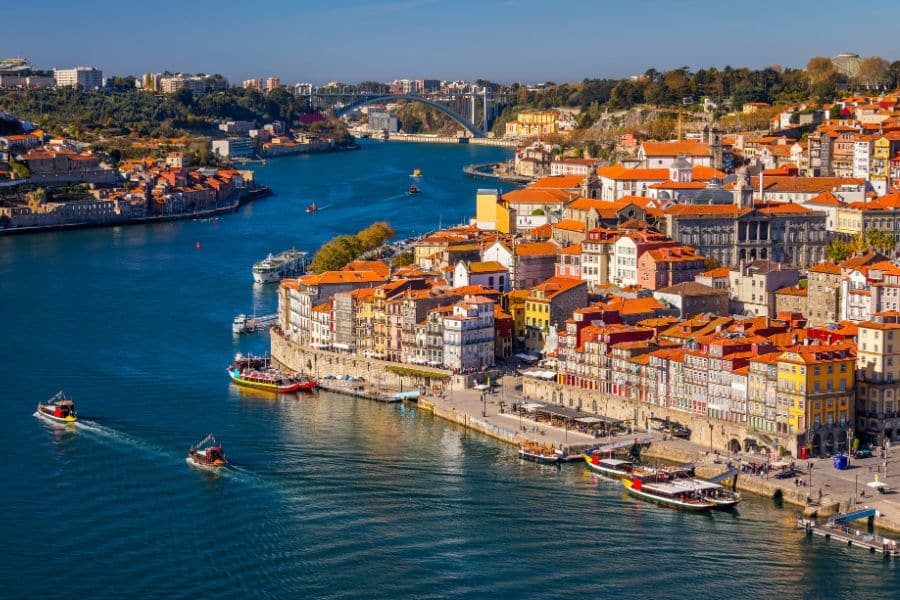
You can still tour their caves and taste wines that have been sitting in darkness longer than most countries have existed. You’ll see the city’s history in azulejo tiles covering building facades and in the narrow medieval streets of Ribeira that tumble down to the water.
A single person can live in Porto for around €1,700 to €1,900 per month, including rent, according to Portugal Investment Properties. A one-bedroom apartment in the city center runs about €1,025, dropping to €740 outside the center. The food markets sell fresh fish hauled in that morning, produce from nearby farms, and bread from bakeries that still bake in wood-fired ovens.
A lunch with wine costs €10 to €12, and the public transport network connects everything efficiently. You’re paying about 30 percent less than Lisbon while getting the same Atlantic coastline, the same quality wine, and arguably better food.
The Douro Valley stretches east from the city, terraced vineyards climbing steep hillsides where nothing should grow but somehow does. Winters are mild and rainy, summers are warm without being brutal, and the beach town of Matosinhos sits twenty minutes away by metro.
The Logistics:
- Apartment hunting: Use Idealista or Imovirtual for listings. Neighborhoods like Cedofeita or Bonfim offer better value than the tourist-heavy Ribeira. Expect to pay first and last month’s rent plus one month’s deposit upfront.
- Transport: The Andante monthly pass covers metro, bus, and some trains for €40 (Zone 2). Single trips cost €1.30. The metro runs to the beach, airport, and most neighborhoods you’d want to live in.
- Market day: Mercado do Bolhão reopened after renovation and runs Monday through Saturday. Smaller neighborhood markets like Mercado de Foz have better prices and fewer tourists buying single tomatoes for photos.
- Gym and activities: Municipal gyms cost €25-30/month. Running along the Douro riverfront is free and gives you better views than any treadmill. Beach access by metro means outdoor swimming from May through October.
- Utilities and internet: Budget €120-150/month total for electricity, water, and fiber internet. The Portuguese internet is fast and reliable. Winter heating costs stay low because the climate rarely gets truly cold.
No. 4 Thessaloniki, Greece
Thessaloniki was founded in 315 BC by a Macedonian king who named it after his wife, Alexander the Great’s half-sister. The city grew into one of the Byzantine Empire’s most important ports, second only to Constantinople, and you can still see that wealth in the Rotunda’s mosaics and the massive city walls that held off invaders for centuries. Thessaloniki has more Byzantine churches than almost anywhere else in the world, fifteen of them UNESCO-listed.
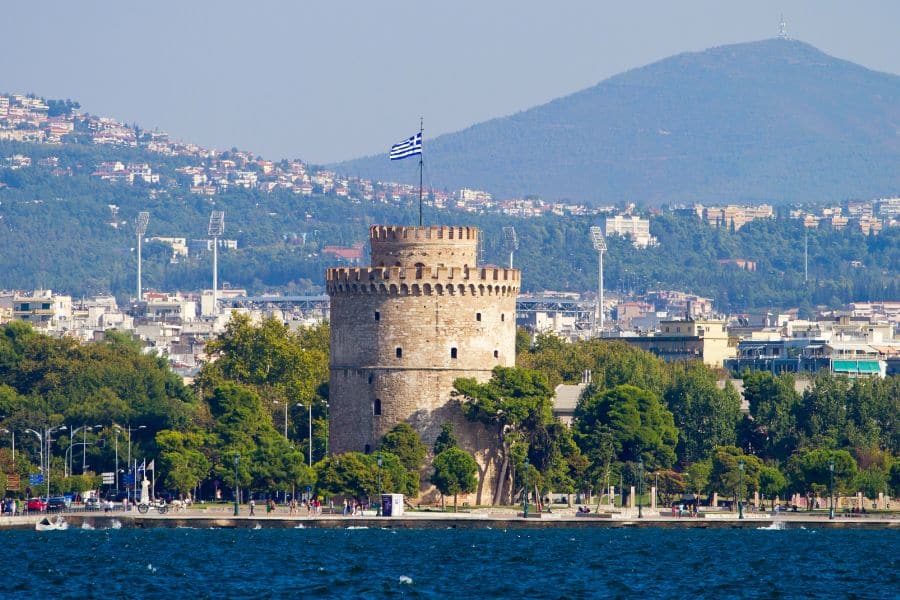
A single person can live here for €850 to €1,200 per month, including rent, according to Iland. A one-bedroom apartment costs €350 to €600, depending on the neighborhood; utilities cost €100 to €150; and a solid meal at a taverna costs €10 to €15.
The city sits right on the Thermaic Gulf with a waterfront promenade that stretches for miles, mountains visible to the north, and beaches within easy reach by bus. The pace here is slower than in the capital but faster than on the islands. Locals sit for hours at cafes along Aristotelous Square, and the evening volta (stroll) fills the waterfront every night regardless of season.
The food markets sell vegetables and fish, and the city’s position as a university town means there’s always something happening. Winters are cold by Greek standards, but still mild; summers are hot, and the Halkidiki peninsula, with its three fingers of beach, sits an hour away.
The Logistics:
- Apartment hunting: Use Spitogatos or XE for listings. Neighborhoods like Ano Poli (upper town) or near Aristotle University offer better value than the waterfront. Expect to pay one to two months’ deposit plus the first month’s rent upfront.
- Transport: A Monthly bus pass costs €30 and covers the entire city. The new metro opened recently and connects key areas. Single bus tickets are €1. Taxis are cheap enough for occasional use at night.
- Market day: Kapani Market (Vlali) and Modiano Market operate Monday through Saturday. Get there early for the best fish and produce. Locals shop here daily because prices beat supermarkets, and the quality is better.
- Gym and activities: Municipal gyms run €25-35/month. The waterfront has free outdoor workout equipment and running paths. Swimming at nearby beaches from May through October costs nothing but bus fare.
- Utilities and internet: Budget €100-150/month total for electricity, water, and internet. Heating costs rise in winter, even as temperatures drop, unlike in southern Greece. Internet speeds are good, and fiber is available in most neighborhoods.
No. 5 Split, Croatia
Split grew around the retirement palace of Roman Emperor Diocletian, who abdicated in 305 AD and spent his final years growing cabbages in what is now the city’s old town. The palace walls still stand, and the entire ancient complex has been continuously inhabited for 1,700 years. What started as an emperor’s seaside villa became a fortified town where people built homes inside the ancient corridors, opened shops in Roman basements, and turned the emperor’s mausoleum into a cathedral.
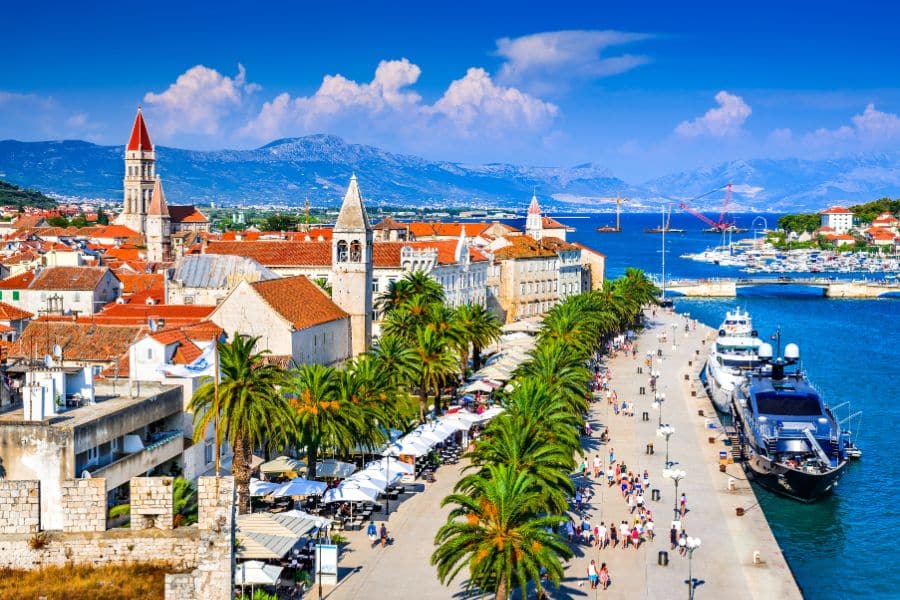
Living in Split costs an average of $1,560 per month, according to recent data. A one-bedroom apartment in the city center runs €500 to €750, dropping significantly outside tourist areas or if you hunt during off-season months from October through April.
The pazar (market) sells Dalmatian produce, fresh fish caught that morning, and local cheese at prices that make cooking at home the obvious choice. A decent meal at a konoba costs €10 to €15, less if you find where locals eat instead of tourists. The Adriatic sits right there, ferries connect you to dozens of islands, and the mountains rise behind the city close enough for afternoon hikes.
Summer brings cruise ships and crowds that pack the palace walls, while winter returns Split to the locals. The Riva promenade fills every evening with people walking, drinking coffee, and watching the sunset light up the stone.
Neighborhoods like Varoš or Manuš, away from the palace, offer a more authentic residential experience where you hear Croatian more than English and rent costs half as much. The climate is Mediterranean, perfect, ferries to Hvar or Brač leave multiple times daily, and the entire Dalmatian coast stretches north and south, waiting to be explored on weekends.
The Logistics:
- Apartment hunting: Use Njuskalo or Index Oglasi for local prices aimed at Croatians, not expat rates. Neighborhoods outside the old town, like Spinut or Meje, offer better value. Start searching from October through April, when owners can’t get short-term tourist rates.
- Transport: City buses cost €1.50 per ride, and a monthly pass costs around €50. Most neighborhoods are walkable or bikeable. The city is compact enough that you probably won’t need the bus pass unless you live far out.
- Market day: The Green Market (Pazar) operates daily, but Saturday morning is when everyone shows up. Get there early for the best selection. This is where you’ll cut your food costs in half compared to supermarkets.
- Gym and activities: Fitness centers run €30-40/month. The coast offers free swimming from May through October, hiking trails start at the city edge, and the Marjan Hill Forest Park offers running paths and workout areas for free.
- Utilities and internet: Budget €150-200/month for electricity, water, and internet combined. Summer air conditioning pushes electric bills higher. The Internet is reliable, and fiber is available in most areas. Check providers like A1 or Telemach for the best deals.
No. 6 Brașov, Romania
Brașov sits in the heart of Transylvania, surrounded by the Carpathian Mountains in almost the exact center of Romania. The city grew around a 13th-century settlement established by the Teutonic Knights, later becoming one of the seven walled citadels built by Transylvanian Saxons.
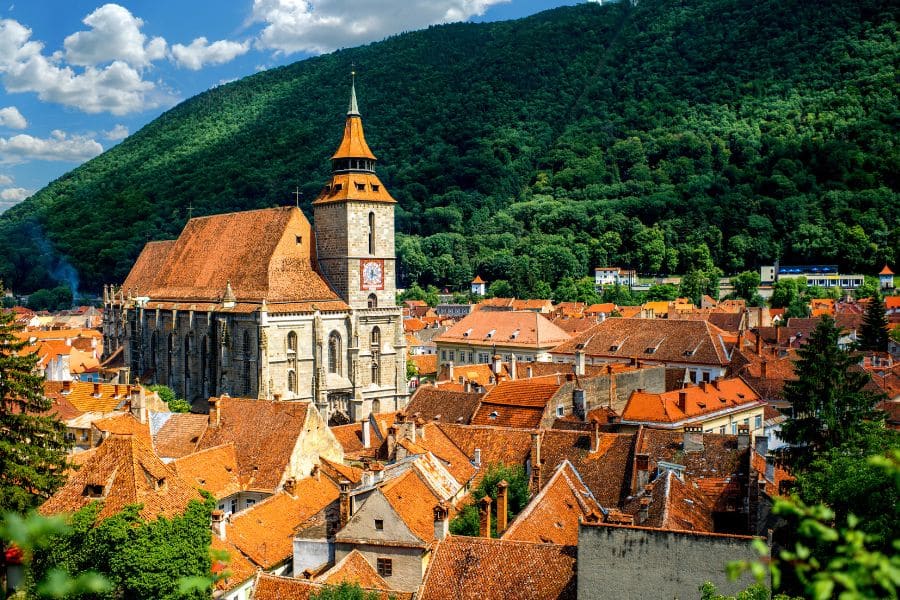
The Council Square still shows German architectural influence, with colorful baroque buildings and the Black Church, a Gothic cathedral that got its name after fire in 1689 darkened the walls with smoke. Mount Tâmpa rises directly behind the old town, its slopes covered in forest, and a Hollywood-style “BRAȘOV” sign marks the ridgeline visible from everywhere in the city.
Monthly costs here average around $1,418, including rent, according to Nomad List. A one-bedroom apartment in the city center costs $450 to $600, dropping to $350 to $450 outside tourist areas. The food markets sell local produce, cheese from mountain shepherds, and fresh bread at prices that make cooking at home not just economical but a pleasure.
A meal at a traditional restaurant runs $8 to $12. You’re paying Eastern European prices while living in one of Transylvania’s most beautiful medieval cities, surrounded by hiking trails and ski slopes. The old town centers on Republicii Street, where buildings painted in yellows, reds, and oranges line pedestrian cobblestones.
Winters bring serious snow and skiing at Poiana Brașov, Romania’s premier ski resort, fifteen minutes from the city. Summers turn the surrounding mountains into hiking country, with trails leading to Saxon fortified churches, medieval ruins, and views across Transylvania. Bran Castle, marketed as “Dracula’s Castle,” sits thirty minutes away, though Vlad the Impaler probably never spent a night there.
The Logistics:
- Apartment hunting: Use Storia for local listings. Neighborhoods like Astra or Tractorul offer residential living away from tourist prices. Start hunting in October or early spring when the short-term tourist rental season ends and landlords seek year-round tenants.
- Transport: City buses cost 3 LEI ($0.65) per ride, and a monthly pass runs about 100 LEI ($22). Most of the city center is walkable, and biking works except during heavy winter snow.
- Market day: Piața Agroalimentară (Agro Market) operates daily, but Saturday brings the best selection. This is where locals shop for vegetables, meat, dairy, and eggs at prices half what supermarkets charge.
- Gym and activities: Fitness centers run 100-150 LEI ($22-33)/month. Mount Tâmpa has hiking trails starting right from the city center, free to access year-round. In winter, Poiana Brașov ski resort is accessible by bus for around 10 LEI each way.
- Utilities and internet: Budget 400-600 LEI ($88-132)/month for electricity, heating, water, and internet combined. Winter heating costs increase significantly due to mountain temperatures. Romania’s internet infrastructure is excellent, with some of Europe’s fastest speeds at remarkably low prices.
No. 7 Plovdiv, Bulgaria
Plovdiv claims the title of one of Europe’s oldest continuously inhabited cities, with settlements dating back more than 6,000 years. The city prospered under Thracian rule before becoming a major Roman city called Philippopolis, and you can still walk through a 2nd-century Roman amphitheater that hosts concerts and performances today.
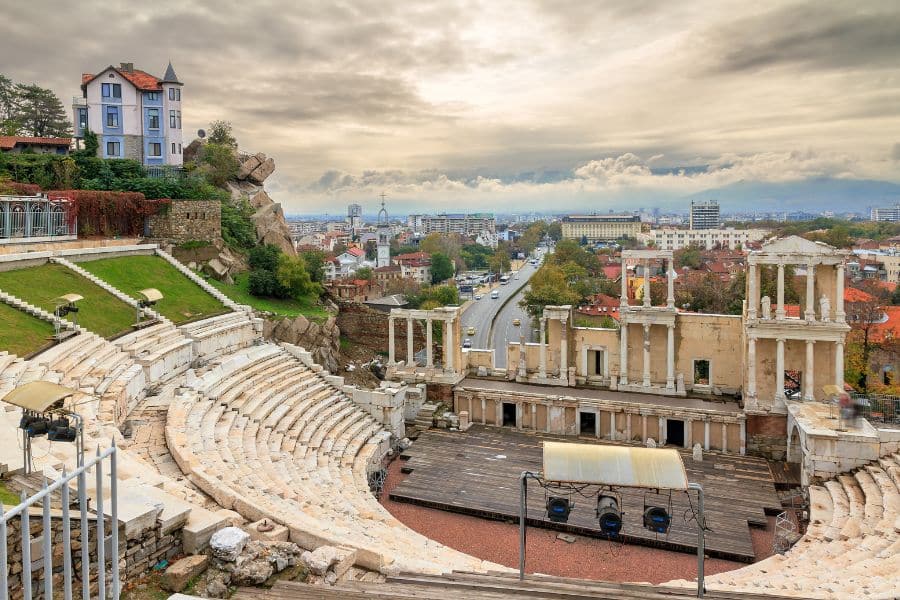
The Old Town spreads across three hills, where colorful Bulgarian National Revival houses with their distinctive overhanging upper floors crowd narrow cobblestone streets. The city served as a crucial trading crossroads for centuries, connecting the Aegean Sea to central Europe, which explains the layers of Greek, Roman, Ottoman, and Bulgarian architecture stacked throughout the city.
A single person can live in Plovdiv for around $1,095 per month, including rent, according to Nomads Cost of Living. A one-bedroom apartment in the city center costs $250 to $380, dropping below $270 outside the center. A meal at a traditional mehana (tavern) costs $6 to $10.
The Kapana district, once the old craft quarter, has transformed into Plovdiv’s creative heart with galleries, cafes, and restaurants filling renovated workshops. The Maritsa River runs through the city, with parks and walking paths along both banks, and the nearby Rhodope Mountains offer weekend escapes.
Plovdiv was named European Capital of Culture in 2019, and the city maintains a thriving arts scene with festivals, concerts, and exhibitions year-round. Summers get hot, but outdoor cafes pack the pedestrian streets every evening, and winters stay relatively mild compared to northern Europe.
The Logistics:
- Apartment hunting: Use Imot for local listings. Neighborhoods like Kapana or near Tsar Simeon’s Garden offer walkable living near the center. Expect to pay one month’s rent plus one month’s deposit upfront.
- Transport: A monthly public transport pass costs 50 BGN ($28). Single bus tickets run 1.50 BGN ($0.85). The city center is compact and walkable, and most neighborhoods are within easy reach. Taxis are cheap for occasional use.
- Market day: The Ladies’ Market (Damski Pazar) operates daily, but mornings are best for selection. This is where locals shop for vegetables, fruit, cheese, and meat at prices far below supermarkets, and the quality is excellent.
- Gym and activities: Fitness centers run 60-100 BGN ($34-56)/month. The city has free outdoor exercise equipment in parks. Running paths along the Maritsa River and hiking trails on the nearby hills are free and accessible year-round.
- Utilities and internet: Budget 150-200 BGN ($84-112)/month for electricity, water, heating, and internet combined. Bulgaria has remarkably fast internet at very low prices. Winter heating costs stay moderate due to the mild climate.
Disclaimer: This article is for general information only and is not professional advice. It may contain affiliate links. Please see our full Editorial Policy for details.

Kylie Lang is a nationally syndicated travel journalist with bylines on the Associated Press Wire & more, a lifestyle writer, and the founder and editor of Your Lifestyle Library (yourlifestylelibrary.com). She holds a BA (Honours) in History from the University of Kent and is a member of the British Guild of Travel Writers.