
If you’ve ever dreamt about escaping it all and spending a week on an island away from the pressures of life, that dream doesn’t usually include hordes of people. At least it doesn’t for me. The dream is my husband and I sitting by the ocean on a deserted island with everything we need for a complete reset and refresh.
And then I wake up knowing I will probably never find that tranquil paradise or afford it. Well, it turns out I’m wrong because these places do exist. The world’s most breathtaking islands are rarely the ones on the glossy magazine covers. The real treasures are the places that haven’t been turned into a luxury brand yet.
These are the hidden gems nobody is talking about because they don’t know they exist, and long may they stay that way.
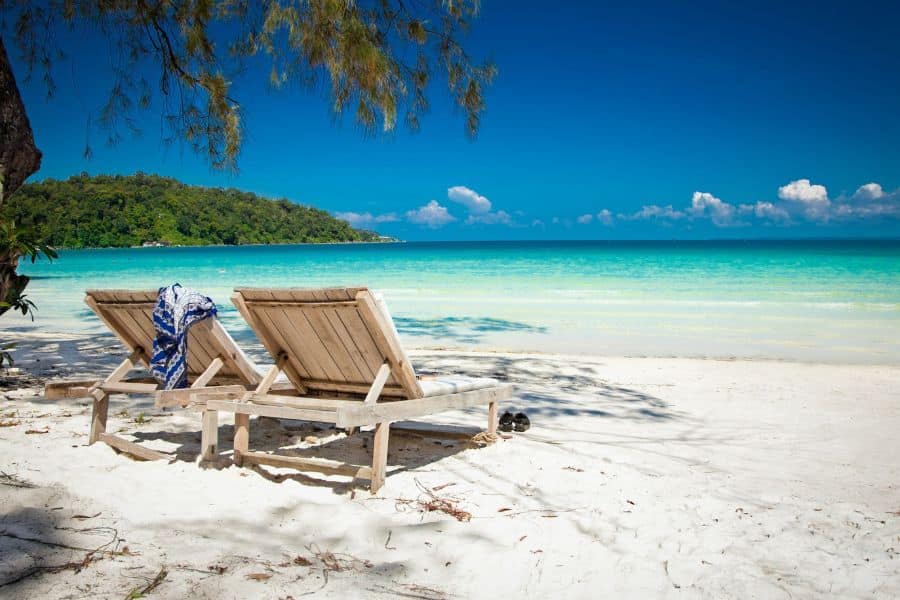
7 Beautiful Island Paradise Escapes That Aren’t Overcrowded Tourist Spots
These seven beautiful island escapes will take your breath away and are remote enough to genuinely slow you down. The dream of you on a beach, a hammock, and a good book is no longer just a dream.
1. Marquesas Islands, French Polynesia

Roughly 1,500 kilometers north of Tahiti, the Marquesas archipelago sits so far out in the Pacific that the early Polynesians who settled Hawaii are believed to have originally set sail from here. Six of the fifteen islands are inhabited, and the population across the whole group barely reaches 10,000.
These are not the turquoise lagoon postcards of Bora Bora. The Marquesas are volcanic, dramatic, and wild: basalt cliffs rising from open ocean, valleys so deep and green they seem to belong to another world, and beaches of black and dark sand rather than the blinding white you might expect.
Paul Gauguin spent his final years on Hiva Oa and is buried there, alongside the Belgian singer-songwriter Jacques Brel, who also chose these islands as his last home. That alone tells you something about the place. On Nuku Hiva, the largest island, you can visit ancient tiki stone statues and archaeological sites.
Horseback riding, hiking into the valleys, and boat trips along the jagged coastline fill the days. The Marquesan people are known for extraordinarily detailed tattooing, a tradition that nearly disappeared under colonial rule and has been revived with fierce pride.
What You Need to Know
- Best time to visit: May to October for the drier season, though the Marquesas are warm year-round
- Nearest airport: No international airport on the islands. Fly into Faa’a International Airport in Papeete (Tahiti), then connect via Air Tahiti or Air Moana on a 3.5-hour domestic flight to Nuku Hiva or Hiva Oa. Flights run only a few times per week, so book connections well in advance
- Currency: CFP franc (XPF).
- Weather: Warm and humid year-round, averaging 27-30°C (80-86°F). The northern group is slightly drier than the southern islands
- Top tip: Consider arriving on the Aranui 5, a passenger-cargo ship that makes a 13-day circuit of the inhabited islands from Papeete. It’s one of the great Pacific journeys and puts you ashore at villages inaccessible by plane
2. Ilha Grande, Brazil

Off the southern coast of Rio de Janeiro state, Ilha Grande spent most of the 20th century as a quarantine island and then a maximum-security prison. The last prison closed in 1994, and because the island was off-limits to development for so long, it entered the tourist era almost entirely intact. Over 60% is now a state park. In 2019, UNESCO declared it a World Heritage Site alongside the colonial town of Paraty on the nearby coast.
The main village, Vila do Abraão, is a small, sandy-streeted place with guesthouses, restaurants, and little else in the way of infrastructure. Trails fan out from here to some of the most beautiful beaches in Brazil: Lopes Mendes, consistently ranked among the world’s finest, is accessible by a 6-kilometer hike or a water taxi.
Pico do Papagaio, the island’s highest peak, rewards a pre-dawn climb with sunrise views across the bay and the forested hills rolling to the horizon. Snorkeling in Lagoa Azul (Blue Lagoon) brings you into clear water alive with fish and coral.
There are no cars on the island. You walk, take a water taxi, or hire a boat. The people who live here are warm and accustomed to visitors without being dependent on them in the way that more commercial destinations tend to be. Crime, even by Brazil’s uneven standards, is minimal.
What You Need to Know
- Best time to visit: April, May, September, and October for smaller crowds, lower prices, and pleasant weather. December to March is peak season, with a lot of domestic tourists
- Nearest airport: Rio de Janeiro (GIG or SDU), then a transfer by shared van or private car to the ferry port at Conceição de Jacareí (about 2.5 hours), followed by a 20-50 minute boat crossing
- Currency: Brazilian Real (BRL).
- Weather: Warm and humid year-round, 20-30°C (68-86°F). December to February is the rainiest period with afternoon downpours. June to August is drier and slightly cooler
- Top tip: Visit Monday to Thursday if you can. Ilha Grande is a weekend escape for city residents, and the island is noticeably quieter mid-week
- Visa note: Americans, Canadians, and Australians currently require a Brazilian visa. The application process is online. Check current requirements before booking
Found this useful? Get more like it in your inbox as a Lifestyle Library Insider.
3. Koh Rong, Cambodia

Cambodia’s second-largest island sits in the Gulf of Thailand, about 25 kilometers off the coast of Sihanoukville. If you’ve heard anything about Sihanoukville recently, it’s probably not good: the mainland city underwent a dramatic transformation after a construction boom and is now widely considered one of the least pleasant stops in Southeast Asia. Koh Rong is the complete opposite. The ferry from the mainland takes 45 minutes and deposits you in a different world.
The island has over 23 individual beaches. Long Set Beach, also called 4K Beach, stretches for four kilometers of fine white sand backed by jungle, with almost no development in sight. Coconut Beach sits in a small bay on the eastern side.
Jungle hikes lead inland to a waterfall near the village of Sok San. But the single most memorable activity on Koh Rong costs nothing: swimming at night. The waters here have one of the densest concentrations of bioluminescent plankton in Southeast Asia, and after dark, every movement through the water sets off bursts of cold blue light.
Most of the island’s residents are Khmer fishing families, concentrated in four villages. Tourism has brought changes, particularly around the main landing area at Koh Touch, but step more than a few minutes away and you’re quickly into a world that feels entirely untouched.
What You Need to Know
- Best time to visit: November to May for the dry season. June to October brings the monsoon and rough seas that make the crossing unpleasant
- Nearest airport: Sihanoukville International Airport, or Phnom Penh International Airport (roughly 4-5 hours by road to the coast). From the pier, take a 45-minute fast ferry to the island
- Currency: US dollars are the primary currency alongside the Cambodian Riel. Most prices are quoted in USD.
- Weather: Hot and humid year-round, averaging 27-32°C (80-90°F). Peak dry season offers reliably calm seas and clear skies
- Top tip: The bioluminescent plankton swim is best on a moonless night away from any artificial light. Ask your accommodation where the clearest spots are, and don’t swim alone after dark
- Note: Remote beaches and eco-lodges often have limited or no electricity after a certain hour.
4. Palawan, Philippines

Palawan sits at the southwestern edge of the Philippine archipelago, a long, narrow island surrounded by the Sulu Sea to the east and the South China Sea to the west. At its northern tip is El Nido, a small fishing town that has become one of the most photographed places in the world for good reason: Bacuit Bay is a scatter of limestone karst islands rising vertically from turquoise water, with hidden lagoons, secret beaches, and cave systems tucked between the cliffs. In 2015, Condé Nast Traveler ranked Palawan the best island in the world.
The island-hopping tours out of El Nido take you through formations 250 million years old, into lagoons where the water shifts from emerald to brilliant blue, and onto beaches where you might be the only people there. Puerto Princesa, further south, is home to the Puerto Princesa Underground River, a UNESCO World Heritage Site where a navigable cave system extends 8 kilometers into a limestone mountain and can be explored by boat. Beyond these highlights, the island’s interior is one of the most biodiverse forests in the Philippines.
The Tagbanua and other indigenous communities have lived on and around these islands for thousands of years. In some protected areas, they manage access directly, and tours are designed in accordance with their guidelines. Your presence here supports communities actively working to protect their home from large-scale development.
What You Need to Know
- Best time to visit: December to May during the dry season. June to November brings monsoon rains and rough seas that can interrupt island-hopping tours
- Nearest airport: Lio Airport (El Nido) has direct daily flights from Manila via AirSwift (about 1 hour 20 minutes), which is the most convenient option. Alternatively, fly to Puerto Princesa International Airport and take a 5-7 hour van transfer north to El Nido
- Currency: Philippine peso (PHP). Cash is strongly preferred, including by most tour operators and local restaurants.
- Weather: Hot and humid, 27-33°C (80-91°F). December to February is slightly cooler and less humid. Short afternoon showers can occur even in the dry season
- Top tip: Book island-hopping tours through your accommodation or a reputable local operator, rather than the first booth you see on arrival. Smaller operators often run more flexible boats with fewer people per trip
5. Taveuni, Fiji

Fiji’s third-largest island sits in the northern Koro Sea, about 40 kilometers across the Somosomo Strait from Vanua Levu. Known as the Garden Island, Taveuni is covered in rainforest up to its peaks, fed by some of Fiji’s highest rainfall. More than 80% of the island falls within the Bouma National Heritage Park.
It’s 42 kilometers long and home to around 10,000 people, which means most of it remains quietly spectacular and largely undiscovered compared to the resort-heavy Mamanuca and Yasawa island groups that most Fiji visitors never leave.
For divers, the Somosomo Strait is home to the Rainbow Reef, widely considered one of the top five dive sites in the world. The density of soft coral, the visibility, and the variety of marine life make it remarkable even by Pacific standards. On land, Tavoro Waterfalls in Bouma National Heritage Park cascade through three tiers that you can swim in.
The Lavena Coastal Walk is a half-day trail along the shoreline to a remote beach accessible only by foot. And then there’s this: the International Date Line runs through Taveuni, and a small marker on the eastern coast lets you stand with one foot in two different days.
Fijian culture is warm in a way that immediately disarms you. The villages around Taveuni maintain strong traditions of communal life, kava ceremonies, and extended family networks.
What You Need to Know
- Best time to visit: May to October for the dry season, lower humidity, and best visibility for diving. The wet season (November to April) coincides with cyclone risk but offers lush scenery and lower prices
- Nearest airport: Matei Airport on Taveuni’s northern tip. Domestic flights from Nadi International Airport take about 70-75 minutes via Fiji Airways/Fiji Link. Book early, as these are small 16-seater aircraft
- Currency: Fijian Dollar (FJD).
- Weather: Warm and tropical year-round, 24-32°C (75-90°F). The island’s topography means you can have sun on one side and rain on the other on the same afternoon
- Top tip: Sunday is genuinely observed as a day of rest throughout Fiji. Many businesses and activities close. Plan your activities around this rather than against it
6. Gili Islands, Indonesia
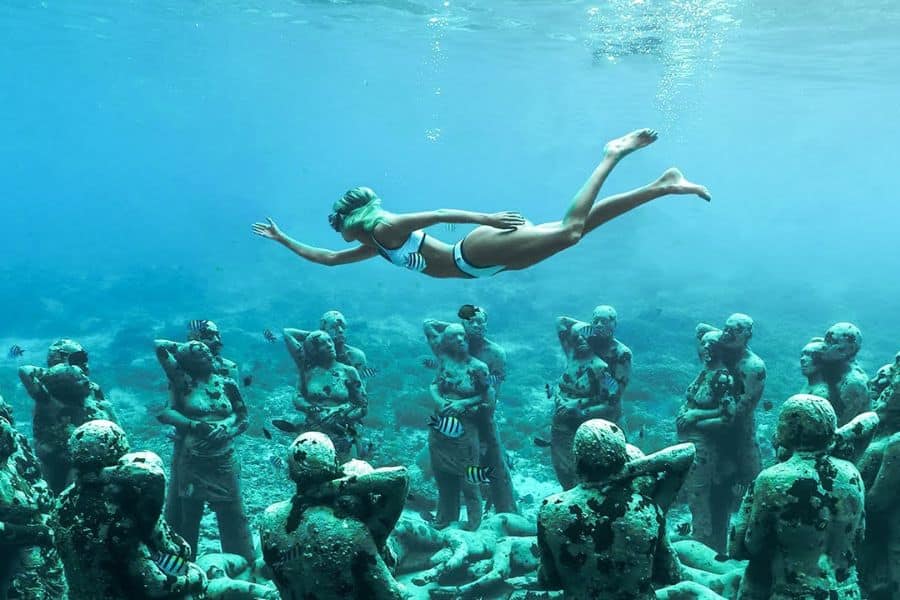
Three small islands sit just off the northwest coast of Lombok in Indonesia, close enough to Bali to reach in about 90 minutes by fast boat. Gili Trawangan, Gili Meno, and Gili Air each have their own personality. Gili T is the most developed and sociable, with a lively beach bar scene and excellent diving infrastructure.
Gili Meno is the smallest and quietest, with local administration actively discouraging loud music and late nights, making it the one to choose if you want genuine peace. Gili Air falls somewhere between the two.
What all three share is the complete absence of any motorized vehicles. No cars, no motorbikes, no scooters. Getting around means walking, cycling, or flagging down a cidomo, a small horse-drawn cart. The diving around all three islands is exceptional. The coral reefs host an enormous variety, and snorkeling is worthwhile even from the beach in many spots.
The Sasak people of Lombok have fished and farmed around these islands for generations, and their communities still exist alongside the tourism. Visit the local warungs (family-run restaurants) in the island interiors rather than the beachfront places, and you’ll eat better and spend a fraction of what the tourist-facing restaurants charge.
What You Need to Know
- Best time to visit: April to September, during the dry season, with sunny skies and calm seas. July and August are the busiest months. April, May, and September offer great weather with far fewer crowds
- Nearest airport: Lombok International Airport (LOP), about 2 hours by taxi plus a 20-minute boat from Bangsal harbour. Most visitors fly into Ngurah Rai International Airport in Bali and take a fast boat directly to the Gilis (approximately 90 minutes from Padang Bai)
- Currency: Indonesian Rupiah (IDR).
- Weather: Hot and humid year-round, 27-32°C (80-90°F). The Gilis get less rain than mainland Lombok, even during the wet season (October to March)
- Top tip: Only book boat transfers with established companies and check that life jackets are provided. Morning crossings are significantly calmer than afternoon ones
- Safety note: Avoid locally distilled spirits and cocktails made with arak. Methanol poisoning from poorly produced local spirits has caused issues. Stick to beer and drinks from established restaurants
7. Andaman Islands, India

Over 500 islands stretch across the Bay of Bengal more than 1,000 kilometers from the Indian mainland, forming a Union Territory that most Indians, let alone international visitors, have never explored. The Andamans are technically part of India, but feel nothing like it: the culture is a layered mix of indigenous tribal communities, descendants of colonial-era convict settlers, Bengalis, Tamils, and Burmese immigrants, all living against a backdrop of dense tropical forest and some of the most pristine coral reefs in the Indian Ocean.
Havelock Island, now officially renamed Swaraj Dweep, is home to Radhanagar Beach, repeatedly named among the best beaches in Asia. The snorkeling and diving around Havelock and the nearby Neil Island (Shaheed Dweep) surpass almost anything available in better-known parts of the region.
The clear, undisturbed water brings extraordinary visibility. Port Blair, the capital and your entry point, is home to the Cellular Jail, a former British colonial prison where independence fighters were incarcerated, if you love a bit of history as I do.
The tribal communities of the Andamans, including the Jarawa people and the famously isolated Sentinelese of North Sentinel Island, are protected by strict government regulations. Contact with these communities is illegal, and the rules exist for good reason: outside contact has historically brought disease and disruption to populations with no immunity. These restrictions deserve complete respect.
What You Need to Know
- Best time to visit: November to May, with December to February being the most comfortable. The monsoon (June to September) brings heavy rain and rough seas that can close some ferry routes between islands
- Nearest airport: Veer Savarkar International Airport in Port Blair, connected by direct flights from Chennai (2 hours), Delhi (3.5 hours), Kolkata (2 hours), and Mumbai. Book well in advance for the Christmas and New Year period
- Currency: Indian Rupee (INR).
- Weather: Tropical and warm year-round, 23-32°C (73-90°F). The islands are relatively protected from typhoons but experience monsoon conditions from June to September
- Top tip: Most foreign visitors no longer require a Restricted Area Permit for the accessible tourist islands, as restrictions were lifted to encourage tourism. Citizens of Afghanistan, Myanmar, China, and Pakistan are still required to obtain one. Check current requirements at the time of booking
Disclaimer: This article is for general information only and is not professional advice. It may contain affiliate links. Please see our full Editorial Policy for details.
Become a Lifestyle Library Insider
Health tips, money know-how, travel deals and garden ideas for life after 50, straight to your inbox.

Kylie Lang is a nationally syndicated travel journalist with bylines on the Associated Press Wire & more, a lifestyle writer, and the founder and editor of Your Lifestyle Library (yourlifestylelibrary.com). She holds a BA (Honours) in History from the University of Kent and is a member of the British Guild of Travel Writers.