
Most of us are pretty good at convincing ourselves that something is probably nothing. My husband is the king of pretending there is nothing wrong when there clearly is.
This is how it goes. A moment of dizziness must be dehydration. Vision that went a little blurry is obviously too much screen time. A headache that came on hard and fast is clearly down to stress.
And nine times out of ten, we’re probably right. But carotid artery disease is a condition that hides behind those everyday explanations. It builds for years, giving almost no indication it’s there, and then announces itself in the worst possible way.
And for women after menopause, it can be deadly. My mom had a stroke just before Christmas, and it has certainly raised my awareness of stroke symptoms and causes. Luckily, I was with her when it happened and could act quickly.

What Menopause Does to Your Arteries
For most of our reproductive years, estrogen acts as a protector. It keeps artery walls flexible, helps manage cholesterol levels, supports healthy blood flow, and reduces inflammation in the blood vessels.
Research published in the journal Stroke found that higher estrogen levels correlate with meaningfully better blood flow through the carotid arteries. In short, estrogen is doing a lot of cardiovascular work behind the scenes, whether we’re aware of it or not.
Then menopause happens, and estrogen levels drop by around 60%.
That loss has consequences that go well beyond hot flashes and disrupted sleep. Without estrogen’s protective influence, LDL cholesterol tends to rise, HDL cholesterol falls, blood pressure climbs, and the artery walls themselves begin to stiffen and become more susceptible to the buildup of fatty deposits called plaque.
Studies comparing pre and postmenopausal women found that the prevalence of carotid artery plaque was 25% in premenopausal women, rising to 54% in women five to eight years after menopause. More than double.
Research also shows that stroke risk roughly doubles in the ten years following menopause. Women are protected from stroke at younger ages compared to men of the same age, but that protection diminishes significantly once estrogen is no longer in the picture.
This is not meant to alarm you, but to make sure you’re paying attention to the right things.
What Are Your Carotid Arteries?
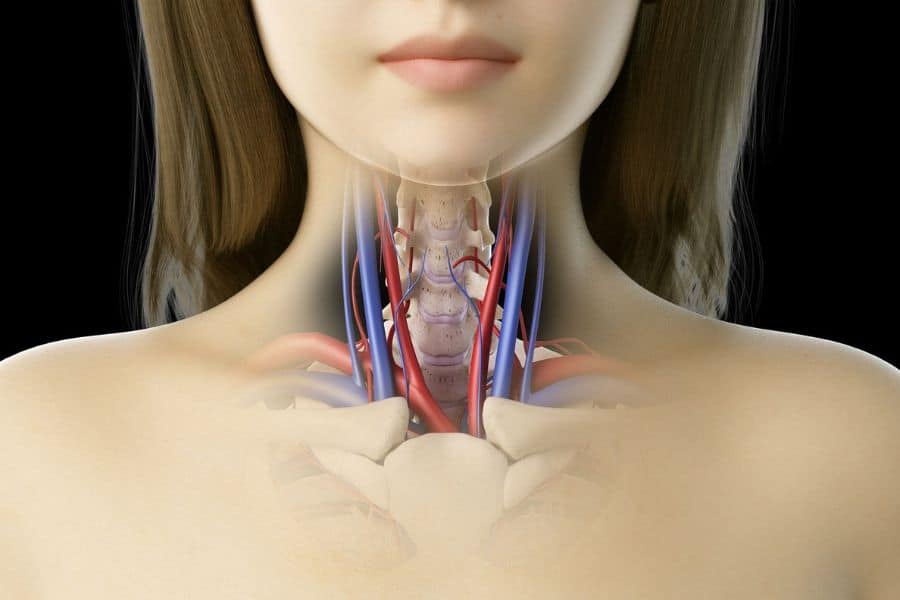
You have two of them, one on each side of your neck, running from your heart up to your brain. You can feel their pulse just below your jawline. Their job is to carry oxygenated blood to the brain, the face, and the head. When they’re healthy, they work like wide-open pipes. When plaque begins to build up along the inner walls, the passage narrows, blood flow to the brain is reduced, and the risk of stroke increases.
This condition is called carotid artery disease or carotid artery stenosis. It develops through the same process that causes heart disease: atherosclerosis, the gradual hardening and narrowing of the arteries through plaque accumulation.
What makes it particularly important to understand is how quietly it tends to progress. There are often no symptoms at all in the early stages. Many women discover it only when a doctor catches an unusual sound during a routine exam, or after experiencing a warning event they very nearly shrugged off.
The Stroke Symptoms That Are Easy to Explain Away
The symptoms of carotid artery disease often arrive quietly, stick around briefly, and then disappear. Which makes them very easy to file under “I’ll keep an eye on it” and promptly forget.
Please don’t.
Sudden weakness or numbness on one side of the body

This can feel deceptively mild. A hand that suddenly seems clumsy when it wasn’t a moment ago. A face that feels strange or heavy on one side. A leg that doesn’t quite cooperate the way it should. The keyword is sudden: this kind of weakness or numbness appears without warning rather than gradually building throughout the day.
When the brain is not receiving enough oxygen due to reduced blood flow, this is one of its distress signals. It often affects just one side of the body because each carotid artery supplies a different part of the brain.
If someone’s smile is drooping unevenly or they cannot keep one arm raised when they try, that is a sign that needs emergency attention immediately. Don’t wait to see whether it passes. This was a big indicator for me when my mom had her stroke. She couldn’t walk properly as her left side was completely numb.
Trouble finding words or speaking clearly
Speech changes connected to disrupted blood flow can range from subtle to obvious. A sudden inability to find a word that should be right there. Speech that comes out slightly slurred or unclear.
Difficulty following a conversation that would normally be easy to track. These things can look from the outside like tiredness or distraction, which is exactly why they’re so often missed.
The brain’s language centers are particularly sensitive to changes in blood supply. People around you may notice something is off before you do, which is worth keeping in mind.
Vision changes, especially in one eye
Sudden blurring, a patch of darkened vision, or seeing double, particularly when these come on without warning and affect primarily one eye, should always be taken seriously. The carotid arteries supply blood not only to the brain but to the eyes.
There is a specific warning sign called amaurosis fugax, where vision in one eye briefly goes dark, as though a curtain has been drawn across it, and then returns to normal. That return to normal can feel reassuring. It isn’t. It’s a reason to seek urgent medical attention, because it indicates the blood supply to the eye was temporarily interrupted.
This happened to my mom in her left eye. She kept complaining that her glasses had dirt on them, but she wasn’t wearing any. Apparently, this is very common.
Dizziness or sudden loss of balance

Feeling unexpectedly unsteady, stumbling without an obvious cause, or experiencing a brief spinning sensation can have many explanations, most of them harmless. But when dizziness appears without a clear trigger, particularly alongside any of the other symptoms on this list, it moves into a different category.
The parts of the brain that control balance and coordination are sensitive to disruptions in blood flow. If those disruptions are connected to carotid artery narrowing, the dizziness is a signal worth acting on.
A severe headache that feels different from anything you’ve had before
There is a particular kind of headache that arrives suddenly and intensely, without any obvious cause. People who have experienced it often describe it as unlike any headache they’ve had before, which is itself an important detail. A headache that builds gradually over a day is a different experience from one that appears hard and fast out of nowhere.
This kind of headache can indicate a serious vascular event. If it happens, seeking medical attention rather than reaching for pain relief is the right response.
When we looked back to the day before mom’s stroke, she’d been complaining of a headache that evening and acute tiredness.
A mini-stroke: the warning you cannot afford to ignore

A transient ischemic attack, or TIA, produces the same symptoms as a full stroke. But they resolve within 24 hours, sometimes within minutes. This is precisely what makes a TIA so dangerous. The symptoms disappear, you feel fine again, and it is extremely tempting to conclude that nothing serious happened.
What has actually happened is that blood flow to the brain was temporarily interrupted. All the warning signs of what a stroke can feel like showed up, and then blood flow was restored before permanent damage occurred. Research consistently shows that someone who has experienced a TIA is around ten times more likely to have a major stroke than someone who hasn’t.
A TIA is a medical emergency. The fact that you feel better doesn’t change that. It needs to be evaluated urgently, ideally on the same day.
Sudden confusion or disorientation
Sudden confusion, where familiar things seem strange or a person seems disconnected from what’s happening around them, can indicate that the brain’s blood supply has been compromised.
The distinction that matters is the word sudden. Gradual mental fogginess over weeks is a different story. Confusion that appears quickly and doesn’t match how you normally feel is worth taking seriously.
This was the biggest thing with my mom. She was very confused and not coherent at all, which, despite her age, was not like her at all.
Persistent fatigue that rest doesn’t fix

This is perhaps the most easily dismissed symptom, particularly for women in midlife when tiredness can be attributed to disrupted sleep, shifting hormones, or simply doing too much. But persistent, unexplained heaviness that rest doesn’t seem to shift can sometimes reflect reduced oxygen delivery through the body.
On its own, fatigue is rarely a clear indicator of anything specific. But when it appears alongside other symptoms on this list, it’s worth mentioning to your doctor rather than accepting it as an inevitable feature of this life stage.
What to Do If Any of This Happens
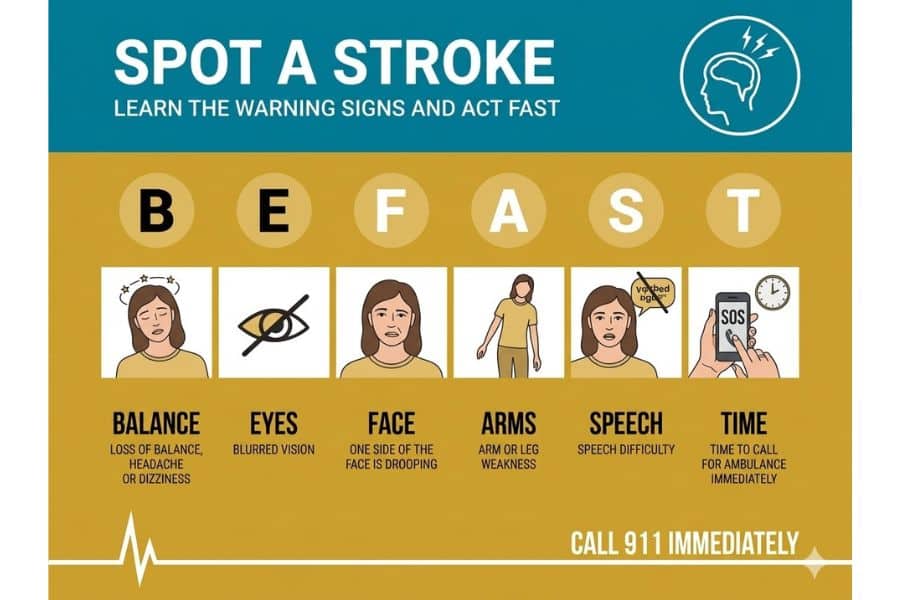
The acronym FAST is worth keeping in your memory: Face drooping, Arm weakness, Speech difficulty, Time to call emergency services. If any of these symptoms last more than a few minutes, call for emergency help.
If symptoms pass on their own, that is still not a reason to wait and watch. It may mean you’ve had a TIA. A same-day call to your doctor is the minimum appropriate response, not something to schedule for next week when things settle down.
I rang emergency services as soon as I realized what was happening, and the ambulance was there within 15 minutes. They said this probably saved her life, as she had multiple seizures when we reached the hospital.
What Can Be Done About It

For mild to moderate blockages, the primary approach is lifestyle change alongside medication. Quitting smoking, if relevant, is one of the most impactful steps, given what tobacco does to arterial walls.
Managing blood pressure and cholesterol are both important, since these are the two modifiable factors most directly linked to plaque buildup, and both are notorious for producing no symptoms at all. You can have blood pressure that puts your arteries under significant daily stress and still feel perfectly fine.
A diet rich in vegetables, whole grains, oily fish, and lean protein supports arterial health. Regular moderate movement, even walking, has a meaningful effect. Statins, which lower cholesterol, have actually been shown in some studies to reduce the thickness of the carotid artery wall itself rather than simply managing further buildup.
For more significant blockages, typically above 70%, a surgical procedure called carotid endarterectomy can remove plaque from the artery through a small incision in the neck. A less invasive alternative uses a thin tube and a tiny stent to widen the narrowed section. Outcomes for both are generally very good when the condition is caught in time.
The Conversation Worth Having with Your Doctor
If you’re postmenopausal and haven’t had your blood pressure and cholesterol checked recently, that’s a sensible starting point. Both can be elevated without any symptoms, and both are things your doctor can help you manage before they become problems.
If you’re experiencing any of the symptoms described in this article, mention them, even if they passed quickly and even if they seem minor. The symptom that lasts thirty seconds and then disappears is sometimes the most important one to report.
Knowing what to look for and being willing to take it seriously when something feels off is one of the most useful things you can do for yourself right now.
Disclaimer: The information in this article is for general informational purposes only and is not a substitute for professional medical advice. If you experience any sudden or concerning symptoms, please contact a healthcare professional or call emergency services without delay.