
If you’re anything like me, the minute January 2nd hits, I get an overwhelming feeling of depression. January is a long month, and where I live in France, it is often rainy, which sends me spiralling down the tunnel of endless gray days. The simple solution is to take myself away to escape the winter blues in January.
Instead of vacationing in the summer when everything is fabulous here in France, I go in the winter. It makes so much sense. It’s cheaper, I can go for longer, and there are way less tourists. However, I don’t always want to go to the obvious places.
So, I set myself a task to find some more off the beaten track kind of places for my winter break. And these are the seven that made it onto my list.

7 Places in Europe Where You Can Escape the Winter Blues in January
Europe has plenty of pockets of winter sunshine. Some you probably won’t have heard of, which is why they’ve made it onto this list. These aren’t going to give you Caribbean heat. We’re talking 60 to 72 degrees, which means you can hike without sweating, eat lunch outside without freezing, and actually enjoy exploring instead of hiding from extreme weather in either direction.
No. 1 Almería, Spain
Almería is a corner of Andalusia that sits in Europe’s only desert, which means it gets around 320 days of sunshine annually. In January, temperatures hover between 62 and 68 degrees, and the sun feels stronger here than anywhere else in Spain because there’s barely any humidity to filter it out.
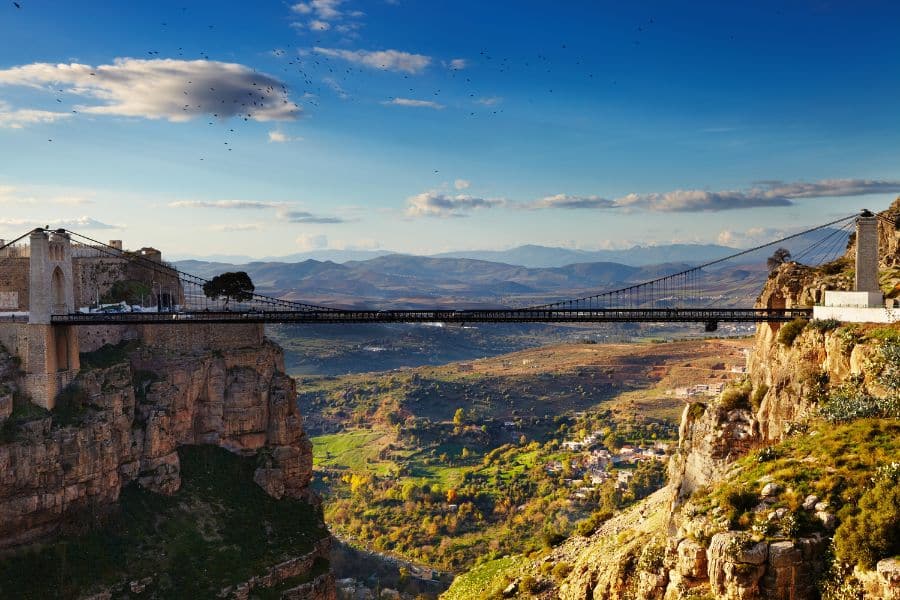
The coastline here is nothing like the overdeveloped Costa del Sol. Cabo de Gata Natural Park protects miles of volcanic beaches, hidden coves, and cliffs that drop straight into the clearest water you’ll see in Spain. The beaches stay empty even when the weather is gorgeous because most people simply don’t know this place exists.
The Alcazaba fortress, built by the Moors in the 10th century, sits on a hill overlooking everything. It’s the second largest Moorish fortress in Spain, after Granada’s Alhambra.
Drive 30 minutes north into the Tabernas Desert, and you’re standing where Clint Eastwood filmed his spaghetti westerns. The landscape is pure Wild West, all rust-colored hills and scrubby vegetation under impossibly blue skies. A couple of the old film sets are still there.
The fishing villages along the coast, places like San José and Las Negras, offer that quiet Mediterranean life people dream about. Whitewashed houses, family-run restaurants serving fish caught that morning, and beaches where you might see three other people all day. In January, it feels like having your own private slice of Spain.
No. 2 Albania’s Riviera
Albania sits right on the same coastline as Greece and Croatia, with the same turquoise water and dramatic mountains dropping into the sea. The difference is that hardly anyone goes there. Most of us couldn’t point to Albania on a map.
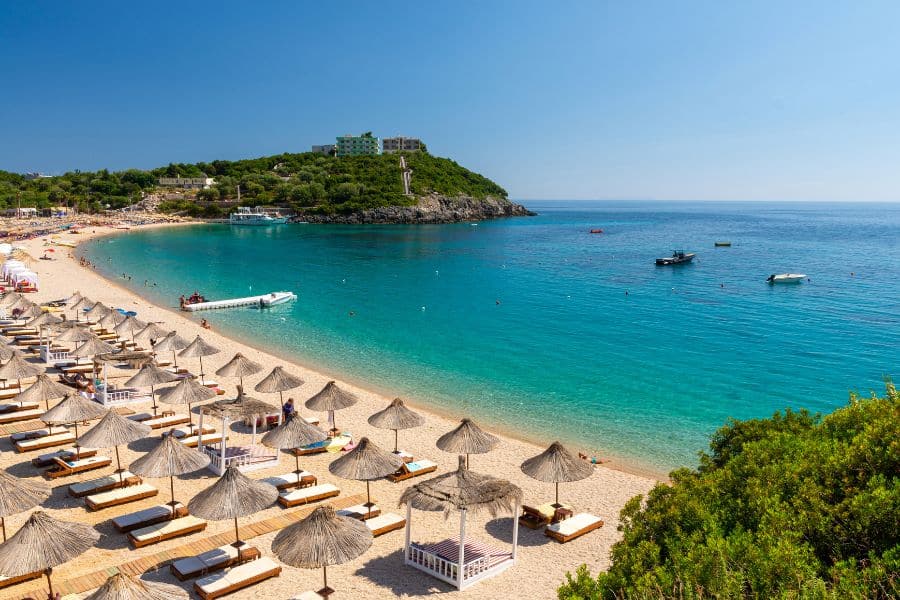
January temperatures along the Albanian Riviera hover between 55 and 60 degrees. It’s not beach weather in the lounging sense, but it’s perfect for coastal walks, exploring villages, and eating outside without needing more than a light jacket. The sea stays around 57 degrees, so swimming is for the brave, but the beaches themselves are spectacular even if you’re just walking on them.
Himara and Dhërmi are the two towns that make the best winter bases. The stone houses climb hillsides overlooking bays that look impossibly blue even in winter light.
Gjipe Beach sits at the end of a canyon between high cliffs, accessible only by a rough hiking trail or by boat. In winter, you’ll have the entire beach to yourself. The Llogara Pass, which connects the coast to the interior, offers views that rival anything in the Mediterranean.
The road winds through mountains with the sea stretching out below, and there are spots to pull over where the only sound is the wind through pine trees. Traditional villages dot the interior, places where old men still sit in cafes playing backgammon, and women sell honey and raki from their doorsteps.
No. 3 Calabria, Italy
Calabria is Italy’s toe, the part that kicks Sicily across the strait. Most tourists skip right over it on their way to more famous destinations. Winter temperatures sit between 58 and 63 degrees. The sea is too cold for swimming, but the coastline is the reason to come. Dramatic cliffs, hidden coves, and fishing villages that look exactly like they did fifty years ago.
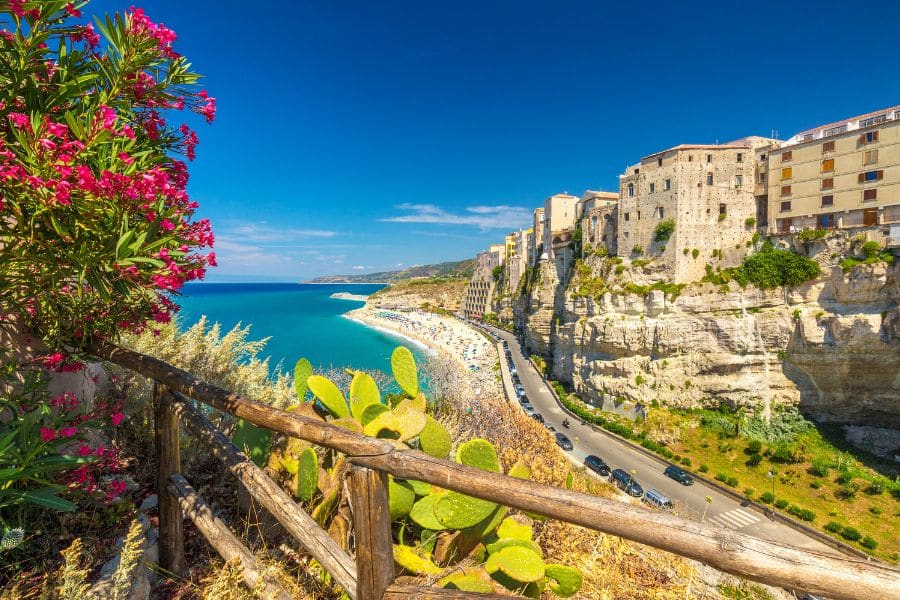
Tropea perches on a cliff above the Tyrrhenian Sea, its medieval center a maze of narrow streets and buildings that seem to grow straight out of the rock. The church of Santa Maria dell’Isola sits on its own rocky outcrop connected to the mainland by a thin strip of land, and the view from up there stretches for miles.
Scilla sits across the strait from Sicily, a fishing village where colorful boats line the beach and swordfish still get hauled in using traditional methods. The Chianalea district, known as “Little Venice,” has houses built right into the water, their foundations lapped by waves.
The Riace Bronzes, two ancient Greek warrior statues pulled from the sea in 1972, live in the archaeological museum in Reggio Calabria. They’re some of the finest examples of classical Greek sculpture in existence, but the museum gets a fraction of the visitors that crowd around lesser pieces in Rome or Florence.
Calabria grows most of the world’s bergamot, that citrus fruit that gives Earl Grey tea its distinctive flavor. The groves line the coast, and in winter they’re heavy with fruit. Local shops sell bergamot everything: marmalade, liqueur, soap, and oil.
No. 4 Comporta, Portugal
Comporta sits on Portugal’s Alentejo Coast, about an hour south of Lisbon, but it feels like a different country entirely. This stretch of coastline has stayed deliberately undeveloped. No high-rise hotels, no beach clubs blasting music, just miles of wild Atlantic beaches backed by sand dunes and rice paddies that turn golden in winter light.
January temperatures range from 60 to 64 degrees. The Atlantic breeze keeps things fresh, and the sun breaks through most days, even when clouds roll in off the ocean. The water stays cold, around 57 degrees, but the beaches themselves are the draw. Long, empty stretches of sand where you can walk for an hour without seeing another person.
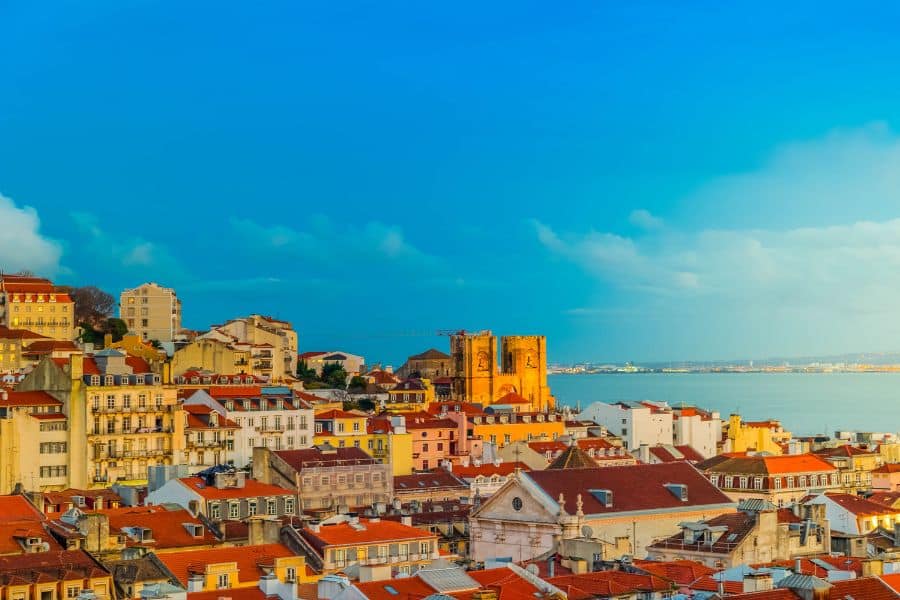
The village of Comporta is a handful of streets, a few restaurants, and some boutique shops that only open when they feel like it. The whole place has a bohemian, barefoot luxury vibe that attracts Portuguese families and a scattering of Europeans who discovered it years ago and keep coming back.
Rice paddies surround the area, remnants of an agricultural tradition that goes back centuries. In winter, they flood, creating mirror-like pools that reflect the sky. Storks nest in the trees, white horses graze in the fields.
Horseback riding along the beach is what Comporta does best. Several local outfits offer rides that take you through the dunes and along the shoreline, the horses splashing through shallow water with the Atlantic stretching endlessly beside you.
The seafood here comes straight from the ocean to your plate. Tiny beach shacks and family restaurants serve grilled fish, clams, octopus, and prawns with nothing more than olive oil, lemon, and salt. The local specialty is arroz de marisco, a soupy rice dish loaded with whatever shellfish came in that day. Order it with a bottle of Alentejo white wine and sit outside watching the sun drop toward the horizon.
No. 5 Kythnos, Greece
Kythnos sits in the Cyclades, just two hours by ferry from Athens, but it might as well be on a different planet from Santorini or Mykonos. The island has over 70 beaches, thermal springs that have been drawing bathers since Roman times, and that authentic Greek island life that disappeared from the more famous spots decades ago.
Winter temperatures hover between 58 and 62 degrees. The sun shines more often than not, and the wind that whips through the Cyclades in summer calms down. Swimming isn’t for the fainthearted, with water temperatures around 61 degrees, but the hot springs at Loutra mix thermal water with the cold sea, creating natural pools that stay warm year-round.
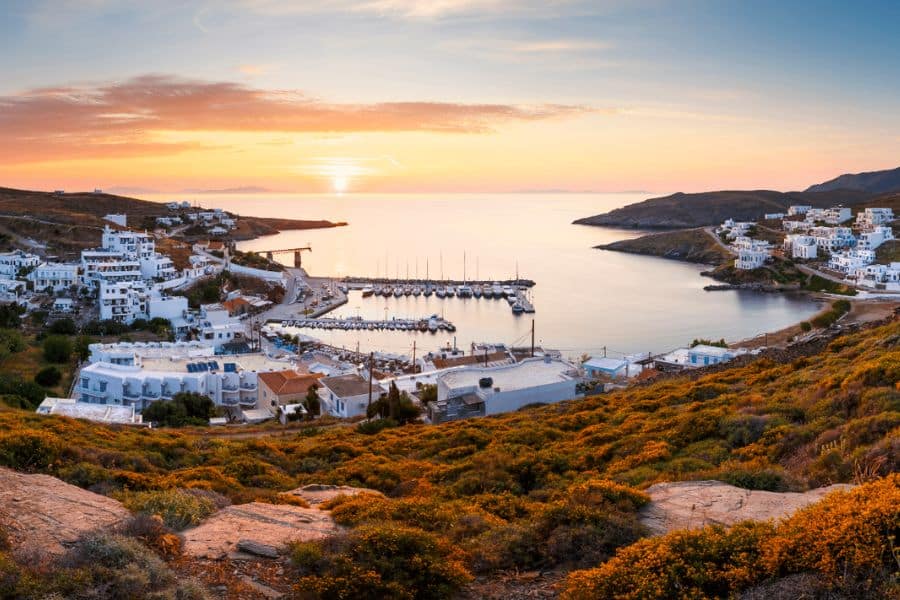
The main port of Merihas is quiet but has everything you need: a handful of tavernas, a couple of rental shops, and fishing boats bobbing in the harbor. From here, you can rent a scooter and spend days exploring beaches that don’t appear on any map. Most of them are accessible only by dirt track.
Kolona Beach is the island’s showstopper, a thin sandbar connecting Kythnos to a small islet, with water on both sides in shades of blue that look photoshopped. In January, you’ll have it entirely to yourself. The sand crunches under your feet, the water laps gently on both shores, and the silence is so complete you can hear your own breathing.
The interior village of Messaria climbs a hillside in the traditional Cycladic style. Whitewashed houses with blue shutters, cobblestone streets too narrow for cars, and flower-covered balconies.
Loutra, the island’s spa town, has thermal springs that bubble up from underground at around 122 degrees. The Romans built bathhouses here, and people have been coming ever since for the mineral-rich waters that supposedly cure everything from arthritis to skin conditions. The modern spa facilities are basic but functional, and soaking in hot water while looking out at the Aegean in January feels like the most decadent thing in the world.
No. 6 Mojacar, Spain
Mojacar clings to a hilltop in Almería province, a tangle of whitewashed houses and narrow streets that look more North African than Spanish. The Moors left their mark here, and the architecture still reflects that heritage centuries later. Below the pueblo, a strip of coastline stretches for miles with beaches that stay empty most of the year.
January temperatures sit between 62 and 66 degrees. The sun shines relentlessly, with Mojacar claiming over 320 days of sunshine annually. Rain is rare as the climate here is drier than almost anywhere else in Europe, creating a microclimate that feels more like Southern California than the Mediterranean.
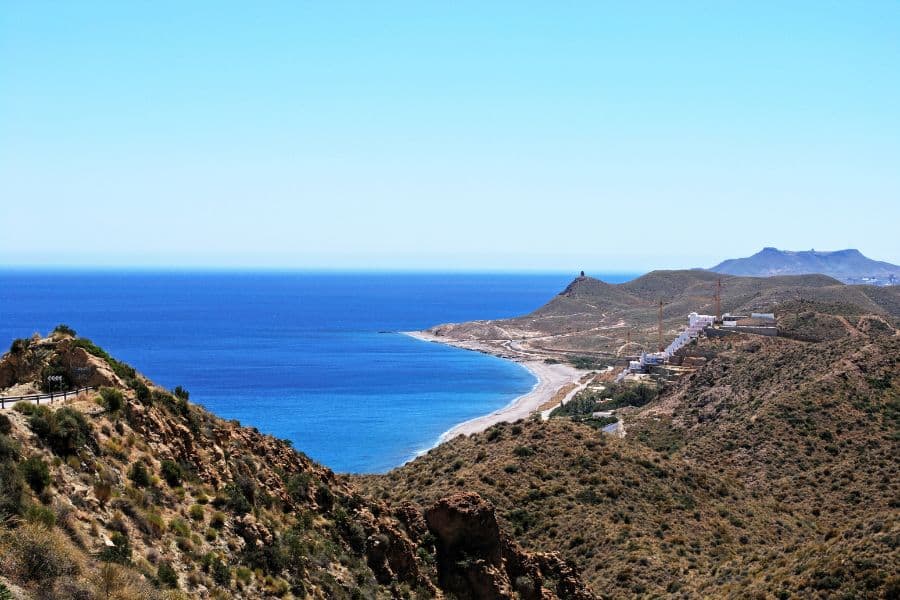
The old town at the top of the hill is a maze worth getting lost in. Streets wind and double back on themselves, opening suddenly onto tiny plazas with views across the valley to the Sierra Cabrera mountains. White walls, bright blue doors and window frames, and bougainvillea spilling over balconies even in winter.
The beaches below are stunning. Long stretches of golden sand backed by low dunes, with clear water and barely a soul in sight. In winter, you might see a few dog walkers and the occasional runner, but otherwise, it’s just you and the Mediterranean. The water is too cold for most people, but the beaches themselves are perfect for long walks when the afternoon sun warms the sand.
The surrounding landscape is pure Almería desert. Dusty hills, dried riverbeds, and vegetation that looks like it belongs in Arizona. The light here is different from the rest of Spain, sharper and cleaner, turning everything golden in the late afternoon. Small farms in the valleys, growing almonds and olives on terraced slopes that haven’t changed in centuries.
Mojacar Pueblo has a laid-back expat community, mostly Northern Europeans who discovered the place years ago and never left. They’ve opened small galleries, craft shops, and restaurants that blend Spanish traditions with international influences.
No. 7 The Algarve’s Western Edge (Sagres and Vila do Bispo)
The western Algarve is where Portugal runs out of land. Sagres sits at the southwestern tip of Europe, where the Atlantic crashes against cliffs that drop 250 feet straight into the foam. This is as far west as you can go without boarding a ship, and the landscape reflects that end-of-the-world feeling. Wind-twisted vegetation and dramatic rock formations
Winter temperatures range from 60 to 64 degrees. The wind picks up in January, but it’s not the bone-chilling cold you’d get further north. The air stays clear and dry, and when the sun breaks through, you can sit outside in a t-shirt. The sea is wild here, with swells that attract surfers year-round and water temperatures around 59 degrees.
Cape St. Vincent marks the actual southwestern point, where a lighthouse has warned ships away from the cliffs since 1904. The fort next to it dates back to the 16th century and was built to protect this strategic corner from pirates and invaders. Stand at the edge where the land drops away, and there’s nothing between you and America except 3,000 miles of ocean.
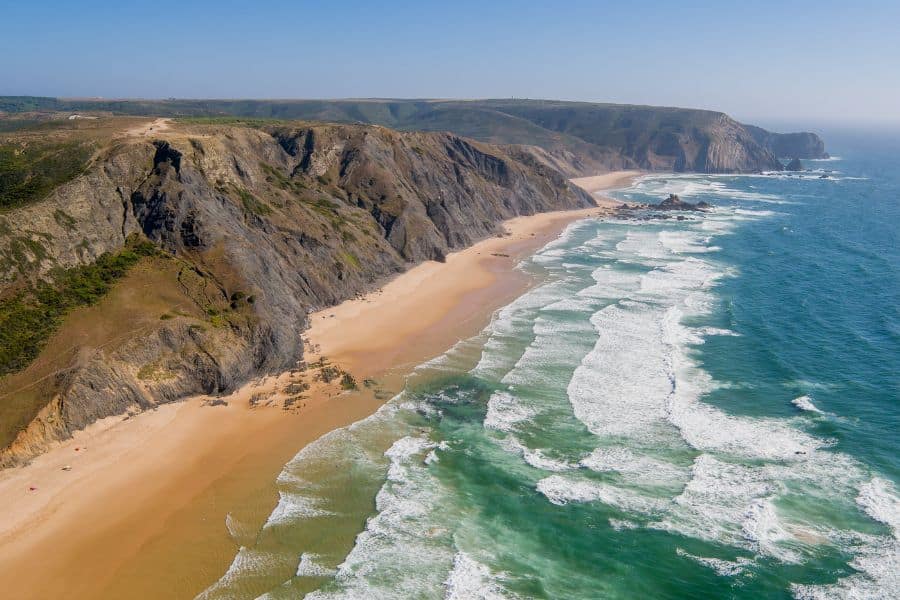
The beaches here are different from the protected coves of the central Algarve. Praia do Beliche sits in a dramatic inlet carved between towering cliffs, accessible by a steep wooden staircase that winds down the rock face. In winter, the beach is deserted, the sand tracked only by footprints that disappear with each tide. The cliffs shelter it from the worst of the wind, creating a pocket of calm where the only sounds are the waves and seabirds.
Sagres village is a working fishing port and surf town, not a resort destination. Restaurants serve grilled sardines, octopus salad, and cataplana stews to locals and the hardcore surfers who’ve made this their winter base.
The coastal trails between Sagres and Vila do Bispo offer some of the most dramatic walking in Portugal. Paths follow the cliff edge through scrubland and wildflowers, with the Atlantic churning hundreds of feet below. Hidden beaches appear in breaks between the cliffs, most of them unnamed and unreachable except by rope or boat. In January, you’ll walk for hours seeing nothing but ocean, rock, and sky.
Disclaimer: This article is for general information only and is not professional advice. It may contain affiliate links. Please see our full Editorial Policy for details.

Kylie Lang is a nationally syndicated travel journalist with bylines on the Associated Press Wire & more, a lifestyle writer, and the founder and editor of Your Lifestyle Library (yourlifestylelibrary.com). She holds a BA (Honours) in History from the University of Kent and is a member of the British Guild of Travel Writers.