
Why should your RV be parked up over winter, not to see the light of day again until spring comes around? Some of the best trips in the U.S. take place in winter, when fewer tourists are around and the scenery is stunning. Winter road trips have their own kind of magic. The roads are calmer, the parks are peaceful, and you see a different side of America that summer travelers often miss.
Of course, winter travel in an RV takes a little extra planning. The prospect of frozen pipes or icy roads can even make the most adventurous driver hesitate. But with a few practical tips and the right destinations, it’s not only doable, it’s one of the best ways to make the most of the cooler months.
Whether you’re pulling up beside a frozen lake or a pine forest dusted with snow, these winter RV trips are proof that adventure doesn’t stop when the temperature drops. And if you’re wondering how to keep your RV warm and your travels safe, stay tuned for the Winter RV Survival Guide at the end of this post.

7 Winter RV Trips That Are a Magical Escape
If you’ve never experienced Christmas on an RV road trip, you’re missing out. Your rig takes on a completely different look and feel, covered in twinkling lights with a little tree in the corner. Winter might feel like a challenge in an RV, but it all comes down to careful planning and choosing the right location.
These 7 locations will make you rethink parking up your RV till the warmer months.
Sedona, Arizona
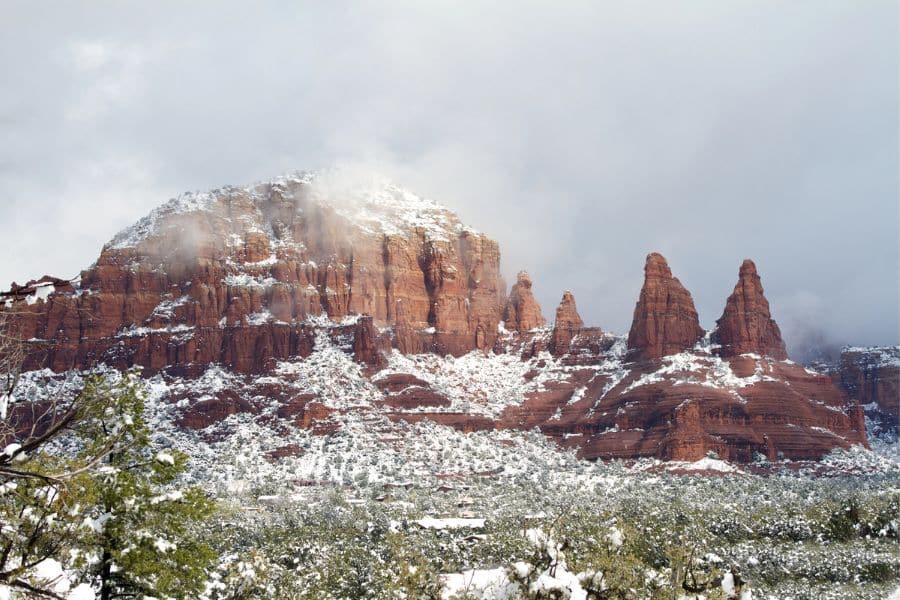
Winter is the “slow season” in Sedona, so you’ll encounter fewer crowds and more space to breathe. The red rocks glow brighter against clear blue skies, and the cool air makes hiking far more comfortable than in the summer heat. You can walk trails like Cathedral Rock or Bell Rock and sometimes have entire stretches to yourself.
The days are mild, usually in the 50s, and the nights are crisp but manageable with a good heater. Slide Rock State Park and Red Rock State Park stay open year-round, and both have easy parking for RVs. The nearby town buzzes with small galleries, local restaurants, and cozy coffee shops, most of which stay open through winter.
If you’re there in December, Sedona’s Festival of Lights at Tlaquepaque Arts & Shopping Village is worth timing your visit around. Return to your RV, pour a glass of wine, and watch the stars. The night skies in Sedona are famously dark and clear, perfect for stargazing right from your campsite.
Rancho Sedona RV Park is one of the best spots in town beside Oak Creek and within walking distance of shops and restaurants, so you don’t have to move your RV once you’re set up.
Lake Tahoe, California and Nevada

Lake Tahoe in winter is a snow-covered playground surrounded by mountains that look like they’ve been dusted with icing sugar, and perfect for a winter road trip. It’s magical. My daughter was a competitive figure skater, and we came here for a competition in the winter. It was breathtaking.
The air is crisp, the sky is clear, and the lake shifts from deep blue to silver as the light changes. You’ll find far fewer visitors than in summer, which means easier parking, quieter trails, and a more relaxed pace.
During the day, take the Heavenly Gondola for sweeping lake views or stop by Northstar Village to skate, shop, and warm up with a hot chocolate. If you’d rather stay outdoors, Zephyr Cove is perfect for snowshoeing or peaceful walks along the shore. The lake doesn’t freeze, so the reflections of the snow-covered pines are beautiful this time of year.
For RV travelers, Tahoe Valley Campground on the California side and Zephyr Cove RV Park in Nevada both stay open year-round. Roads are plowed, hookups are available, and you’ll find propane on site. Bring tire chains if snow is forecast, as mountain weather can change quickly.
If you’re there in December, Heavenly Holidays brings music, fireworks, and twinkling lights to South Lake Tahoe. The village hosts ice sculptors and nightly entertainment, and local restaurants serve festive menus. Christmas morning often starts quietly here, with the lake calm and still, before skiers head to the slopes or travelers take a walk along the shoreline to watch the light catch the snow.
Yellowstone National Park, Wyoming
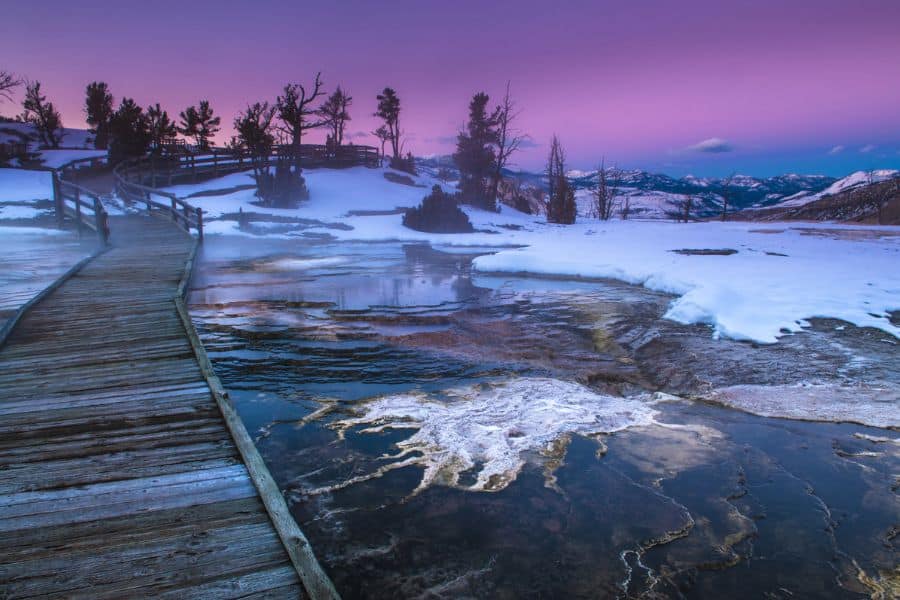
Winter transforms Yellowstone into something entirely different from the park most people know. Steam rises from geysers against the snow, and the sound of bison moving through frost-covered meadows replaces the buzz of summer traffic.
Most park roads close to regular traffic from November until late April, but that doesn’t mean it’s off-limits. You can enter through the North Entrance near Gardiner, Montana, which stays open year-round, and explore the northern range, including Mammoth Hot Springs and Lamar Valley. This part of the park is known for its winter wildlife. You’ll likely see herds of elk and bison and, if you’re lucky, wolves in the distance.
RV camping inside the park isn’t possible in winter, but there are good year-round options just outside. Yellowstone Hot Springs RV Park near Gardiner is one of the best spots, offering full hookups and easy access to both the park and the hot springs. Expect daytime temperatures around freezing, and bring plenty of propane for your heater.
At Christmas, the nearby town of Gardiner decorates its main street, and local lodges serve Christmas dinners with regional dishes like elk and trout.
The Great Smoky Mountains, Tennessee
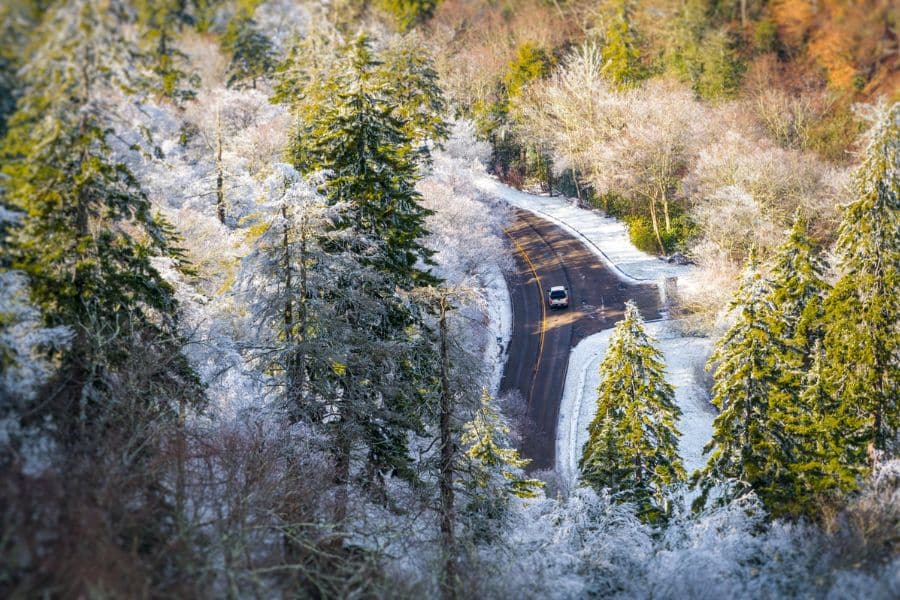
Winter brings a quiet beauty to the Smokies. The crowds disappear, leaving behind frost-covered forests, open roads, and mountain views that stretch for miles. The air is crisp but not bitter, with daytime temperatures often sitting in the 40s. Without the heavy foliage of summer, you can see deep into the valleys and spot wildlife you might otherwise miss.
Many scenic drives remain open year-round, including Little River Road and the stretch from Gatlinburg to Cades Cove. This is one of the best times to explore the park at your own pace, stopping at frozen waterfalls like Laurel Falls or hiking the Alum Cave Trail when it’s lightly dusted with snow. If you’re lucky, you’ll see deer or wild turkeys along the route, especially early in the morning.
For RV travelers, camping inside the national park isn’t possible in winter, but several excellent campgrounds just outside stay open year-round. The Pigeon Forge / Gatlinburg KOA and Riveredge RV Park are both well-equipped with full hookups, heated facilities, and easy access to restaurants, shops, and attractions. You can spend the day hiking, then return to your RV for a warm dinner and the sound of the river nearby.
Christmas in the Smokies has a nostalgic, small-town feel. Gatlinburg and Pigeon Forge transform into winter wonderlands, covered in millions of twinkling lights. Dollywood’s Smoky Mountain Christmas Festival is one of the region’s highlights, with stage shows, carolers, and holiday treats.
The Blue Ridge Parkway, North Carolina
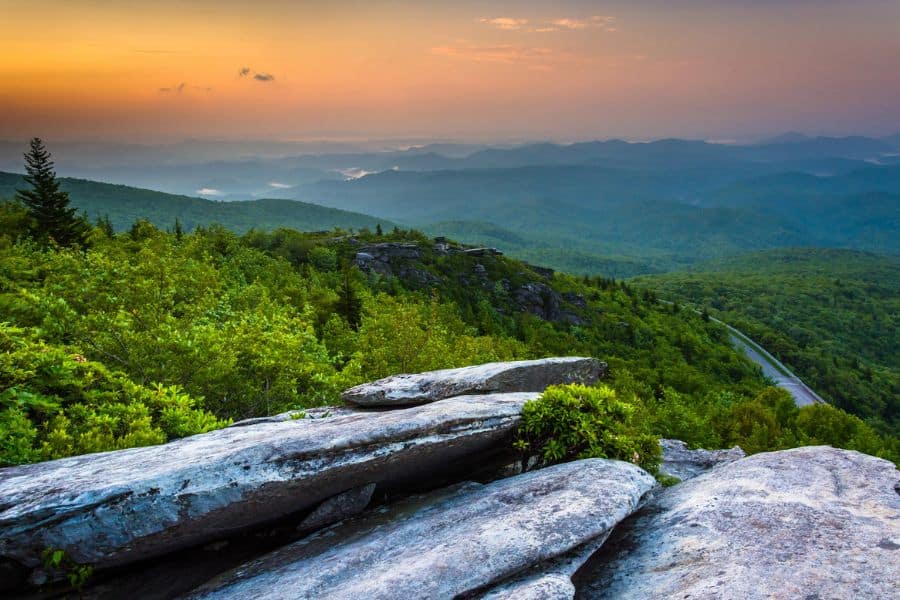
Winter on the Blue Ridge Parkway is filled with smells of pine and woodsmoke, and the mountain ridges take on soft shades of blue and gray. While some higher-elevation sections of the Parkway close after heavy snow, many stretches remain open, especially around Asheville, where you can still enjoy the views without traffic.
This is the season for slow drives, scenic overlooks, and easy hikes that show the mountains in a completely different light. Craggy Gardens, Waterrock Knob, and Linville Falls are all worth visiting when the frost lingers on the trees.
In Asheville, you can park your RV and spend a few days exploring the city’s winter markets, local breweries, and cozy restaurants that focus on Appalachian ingredients. The Biltmore Estate’s Christmas decorations are a highlight of the season, with more than 50 trees lit throughout the mansion and thousands of twinkling lights on the grounds.
For RV travelers, Asheville Bear Creek RV Park and Mama Gertie’s Hideaway Campground both stay open year-round and offer full hookups. They’re close enough to town for dining and shopping yet far enough away to enjoy quiet mountain views. Nights can dip into the 20s, so bring extra propane, but the days are often sunny and comfortable for hiking.
Christmas along the Parkway feels like stepping into a classic winter postcard. Small mountain towns like Blowing Rock and Little Switzerland put up lights along their main streets, and you’ll find local shops selling handmade ornaments and baked goods. Asheville’s Christmas Parade fills the streets with brass bands and festive floats, while candlelight tours at the Biltmore draw visitors from across the state.
Rocky Mountain National Park, Colorado

Experiencing winter in Rocky Mountain National Park sees the peaks buried in snow. It’s one of the few national parks where you can experience real alpine winter without the crowds. The eastern entrance near Estes Park remains open year-round, offering RV travelers access to snow-covered meadows, frozen lakes, and plenty of wildlife.
The best part of visiting in winter is the stillness. You can snowshoe the Bear Lake Trail, walk around Sprague Lake, or cross-country ski along the Moraine Park area. Elk and mule deer often wander close to the road, and on clear days, the mountain views are breathtaking. The higher roads, like Trail Ridge, are closed to vehicles until late spring.
For RV travelers, camping inside the park isn’t possible in winter, but there are excellent options nearby. Estes Park Campground at Mary’s Lake and Elk Meadow Lodge & RV Resort both stay open year-round with electric hookups and access to town. Estes Park itself is lively through the colder months, with restaurants, cozy cafés, and local shops selling handmade goods.
The town lights up for the holidays with glowing storefronts and a Christmas Eve torchlight parade. Local lodges host festive dinners, and there’s often live music in the evenings. During the day, you can take a sleigh ride through the snow or head back into the park for a quiet walk surrounded by pine and silence.
Vermont, Green Mountains Region
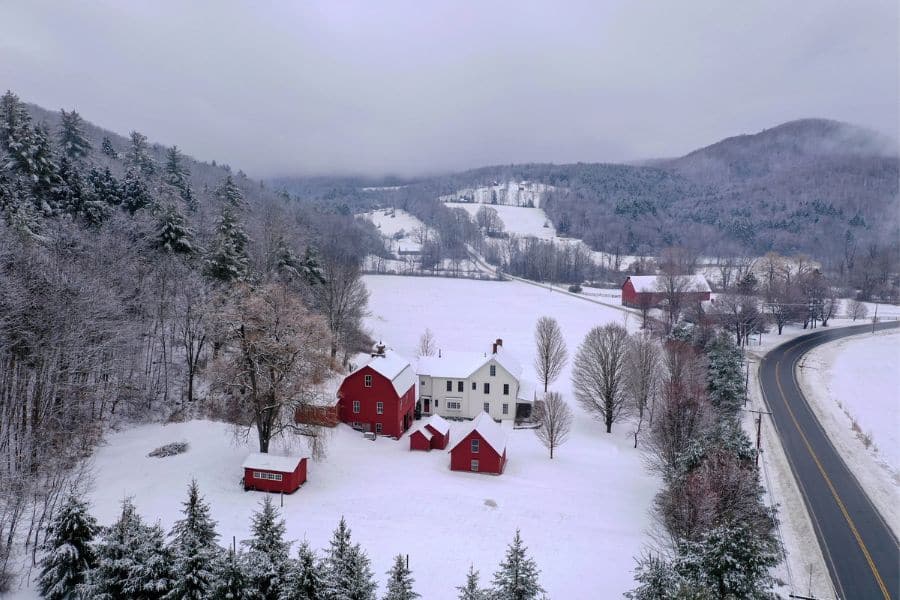
Vermont in winter is postcard-perfect. The Green Mountains turn white, the air feels crisp, and the small towns look straight out of a snow globe. This is maple syrup country, but in winter it’s also for travelers who want quiet trails, snowy drives, and cozy evenings tucked away in nature.
Several RV parks stay open year-round, including Green Mountain Family Campground near Bristol and Maple Grove Campground in Fairfax. Both offer electric hookups and easy access to the main roads, though you’ll want to call ahead about snow conditions and water hookups before you arrive. Daytime temperatures hover in the 30s, so it’s cold but manageable with good insulation and plenty of propane.
You can snowshoe along forest trails in Stowe, visit the covered bridges in Waitsfield, or stop by a country store for hot cider and local cheese. On clear days, the views from Smugglers’ Notch or the scenic Route 100 are spectacular.
Christmas in Vermont is like something out of the movies. After all, White Christmas was set in the fictional town of Pine Tree, Vermont. Towns like Woodstock and Stowe decorate their main streets with lights and wreaths, and horse-drawn sleigh rides run through the snow.
The annual Wassail Weekend in Woodstock fills the town with music, markets, and parades. It’s easy to find a local inn or café serving Christmas dinner, or you can cook your own festive meal in your RV, surrounded by pine and candlelight.
Winter RV Survival Guide
Winter RV travel can be incredible, but it’s also the season that tests your setup. With a bit of planning, you can stay warm, keep everything running smoothly, and actually enjoy the kind of quiet that only winter brings. Here’s how to do it.

Keep Your RV Warm
Start with insulation. Thermal curtains, draft stoppers, and rugs on cold floors make a huge difference. If your RV isn’t built for cold weather, pick up a small ceramic heater for extra warmth, and use it sparingly alongside your main heating system. Skirting around the bottom of your RV helps trap heat underneath and keeps pipes from freezing.
Protect Your Water System
Frozen pipes are the biggest worry, so prevention is everything. Use a heated hose or disconnect it at night if the temperature drops below freezing. Add foam insulation to any exposed pipes and consider a small space heater in the storage bay where your tanks are. Keep a few gallons of water inside your RV as backup, just in case.
Check Your Tires and Batteries
Cold weather drops tire pressure fast. Check it before every drive and top up as needed. Keep your batteries fully charged and test them regularly; the cold drains power more quickly than you think. If you’re staying put for a while, a small solar setup or trickle charger helps keep everything topped up.
Stock the Essentials
Think of winter RVing as a mix of camping and self-sufficiency. Keep extra propane, warm bedding, non-perishable food, and a few emergency supplies, such as blankets and flashlights. A small shovel and a bag of salt or sand come in handy for icy steps or driveways.
Plan Routes Carefully
Before setting out, check road conditions daily. Mountain passes and smaller scenic roads can close quickly in bad weather. Apps like Campendium or RV Life show which campgrounds are open year-round and which roads are safe for RVs. Always have a backup stop planned in case the weather changes.
Stay Connected and Safe
A Wi-Fi booster helps if you’re working remotely or checking weather updates. Keep a physical map as a backup, since GPS can be unreliable in mountainous areas. Share your route with a friend or family member before each leg of your trip so someone knows where you are.
Disclaimer: This article is for general information only and is not professional advice. It may contain affiliate links. Please see our full Editorial Policy for details.

Kylie Lang is a nationally syndicated travel journalist with bylines on the Associated Press Wire & more, a lifestyle writer, and the founder and editor of Your Lifestyle Library (yourlifestylelibrary.com). She holds a BA (Honours) in History from the University of Kent and is a member of the British Guild of Travel Writers.