
Have you ever considered getting Botox? I have, but it never got any further, as, for me, the thought of putting needles into my face scares me. Plus, I’ve seen those people who look so over-botoxed they no longer look normal, so it put me off.
However, one of my closest friends has it regularly and swears by it, and looks great. But for me, I want something more natural that doesn’t include needles or anything being injected into my face. So when chatting over coffee with a friend of mine who happens also to be a yoga instructor, we discussed looking older and the things we used to try to stop the aging process.
She told me about a routine she does most days of facial yoga moves. She had me hooked from the minute she said: “quick, easy, and free.”
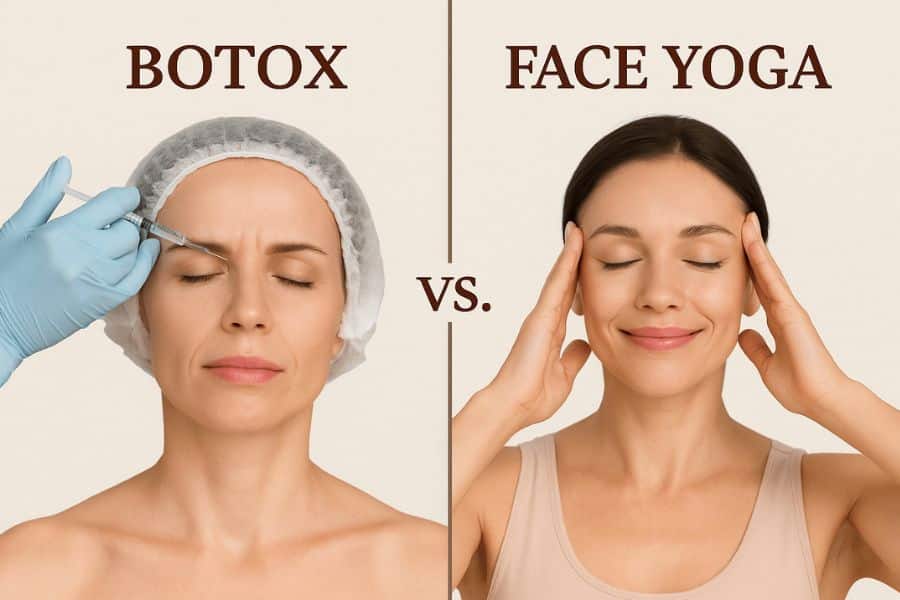
Could Face Yoga Really Replace Botox?
Botox works by temporarily paralyzing facial muscles so they can’t contract and create wrinkles. It’s effective, no question. But it comes with a price tag that adds up fast, and it doesn’t address the loss of muscle tone and facial volume that comes with age.
Face yoga takes a completely different approach. Instead of freezing muscles, you’re working them. The idea is that the 57 muscles in your face respond to exercise the same way the muscles in your body do. When you train them consistently, they become firmer and more toned. That firmness naturally lifts and sculpts the face.
The other thing face yoga does that Botox doesn’t is improve circulation. Better blood flow means more oxygen and nutrients reaching your skin cells, which can improve skin texture and give you that healthy glow that no needle can replicate.
Will face yoga give you the same overnight result as Botox? No. But it also won’t give you a frozen forehead. The results build gradually and look like you, just more rested and lifted.
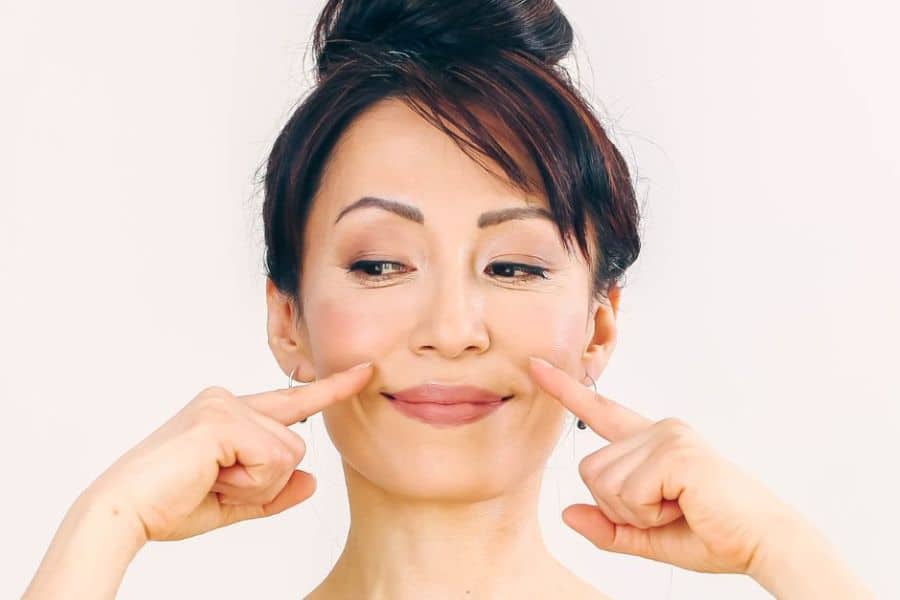
9 Facial Yoga Moves To Stop the Aging Process
Before we start, remember consistency is everything here. Think of it like going to the gym. One session won’t change anything, but thirty sessions will.
The Neck Firmer
The neck is often the first place to show signs of aging, and it’s also one of the most neglected areas in any skincare routine. Horizontal lines, sagging skin, and loss of definition under the jaw all start to creep in during midlife, often faster than we expect.
The neck firmer targets the platysma muscle, a thin sheet of muscle that runs from your jaw down to your collarbone. When this muscle weakens, the skin above it starts to sag and band.
To do it, sit up straight and tilt your head back so you’re looking at the ceiling. Press your tongue flat against the roof of your mouth. You should feel a gentle stretch along the front of your neck. Now swallow. You’ll feel the muscles in your neck engage. Hold this position for 30 seconds before bringing your head back to a neutral position. Repeat five times. Do this once a day, and you’ll start to notice more definition along the jawline and a firmer appearance along the front of the neck within a few weeks.
The Forehead Smoother
Horizontal forehead lines are one of the most common concerns among women in midlife, and they’re largely caused by repetitive muscle movement, specifically the frontalis muscle contracting every time you raise your eyebrows. Over time, those temporary creases become permanent grooves.
To do this move, place both hands flat on your forehead with your fingers spread wide. Apply gentle but firm pressure to hold the skin in place. Now try to raise your eyebrows against the resistance of your hands.
You’ll feel the muscles working, but without actually letting the skin crease. Hold for five seconds, release, and repeat ten times. The goal is to strengthen the muscle while training it to move without pulling the skin into those deep lines.
The Eye Brightener
The skin around the eyes is the thinnest on the entire face, which is exactly why it shows aging first. Crow’s feet, drooping upper lids, and puffiness under the eyes are all things face yoga can help address over time.
Place your index fingers gently at the outer corners of your eyes and your middle fingers at the inner corners. Apply very light pressure. Now squint upward with your lower eyelids, as if you’re trying to look into bright sunlight. You’ll feel the muscle under your eye engage.
Hold the squint for one second, then release. Do this ten times without blinking between reps. This strengthens the orbicularis oculi muscle, which circles the eye, and over time can help lift the lower lid and reduce the appearance of puffiness.
The Brow Lifter
Drooping brows make you look tired even when you’ve had eight hours of sleep. As we age, the muscles that hold the brows in a lifted position weaken, and gravity does what gravity does. This move works the frontalis and occipitalis muscles to counteract that downward pull.
Place your index fingers just above your eyebrows and gently push the skin downward. Now try to lift your eyebrows upward against that resistance. Hold for five seconds, relax, and repeat ten times. The resistance is key here. Without it, you’re just raising your brows and deepening the lines above them. With it, you’re building strength without the crease.
The Double Chin Lift
The double chin is one of those things that seems to appear out of nowhere and then suddenly feels impossible to shift. It’s caused by a combination of weakened muscles, fat deposits, and skin that has lost elasticity. This move targets the submental area, the skin and muscle directly under the chin.
Tilt your head back and look toward the ceiling. Bring your lower lip up over your upper lip as far as you comfortably can, like you’re trying to touch your nose with your bottom lip. Hold for five seconds, and you’ll feel the stretch along your chin and upper neck.
Bring your head back down, then repeat 10 times. You can also try chewing motions with your head tilted back, which engages the muscles along the jaw and under the chin simultaneously.
The Jawline Sculptor
A well-defined jawline is something most of us associate with youth. As we age, the masseter muscles on either side of the jaw can lose tone, and the area around the jowls can start to soften. This move targets those muscles directly.
Press your tongue firmly against the roof of your mouth. Now tilt your chin down toward your chest and then turn your head slightly to the right. Hold for five seconds. You should feel a stretch along the left side of your jaw and neck. Return to the center, then repeat on the left side.
Do five reps on each side. For an added challenge, try adding a gentle smile while holding the position. The combination of tongue pressure and head angle engages multiple muscles simultaneously, which makes this one of the most efficient moves in face yoga.
The Facial Detox
I felt a bit silly doing this one, but stick with it. The facial detox focuses on improving lymphatic drainage, which helps reduce puffiness, dullness, and fluid retention in the face. When the lymphatic system isn’t moving efficiently, toxins and fluid build up in the tissue, and that shows as swollen, dull-looking skin.
Using the flat of your fingers rather than the tips, apply gentle, sweeping pressure from the center of your face outward toward your hairline and ears. Work from your chin up toward your temples, then across your forehead, and finish by sweeping down from your ears to your collarbone.
This encourages lymphatic fluid to drain away from the face. Do this for about 2 minutes every morning, ideally before applying any moisturizer. The difference in puffiness can be noticeable the same day, particularly if you tend to wake up with a swollen face.
The Stress Reliever
Stress doesn’t just affect how you feel. It shows up on your face. When you’re tense, you unconsciously clench your jaw, furrow your brow, and tighten the muscles around your mouth. Over time, those habitual tension patterns carve lines into your face and can even contribute to jaw pain and headaches.
This move is about releasing that held tension rather than building muscle. Start by opening your mouth as wide as you comfortably can, then stick your tongue out as far as possible. Hold for five seconds, then release.
Next, gently massage the jaw muscles just in front of your ears using small circular motions. Finish by placing your palms over your closed eyes and taking three slow, deep breaths. This combination of muscle release and breathing tells your nervous system to stand down, which reduces the physical effects of stress on your face.
The Cheekbone Lift
Full, lifted cheeks are one of the biggest markers of youth, and they’re also one of the first things to go as we age. Fat pads in the mid-face descend over time, and the muscles that support them weaken. This move targets the zygomaticus major, the muscle responsible for lifting the corners of your mouth and giving you that high-cheekbone look.
Smile as wide as you can while keeping your lips closed, almost like a big, toothy grin with your mouth shut. Now place your fingertips on the apples of your cheeks, directly over the muscles you feel working. Apply light upward pressure and hold for 20 seconds. You’ll feel a gentle burn in the muscles. Release and repeat five times.
For a more intense version, do the same exercise while lifting the corners of your mouth as if you’re about to wink, alternating sides.
Disclaimer: The information in this article is intended for general informational purposes only and is not a substitute for professional medical advice. Please consult a qualified healthcare provider before beginning any new health or wellness practice, particularly if you have any existing skin or muscle conditions.