
I’ve watched friends with high-powered jobs and back-to-back commitments burn out spectacularly. I’ve seen them take vacations that somehow require recovering from the vacation. I’ve been there myself. But when did we start treating travel like another item to check off an endless to-do list?
Somewhere between scrolling through Instagram and booking flights to the next trending destination, we forgot what it feels like to actually slow down. To wake up without an alarm. To spend an entire afternoon doing absolutely nothing and feeling good about it.
That’s what slow travel does. It takes you to places where life moves at a human pace, where your biggest decision is which local bakery to try for breakfast, and where you have enough time to remember who you are underneath all those responsibilities. That’s where these slow travel destinations in Europe come in.
7 Slow Travel Destinations in Europe
These seven destinations won’t just give you a break from burnout; they’ll show you there’s another way to live. A way that isn’t lived at a hundred miles an hour, but lets you take time to smell the roses. And the best part? It’s wallet-friendly.
No. 1 Languedoc, France
I was always going to start with France, as it’s where I live. I moved here to slow down and beat the burnout that had slowly started to consume me. So, trust me when I say, I get it. I understand it only too well and have done something about it. France has been good for my soul in so many ways.
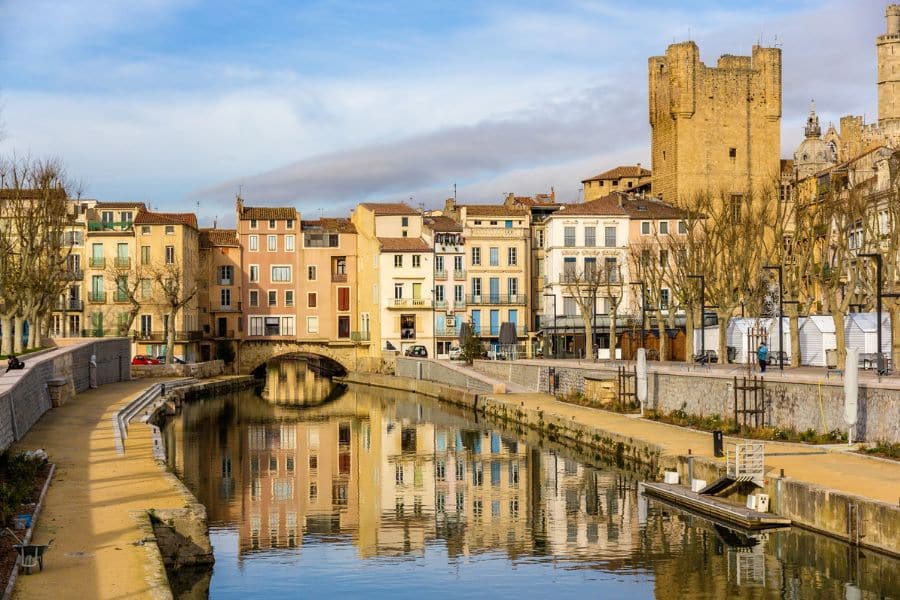
There are so many places to choose from if you’re after a bit of slow travel, and the Languedoc is one of those perfect places that is a wonderful combination of history, weather, and rural life. The towns scattered across Languedoc look like someone hit pause on France about fifty years ago.
Stone houses with faded shutters, weekly markets, castles, and café terraces where lunch stretches into three hours without anyone checking their watch. This is southern France without the Provence price tag or the Riviera crowds. The light here is softer, the pace is gentler, and nobody’s constantly snapping and posing for Instagram.
Inland towns like Pézenas or villages around the Grands Causses offer rentals for half what you’d pay near Montpellier. Market-fresh produce means you can cook incredible meals for pocket change. Wine comes from the vineyard down the road, bread from the boulangerie that’s been there for generations, and your morning coffee ritual is all part of the vibe. The French call this savoir vivre, and with good reason.
Where to stay in the Languedoc Region of France >>>
Slow Travel Highlights:
- Your first week: Find your local market day. Buy too much cheese, a bottle of regional wine, and fresh figs if it’s late summer. Spend the afternoon doing absolutely nothing with your haul.
- Quiet reset day: Drive to one of the gorgeous towns in the Cévennes. Walk along the river, find a café in a village square, order a citron pressé, and watch French life unfold at its own unhurried speed.
- When you need people: Head to a market town on Saturday morning. The energy is fantastic, and everyone stops to chat. You’ll start recognizing faces by week three.
- Late afternoon ritual: Take the scenic route anywhere. Stop at every viewpoint. French countryside roads are made for meandering, and the golden hour here is when the landscape puts on its own spectacular show.
No. 2 Abruzzo, Italy
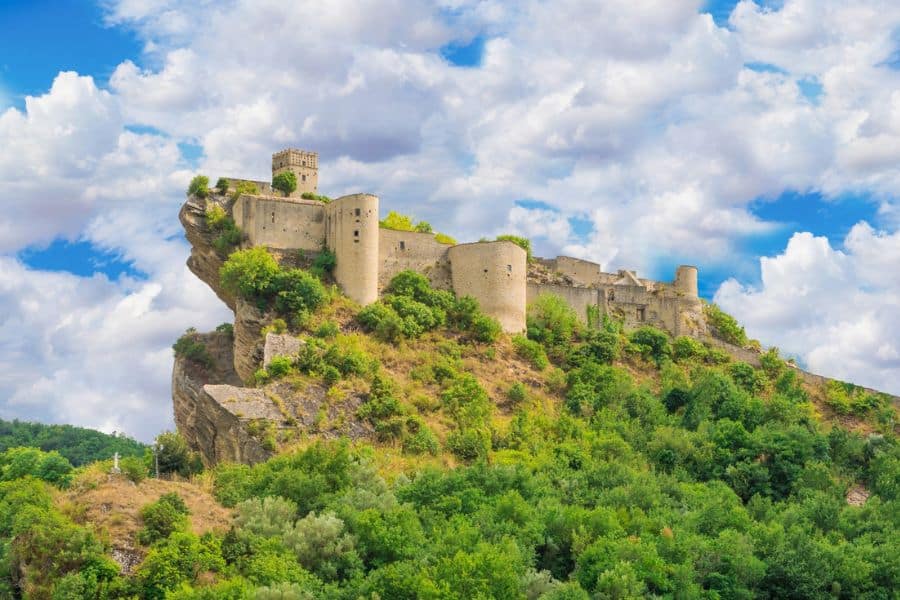
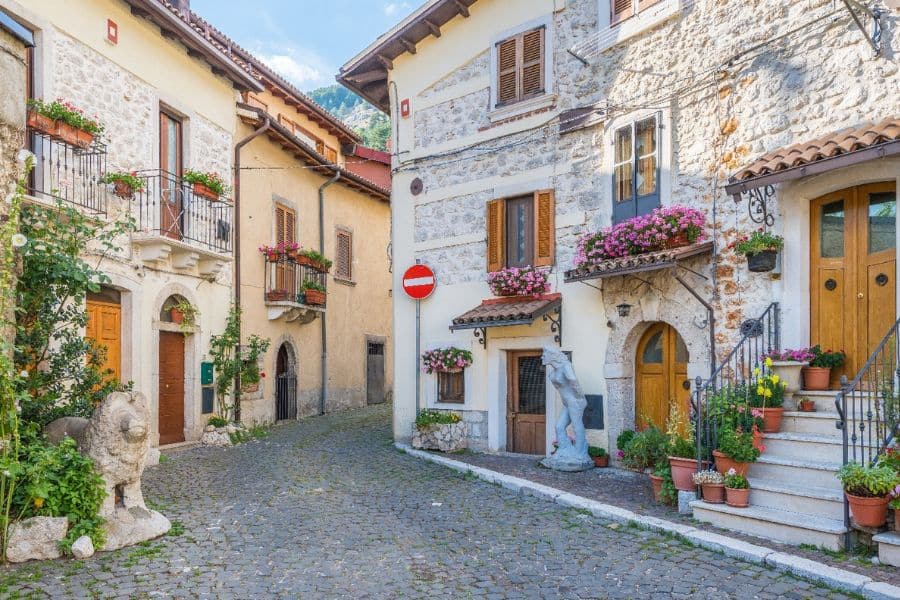
Abruzzo sits wedged between Rome and the Adriatic coast, which means most travelers drive right past it on their way to somewhere more famous. Their loss. Medieval hilltop towns here still have butchers who cure their own meat and nonnas making pasta by hand in doorways.
The Gran Sasso mountains loom behind almost every village, close enough that you can have breakfast by the sea in Vasto and be hiking mountain trails by lunch.
Rent an apartment in Sulmona or Scanno for three weeks and you’ll spend less than it would cost for a week in a Florence hotel. The local specialty is arrosticini, skewers of roasted lamb that taste far better than such a simple description suggests, and you’ll find them at every village festival.
Ceramics from Castelli line shop windows, each piece hand-painted by artisans whose families have been doing this for centuries. This is the Italy where people still live and work, not the Italy that’s been turned into an open-air museum. It’s just perfect.
Where to stay in Abruzzo, Italy >>>
Slow Travel Highlights:
- Base yourself in Sulmona: The town has a beautiful piazza backed by snowy mountains, confetti shops selling candied almonds that even British royals have ordered, and evening passeggiate where locals spend time talking instead of scrolling.
- Mountain escape day: Drive up to Santo Stefano di Sessanio. The village clings to a hillside at 1,250 meters, stone houses stacked on top of each other, and the air is so clear you can see for miles. Have lunch, wander the empty streets, breathe.
- Lake afternoon: Lago di Scanno is heart-shaped from certain angles and surrounded by hills. Pack a picnic, find a quiet spot, and spend hours doing nothing productive. The nearby village of Scanno looks like it’s frozen in the 1950s.
- Food ritual: Find the local salumeria, point at things you don’t recognize, take them home. Pair with local Montepulciano d’Abruzzo wine. This is how you learn to eat like a local and understand the regional food.
No. 3 Extremadura, Spain
Extremadura sits in western Spain near the Portuguese border, and most tourists have never heard of it. The region gave Spain its conquistadors, who plundered the Americas and sent their gold back home to build palaces and monasteries that still dominate town squares today.
Walk through Cáceres or Trujillo at twilight, and the medieval architecture looks like a film set, except there are no crowds taking selfies. Just locals heading home from work. The cost of living here makes the rest of Spain look expensive. You can rent a one-bedroom apartment in the center of Cáceres for under 500 euros a month, and a three-course meal with wine runs about 15 euros.
The food is spectacular. Jamón ibérico from black pigs that roam the dehesas, local cheeses, and plenty of fresh produce from the markets.. The pace is slow enough that shops still close for siesta, and once you’ve enjoyed a week of this, you’ll wonder how you survived without your afternoon siesta.
Where to stay in Extremadura, Spain >>>
Slow Travel Highlights:
- Start in Cáceres: The old town is UNESCO-listed and feels like stepping back five centuries. Stone palaces line cobbled streets, storks nest on church towers, and you can walk the entire centro histórico in an hour. Then spend the next three weeks discovering why you want to stay.
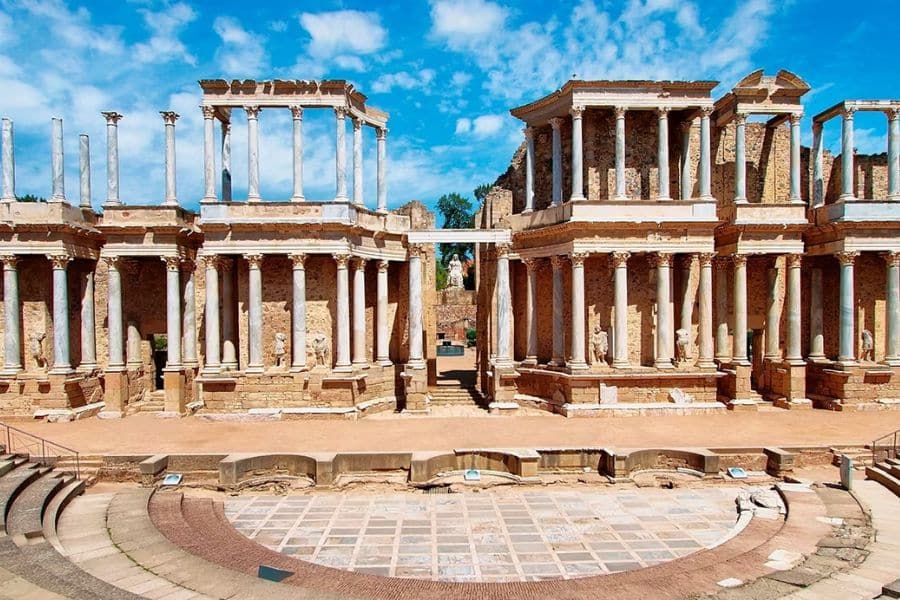
- Roman history day: Drive to Mérida and spend the morning wandering through the best-preserved Roman ruins in Spain. The amphitheater still hosts performances, and the aqueduct is still standing. Have lunch at a tiny restaurant where the menu is handwritten and changes daily.
- Monastery visit: Guadalupe sits in the mountains surrounded by nothing but cork forests. The monastery is massive, ornate, and surprisingly quiet. Stay overnight if you can, as this is when it goes quiet and you almost have the place to yourself; it’s magical.
- Evening rhythm: Find a terrace in any town square around 8 p.m. Order whatever the person next to you is drinking. Watch Spanish life unfold as families stroll, kids play, and nobody seems to be in a hurry to be anywhere else.
No. 4 Alentejo, Portugal
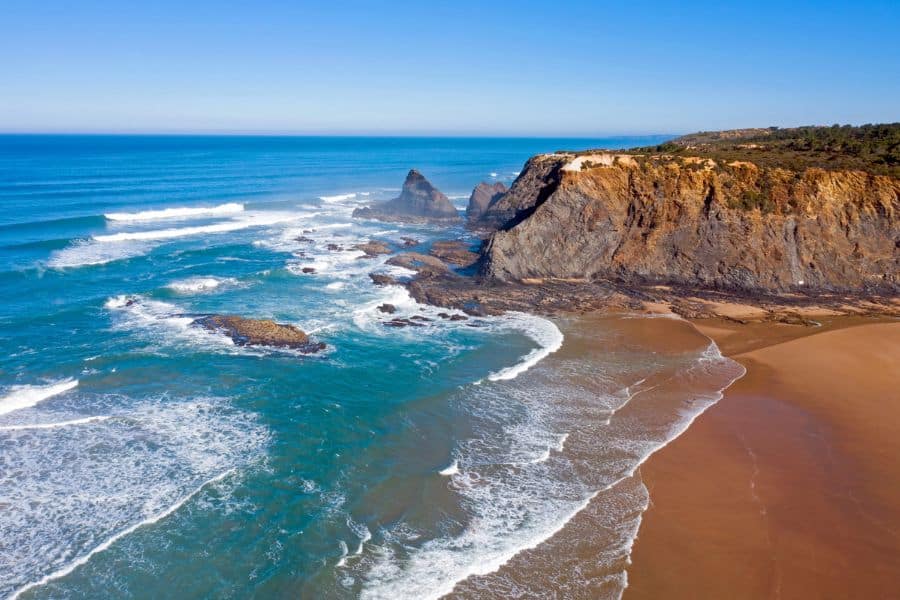
Alentejo covers a third of Portugal but holds only six percent of its population, which tells you everything about the space you’ll have here. Cork forests stretch for miles, whitewashed villages perch on hilltops, and the beaches along the wild Atlantic coast remain empty even in August. This is Portugal before Lisbon got expensive and the Algarve got crowded. Drive inland from the coast and you’ll pass more sheep than people.
A decent meal with local wine costs around 20 euros, and we’re talking about food that would cost three times that in Lisbon. Évora, the regional capital, has Roman ruins right in the town center, and you can rent an apartment with medieval walls for what a hostel bed costs in Porto.
The Alentejo moves to its own clock, similar to what it’s like in France. Lunch takes at least two hours, and shops close when the owner decides it’s too hot to work. Nobody rushes because there’s nowhere urgent to be. The region produces half of Portugal’s wine, which means every other driveway leads to a vineyard where someone will pour you samples and tell you stories about their grandfather.
Where to stay in Alenjejo, Portugal >>>
Slow Travel Highlights:
- Base in Évora: The walled town has everything you need within walking distance. A Roman temple sits in the main square, the cathedral dates back centuries, and the local market on Saturday mornings sells olives, cheese, and honey from farms you can see from town.
- Hilltop village day: Drive to Monsaraz and park at the bottom. Walk up through the narrow streets to the castle at the top. The entire village is car-free, whitewashed, and overlooks the Alqueva reservoir.
- Beach escape: Head to the coast near Comporta or Odeceixe. The beaches are huge, backed by dunes, and you can walk for an hour without passing another person. The water is cold, but that Atlantic chill wakes you up in ways a pool never will.
- Cork forest walk: Pick any minor road and follow it. You’ll end up driving through cork oak forests where the trees are stripped and painted with numbers. Pull over, walk among them, feel how quiet 500 acres of trees can be.
No. 5 The Peloponnese, Greece
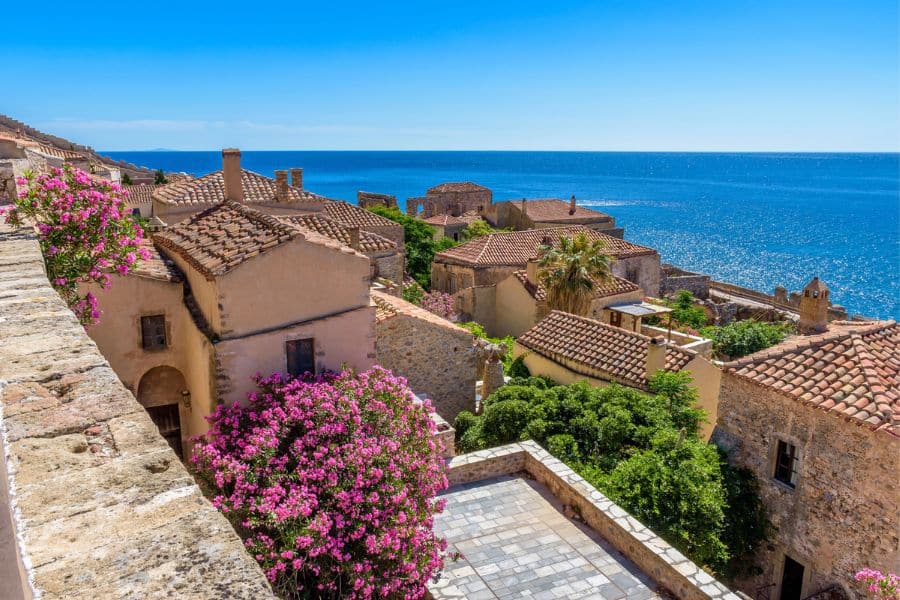
The Peloponnese is off mainland Greece, connected by a narrow strip of land that most people cross without stopping. They’re heading to the islands, which means this entire peninsula of ancient ruins, mountain villages, and turquoise coves gets overlooked.
Olympia is here, where the Olympics started, Mycenae, where Agamemnon ruled, and Monemvasia, a Byzantine fortress town built into a rock that juts out of the sea. You can visit all of them without waiting in a single ticket line.
A taverna meal with fresh fish, Greek salad, and local wine runs about 15 euros. Small hotels and guesthouses charge half what you’d pay on Santorini, and many of them are family-run places. The Mani region in the south has stone tower houses, empty roads, and villages where you might be the only tourist all week. Drive the coastal roads and you’ll find beaches with nobody on them, the kind where you can swim naked at noon if you want because there’s nobody around to care.
Where to stay in the Peloponnese, Greece >>>
Slow Travel Highlights:
- Start in Nafplio: The old Venetian town works as a perfect base. Harbourfront cafés, a fortress you can hike up to for sunset views, and day trip access to Mycenae and Epidaurus. Rent an apartment for a month, and the price drops to almost nothing.
- Mani Peninsula escape: Drive south into the Mani and stay in Kardamyli or Stoupa. The landscape turns wild and rocky, tower houses dot the hillsides, and the swimming is spectacular. Locals still speak their own dialect down here. It feels like the edge of the world.
- Monemvasia overnight: Cross the causeway to the rock island and spend the night inside the medieval town. After the day visitors leave, you’ll have Byzantine churches, stone alleyways, and rooftop restaurants to yourself. Wake up to the sound of waves instead of traffic.
- Mountain village lunch: Pick any inland road heading up from the coast. You’ll hit a village with one taverna, an old church, and views that stretch to the sea. Order whatever the cook made that day. It’ll be the best meal of your week and cost less than a coffee back home.
No. 6 Kythnos, Greece
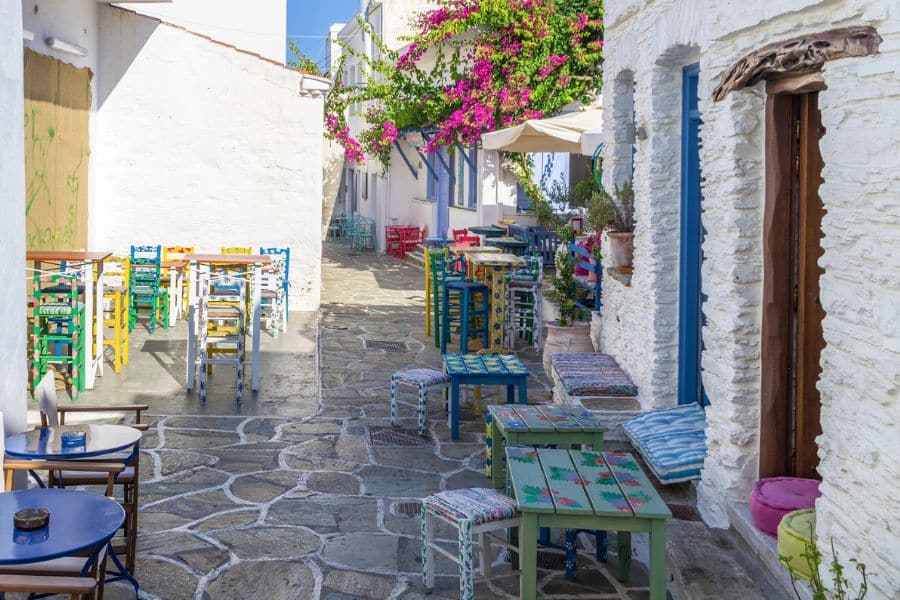
Kythnos sits two hours by ferry from Athens, close enough that Greek families escape here on weekends but far enough that most foreign tourists never make it past Mykonos. If you’ve ever dreamed of having your own Mamma Mia vacation, this place hits the spot.
Over seventy beaches wrap around the island, most of them accessible only by boat or dirt track, which keeps the crowds away. Whitewashed villages cling to hillsides, fishing boats bob in tiny harbors, and the thermal springs at Loutra have been drawing people since Roman times.
A room in a family-run guesthouse costs around 70 euros a night, dropping lower if you stay a month. Tavernas serve grilled octopus, fresh calamari, and Greek salad for about 12 euros, and the owner usually comes out to ask where you’re from.
There are no luxury resorts here, no beach clubs blasting music, no sunset cocktail bars charging 20 euros for a drink.
Where to Stay in Kythnos, Greece >>>
Slow Travel Highlights:
- Base in Merihas: The main port has everything you need without feeling touristy. Rent a scooter from one of the shops near the harbor and spend your month exploring beaches that don’t appear on any map. Get lost on purpose.
- Thermal springs ritual: The hot springs at Loutra mix with cold seawater in rock pools right at the shore. Go early morning when it’s just you and a couple of Greeks who’ve been coming here for decades. The minerals turn the water cloudy and your skin soft.
- Messaria village afternoon: The interior village has cobblestone streets, flower-covered balconies, and cafés where old men play backgammon for hours. Order a Greek coffee, sit in the shade, watch time slow to a crawl. Nobody will rush you to leave.
- Beach hopping by boat: Water taxis run to remote coves that have no road access. Agios Stefanos, Kolona, with its sandbar connecting two beaches, Apokrous, where the water is so clear you can see fish from the boat. Pack a simple lunch and spend the entire day at the sea.
No. 7 Albania: The Albanian Riviera
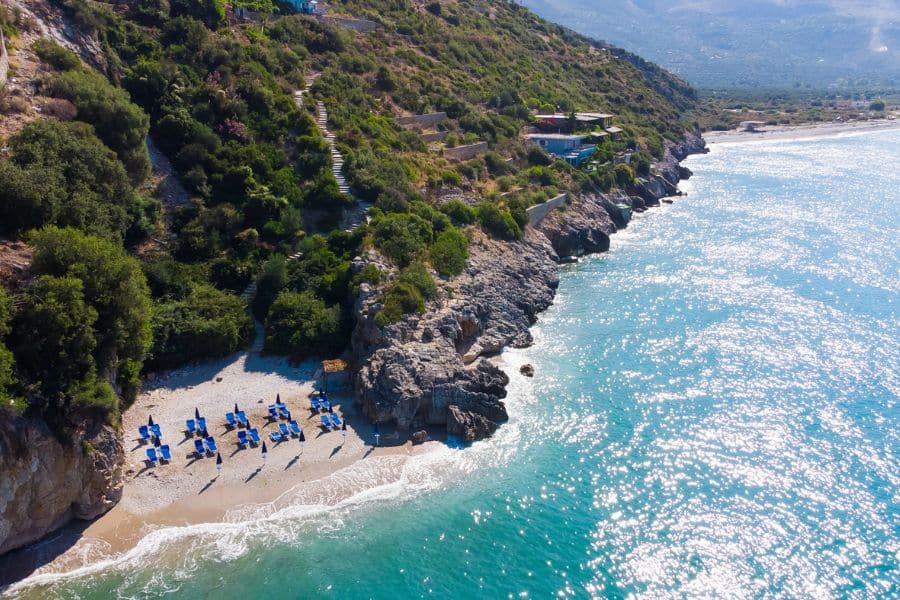
Albania sits on the same coastline as Greece and Croatia, with turquoise water, white-sand beaches, and mountains that drop straight into the sea. The difference is nobody’s here yet. The Albanian Riviera stretches for miles with coves that remain empty even in July, and towns like Himarë and Dhërmi, where you can still rent a room with sea views for 30 euros a night.
A three-course seafood dinner with local wine costs about 15 euros. Fresh produce at markets is so cheap you’ll think you miscalculated the exchange rate. The country uses the lek, and your money stretches so far you’ll stop checking prices after the first week.
Infrastructure is still catching up, which means fewer luxury resorts and more family guesthouses. The beaches between Dhërmi and Jale are accessible by rough roads that keep out tour buses, leaving stretches of coastline that are like your own private beach.
Where to Stay on the Albanian Riviera >>>
Slow Travel Highlights:
- Base in Himarë: The town climbs hillsides above a perfect bay. Old stone houses mix with newer buildings, tavernas line the waterfront, and locals still outnumber tourists. Rent an apartment for a month and you’ll pay less than a week in Nice.
- Beach day ritual: Hire a boat to take you to isolated coves along the coast. Gjipe Beach sits at the end of a canyon with cliffs on both sides. No roads, no buildings, just a curve of white pebbles and water so clear you can see the bottom at twenty feet.
- Mountain escape: Drive inland to Gjirokastër, a UNESCO town of stone houses and Ottoman architecture stacked on a steep hillside. The castle overlooks everything, and the old bazaar still functions as an actual market. Have lunch where locals eat and pay a fraction of coastal prices.
- Evening rhythm: Find a waterfront taverna in Dhërmi village around sunset. Order whatever fish came in that morning. Watch the light fade over the Ionian Sea and realize you’ve stopped counting days.
Disclaimer: This article is for general information only and is not professional advice. It may contain affiliate links. Please see our full Editorial Policy for details.

Kylie Lang is a nationally syndicated travel journalist with bylines on the Associated Press Wire & more, a lifestyle writer, and the founder and editor of Your Lifestyle Library (yourlifestylelibrary.com). She holds a BA (Honours) in History from the University of Kent and is a member of the British Guild of Travel Writers.