
How many times have you walked into a store for one thing and come out with ten? I’ve lost count of how many times it’s happened to me. The classic is going shopping when I’m hungry. It’s the worst thing I can do, as my cart is then laden with all sorts of junk food that wasn’t on my list.
How does this happen with such startling regularity? In a word, psychology. Or more specifically, the psychology of retail. The stores we shop at are selling experts who know exactly how to reel you in.
From the smell of freshly baked bread at the entrance to the grocery store to the calming music coming from your favorite beauty store. They are all tactics in getting you through the door and buying. The big question is, how do you arm yourself so you are immune to their tricks?

9 Psychological Retailer Tricks Making You Spend More in Stores
Retailers spend enormous amounts of money on psychologists, designers, and behavioral researchers whose entire job is to understand how your brain makes decisions.
The store you walked into, the app you opened, the email that landed in your inbox, all of it has been engineered to make you spend more than you planned.
The good news? Once you know the tricks, they lose most of their power.
1. The Gruen Effect
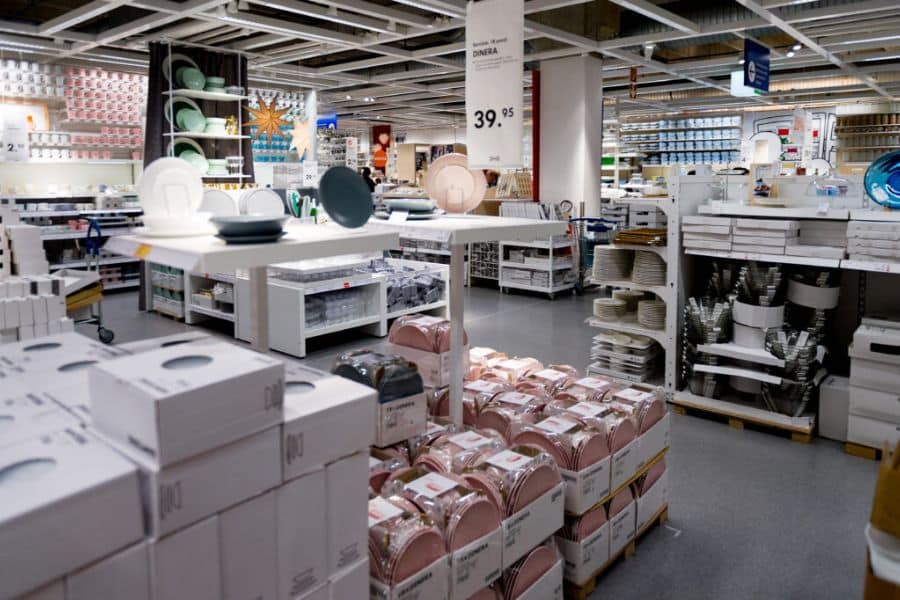
The next time you walk into a large store and suddenly lose all sense of direction, that’s not a coincidence. It’s the Gruen Effect, and it’s one of the oldest tricks in retail.
Named after Austrian architect Victor Gruen, who pioneered the American shopping mall, the principle is simple. The more disoriented you are, the more you wander. The more you wander, the more you see. The more you see, the more you buy.
It’s genius, really, and when you know about it, you’ll see it everywhere in your grocery store. Essential items like milk, eggs, and bread are deliberately placed at the back of the store, forcing you to walk past hundreds of other products just to get to the thing you actually came for.
IKEA has turned this into an art form with its one-way maze that ensures you pass through every single department before you reach the exit.
Online, the equivalent is infinite scroll. There’s no natural stopping point, no end to the page, because an ending would give your brain permission to stop.
How to outsmart it
Write your list before you go in and treat it like a contract with yourself. In a physical store, head straight for what you need. Online, skip the homepage entirely and go straight to the search bar. If you’re prone to browsing on apps, set a five-minute timer before you open them.
2. The Atmosphere Trap
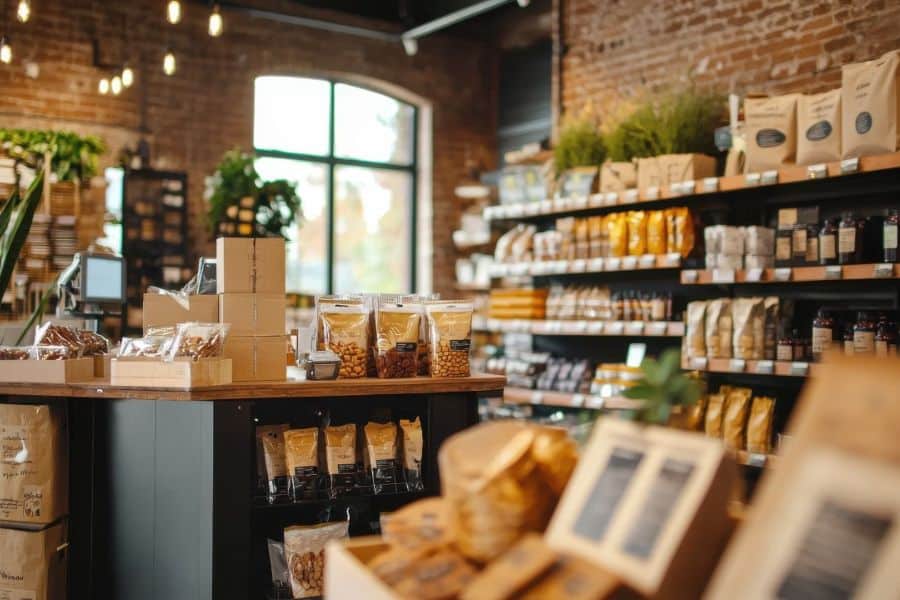
If you’re hosting a dinner party, you set the ambient lighting to create an atmosphere that helps people relax and enjoy themselves. Shops do the same but with a slightly different intent.
Retailers use scent, music, lighting, and even temperature as tools. Slow-tempo music encourages you to move through the store at a leisurely pace, which means you spend more time there.
The smell of rotisserie chicken cooking near a supermarket entrance makes you hungry, and hungry shoppers consistently spend more. I’m definitely one of those.
Soft, warm lighting in clothing store fitting rooms makes both the clothes and the person wearing them look better, which makes you feel better about buying.
It works online too, in subtler ways. Aspirational video content, smooth animations, and carefully chosen color schemes are all designed to create a feeling, and that feeling loosens your grip on your wallet.
How to outsmart it
Wear headphones with your own playlist when you shop. It sounds simple, but it overrides the store’s soundtrack and keeps you moving at your own pace. When something smells wonderful near a store entrance, notice it for what it is, a sales tool, not an invitation.
3. Eye Level is Buy Level

Every product placement decision in a store has been made deliberately, and the one that catches your eye first is almost certainly the one that makes the retailer the most money.
The “eye level is buy level” rule is retail gospel. The most profitable, highest-margin products sit right in your direct line of sight. The better-value alternatives, often store brands or less heavily marketed products, are tucked away at the top or bottom of the shelf where you have to actually make an effort to find them.
At the checkout, things get even more calculated. By the time you reach the register, you’ve already made dozens of small decisions, and your brain is tired. That’s when retailers line your path with low-cost impulse items, knowing that decision fatigue makes you far more likely to grab something without thinking.
Online, the checkout page is the new impulse aisle. “People also bought” and “Frequently bought together” suggestions land at exactly the moment your guard is down.
How to outsmart it
Make a point of scanning the full shelf, top to bottom, before you pick anything up. The best value is often hiding in plain sight at knee height. At checkout, both in-store and online, apply a simple rule: if it wasn’t on your list when you walked in, it doesn’t go in the cart.
4. The Anchor Price Game

Retailers know that the first number you see shapes every judgment you make after that. That’s anchoring, and once you spot it, you’ll see it absolutely everywhere.
A $300 sweater sitting next to a $1,200 one suddenly feels like a reasonable purchase, even if $300 for a sweater would have seemed outrageous in any other context.
A restaurant menu that leads with a $250 bottle of wine isn’t expecting you to order it. It just makes the $65 bottle look like the sensible, middle-ground choice.
Online subscriptions do this constantly, leading with the most expensive “Premium” or “Enterprise” tier so that the mid-range plan feels like a steal by comparison.
How to outsmart it
Ignore the anchor entirely. The “was” price, the crossed-out figure, the luxury option at the top of the menu — treat all of it as irrelevant. The only question worth asking is whether the actual price in front of you represents fair value for something you actually need. If you’re unsure, a quick search for the going rate elsewhere will give you a reality check that no anchor can distort.
5. The Fake Sale
Not all sales are lies. But a significant number of them are, and learning to tell the difference can save you a surprising amount of money.
Many large retailers, particularly in furniture and clothing, run items on “sale” so consistently that the sale price is actually the regular price. The higher figure on the tag is a fictional price that almost nobody pays. It exists solely to create the impression of a discount.
Online, this gets murkier. A product showing Manufacturer’s Suggested Retail Price (MSRP) $299, crossed out with bold Our Price $199, sounds compelling until you search for the same product and discover it has never sold for $299 anywhere. The savings are invented.
Buy-one-get-one deals are worth scrutinizing, too. Sometimes they’re a great value. Sometimes the first item has been priced to cover the cost of the “free” one.
How to outsmart it
Before buying anything based on a sale price, take thirty seconds to check its price history. Tools like CamelCamelCamel work for Amazon purchases and will tell you immediately whether the current deal is real or manufactured.
For Buy One Get One Free (BOGOF) offers, ask yourself whether you’d buy a single item at half the listed price. If the answer is no, the deal isn’t as good as it looks.
6. The Fear of Missing Out

Urgency is one of the most powerful forces in retail. The strange thing is, I know this trick of old, but I still fall for it. The fear of missing out short-circuits rational thinking in a way that very few other tactics can match.
Countdown timers, “only 3 left in stock” warnings, “offer expires at midnight” banners, all of these are designed to trigger the same primal response. Losing something, even something you didn’t own five minutes ago, feels worse than never having had it.
Psychologists call this loss aversion, and research consistently shows that the pain of a loss is roughly twice as powerful as the pleasure of an equivalent gain.
Loyalty programs use this too. Once you’ve accumulated enough points or reached a status tier, the thought of losing that progress by shopping somewhere else can keep you locked into a brand even when a competitor offers better value.
How to outsmart it
When you feel a rush to buy, that’s your signal to slow down, not speed up. Mentally reframe the urgency message. “Offer ends tonight” becomes “an opportunity to spend money I hadn’t planned to spend.” “Only 2 left in stock” becomes “let me think about whether I actually want this.” That small pause is usually enough to let your rational brain catch up.
7. The Free Gift That Isn’t Free
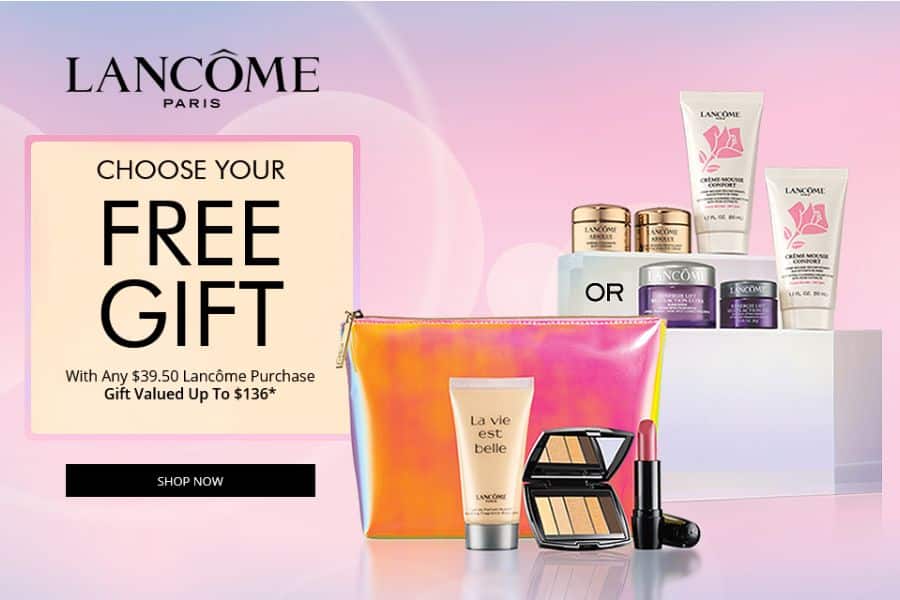
There is something deeply wired into us that responds to receiving a gift. Even a small, unsolicited one.
Retailers know this. That free sample handed to you in a grocery store aisle, the complimentary gift with purchase at a beauty counter, the sales assistant who spends twenty minutes helping you find exactly the right thing — none of it is random. It’s a carefully calculated social nudge designed to make you feel a quiet obligation to buy something in return.
Online, the same principle shows up in free e-books, welcome discount codes, and “surprise” gifts added to your cart when you hit a certain spend threshold.
How to outsmart it
Remind yourself that a corporation offering you a free sample is not being generous. It’s investing in customer acquisition. You are not in debt to a business for its marketing strategy. Take the sample, accept the help, and make your purchasing decision entirely on its own merits. You owe nothing in return.
8. The Free Shipping Trap
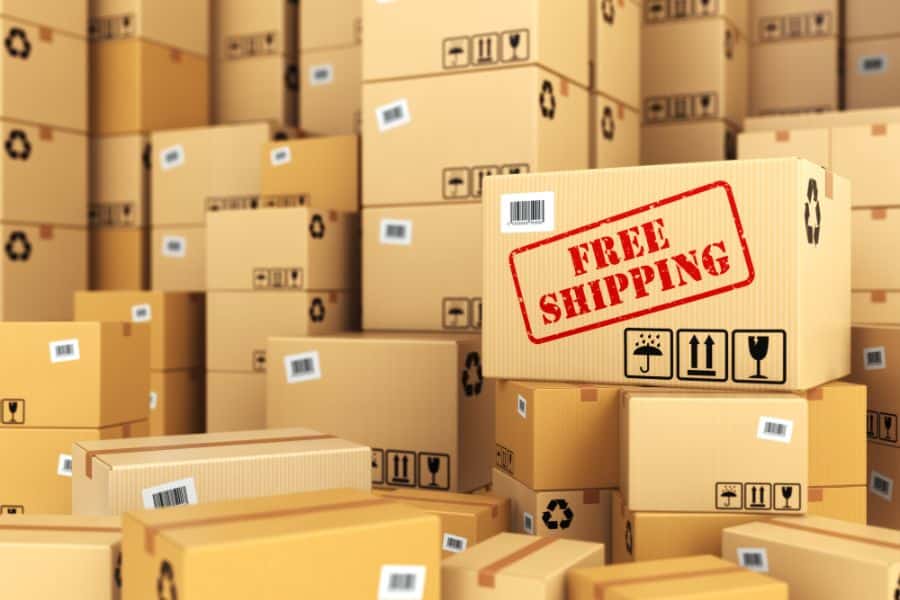
Adding $18 of things you don’t need to avoid a $6 shipping fee is so common it barely registers as irrational anymore. But that’s precisely why it’s so effective.
Shipping costs feel like a loss, money spent for nothing tangible. Spending a little extra on an actual product, on the other hand, feels like a gain. Retailers understand this perfectly, which is why free shipping thresholds are almost always set just above the average order value. That little “you’re only $12 away from free shipping” notification in your cart is not a helpful reminder. It’s a very deliberate upsell.
How to outsmart it
Do the math before you add anything to your cart to hit a threshold. If shipping costs $6 and you need to spend $15 more to avoid it, you’re not saving $6. You’re spending an extra $9. Unless the item you’re adding is something you would have bought anyway, paying the shipping fee is almost always the cheaper option.
9. The Try Before You Buy Trick
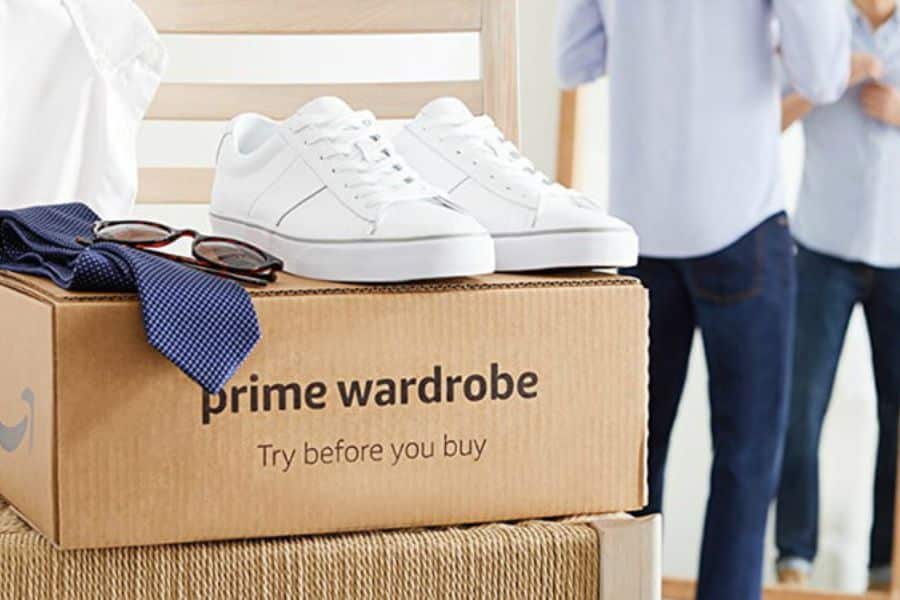
Free trials and try-at-home programs seem like a risk-free option. And in some ways, they are. But they’re also one of the most psychologically sophisticated sales tools in the retailer’s toolkit.
The moment you start using something, something shifts. You’ve personalized it, integrated it into your routine, maybe rearranged your wardrobe or your phone screen around it. Giving it back feels like a loss.
That’s the endowment effect at work, the well-documented tendency to place a higher value on things once we feel a sense of ownership over them, even when that ownership isn’t official yet.
Clothing subscription boxes that send items to your home are built on this. So are the free trials for software, streaming services, and apps that ask for your payment details upfront. Once your playlists are built and your settings are saved, canceling feels like giving something up, not just stopping a payment.
How to outsmart it
For try-at-home clothing, put anything you’re not completely certain about straight back into the return packaging immediately. Don’t let it sit in your wardrobe where it starts to feel like yours. For free trials, set a calendar reminder two days before the billing date with one question: would I pay for this today if there were no trial? If the honest answer is no, cancel before the reminder goes off.