
We all have bucket-list destinations we dream of traveling to; some are realistic, others are pipe dreams. These are the places that speak to your soul. Places of ancient wonders, breathtaking landscapes, and lost civilizations. We’ve seen the pictures, and now we want to go.
But with the way the world is today, who knows how much longer these places will exist? Climate change, overtourism, and environmental degradation are threatening the very existence of destinations that have defined our planet for thousands of years.
Glaciers that took 10,000 years to form are melting in decades. Coral reefs that sustained entire ecosystems are bleaching white. Ancient forests are burning. The window to see these places as nature intended is closing faster than anyone wants to admit.
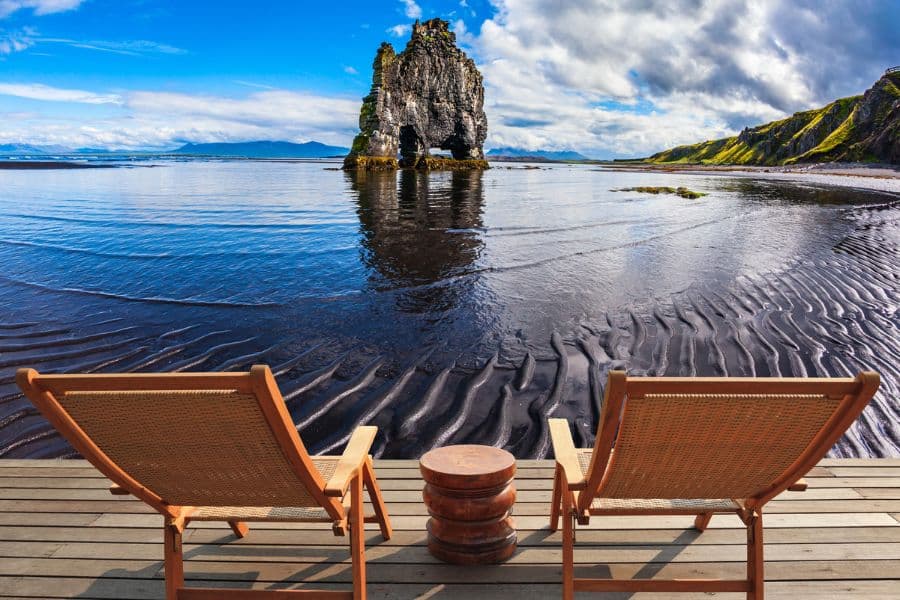
9 Bucket List Destinations to Visit in 2026
Some places on this planet make you stop and wonder how they even exist. Places so spectacular, so impossibly beautiful, that seeing them feels like witnessing something sacred. These are the wonders that have survived for millennia, shaping cultures, inspiring legends, and reminding us just how extraordinary our world really is.
These are truly bucket list destinations you won’t want to miss.
Great Barrier Reef, Australia
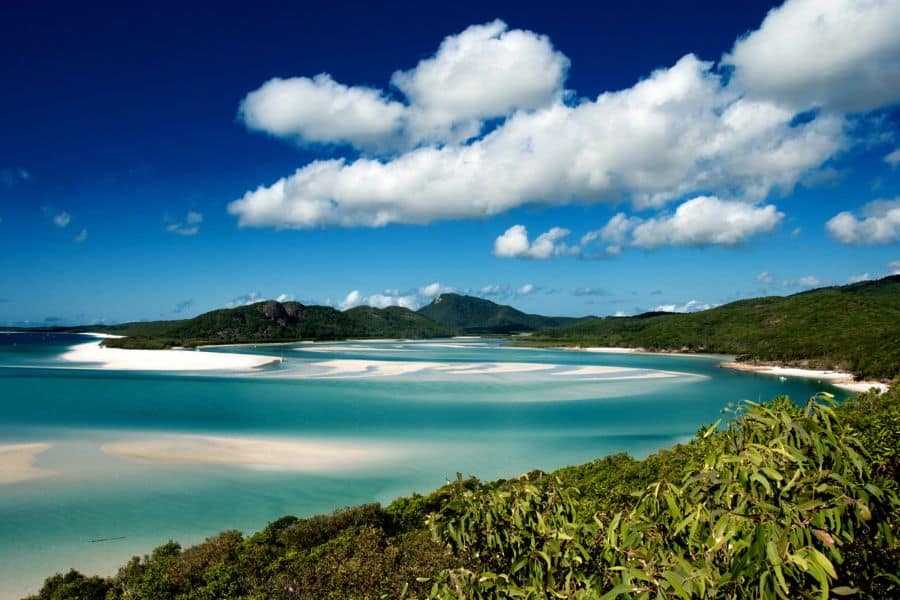
I lived in Australia for ten years, and a year of that was spent on the Great Barrier Reef in a place called Airlie Beach. I’ve been snorkeling on the reef and seen the marine life up close and personal, and it’s an experience you don’t forget.
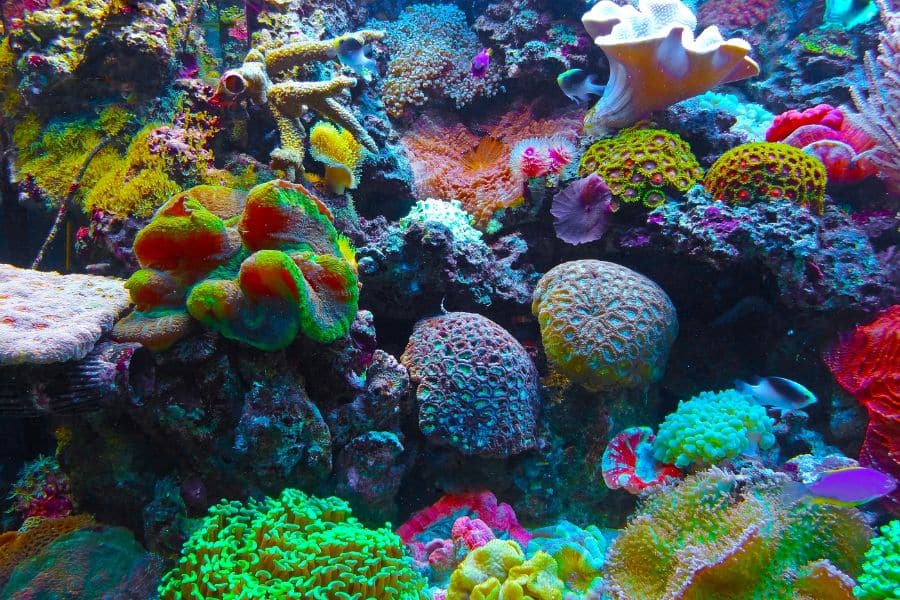
The Great Barrier Reef stretches 2,300 kilometers along Australia’s northeast coast, visible from space. Swimming through this underwater wonderland feels like floating through a living kaleidoscope, where every turn reveals another explosion of color: purple sea fans swaying in the current, schools of tropical fish darting between coral formations, sea turtles gliding past, it’s like a real-life Finding Nemo.
But the reef is dying. Ocean temperatures in 2024 reached the highest levels in 400 years, and the reef has suffered six mass bleaching events since 2016. When water gets just one degree too warm for just four weeks, corals expel the colorful algae that keep them alive, turning vibrant ecosystems ghostly white.
Half the world’s coral reefs have been lost in the last 30 years, and scientists say the frequency of bleaching events means the reefs can’t recover between hits anymore. The World Heritage Committee is conducting a full review in 2026, and if Australia doesn’t show real progress on climate action, the reef could be added to the World Heritage in Danger list. The window to see this natural wonder in anything resembling its former glory is closing fast.
Travel Information:
Peak/Off-peak seasons: May to October offer the best visibility and weather with lower humidity. November to April is the wet season with possible cyclones, but fewer tourists and lower prices.
How to get there: Fly into Cairns or Brisbane, then take boats from Port Douglas, Cairns, or the Whitsundays. Liveaboard dive trips offer the best access to pristine outer reef areas.
How long is needed: 3-5 days minimum. Liveaboard trips run 3-7 nights and let you dive multiple sites far from shore where coral is healthiest.
Things to do: Take a helicopter flight for aerial reef views, snorkel or dive at multiple sites, visit Lady Elliot Island for manta rays, sail through the Whitsundays, and learn about conservation efforts at reef research stations.
Great Wall of China, China
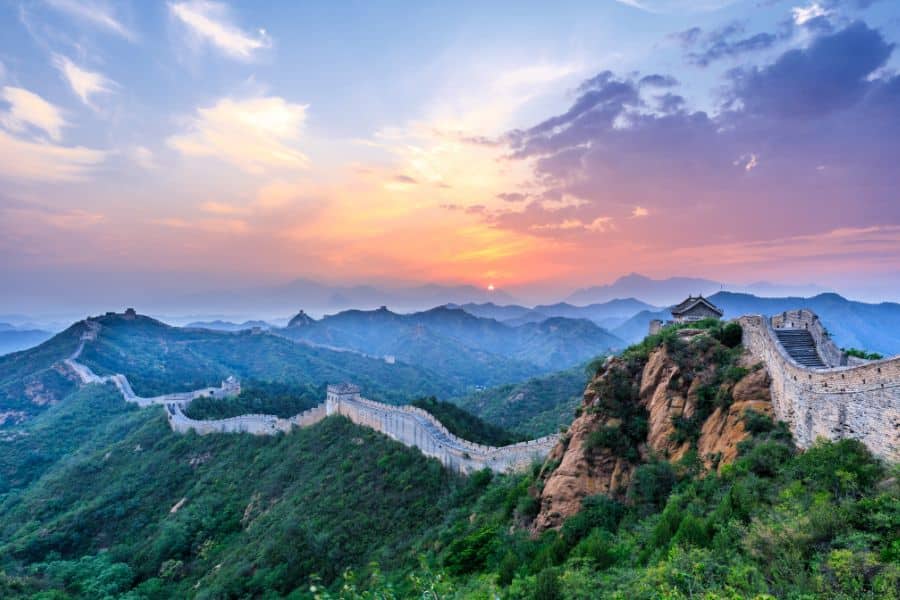
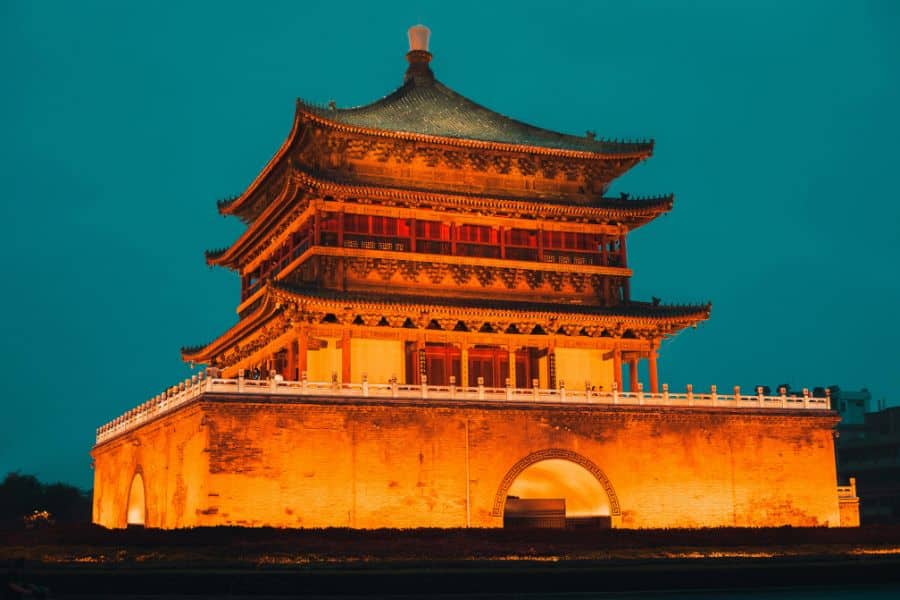
The Great Wall snakes across 13,000 miles of Chinese landscape, climbing mountains, crossing deserts, and winding through valleys in a feat of engineering that took over 2,000 years and millions of workers to build.
Walking along its ancient ramparts, with watchtowers punctuating the horizon and steep drops on either side, you feel the weight of history beneath your feet. This is where dynasties made their stand, where soldiers kept watch for invading armies, where the boundaries of an empire were literally carved into stone and earth.
But only 5.8% of the Great Wall remains well preserved. More than half has either vanished completely or deteriorated so severely that they’re barely recognizable. Wind erosion, rainfall, freeze-thaw cycles, and rising temperatures are eating away at the rammed earth sections, particularly in northwestern China, where sandstorms are reducing stretches to mounds of dirt that could disappear entirely within 20 years.
Plant roots crack through masonry from within, landslides and earthquakes topple entire segments, and illegal dismantling still happens in remote areas where locals take bricks for private construction. Climate change is accelerating the deterioration, with shifting weather patterns causing more extreme erosion and destabilization.
The Chinese government is pouring billions into restoration, using satellite monitoring and hand repairs with historically accurate materials, but racing against nature’s relentless assault on 2,000-year-old structures built from packed earth is a battle they’re losing in many sections.
Travel Information:
Peak/Off-peak seasons: April to May and September to October offer ideal weather with fewer crowds. Avoid July-August (peak summer heat and tourists) and January-February (extreme cold, though dramatic snow views).
How to get there: Fly into Beijing, then take buses, taxis, or organized tours to popular sections like Badaling (1 hour), Mutianyu (1.5 hours), or Jinshanling (2.5 hours). High-speed trains reach some sections.
How long is needed: 1-2 days for a single section, 3-5 days to explore multiple sections and understand the wall’s diversity from restored tourist areas to wild, crumbling stretches.
Things to do: Hike restored sections at Mutianyu with cable car access, trek the wild wall at Jinshanling to Simatai for authentic ruined beauty, camp overnight on remote sections, visit the wall museum at Badaling, and photograph sunrise from watchtowers.
Bora Bora, French Polynesia
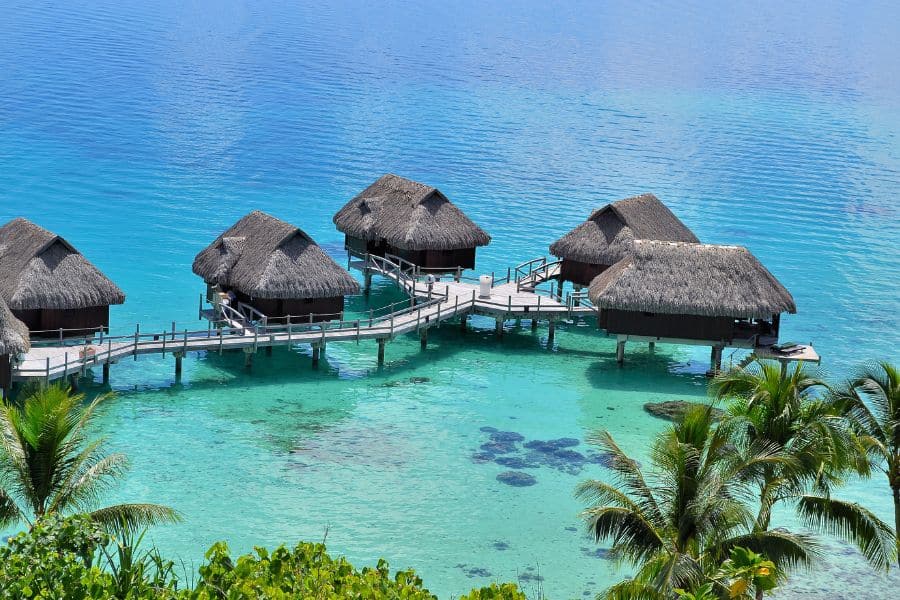
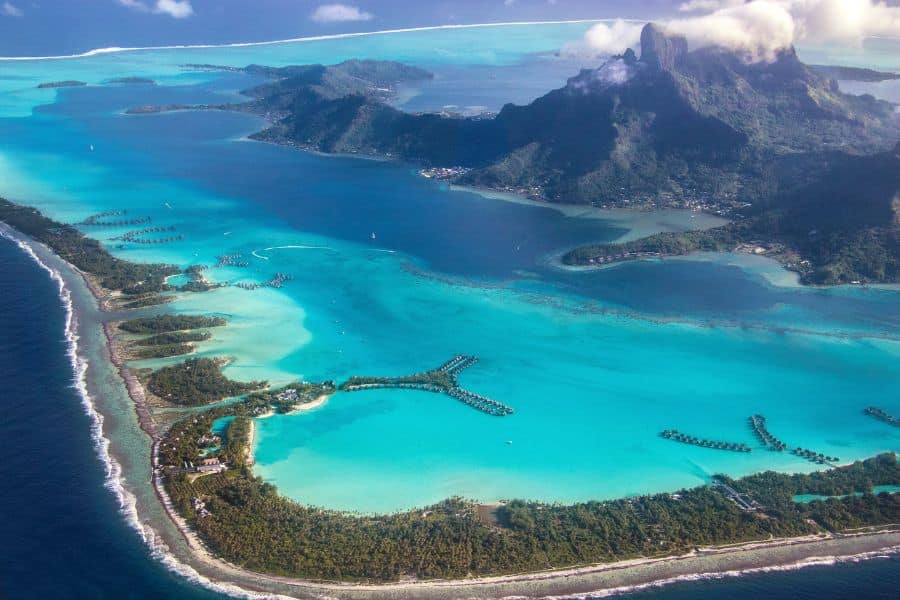
Bora Bora rises from the South Pacific like a dream someone forgot to wake up from. The volcanic peak of Mount Otemanu pierces the sky. At the same time, an impossibly turquoise lagoon spreads around the island, protected by a barrier reef that creates water so calm and clear you can see tropical fish darting between coral formations 30 feet below your overwater bungalow.
But the reef protecting this paradise is dying. In January 2020, just four days of unusually low tides combined with high temperatures and an algal bloom caused live coral cover on some Bora Bora reefs to plummet from 80% to 20%. Fish populations dropped by 40% in the same stretch.
Rising sea surface temperatures are triggering more frequent bleaching events across French Polynesia, and ocean acidification is making it harder for corals to build their calcium carbonate skeletons. Scientists predict 90% of global reefs will experience severe bleaching annually by 2055. Sea levels are rising too, threatening the low-lying motus (small islands) that dot the lagoon and the coastal infrastructure that supports the tourism industry that Bora Bora depends on.
The frequency and intensity of tropical storms are increasing, and each major storm damages reefs already weakened by warming waters. French Polynesia’s economy relies heavily on tourism, and as reefs continue to decline, the very thing that draws visitors here is vanishing. Conservation efforts like coral restoration are underway, but racing against the pace of climate change means every year matters.
Travel Information:
Peak/Off-peak seasons: May to October is the dry season with perfect weather, but the highest prices. November to April is the wet season with occasional rain and tropical storms, but 20-30% lower rates and fewer tourists.
How to get there: Fly into Papeete, Tahiti, then take the 50-minute flight to Bora Bora. Some routes connect through Los Angeles, Honolulu, or Auckland. Book inter-island flights well in advance.
How long is needed: 4-7 days. Three days minimum to experience the lagoon, reef snorkeling, and island tours. Add extra days for diving, shark and ray feeding excursions, and exploring nearby motus.
Things to do: Stay in an overwater bungalow with glass floor panels, snorkel or dive the barrier reef while coral still exists, take a lagoon tour with shark and stingray encounters, hike Mount Pahia for panoramic views, enjoy a traditional Polynesian dinner show, and sunset cruise around the island.
Iceland’s Golden Circle
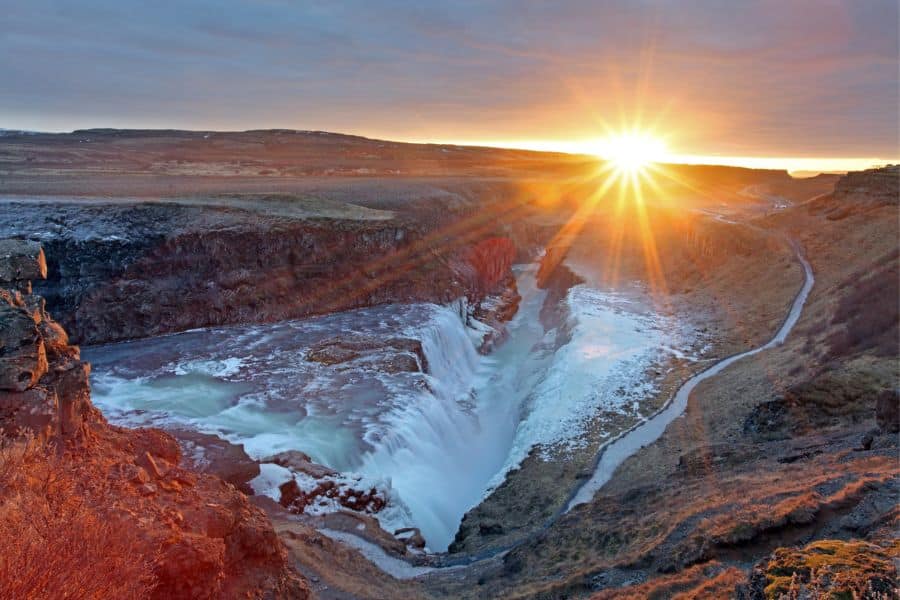
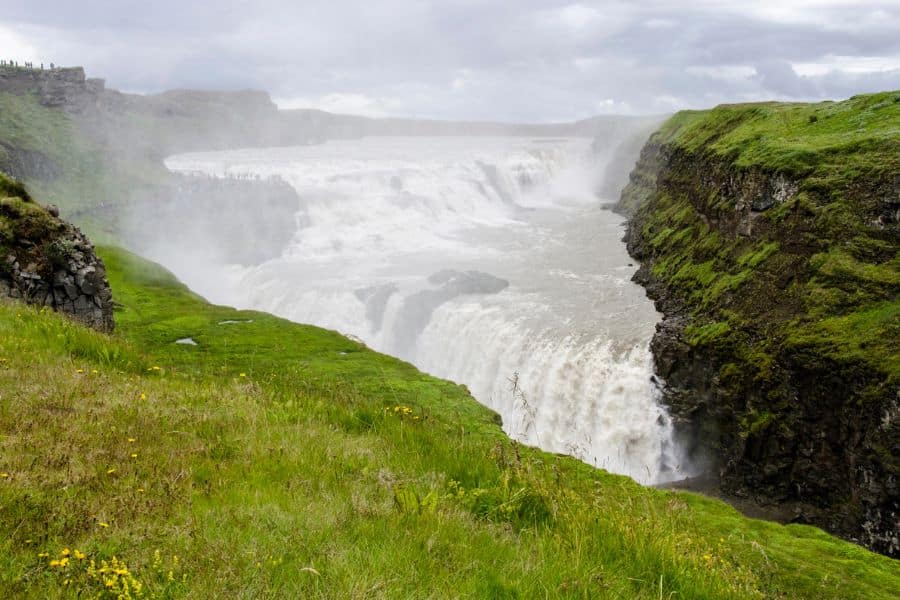
Stand between two continents at Thingvellir National Park, where you can literally walk through the rift between the North American and Eurasian tectonic plates. Watch Strokkur geyser hurl boiling water 100 feet into the air every eight minutes at the Geysir geothermal area. Feel the thunder of Gullfoss, the Golden Falls, as glacial meltwater plunges 105 feet into an ancient canyon in two massive tiers.
Iceland’s Golden Circle packs three of the planet’s most dramatic geological wonders into a 190-mile loop just outside Reykjavik, and together they reveal the raw power of a land shaped by fire and ice.
But the ice is vanishing. Iceland has already lost 70 of its 400 glaciers since 2000, and the country is warming four times faster than the Northern Hemisphere average. Langjökull, the second-largest glacier feeding Gullfoss waterfall and visible from the Golden Circle route, has lost massive amounts of ice in the past two decades.
Scientists predict only 10 to 20% of its mass will remain by 2100, and it could completely disappear in 50 years under worst-case scenarios. In some areas, glaciers are retreating at 100 meters per year. Memory cairns now mark where Langjökull’s edge stood in previous decades, monuments to ice that will never return.
In 2019, Iceland held a funeral for Okjökull, the first glacier officially declared dead from climate change, and erected a plaque warning future generations about what was lost. Tour operators who run snowmobile excursions and ice cave experiences on Langjökull say their businesses won’t exist in 10 to 15 years.
The meltwater creating new glacial lagoons, such as Jökulsárlón, is accelerating at unprecedented rates. Overtourism is compounding the problem at Golden Circle sites, with crowds trampling delicate moss that takes decades to regrow and infrastructure struggling to handle two million annual visitors. The combination of climate change and heavy foot traffic means the landscapes that made Iceland famous are transforming faster than scientists predicted just a decade ago.
Travel Information:
Peak/Off-peak seasons: June to August offer the midnight sun and warmest weather, but massive crowds and the highest prices. September to October provides Northern Lights, fall colors, and fewer tourists. November to March brings winter landscapes, Northern Lights peak season, and 30-40% lower rates, but harsh weather and limited daylight.
How to get there: Fly into Keflavik International Airport near Reykjavik. The Golden Circle loop starts from Reykjavik, about 30 minutes to the first stop at Thingvellir. Rent a 4×4 vehicle for flexibility and winter driving, or join guided day tours departing from Reykjavik hotels.
How long is needed: One day minimum for the basic three-stop loop. Two days allow for glacier experiences and additional sites like Kerid crater, Secret Lagoon, and Bruarfoss waterfall. Three days permit snowmobiling on Langjökull and exploring the man-made ice tunnel.
Things to do: Walk between tectonic plates at Thingvellir National Park, photograph Strokkur geyser eruptions, stand at the edge of Gullfoss waterfall’s canyon, snowmobile on Langjökull glacier while it still exists, explore the Into the Glacier ice tunnel carved 500 meters into Langjökull, soak in Secret Lagoon hot springs, dive or snorkel the Silfra fissure between continents (clearest water on Earth).
Maui, Hawaii, USA
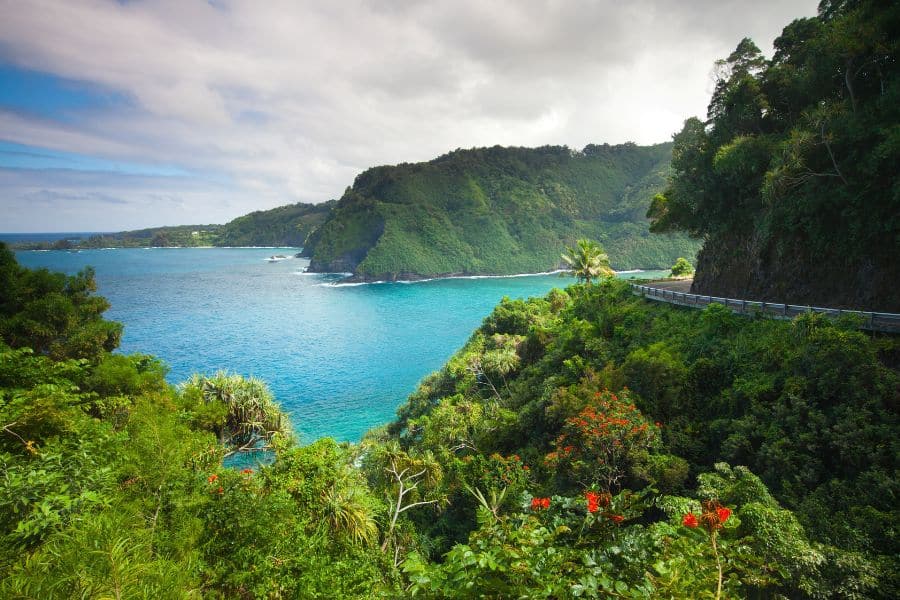
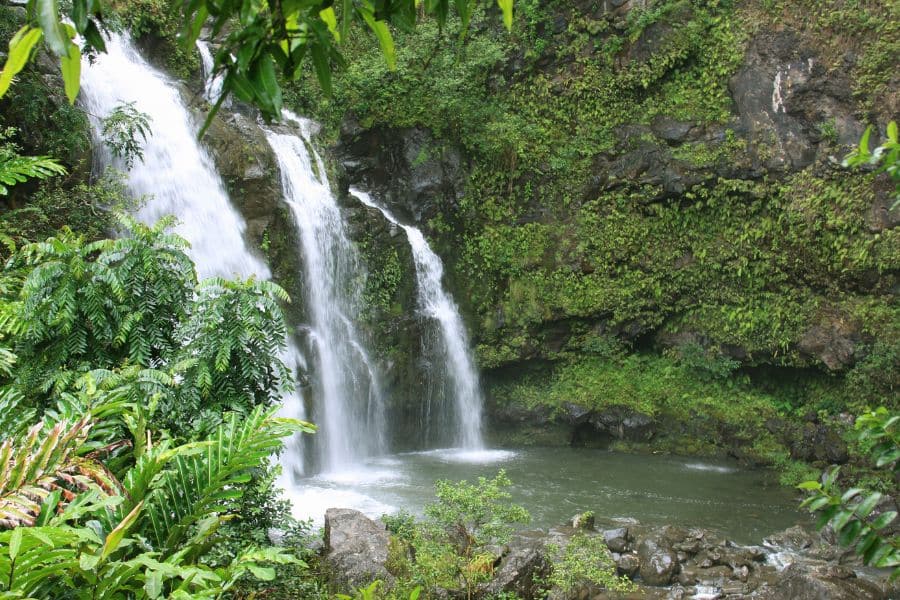
Drive the legendary Road to Hana, 64 miles of winding two-lane highway with 620 curves and 59 one-lane bridges threading through rainforest, past cascading waterfalls, black sand beaches, and hidden coves. Watch sunrise from the summit of Haleakala, standing at 10,023 feet above sea level, where you’re literally above the clouds.
Snorkel with sea turtles in crystal-clear waters at Kaanapali Beach or explore bamboo forests on the Pipiwai Trail to 400-foot Waimoku Falls. Maui combines dramatic volcanic landscapes with postcard beaches and warm Hawaiian hospitality, making it one of the most beloved islands in the Pacific.
But the 2023 Lahaina wildfires changed everything. On August 8, 2023, wind-driven fires fueled by Hurricane Dora killed 102 people and destroyed over 2,200 structures in the historic town of Lahaina, causing $5.5 billion in damages. The deadliest U.S. wildfire in over a century wiped out a former royal capital in hours, and recovery is ongoing.
Climate change is making these disasters more frequent and severe. Rising temperatures created flash drought conditions before the fires, and invasive grasses that replaced historic sugarcane plantations became tinderboxes. Sea level rise is threatening Maui’s coastline at an accelerating rate.
The island has already lost 85% of its beaches to coastal erosion, and West Maui condos now sit precariously close to disappearing shorelines. Coral reefs surrounding Maui are dying from warming ocean temperatures and ocean acidification. Between 2014 and 2016, mass bleaching events killed up to 50% of reefs in some locations, and scientists predict severe bleaching will occur annually by 2055.
These reefs protect the coastline from storms and erosion, so their death accelerates beach loss. Overtourism compounds these problems. Before the fires, Maui welcomed nearly 2.2 million annual visitors, straining water resources, overwhelming waste management systems, destroying fragile ecosystems through foot traffic, and contributing 25% of Hawaii’s energy-sector greenhouse gas emissions.
The combination of climate-driven disasters, disappearing beaches, dying reefs, and tourism pressure means the Maui visitors experience today may be unrecognizable in the coming decades.
Travel Information:
Peak/Off-peak seasons: December to April is the peak season, with the highest prices, the best whale watching (humpbacks migrate from November through May), and the most crowds. May to November offers lower rates, fewer tourists, warmer ocean temperatures, and occasional tropical storms, but overall excellent conditions.
How to get there: Fly into Kahului Airport (OGG) on Maui. Direct flights are available from major West Coast cities, Dallas, Chicago, and other U.S. hubs. Inter-island flights connect from Honolulu. Rent a car at the airport for flexibility in exploring the island.
How long is needed: Seven days minimum to experience multiple regions without rushing. Three days for Road to Hana and East Maui, two days for West Maui beaches and snorkeling, one day for Haleakala summit sunrise, one day for Upcountry exploration. Ten days are ideal for adding whale watching, diving, and relaxation.
Things to do: Drive the full Road to Hana with stops at Wailua Falls, Wai’anapanapa Black Sand Beach, Seven Sacred Pools, and Pipiwai Trail bamboo forest. Wake at 3 am for Haleakala sunrise (requires advance reservations). Snorkel Molokini Crater or with sea turtles at Turtle Beach. Take a whale watching tour from December through April. Explore historic Paia town.
Machu Picchu, Peru

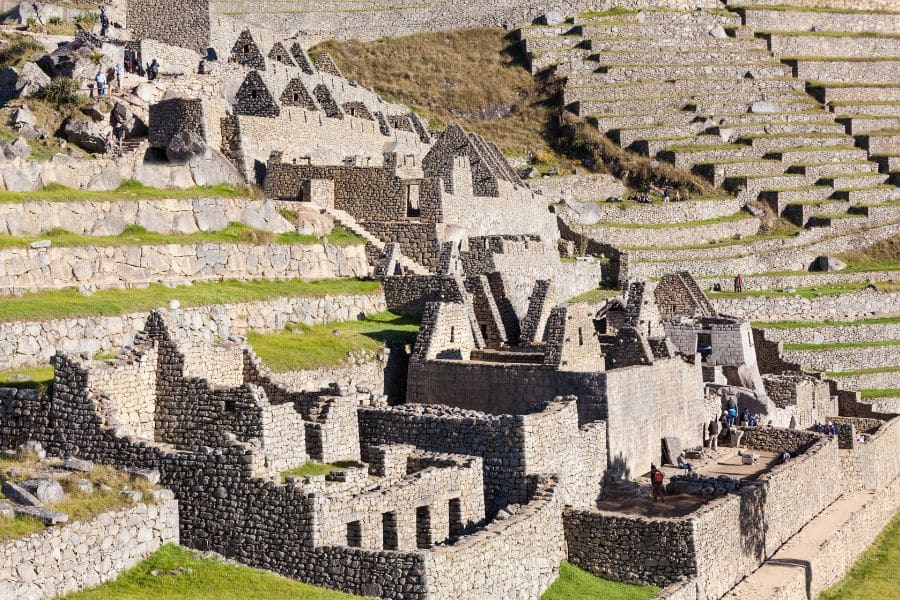
This one is the top of my husband’s bucket list, so we’re planning a trip later this year. Can you imagine standing before the Lost City of the Incas, a 15th-century citadel perched 7,970 feet above sea level in the Andes Mountains, shrouded in morning mist. Walk through ancient stone temples, terraced agricultural platforms, and perfectly fitted granite walls built without mortar that have survived five centuries of earthquakes.
Trek the legendary Inca Trail for four days through cloud forests, alpine tundra, and mountain passes reaching 13,828 feet to arrive at the Sun Gate at sunrise and watch Machu Picchu emerge from the clouds. Explore the Sacred Valley where Inca nobility built their estates among fertile farmland, visit the fortress ruins at Ollantaytambo, and wander Pisac’s terraced citadel complex. Machu Picchu represents the architectural and engineering genius of the Inca civilization, and hiking there remains one of the world’s ultimate bucket list adventures.
But climate change and overtourism are destroying what took the Incas decades to build. Temperatures have risen 2.1°C since 1960, nearly double the global average, with projections showing another 1.8 to 3.2°C increase by 2050. This warming is triggering more frequent landslides and mudslides, especially during the rainy season.
In 2024, emergency trail closures increased by 35% compared to the previous decade, driven by extreme weather events. The protective cloud forest ecosystem that shields Machu Picchu from erosion is beginning to retreat upward to higher elevations, potentially leaving the site exposed to more severe weather impacts.
Altitude sickness incidents have increased 25% since 2020, possibly due to changing atmospheric pressure patterns. More than 1.5 million annual visitors are accelerating erosion on pathways and structures never designed for modern tourism volumes. Before pandemic restrictions, up to 4,000 daily visitors exceeded UNESCO’s recommended capacity of 2,500, creating dangerous overcrowding that damaged both the site and visitor experience.
The constant foot traffic wears down ancient stone pathways. Tourists have vandalized ruins, left garbage, and explored restricted areas. The gateway town of Aguas Calientes has become entirely dependent on tourism, creating economic vulnerability. UNESCO nearly added Machu Picchu to its endangered heritage list in 2017, and only strict new visitor management systems kept it off.
Peru is investing over $50 million in climate adaptation, including enhanced drainage systems and soil stabilization, but fighting a losing battle against accelerating climate impacts.
Travel Information:
Peak/Off-peak seasons: May to October is the dry season, with clearer skies, the best hiking conditions, but the highest prices and the most crowds. November to April is the wet season with afternoon rains, frequent trail closures, lower rates, and fewer tourists. The Inca Trail closes completely every February for maintenance.
How to get there: Fly into Lima, then take a domestic flight to Cusco (1 hour 20 minutes). Spend 1-2 days in Cusco at 11,152 feet for altitude acclimatization before visiting Machu Picchu. Train from Ollantaytambo to Aguas Calientes (1.5 hours), then bus to ruins (30 minutes). Or hike the 4-day Inca Trail.
How long is needed: Seven days minimum. Two days in Cusco for acclimatization and city tours, one day exploring Sacred Valley (Pisac, Ollantaytambo, Chinchero, Moray salt terraces), four days for classic Inca Trail, or one day for train/bus option plus ruins tour. Ten days is ideal to add alternative treks and deeper Sacred Valley exploration.
Things to do: Hike the classic 4-day Inca Trail (book permits 6-8 months ahead, strictly limited to 500 people daily, including guides and porters). Take a sunrise tour of Machu Picchu ruins with a mandatory guide.
Climb Huayna Picchu or Machu Picchu Mountain for aerial views. Explore the Ollantaytambo fortress, the Pisac archaeological site, and the Moray circular terraces. Visit Chinchero weaving cooperatives. Book timed entry tickets for Machu Picchu months in advance.
Patagonia, Argentina & Chile
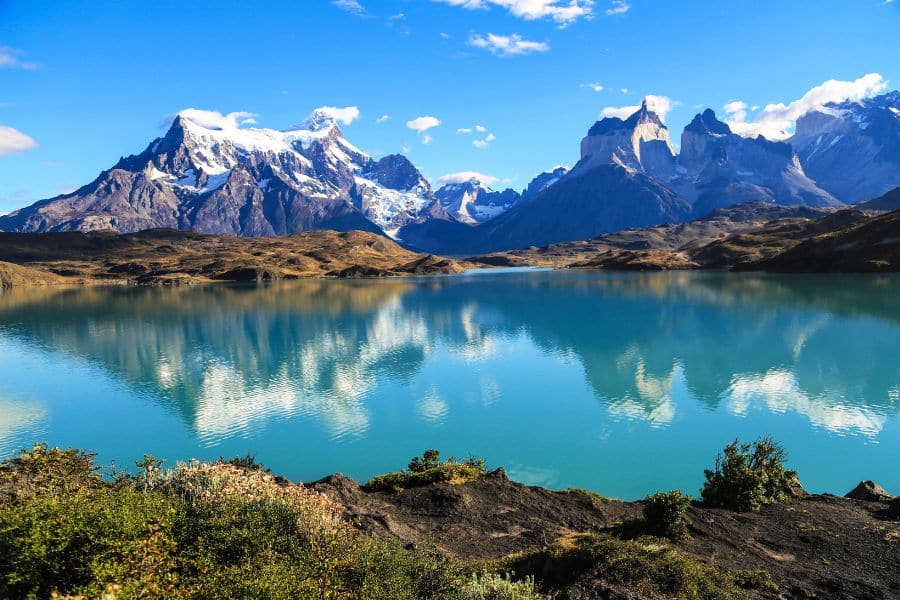
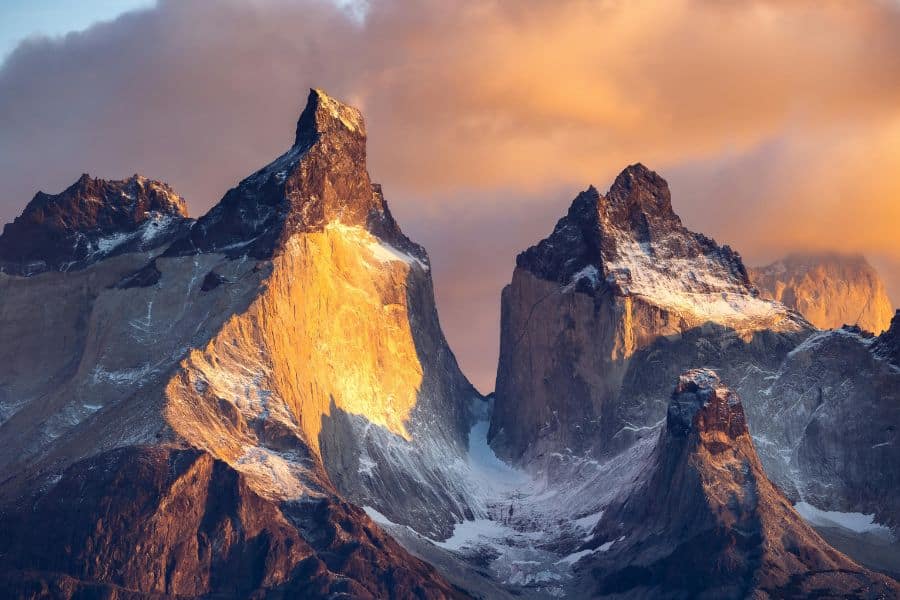
Trek beneath the granite spires of Torres del Paine, three iconic towers rising 9,350 feet above turquoise glacial lakes in Chilean Patagonia. Stand on wooden walkways mere feet from the 200-foot-tall ice walls of Perito Moreno Glacier, one of the few advancing glaciers left on Earth, and watch massive chunks of ice calve into Lake Argentino with thunderous cracks.
Hike to Laguna de los Tres for sunrise views of Mount Fitz Roy’s jagged 11,171-foot peak reflected in alpine waters. Cross between Argentina and Chile through vast Patagonian steppe dotted with guanacos, condors soaring overhead, and wind-sculpted lenga forests. Patagonia represents the wild southern edge of South America, where the Andes meet glacial lakes, where you can stand at the end of the world and feel truly small.
But the glaciers that define this landscape are disappearing faster than almost anywhere on Earth. The Patagonian ice fields are melting at some of the highest rates on the planet, thinning by nearly 3.3 feet per year and now accounting for 10% of global sea level rise from mountain glaciers. Out of 26,000 glaciers that make up the three Patagonian ice fields, only two have grown over recent decades.
The rest are retreating significantly. Many smaller glaciers could vanish within 20 to 30 years. In the past 20 years alone, glacier coverage across Patagonia has shrunk 10 to 20%. Temperatures are rising, precipitation is decreasing, and snowpack accumulation can’t keep pace with accelerating melt.
The San Rafael Glacier is receding so dramatically that views once visible 30 minutes into the national park now require 2.5 hours to reach. The Exploradores Glacier loses about 5 inches daily during summer. Climate change has triggered a new cycle of glacial lake outburst floods as ice dams collapse, sending devastating surges down rivers and threatening communities and infrastructure.
In 2019, Chile’s Northern Patagonia Icefield split in two due to rapid melting. These glaciers feed the rivers that sustain agriculture, provide drinking water for cities, and shape the entire ecosystem. Once they’re gone, the water supply for millions from La Paz to Santiago will face serious threats.
The protective cloud forests surrounding many glaciers are already beginning to retreat upward to higher elevations. Tourism pressure on fragile ecosystems is growing. The ground itself is rising as ice weight disappears, causing geological instability. Scientists warn that without immediate global action on climate change, Patagonia’s ice fields face collapse, fundamentally altering one of Earth’s last great wilderness areas.
Travel Information:
Peak/Off-peak seasons: November to March is summer, with the warmest weather, long daylight hours, the best hiking conditions, but the highest prices and the most crowds. April to October is winter with snow, harsh weather, many trail closures, but dramatic scenery, fewer tourists, and lower rates. December to February is peak season.
How to get there: Fly into Buenos Aires, Argentina, or Santiago, Chile. From Buenos Aires, a domestic flight to El Calafate (3 hours) for Argentine Patagonia. From Santiago, fly to Punta Arenas (3.5 hours), then bus to Puerto Natales (3 hours) for Chilean Patagonia. El Calafate serves as a base for the Perito Moreno Glacier and El Chaltén. Puerto Natales is the gateway to Torres del Paine.
How long is needed: Two weeks minimum. Three days in El Calafate for Perito Moreno Glacier and optional ice trekking, three days in El Chaltén for Fitz Roy hikes (Laguna de los Tres, Laguna Torre, Loma del Pliegue Tumbado), five days Torres del Paine W Trek plus travel days. Three weeks is ideal to add the full O Circuit or Ushuaia.
Things to do: Trek Torres del Paine W Circuit (4-5 days, advance refugio bookings essential), hike Laguna de los Tres to Mount Fitz Roy viewpoint, walk Perito Moreno Glacier boardwalks or book ice trekking experience, visit Los Glaciares National Park, trek Laguna Torre below Cerro Torre, boat tours to Upsala and Spegazzini glaciers, horseback riding on Patagonian estancias, spot guanacos, condors, and pumas.
Taj Mahal, India
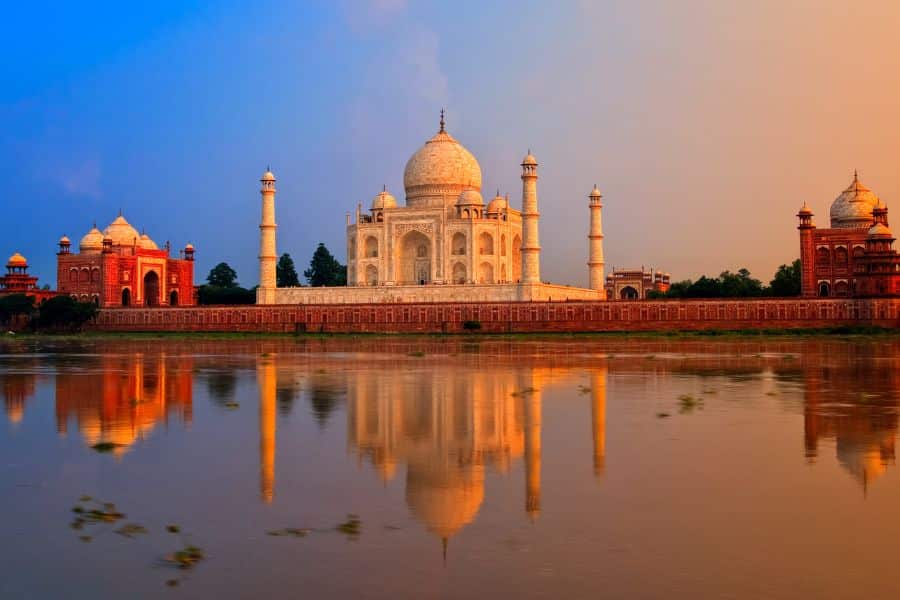
Stand before the world’s greatest monument to love, a white marble mausoleum that seems to float above reflecting pools at sunrise. Emperor Shah Jahan built the Taj Mahal between 1632 and 1653 for his beloved wife, Mumtaz Mahal, creating a masterpiece that blends Persian and Indian architectural styles and features 28 types of precious stones inlaid in intricate floral patterns.
Watch the marble change color from soft pink at dawn to golden at sunset, walk through Mughal gardens laid out in perfect symmetry, and marvel at the main dome soaring 240 feet above the Yamuna River. The Taj Mahal represents the pinnacle of Mughal architecture, a UNESCO World Heritage Site that draws seven million visitors annually to witness what poet Rabindranath Tagore called “one teardrop glistening spotlessly bright on the cheek of time.”
But air pollution is destroying what took 20,000 artisans 22 years to build. The pristine white marble has turned yellow and brown, covered in a toxic film of dust, soot, and carbon particles from industrial emissions, vehicle exhaust, and construction activities. Sulfur dioxide and nitrogen dioxide from nearby factories, brick kilns, and the Mathura Oil Refinery react with moisture to form acid rain that corrodes marble, a process scientists call “marble cancer.”
The once-flawless exterior now shows visible discoloration that workers must periodically remove by applying and peeling off clay. Black carbon, brown organic carbon particles, and dust settle on the surface daily, absorbing ultraviolet light and accelerating yellowing. The polluted Yamuna River flowing beside the monument breeds insects that turn sections of the marble green.
In 1998, when President Bill Clinton visited, he declared that pollution damage had exceeded harm from 350 years of wars, invasions, and natural disasters combined. Despite the Taj Trapezium Zone regulations restricting polluting industries within an area of 10,400 square kilometers, enforcement remains weak.
Agra ranks among India’s most polluted cities, with particulate matter levels regularly exceeding safe limits by 10 times. Construction dust from rapid urbanization, emissions from the textile industry, agricultural burning in neighboring states, and traffic from millions of annual visitors all contribute.
The Supreme Court of India has issued directives to address the crisis, but restoration efforts struggle with funding and political will. Climate change brings additional threats through increased flooding, groundwater fluctuation affecting foundations, and more extreme weather eroding the structure. Each year that passes, more of the marble’s luminescence disappears beneath pollution’s relentless assault.
Travel Information:
Peak/Off-peak seasons: October to March is the peak season, with pleasant weather (15-27°C), clear skies, the best photography conditions, but the largest crowds and the highest prices. November-December sees heavy smog and fog limiting visibility. April to June is extremely hot (40-45°C), with fewer tourists, but unbearable midday heat. July to September brings monsoon rains, humidity, lush gardens, the lowest crowds, but uncomfortable conditions.
How to get there: Fly into Indira Gandhi International Airport in New Delhi (the closest international airport, 230 km away). From Delhi, take an express train to Agra (4-5 hours), hire a private car/driver via the Yamuna Expressway (3 hours), or book a day tour. Alternatively, fly to Agra Kheria Airport (limited domestic flights), 1 hour from the monument.
How long is needed: One full day minimum for Taj Mahal at sunrise, Agra Fort, and Itmad-ud-Daulah (Baby Taj). Two days are ideal to visit Fatehpur Sikri (40 km away, a UNESCO World Heritage Site), the Mehtab Bagh gardens for sunset Taj views, and explore Agra’s markets. Three days allow a relaxed pace as part of the Golden Triangle tour (Delhi-Agra-Jaipur).
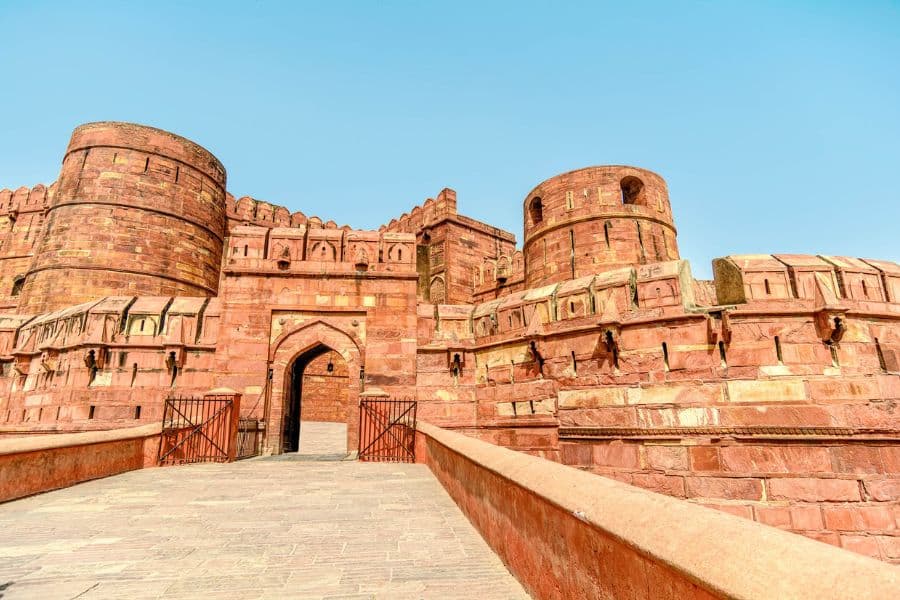
Things to do: Visit Taj Mahal at sunrise (opens 30 minutes before sunrise, closed Fridays), explore Agra Fort (former Mughal residence with Taj views), tour Itmad-ud-Daulah tomb, visit Fatehpur Sikri abandoned Mughal capital, view sunset from Mehtab Bagh gardens across Yamuna River, book night viewing on full moon (limited to 400 visitors, advance booking required). Purchase tickets online or at the gates (foreigners pay 1050 rupees, plus an additional 200 rupees to enter the mausoleum, which includes shoe covers and water).
Bagan, Myanmar
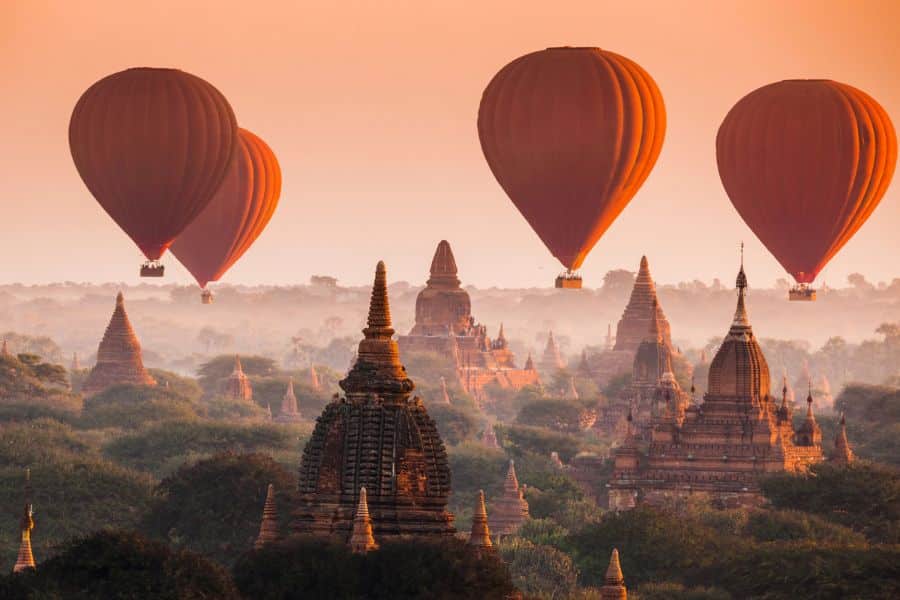
Watch hot air balloons drift over 2,200 ancient Buddhist temples rising through morning mist on a vast plain along the Irrawaddy River. Between the 9th and 13th centuries, the Pagan Kingdom built more than 10,000 religious structures here, creating one of the greatest concentrations of Buddhist architecture on Earth.
Explore red brick pagodas with intricate carvings, climb temple terraces for panoramic views of spires stretching to the horizon, discover sacred murals in dimly lit chambers, and cycle dusty paths between stupas scattered across 26 square miles of scrubland. Some temples soar over 200 feet high with golden domes glinting in sunlight, while smaller shrines hide treasures in quiet corners.
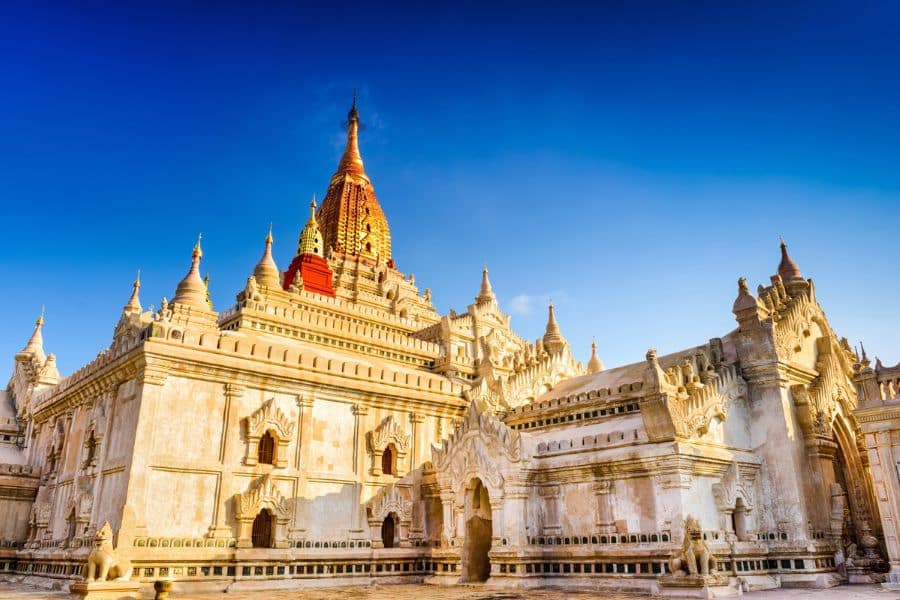
Ananda Temple showcases perfectly preserved architecture with gold-plated Buddha statues from the 1100s, Shwezigon Pagoda displays classic stupa design with a golden dome, and Thatbyinnyu Temple stands as Bagan’s tallest at 216 feet. UNESCO granted World Heritage status to this temple city in 2019, which rivals Angkor Wat in Cambodia, drawing visitors who experience sunsets that turn the sky purple behind the silhouette of a thousand pagodas. The ancient capital of the first unified Burmese dynasty represents centuries of devotion, artistry, and architectural innovation that have endured over time.
But earthquakes and climate change are destroying what took 250 years to build. Bagan sits directly on the Sagaing Fault, one of the world’s most active seismic zones, and has experienced devastating earthquakes throughout its history. More than 400 earthquakes struck between 1904 and 1971, with a magnitude eight quake in 1975 causing severe damage to many temples.
The 2016 earthquake significantly damaged hundreds of monuments, and on March 28, 2025, a catastrophic 7.7-magnitude earthquake caused widespread destruction across the archaeological zone. Several 800-year-old temples collapsed, and surveys reported damage to potentially 400 pagodas, with 180 in the central monument zone.
Many iconic structures, such as the Sulamani Temple, sustained significant damage, and the earthquake exposed a critical vulnerability: temples that underwent shoddy repairs by Myanmar’s military government in the 1990s suffered the worst damage, while original structures fared better.
The clay brick and mud construction that helped temples survive for centuries in the semi-arid Central Dry Zone now faces a new threat from climate change. Increasing extreme weather events bring torrential rains that the ancient materials cannot withstand. In September 2024, Typhoon Yagi brought a 60-year record of rainfall, causing the 12th-century Pagoda No. 167 and the 13th-century Sinka Temple to collapse. Excessive water seeping into walls weakens foundations never designed for such moisture. Climate scientists predict Myanmar’s Central Dry Zone will experience more frequent heavy rainfall, flooding, and unpredictable weather patterns.
Travel Information:
Peak/Off-peak seasons: November to February is the peak season, with pleasant weather (22-25°C), dry conditions, clear skies, and hot air balloon flights operating, but with most crowds and the highest prices. October and March are shoulder seasons with decent weather, fewer tourists, and good photography conditions.
April to May is extremely hot (reaching 48°C), with fewer tourists, but the heat is unbearable. June to October is the monsoon season, with heavy rainfall, high humidity, the greenest landscapes, the lowest prices, minimal tourists, but temple closures and uncomfortable conditions. Mid-to-late September offers the tail end of the monsoon with green scenery and almost no crowds.
How to get there: Fly into Yangon’s international airport first (Myanmar’s main gateway). From Yangon, fly to Nyaung-U Airport (1.2 hours, $70-150), or take a VIP bus (9 hours, $5-8), or an overnight train. Can also reach Bagan from Mandalay by bus (4 hours) or Inle Lake by bus (8 hours). Domestic flights are available between major cities.
Note: Myanmar requires a visa for most nationalities. Apply for an e-visa online ($50 USD, 28-day validity). Bring crisp, unbent USD notes, as damaged currency is often refused.
How long is needed: Three days minimum to properly explore major temples at a leisurely pace, catch multiple sunrises and sunsets, and experience both cycling tours and hot air balloon. Four or more days allow day trips to Mount Popa volcanic monastery (40 miles away, 777 steps to the temple), deeper temple exploration, and immersion in local culture.
Things to do: Rent an e-bike or bicycle to explore temple routes independently (flat terrain, easy cycling). Watch the sunrise from the temple terraces as hot air balloons drift overhead (balloon rides $260-330, operate October-March only). Visit Ananda Temple, Shwezigon Pagoda, Thatbyinnyu Temple, and lesser-known structures for solitude.
Take a boat cruise on the Irrawaddy River at sunset. Explore local villages to see lacquerware production and traditional crafts. Visit Lawkananda Pagoda on the riverside. Day trip to Mount Popa monastery. The entrance fee of 25,000 kyat ($18.50 USD) covers the entire stay. Note: Due to the March 2025 earthquake damage, some temples may be closed for safety assessments and restoration. Check current access before visiting specific structures.