
There is so much advice out there on what you should and shouldn’t do when it comes to improving your credit rating. My daughter and I were having this conversation a couple of weeks ago as she’s now looking to get a mortgage and is trying to tidy up her finances.
She’d read somewhere that having too many cards hurts your score, and she was about to clear and close the card she’d had since college. Luckily, she hadn’t acted because this one thing would have seen her score drop substantially.
Credit scoring is one of those areas where one wrong move could see that dream of owning your own home go up in smoke. Most of us know we need to pay our bills on time, but beyond that, it’s a little hit and miss.
What a Credit Score Actually Measures
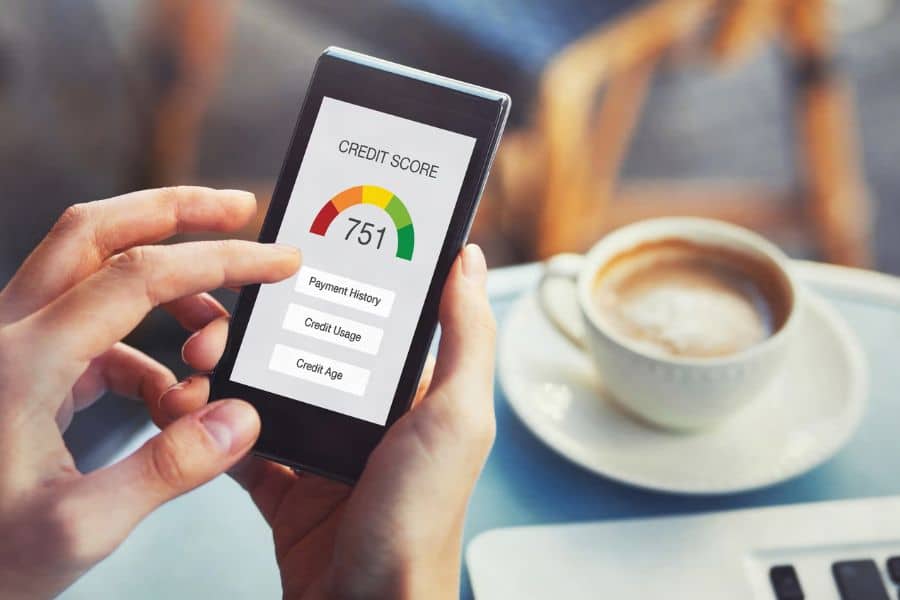
Your FICO score, the one most US lenders use, ranges from 300 to 850 and is built from five components in fixed proportions. Payment history is 35 percent of it. Amounts owed (mostly credit utilization) are 30 percent. Length of credit history is 15 percent. New credit is 10 percent. Credit mix is the last 10 percent.
VantageScore, the other big one, weights things slightly differently but lands in roughly the same neighborhood.
Those percentages matter because they tell you where to spend your attention. If 65 percent of your score comes from two factors, payment history and utilization, then almost everything else is a rounding error. People get obsessed with the 10 percent stuff and ignore the 30 percent stuff, and then wonder why their score won’t budge.
I’ll be honest, I didn’t fully understand this myself until a few years ago. I’d been paying my cards in full every month, thinking I was a model citizen, and my score was fine but not great. Turned out my utilization was being reported at high numbers because of when the statement closed in the billing cycle, even though I never paid a penny of interest.
Fixing that one thing pulled my score up about 30 points in two months.
The Utilization Trap Almost Nobody Explains Properly
Credit utilization is the percentage of your available credit you’re using at any given moment. If you have a card with a $10,000 limit and you’re carrying a $3,000 balance, that’s 30 percent utilization on that card. The score also looks at your total utilization across all cards.
Here’s where people get tripped up. The balance reported to the credit bureaus is usually the one on your statement closing date, not the one after you pay it off. So you can pay your card in full every single month, never owe a cent of interest, and still have 60 or 70 percent utilization reported because the bank snapshots your balance the day the statement closes. The bureaus see that snapshot. Your score reacts to that snapshot.
The target most people cite is under 30 percent, but if you want a real boost in your score, aim for under 10 percent on your reported balance. There are two ways to do that without changing your spending. One, make a payment a few days before your statement closes, so the reported balance is small. Two, ask your card issuer for a credit limit increase, which raises the denominator and automatically lowers your utilization. I did this with two of my cards last year, and it took about five minutes on the phone.
One other thing worth knowing: utilization has no memory. A high balance one month and a low balance the next doesn’t haunt you. The score reacts to what’s reported now. So if you’re about to apply for a mortgage or a car loan, paying everything down to almost zero in the month before the application can give you a temporary lift of 20 to 50 points. Lenders won’t know or care that it’s temporary.
Why Closing Old Cards Is Usually a Bad Idea
Back to my daughter and closing the main credit card she’d had since college. Two things would have happened if she’d closed it. Her average account age would have dropped because the calculation suddenly lost its oldest data point.
And her total available credit would have dropped too, pushing her utilization percentage up overnight even though her actual debt hadn’t changed.
Closed accounts in good standing do stay on your report for around 10 years, so the age effect is delayed rather than instant, but the utilization hit is immediate. For someone about to apply for a mortgage, that’s the worst possible timing.
The sensible default is to keep old cards open, especially the oldest one, even if you barely use it. Put a recurring small charge on it (a streaming subscription, say) and set it to autopay from your checking account.
That keeps the card active so the issuer doesn’t close it for inactivity, and it keeps the credit line counting toward your utilization math. The exception is a card with an annual fee you can’t justify, or one that tempts you to spend more than you can afford. In that case, close it with eyes open, knowing your score will dip for a while.
The Stuff People Worry About That Barely Matters
Checking your own credit score doesn’t hurt it. I can’t stress this enough. Pulling your own report through Credit Karma, your bank’s app, or annualcreditreport.com is a soft inquiry and has zero effect.
The hard inquiry, the kind that drops your score a few points, only happens when a lender pulls your report because you applied for credit.
And even hard inquiries are small. A single one typically costs you about 5 points and fades within a year. Multiple hard inquiries in a short window for the same type of loan (mortgage shopping, auto loan shopping) are usually bundled together and counted as one, as long as you do them within about 14 to 45 days, depending on the scoring model.
So shop around for a mortgage in a focused two-week burst, and you won’t get penalized for it.
Credit mix is another one. It’s only 10 percent of the score, and the algorithm just likes to see that you can handle different types of credit, revolving (cards) and installment (loans). You don’t need to take out a car loan you don’t want just to have an installment loan on your file.
If you already have a mortgage or student loan, you’ve got the installment box checked. Going out of your way to manufacture one isn’t worth it.
Carrying a small balance to “build credit” is a myth. Paying interest doesn’t improve your score. The card issuer reports your balance and your payment status, whether you pay in full or carry a balance. Pay in full, save the interest, and your score does just as well. Possibly better, because lower reported balances mean lower utilization.

What Actually Moves the Number, in Order
If you want a practical priority list, here it is, ranked by how much bang you get for your effort.
- Never miss a payment. A single 30-day-late mark can knock 60 to 110 points off a good score and stays on your report for 7 years. Set up autopay for at least the minimum on every account, even if you plan to pay more manually.
- Get your reported utilization under 10 percent. Pay before the statement closes, ask for a credit limit increase, or both. This is the single fastest legitimate way to raise your score, and it works within one or two billing cycles.
- Leave old accounts alone. Don’t close them unless there’s a real cost reason. Length of credit history is a slow-build factor; you can’t speed it up, but you can absolutely destroy it by closing your oldest card.
- Space out new applications. If you’re planning a big purchase that needs financing, don’t open new credit cards in the six months leading up to it. Each new account drops your average age and adds a hard inquiry. Both are small effects individually, but they stack.
- Check your credit reports for errors at least once a year. You can get all three (Equifax, Experian, TransUnion) free at annualcreditreport.com. Errors are more common than people think: accounts that aren’t yours, late payments that weren’t actually late, balances that were paid off but never updated. Disputing an error is free and can sometimes pull your score up by a startling amount if the error was dragging it down.
The whole credit-score game rewards patience and a handful of small habits more than any single dramatic move. To get your score above 800, pay on time for a long time, keep your utilization low, and don’t fiddle with your accounts.
Disclaimer: This article is for general information only and isn’t personalized financial advice. Your situation is your own, and for big decisions like mortgages, refinancing, or anything involving a chunk of money you can’t afford to lose, talk to a qualified financial professional who knows your full picture.