
Medicare Open Enrollment runs from October 15 to December 7, and if you have a Medicare-eligible address, your mailbox and phone are about to take a beating. Big blue envelopes, robocalls, TV ads talking about extra benefits, and the occasional door-knock in some zip codes.
It’s a sales pitch on steroids. The $0 premium plan, the flex card, the free groceries, the celebrity-endorsed hotline, they’re all designed to move you off the plan you have onto one that pays the marketing company a commission.
Some of those switches are fine, but many of them cost you rather than saving you money. So what are they actually doing, and how do you tell a straight offer from a costly upsell?

6 Medicare Open Enrollment Tricks That Cost You Money
Before you sign anything, here are the Medicare tricks to watch for and what to do instead.
The $0 Premium Plan That Isn’t Really Free

The single most common hook in Medicare Advantage advertising is the $0 monthly premium. It’s true as far as it goes. Plenty of Advantage plans charge nothing on top of your Part B premium, which is $202.90 for 2026.
The Part B premium doesn’t disappear because your Advantage plan is $0. You pay it regardless, straight out of your Social Security check.
What the $0 premium hides is everything you pay when you actually use the plan. Copays for specialists, coinsurance on hospital stays, daily charges for skilled nursing, prior authorization hurdles that delay care, and out-of-pocket maximums that can run past $9,000 in-network and higher still if you go out-of-network.
A plan can be free to hold and expensive to use, and the ads never mention the second half.
The question to ask isn’t what the premium is. It’s what the plan costs you in a bad year. Look up the plan’s Summary of Benefits, find the maximum out-of-pocket amount, and add it to your Part B premium for the year.
That’s your real worst-case number. If that figure is higher than what you’d pay under Original Medicare with a decent Medigap policy, the $0 premium was never the bargain it looked like.
The Flex Card, The Grocery Allowance, And Other Benefits That Come With Strings

You’ve seen the commercials. A card loaded with money for groceries, utilities, dental work, over-the-counter items, sometimes rent.
The numbers quoted are usually the maximum possible allowance across every eligible category combined, not what any individual person actually gets, and eligibility is often tied to having a specific chronic condition, a low income, or dual eligibility with Medicaid.
The average person watching the ad qualifies for a fraction of the headline number, if any.
The flex card itself is real on some plans. What the ad doesn’t tell you is that to get the card, you’re enrolling in a Medicare Advantage plan with its own network, prior authorization rules, and drug formulary. If your doctor isn’t in that network, or your prescription isn’t on the formulary, the $2,000 grocery card starts to look expensive.
Call the plan directly, not the number on the TV ad, and ask three questions. What’s the actual card amount for someone with my income and health status? What can I spend it on where I live? And what happens to my current doctors and prescriptions if I enroll? If the answers don’t hold up, the card was bait.
The Unsolicited Call, The Door Knock, And The ‘Medicare Representative’ Who Isn’t One

Medicare itself does not cold-call you. It does not send agents to your door. It does not text you a link to enroll, period.
Anyone doing those things is either a private insurance agent or a lead-generation company, and under CMS marketing rules, cold-calling a Medicare beneficiary about a specific plan without prior permission is prohibited.
Of course, that doesn’t stop it from happening. Complaints to state insurance departments spike every fall for exactly this reason.
The way to tell is usually in the opening line. ‘I’m calling about your Medicare benefits.’ ‘There are new benefits in your area you may qualify for.’ ‘I need to verify your Medicare number to update your file.’
Your Medicare number is the key to the kingdom for medical identity theft, and no legitimate call will ever ask you to read it out to confirm who you are. Hang up. If you’re worried the call might have been real, phone 1-800-MEDICARE yourself and ask.
The same goes for the person at the community center offering a free lunch and a Medicare ‘education session.’ Under CMS rules, an agent at a marketing event cannot enroll you on the spot without a signed Scope of Appointment form filed at least 48 hours in advance, and they cannot pressure you to sign anything that day.
If someone tries, walk out. The good agents follow the rules, and the ones who don’t are the ones you especially don’t want handling your coverage.
The Switch That Locks You Out Of Medigap Later

This is the trick that costs the most. When you first sign up for Medicare Part B, you get a 6-month window where you can buy any Medigap policy sold in your state at the best available rate, regardless of your health.
That’s called guaranteed issue, and once that window closes, in most states, Medigap insurers can review your health history and either charge you more, exclude certain conditions, or refuse to sell you a policy at all.
Here’s where the Advantage sales pitch gets dangerous. If you drop Original Medicare and Medigap to try a Medicare Advantage plan, and then a year or two later decide Advantage isn’t working for you, going back to Original Medicare is the easy part. Getting Medigap back is not.
Unless you’re inside a narrow trial-right window or live in one of the handful of states (Connecticut, Massachusetts, New York, Maine, and a few others with partial protections) that require guaranteed issue year-round, you’ll be medically underwritten. If you’ve been diagnosed with anything serious since you first enrolled, the policy you want may no longer be available at any price.
Agents pushing you to switch during Open Enrollment rarely walk you through this. Before you drop a Medigap policy, ask the agent to put in writing that you can return to the same plan at the same rate if the Advantage plan doesn’t suit you. They can’t, because in most states it isn’t true. That answer alone tells you what the switch is really worth.
The Drug Formulary And Network Bait-And-Switch
Plans are allowed to change their formulary, network, and cost-sharing every calendar year. The plan you researched last October is not necessarily the plan you’ll be enrolled in next January, and the Annual Notice of Change document the plan mails you in September is the only warning you get. Most people put it straight in the recycling.
The common pattern goes something like this. You enroll because your cardiologist is in-network and your blood pressure medication is on Tier 1. In year two, the cardiologist has dropped out of the network over reimbursement disputes, and the medication has moved to Tier 3 with a higher copay or a prior authorization requirement.
You’re locked in until the next Open Enrollment window, and by then your options in your area may have narrowed further. Advantage plan networks, in particular, have been consolidating, and rural counties have seen sharp drops in the number of available plans.
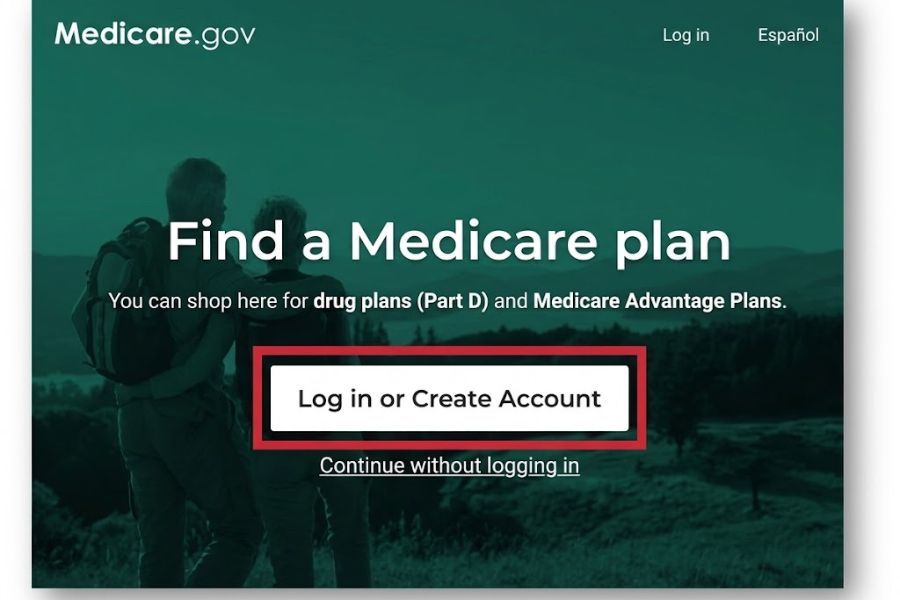
Before December 7, do two things. Pull out the Annual Notice of Change for your current plan and read the sections on drug tier changes, network changes, and cost-sharing changes. Then run your prescriptions and your doctors through the Medicare Plan Finder at medicare.gov for every plan you’re considering, including staying where you are.
The Plan Finder shows you the actual estimated annual cost for your specific drugs at your specific pharmacy, which is the only number that matters.
The Urgency Trick And The 48-Hour Deadline That Isn’t Real

The last week of Open Enrollment is when the pressure tactics go into overdrive. Callers will tell you the plan is filling up, the benefits are being pulled, and that you have 24 or 48 hours to lock in your rate.
None of that is how Medicare works. Enrollment is not first-come, first-served, benefits are set for the plan year, and the only real deadline is December 7 at midnight for coverage starting January 1.
If you miss December 7, you’re not without options. The Medicare Advantage Open Enrollment Period runs from January 1 to March 31 and allows people already on an Advantage plan to switch to a different Advantage plan or return to Original Medicare.
Special Enrollment Periods exist for people who move, lose other coverage, qualify for Extra Help, or are affected by changes to a plan’s contract.
The urgency is manufactured to stop you from doing the one thing that protects you: taking a day to compare the plan against what you already have.
If someone is pushing you to sign today, the answer is no. Tell them you’ll call back after you’ve checked the plan on Medicare.gov and spoken with your State Health Insurance Assistance Program (SHIP), which offers free, unbiased counseling in every state and is funded by federal grants rather than commissions.
The SHIP counselor has no plan to sell you. That’s the person you want in your corner between now and December 7.
Disclaimer: The content in this article is for informational purposes only and is not intended as financial, investment, or tax advice. Always consult a qualified financial advisor or tax professional before making decisions about your money, investments, or retirement planning.
Disclaimer: This article is for general information only and is not professional advice. It may contain affiliate links. Please see our full Editorial Policy for details.

Kylie Lang is a nationally syndicated travel journalist with bylines on the Associated Press Wire & more, a lifestyle writer, and the founder and editor of Your Lifestyle Library (yourlifestylelibrary.com). She holds a BA (Honours) in History from the University of Kent and is a member of the British Guild of Travel Writers.