
With everything that’s going on in the world, many of us are looking to escape to another world. One that moves at a slower pace, isn’t as materialistic, and allows you to just enjoy the simple pleasures in life.
Ten years ago, I moved to France for exactly that reason and have never looked back. I live in what I call my rural French bubble, and I love it. Life is easy. I spend time in the garden, walk to my local boulangerie every day, and I have a great quality of life.
And the best part is that it costs me less to do more in the French countryside, and I’ve never felt happier or more settled. Now, France might not be your country of choice, and everyone’s idea of affordable is different, but it doesn’t have to be a dream. The reality of living life for less in a European country is doable.
9 European Countries Americans Can Live For Less
Living in Europe doesn’t have to cost a fortune, and you don’t need to sacrifice quality of life to make it work. While capital cities like Paris and Amsterdam will drain your bank account, plenty of European countries offer the lifestyle you’re craving at prices that’ll make you wonder why you didn’t do this sooner.
I’m talking real healthcare that won’t bankrupt you, fresh markets where the produce tastes amazing, and enough money left over to enjoy life. These seven countries deliver exactly that, and each one brings its own flavor of European living.
Czech Republic

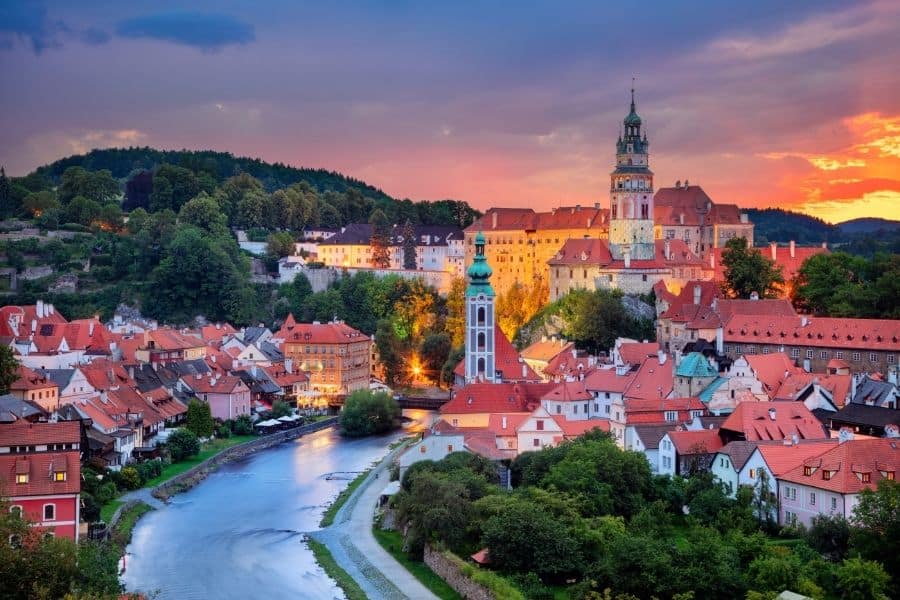
Prague gets all the attention, and sure, it’s gorgeous with those cobblestone streets and Gothic spires. But it’s also where everyone goes, which means prices have climbed to match tourist demand. If you want the Czech Republic experience without the tourist tax, head to places like Brno, Olomouc, or Český Krumlov.
Brno, in Moravia, is the country’s second city, home to universities, tech companies, and a thriving arts scene. The Špilberk Castle overlooks the city center, where Art Nouveau buildings house modern cafes and wine bars serving Moravian vintages most foreigners have never heard of.
Olomouc brings six ornate Baroque fountains, a UNESCO-listed Holy Trinity Column, and a student population that keeps restaurant prices reasonable. Český Krumlov curves around a bend in the Vltava River, its Renaissance castle complex second only to Prague’s in size.
Pilsner Urquell was invented in Plzeň, about an hour from Prague, and locals will debate the proper pour technique with the seriousness Americans reserve for barbecue styles. A half-liter of excellent beer costs less than bottled water in most American cities.

Moving to the Czech Republic: Top Tips
- Healthcare: Universal system with quality care. Expats typically need private insurance, which costs around $100-150 monthly
- Living Costs: A couple can live comfortably on $1,800-2,200 monthly outside Prague
- Rent: One-bedroom apartments in Brno or Olomouc run $500-700
- Food: Restaurant meals cost $8-12, groceries for two people around $300 monthly
- Getting Around: Monthly public transport passes cost about $20
- Visa: Schengen tourist visa allows 90 days in a 180-day period. Long-term visa (over 90 days) available for retirees, freelancers, or business owners. Digital nomad visa launched in 2024 allows stays up to one year for remote workers earning €2,500+ monthly
Albania

Albania sits right next door to Greece with a similar coastline, mountains, and Mediterranean climate, yet somehow costs half as much. The Albanian Riviera stretches from Palasa to Ksamil with turquoise waters, white pebble beaches, and cliff-top villages, connected by a winding coastal road that drops straight to the sea in places.
Tirana surprises visitors with its block-painted buildings, Italian-influenced cafe culture, and nightlife that runs until sunrise. Former dictator Enver Hoxha left behind thousands of concrete bunkers scattered across the countryside, bizarre reminders of his paranoid isolation.
Berat climbs a hillside with Ottoman-era houses stacked on top of each other, white walls and red roofs earning it the nickname “City of a Thousand Windows.” Gjirokastër has similar gray stone architecture, with its castle overlooking the valley where old men sit in cafes playing dominoes.
Saranda on the south coast puts you a 30-minute ferry ride from Corfu, with access to Butrint’s Greek and Roman ruins and the Blue Eye spring that bubbles impossibly clear water from underground.
The food is influenced by Greece, Italy, and Turkey. Byrek, phyllo pastry filled with cheese or meat, costs €1 at bakeries. Tavë kosi, lamb baked with yogurt, appears on every restaurant menu for €5-7. Fresh fish comes straight from fishing boats, priced by the kilo, and nobody will look at you funny if you pick your dinner from the day’s catch.

Moving to Albania: Top Tips
- Healthcare: Improving, but basic, private clinics recommended, insurance around $60-100 monthly
- Living Costs: Live comfortably on $1,200-1,800 monthly
- Rent: Coastal one-bedrooms available for $300-450
- Food: Restaurant meals under $10, groceries incredibly cheap
- Infrastructure: Still developing, expect some challenges, but rapid improvements
- Visa: Americans get a one-year visa-free (365 days). After that, can apply for a temporary residence permit through property ownership, starting a business, or proof of sufficient income. One of Europe’s easiest countries for extended stays
Greece

Everyone knows Santorini and Mykonos, but Greece is massive, and most of it remains refreshingly affordable. Head to the mainland, skip the famous islands, and you’ll find the other side of Greece.
Thessaloniki offers the White Tower on the waterfront, Roman ruins scattered throughout the modern city, and a restaurant scene that locals argue beats Athens. The Ladadika district transforms from a quiet daytime neighborhood to a buzzing taverna hub after dark, where you’ll pay €15 for grilled octopus that would cost triple in the islands.
Nafplio on the Peloponnese was Greece’s first capital, its Venetian fortress climbing the cliff above a harbor lined with neoclassical mansions painted in faded pastels. Patras connects you by ferry to Italy if you want to explore beyond Greece, and its carnival rivals Rio’s for spectacle while costing nothing to watch.
On Crete, stick to towns like Rethymno or Chania outside high season, or head inland to mountain villages where tavernas serve lamb slow-cooked in wood ovens and nobody speaks much English. Naxos produces potatoes, cheese, and wine that supply fancier islands, meaning you eat what Santorini imports at a fraction of the price.

Moving to Greece: Top Tips
- Healthcare: Public healthcare for residents, private insurance recommended at $50-100 monthly
- Living Costs: $1,500-2,000 monthly covers comfortable living outside tourist areas
- Rent: Mainland cities offer one-bedrooms for $400-600, less in smaller towns
- Food: Taverna meals run $10-15, weekly groceries for two around $50-70
- Island Living: Year-round island residents find even better deals off-season
- Visa: Schengen tourist visa for 90 days. Greece offers a Digital Nomad Visa for remote workers earning €3,500+ monthly, valid for 12 months and renewable. Golden Visa available with €250,000+ property investment (increased from €250,000 in 2023)
Spain

Spain stretches far beyond its famous cities like Barcelona and Madrid. Valencia offers Mediterranean beaches, incredible food markets, and a lower cost of living. Seville brings Andalusian heat, flamenco, and prices that drop the further you get from tourist zones. Smaller cities like Granada, Málaga, or Zaragoza, outside the fancy bits, deliver authentic Spanish life without the premium.
Valencia’s Central Market occupies a modernist building where over 1,200 vendors sell everything from whole jamón legs to fresh horchata made from tiger nuts. The city invented paella, and you can still find restaurants cooking it over orange wood fires the traditional way for €12 a person.
Seville’s Triana neighborhood sits across the river from the touristy center, home to flamenco clubs where locals actually go and ceramic workshops that have operated for generations. Head to Extremadura’s medieval towns like Cáceres or Trujillo, where conquistadors built palaces with New World gold, and you’ll find one-bedroom apartments for €300 monthly.

Moving to Spain: Top Tips
- Healthcare: Public system ranks among Europe’s best, private insurance costs $50-80 monthly
- Living Costs: Comfortable living on $1,700-2,300 monthly outside major cities
- Rent: One-bedrooms in mid-sized cities run $500-700, in rural areas, much less
- Food: Menu del día lunches cost $12-15, monthly groceries around $250-300
- Regional Differences: Northern Spain costs more, southern regions offer better value
- Visa: Schengen tourist visa for 90 days. Non-Lucrative Visa for retirees with passive income (around €2,400+ monthly requirement). Digital Nomad Visa launched in 2023 for remote workers, requires proof of a €2,000+ monthly income, valid for one year, and renewable up to five years
Portugal

Lisbon has gotten expensive, there’s no denying it, and Porto isn’t far behind. But Portugal extends beyond these two cities, and the rest of the country remains one of Europe’s best values. The Alentejo region offers whitewashed villages, cork forests, and Atlantic beaches with almost no tourists.
The Algarve, away from the resorts, gives you year-round sunshine and gorgeous little fishing villages. Évora in the Alentejo has a Roman temple standing in the main square, medieval walls circling the old town, and restaurants serving açorda, a bread-based stew flavored with garlic and cilantro that locals have eaten for centuries.
Coimbra’s university dates to 1290, its library is a Baroque masterpiece, and students still wear black capes to classes, which makes me think of Hogwarts. Tavira in the eastern Algarve stretches along both banks of the Gilão River, connected by a Roman bridge, with beaches reached by ferry and prices half what you’d pay in Lagos or Albufeira.
The Portuguese obsession with bacalhau means salt cod appears in hundreds of recipes, and you’ll find it fresh at markets for €8 a kilo. Wine regions like the Douro Valley or Dão produce bottles that sell internationally for $50 but cost €5 at the vineyard gate.

Moving to Portugal: Top Tips
- Healthcare: Excellent public system, private insurance around $60-100 monthly
- Living Costs: Live well on $1,800-2,400 monthly outside Lisbon and Porto
- Rent: Interior cities offer one-bedrooms for $450-650
- Food: Restaurant meals cost $10-15, and market shopping is incredibly affordable
- Coastal vs Inland: Beaches cost more, but interior regions offer exceptional value
- Visa: Schengen tourist visa for 90 days. D7 Passive Income Visa for retirees (minimum €820 monthly income). The Digital Nomad Visa (D8) requires a monthly income of € 3,280+. The Golden Visa program ended for real estate in 2023, but continues for investment funds
Montenegro

Montenegro is a tiny Balkan country that squeezes dramatic mountains, medieval towns, and Adriatic coastline into a space smaller than Connecticut. Kotor sits in a fjord-like bay surrounded by mountains that rise straight from the water, its medieval walls snaking up the hillside above stone buildings dating to Venetian rule.
Budva’s old town juts into the sea on a small peninsula with Roman and Venetian ruins. Herceg Novi spreads up steep hillsides at the bay’s entrance, its Ottoman fortresses looking across to Croatia.
The Bay of Kotor locals call Boka revolves around fresh seafood, swimming year-round, and a slower pace than the coast further south. Inland, Durmitor National Park offers hiking, rafting in the Tara Canyon (Europe’s deepest), and medieval monasteries tucked into mountain valleys where monks still live and work.
The country uses the euro despite not being in the EU, which makes money management straightforward. Ćevapi and pljeskavica dominate restaurant menus, grilled meat dishes influenced more by Bosnia than Italy, though the coast serves fresh fish prepared with olive oil and garlic.

Moving to Montenegro: Top Tips
- Healthcare: Basic public system plus private clinics, insurance costs $80-120 monthly
- Living Costs: $1,500-2,000 monthly covers comfortable coastal living
- Rent: One-bedrooms on the coast run $400-550, interior much cheaper
- Food: Fresh fish and produce at low prices, restaurant meals $8-12
- Mountain vs Coast: Interior regions offer better value but less tourism infrastructure
- Visa: Americans get 90 days visa-free. Temporary residence permits are available to property owners, company founders, or those with sufficient funds (approximately €1,500+ per month). One-year residence permits are renewable annually
Estonia

Estonia isn’t often mentioned when people dream about moving to Europe, which is such a shame. Tallinn looks like a medieval movie set that someone accidentally made real, with cobblestone streets, Gothic spires, and city walls that date back centuries. But underneath that old-world exterior lies one of Europe’s most digitally advanced societies.
The Old Town occupies a hilltop, Toompea, crowned by Aleksander Nevsky Cathedral’s onion domes and the pink Toompea Castle. Below, merchant houses from the Hanseatic League days have been converted into restaurants serving elk stew and black bread.
You’ll also find modern Estonian cuisine using foraged ingredients and Baltic fish. Kadriorg Park spreads east of the center, its Baroque palace, built by Peter the Great, housing an art museum, while the ultra-modern Kumu building next door displays Estonian art from the 18th century to the present.
The e-residency program lets you establish an EU company online without living in Estonia, and the country basically invented Skype. Internet speeds embarrass American cities, bureaucracy happens digitally, and you can vote from your laptop. Summers stay light until nearly midnight with temperatures hitting the 70s, while winter brings proper snow, Christmas markets in Town Hall Square, and Estonians disappearing into saunas.

Moving to Estonia: Top Tips
- Healthcare: EU-standard public system, private insurance is optional at $50-80 monthly
- Living Costs: $1,800-2,400 monthly for comfortable urban living
- Rent: Tallinn one-bedrooms run $500-700, and other cities are much cheaper
- Food: Grocery prices similar to Western Europe, restaurants more affordable
- Tech Infrastructure: Some of Europe’s best internet and digital services
- Visa: Schengen tourist visa for 90 days. Digital Nomad Visa (D-type visa) for remote workers earning €4,500+ monthly (or €3,504 if working for an Estonian company), valid up to one year. Temporary residence permits for entrepreneurs and investors are also available