
For many Americans, the dream of living in Europe, where the cost of living is lower, healthcare is more affordable, and the life expectancy is considerably higher, is high on the priority list. Then take into consideration the political climate, and it’s little wonder people are Googling, Long Term Visas for Americans in Europe.
Until recently, for many, this has only been a pipe dream. However, in 2025, certain European countries are making this a very real option. They’ve revamped their visa programs, brought in new visas, and are making it simpler for Americans to pack their bags and move overseas.
So which countries are on the list? Where should you put your pin on the map, and how do you turn the dream into reality?

5 European Countries Where It’s Easier To Get Long-Term Visas
France
I have to put France at the top of the list as it’s where I’ve been living for nearly ten years now. It also happens to be a very popular choice with Americans looking to live the European dream. I’ll be the first to admit that the powers that be in France have a love affair with paperwork, so there are some hoops you’ll need to jump through, but it’s not as difficult as you might think.

What the Visa Looks Like
With the French visitor visa, you can stay for up to a year without needing a job here. The main thing they ask is proof that you can cover your expenses, usually somewhere between €1,500 and €2,000 a month from savings or retirement income.
One positive change is that the French consulates in the US have made the whole process a little smoother. The wait times for appointments are shorter, and the instructions are now available in clear English instead of being buried in bureaucratic language.
There’s also a real push from smaller towns and rural areas to bring in new long-term residents. Some places even offer help with housing and programs to make it easier to feel part of the community.
I have lots of information on visa requirements for France that you can find here >>>
Portugal – our No. 1 Pick for Americans
Portugal has a reputation as one of the most livable countries in Europe. Part of its appeal is the rhythm of daily life. Cafés still fill with locals in the morning, evenings are often spent outdoors, and there’s a noticeable balance between work and leisure that many Americans find missing at home.
The country’s diversity of landscapes also makes it stand out. In the north, you have the rolling Douro Valley with its terraced vineyards, while the south offers the Algarve’s dramatic cliffs and fishing villages. Portugal is small enough that you can reach both in a single day, which gives life there a sense of variety without the chaos of constant travel.

For anyone thinking long-term, Portugal also offers a high standard of healthcare, a strong sense of safety, and a community of expats who’ve already paved the way.
What the Visa Looks Like
Portugal makes things straightforward for Americans who want to stay longer than a holiday. The D7 visa was originally created with retirees and passive income earners in mind. The income requirement is one of the lowest in Europe, at about €820 per adult each month.
For people working remotely, the D8 Remote Work Visa has been refined to minimize complications. Health insurance rules are easier to navigate, and appointment bookings through SEF are now less of a hurdle. It’s designed to help digital nomads settle in without getting tangled in red tape.
On top of that, several regions outside Lisbon and Porto are rolling out incentives to draw in new residents. These include tax breaks and quicker residency approvals, making smaller towns and rural areas an attractive option. Even with recent changes to the Golden Visa, Portugal still stands out as one of the more accessible paths to long-term residency in Europe.
A Note on the Golden Visa
For years, the Golden Visa was the headline option for moving to Portugal. It gave non-EU citizens residency in exchange for making an approved investment. Many Americans used it as a way to gain a foothold in Europe, with the bonus of traveling freely around the Schengen Zone.
As of 2025, the rules look different. Buying real estate no longer counts, so the old route of purchasing a property to qualify is gone. Instead, investments now focus on areas like venture funds, cultural projects, and research. There are still pathways, but they’ve narrowed.
Another change on the horizon is how long it takes to reach citizenship. Portugal may soon extend the wait time from five years to ten, with stricter requirements for integration. It’s still possible to move forward with the Golden Visa, but it takes more planning than it once did.
Italy
Italy has long been a favorite for Americans looking to settle in Europe. Part of the appeal is the variety of lifestyles you can step into. You might picture yourself in a lively city like Rome or Milan, with museums, markets, and endless cultural events, or in a small town where neighbors still gather in the piazza every evening.

Add to that a fabulous Mediterranean diet (pizza and pasta, yes please), excellent healthcare, and a cost of living that can be surprisingly reasonable outside the big cities, and you start to see why so many people put Italy high on their list.
What the Visa Looks Like
Italy has opened the door a little wider for freelancers, creatives, and solo business owners with a new visa option. It’s designed to be more straightforward than the old self-employment route and comes with fewer barriers.
You’ll need to show around €8,500 a year in steady freelance income, which is a far more reachable target than before. Some southern regions are even moving applications along more quickly as part of their efforts to attract new residents and revive local economies.
The visa is valid for up to two years, and if you fall in love with life in Italy, there are options to renew and extend your stay. It’s the perfect way to try before you buy.
Estonia
Estonia might not be the first country that comes to mind, but it’s one of the most fascinating places to consider. The medieval Old Town of Tallinn could have been lifted straight out of a history book, yet the country is also one of the most digitally advanced in Europe.

Beyond the capital, you’ll find a slower pace in coastal towns and forested countryside, and it’s extremely accessible to the rest of Europe if you want to use it as a base to travel around.
What the Visa Looks Like
Estonia’s Digital Nomad Visa works well for Americans earning at least €3,500 a month online. It’s aimed at people who want the freedom to live there while continuing their remote work.
Another option is the e-Residency program, which lets freelancers and entrepreneurs set up a business inside the EU without having to move to Estonia full-time. They were the first to offer a program of this kind in 2014 and remain the leaders. For many, it’s a clever way to gain a European base while staying flexible.
Life on the ground is also made easier by Estonia’s tech-first approach. The residency process is refreshingly clear, renewals are straightforward, and for anyone in the startup world, the infrastructure is already in place.
Croatia
Croatia is one of the newest members of the Schengen Zone, which means easier travel throughout Europe once you’re a resident. That alone has made it an attractive choice, but there’s more to it than convenience. The Adriatic coastline is the star, with historic cities like Dubrovnik and Split offering a mix of medieval streets, vibrant café culture, and access to some of the most stunning islands in Europe.
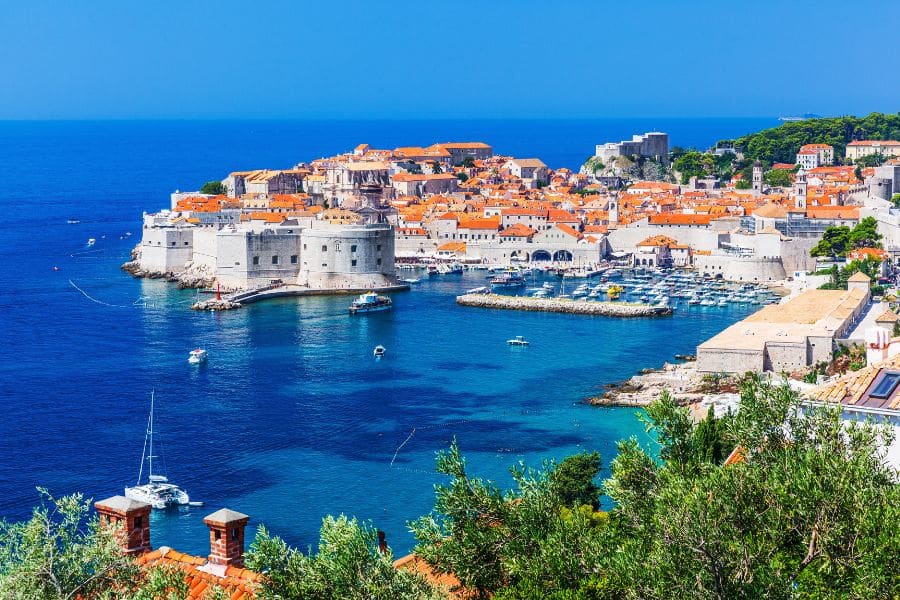
Inland, life feels different; smaller towns surrounded by vineyards and rolling hills offer a slower pace and a chance to really embed yourself in local traditions. For many, the draw of Croatia is that English is widely spoken, and the cost of living can be more manageable than in Western Europe.
What the Visa Looks Like
Croatia’s digital nomad visa gives Americans the chance to stay for up to a year, and if your work is based overseas, you won’t be taxed locally on that income. It’s designed with remote workers in mind, making it one of the more flexible entry points into Europe.
The income requirement is about €2,300 a month, and the process has been streamlined. Applications can now be done online, and the instructions are available in English, which takes away a lot of the confusion that used to slow people down.
Living costs also add to the appeal. Coastal towns like Split and Zadar still offer rents well below what you’d expect in most Western cities. In the past, Croatia was tricky for long-term stays, but the new rules in 2025 make it far simpler for anyone ready to call the Adriatic home for more than just a vacation.