
I love being in my fifties, but there is no getting away from the fact that my body isn’t quite as strong and supple as it used to be. Everything is that little bit harder and takes that little bit longer. Obviously, the changes in your body happen gradually; it isn’t an overnight change.
However, things are changing, and you can’t ignore it. Now I’m lucky in the fact that my daughter, Summer, knows a lot about strength and conditioning. She was a figure skater, representing Britain, and knows a lot about nutrition and exercise. She did as much off ice, doing stamina and strength training, as she did on the ice.
I asked her to put together some really simple exercises I could do here at my home in France, as the nearest gym is about a 30-minute drive away. She told me that what I needed to do was rebuild my muscle, which starts to decline once we reach fifty. So she gave me these five standing exercises, and I have to say, after doing them now for about three months, they’ve started to make a difference.

5 Easy Standing Exercises That Rebuild Muscle After Fifty
I don’t know about you, but I’m a visual learner and I need to see exercises as well as read about them. So for each of these, my daughter gave me a video demonstrating the move, which really helps. She’s also given me the instructions for each one to make sure I do it properly, so here goes.
No. 1 The Reverse Lunge
When my daughter first showed me reverse lunges, I thought they looked deceptively simple. But once I started, I realized just how much they worked my legs and balance. What I really like about them is that they feel easier on my knees than forward lunges, yet they still build strength where I need it most.
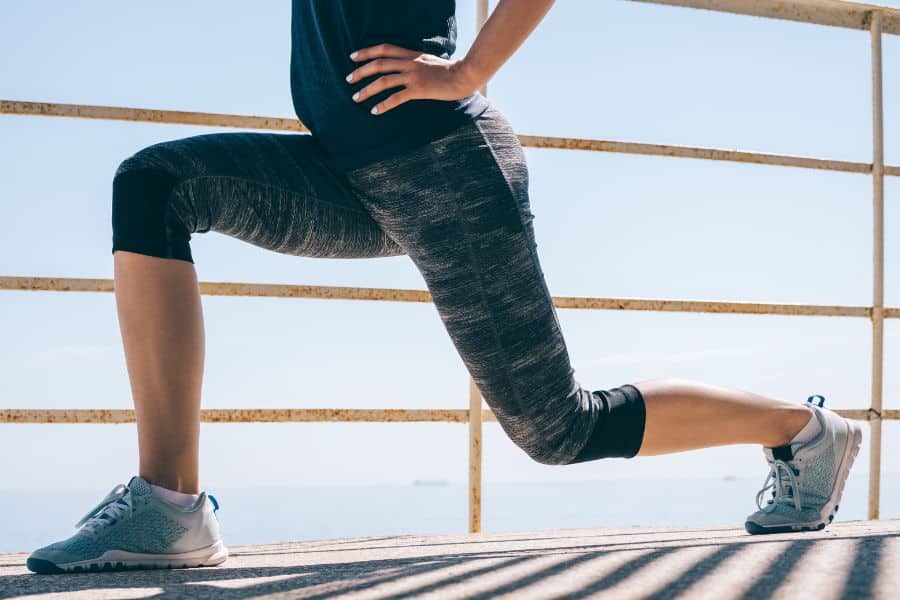
This move targets the muscles that keep you steady and strong in daily life. Think about getting down in the garden, stepping backward, or carrying shopping bags up a flight of stairs. Reverse lunges quietly train you for all of that without you even noticing.
How to do it:
- Stand with your feet hip-width apart.
- Step one foot back and bend both knees until they form right angles.
- Keep your front knee directly above your ankle and your chest upright.
- Push through your front heel to rise back to standing.
- Do all your reps on one side before switching.
Try this: Aim for three sets of 8 to 12 reps on each leg with a short rest in between.
Other options: If you want to mix it up, you can try split squats, walking lunges, or add a knee lift at the end of your reverse lunge.
Summer’s Top Tip: Keep your step back smooth and controlled. It makes the exercise safer and more effective.
No. 2 Squats
If there’s one move that never goes out of style, it’s the squat. My daughter explained that it’s the exact motion we use every time we sit down or stand up, which is probably why it feels so natural. The more I practiced squats, the more I noticed how much easier it was to get out of a chair without that little groan I used to make.
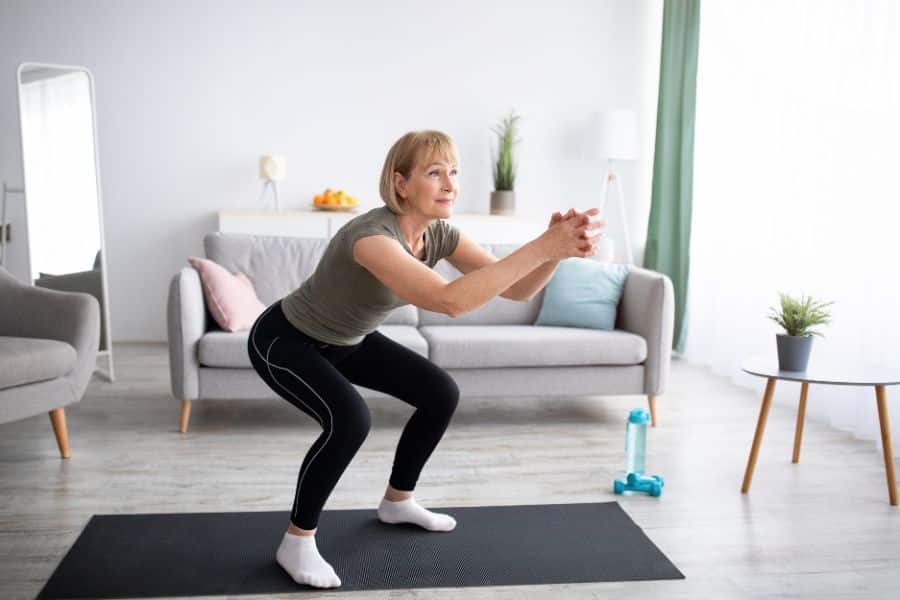
Squats are brilliant because they build up the muscles that support your knees and hips. These are the spots that tend to complain the most as we get older. Strengthening them makes everyday activities smoother, but it also gives you the stamina for the fun stuff, like long walks or chasing grandkids around the garden.
How to do it:
- Stand with your feet about shoulder-width apart.
- Push your hips back a little as you bend your knees, lowering into a squat.
- Go down until your thighs are close to parallel with the floor, or as low as you can while keeping your chest lifted.
- Brace your core and keep your weight centered over your heels.
- Press through your heels to stand tall again.
Try this: Do three sets of 12 to 15 reps, taking about 45 seconds of rest between sets.
Other options: You can try sit-to-stand squats, slow squats with a pause, single-leg sit-to-stands, or squats to an elevated surface if you need extra support.
Summer’s Top Tip: Don’t let your knees drift inward. Keep them pointing in line with your toes to protect your joints and get the most out of the move.
No. 3 Standing Side Leg Raises
I’ll admit, I never gave much thought to my hips until they started to complain. My daughter explained that weak hips often show up as sore knees, an achy back, or that wobbly feeling when you’re trying to balance. Once I started doing side leg lifts, I could feel right away that they worked a muscle I’d been ignoring.
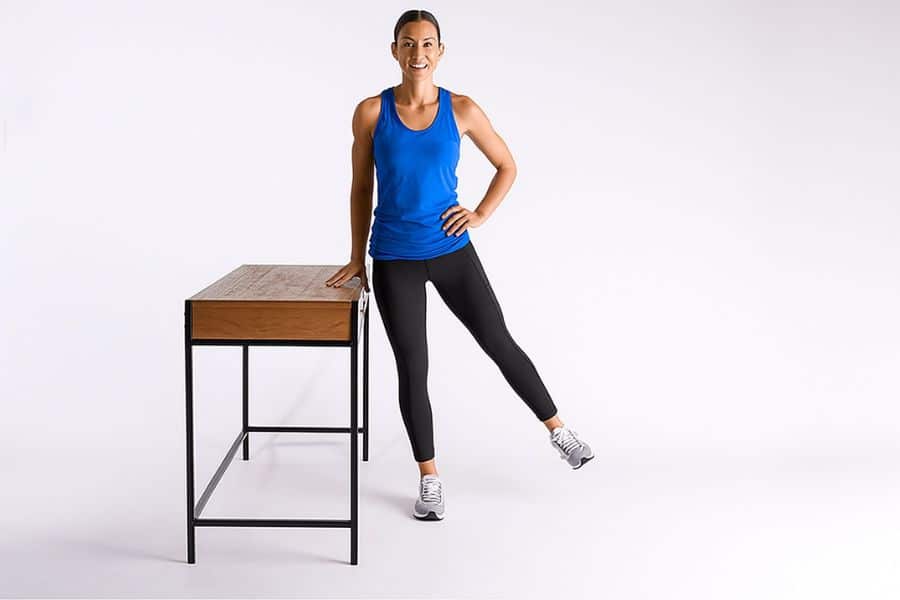
This move strengthens the glute medius, which is the muscle that keeps your hips steady when you walk or shift side to side. Training it makes everyday movements smoother, whether that’s stepping out of the car, moving around the kitchen, or even catching yourself if you trip. Over time, stronger hips mean less strain on your joints and a lot more stability.
How to do it:
- Stand tall and place your hands lightly on a chair or wall for balance.
- Keep your body upright and lift one leg out to the side.
- Pause briefly at the top.
- Lower your leg back down with control.
- Finish all your reps on one side before switching to the other.
Try this: Aim for three sets of 12 to 15 reps per side, with a short rest in between.
Other options: Add a resistance band, try small pulses, or step out to the side with each rep for a little variety.
Summer’s Top Tip: Keep your torso steady. The work should come from your hips, not from leaning your upper body.
No. 4 Standing Torso Twists
I’ve suffered with my back for a long time, which stems from my days as an event planner when I didn’t pick things up correctly and spent a lot of time carrying big boxes, stacks of chairs, and rolling round tables on bad surfaces.
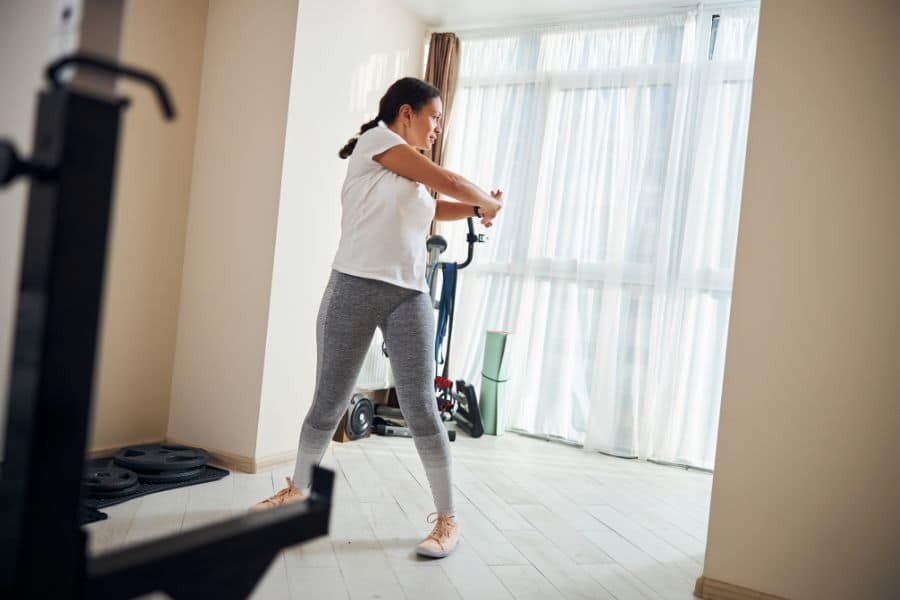
It’s got worse as I’ve got older, and my daughter told me that it’s often down to the core muscles not doing their job properly. Once I started adding torso twists into my routine, I realized how much looser and more mobile I felt, and my back doesn’t seem to twinge as much, although that might be psychological, who knows, but I feel good.
This exercise strengthens the obliques and the deep stabilizing muscles that support your spine. It also trains rotational movement, which we actually use more than we think. Reaching into the backseat of the car, swinging a golf club, or turning to grab something from the counter all rely on these muscles working smoothly. Over time, it helps reduce stiffness and keeps your posture tall and strong.
How to do it:
- Stand with your feet shoulder-width apart and arms straight out in front of you.
- Rotate your torso slowly to the right while keeping your hips steady.
- Return to the center, then rotate to the left.
- Move with control rather than speed.
- Alternate sides until you’ve finished your set.
Try this: Go for three sets of 12 to 16 twists on each side, resting for about 30 seconds in between.
Other options: Place your hands behind your head, add a medicine ball if you have one, or hold the twist for a few seconds to really challenge your core.
Summer’s Top Tip: Keep your hips still and focus on moving from your midsection. That’s how you know your core, not your legs, is doing the work.
No. 5 Standing Calf Raises
I never realized how much I relied on my calves until I started working on them. My daughter pointed out that they’re not just about walking or running, they’re also the muscles that keep me steady when I’m on uneven ground.
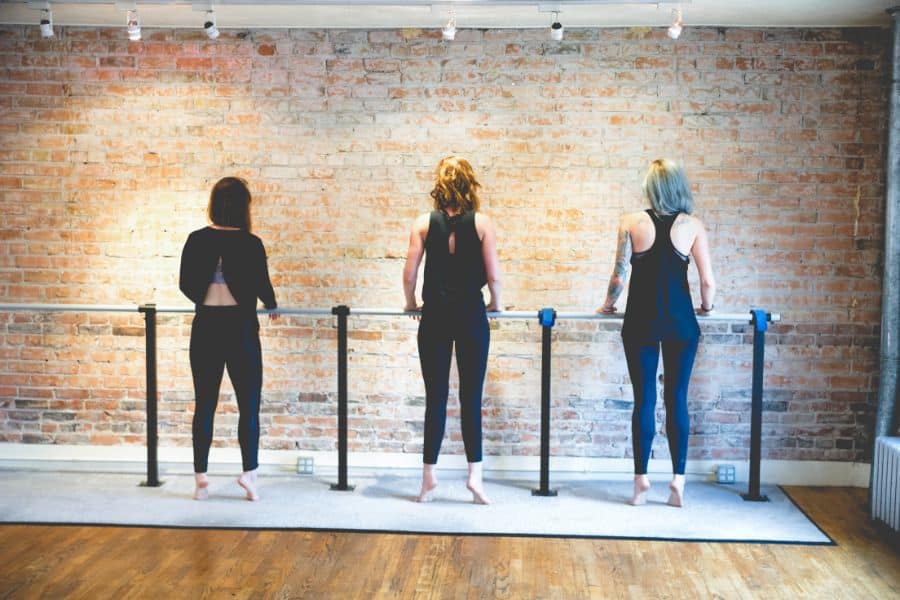
Calf raises strengthen the lower legs and even the tiny muscles in your feet and ankles. That strength makes a big difference as we get older, especially when it comes to balance. Stronger calves act like shock absorbers, protecting your joints and giving you the push-off power to walk with confidence.
How to do it:
- Stand with your feet hip-width apart and rest your hands lightly on a wall or countertop for support.
- Lift your heels off the ground so you’re standing on the balls of your feet.
- Pause briefly at the top.
- Lower your heels slowly back down.
- Repeat the movement without bouncing.
Try this: Aim for three sets of 15 to 20 reps with short breaks in between.
Other options: Try single-leg calf raises, raise your heels from an elevated surface for a bigger range of motion, or add pulse holds for extra burn.
Summer’s Top Tip: Don’t rush the lowering part. That slow, controlled descent is where the real strengthening happens.
Disclaimer: I’m sharing these exercises from my own experience and what I’ve learned from my daughter, but I’m not a medical professional. Please check in with your doctor or a qualified health provider before trying anything new, especially if you have health concerns or existing conditions. Listen to your body and go at your own pace.