
It’s not till you’re forced to do an audit of your finances that you realize just how much money you’re wasting every month. In my case, it was over $400 a month. I kid you not.
I highly recommend spending some time reviewing your latest bank statement with a highlighter, marking all payments you don’t recognise. I’d also suggest color-coding them for good measure.
It’s painful but cathartic at the same time, and of course, it highlights where you can save money. It also takes courage to build up to doing this, because there will be some nasty surprises along the way. But it’s a bit like not opening the bills, hoping they’ll go away. They don’t, and things are worse when you leave them.

9 Wave to Save Hundreds of Dollars Every Month
It’s rarely the big stuff that bleeds your budget dry. It’s the quiet, everyday habits you don’t even notice. The subscription that renews while you sleep. The Costco run with all those bargains you bagged. The coffee stop that’s just part of your morning. All these things can add up to hundreds of dollars you could use for a vacation or whatever is on your bucket list.
Not Buying Home Brands at the Grocery Store

Walk into any grocery store, and you’ll see the same product twice. A name-brand version with a recognizable label and a price that reflects years of marketing, and a store-brand version sitting right next to it, often made in the same facility, sometimes by the same manufacturer.
The store brand is typically 20% to 30% cheaper.
I know this well because I used to be the girl who would only buy Heinz baked beans and ketchup, refusing to buy any other brand. Then, when I audited my weekly shopping bill, I realized how much my little obsession was costing me. And those weren’t the only items on the list.
For staples like flour, sugar, canned tomatoes, dried pasta, and olive oil, there is no meaningful difference. None. The ingredient list is identical. The only thing different is the packaging. On a full grocery shop, switching to store brands can consistently shave $50 to $100 off your monthly bill.
The products where brand really does matter are few. For cleaning products and washing powder, I still think there is a case for buying the known brand, but for everything else, try the store brand first. You’ll probably never look back.
Ignoring Your Growing Subscriptions

There was a time when the only thing you probably subscribed to was your gym membership. Now, between streaming services, delivery passes, apps, gym portals, and cloud storage, the number has quietly multiplied.
A recent survey found that the average American spends around $1,080 a year on subscriptions. And of that total, around $205 goes toward services they never, or rarely, use. The problem is that most subscriptions auto-renew. You sign up once, forget to cancel, and the charge just keeps appearing.
The fix is simple but requires you to actually sit down and do it. Go through your credit card and bank statements from the last three months. Write down every recurring charge. Then ask yourself, honestly, when did I last use this? If you can’t remember, cancel it today.
A good rule is to review your subscriptions every six months, just as you’d check your car insurance or utility bills.
Bulk Buying Because There Is a Deal
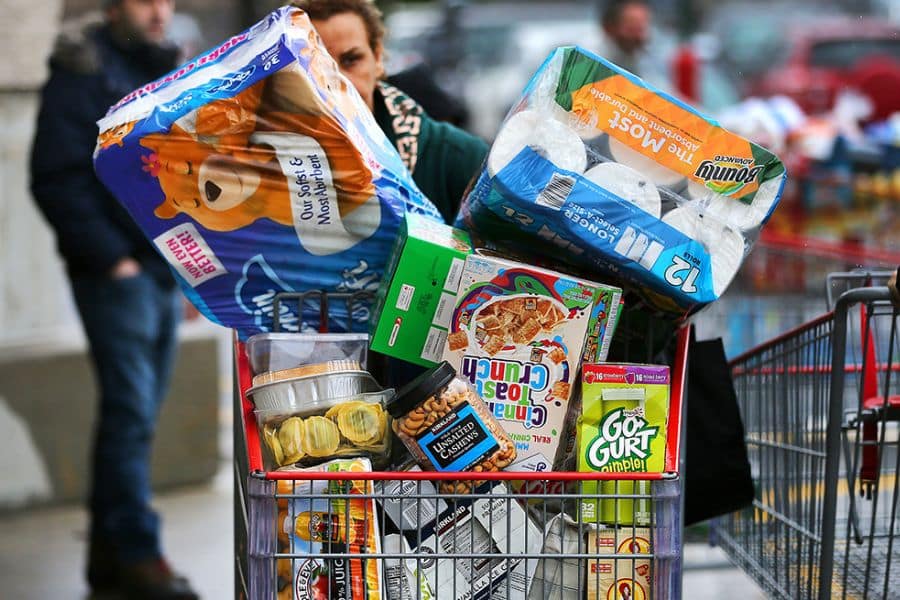
We all love a good deal, and if it’s a deal, it makes sense to bulk buy. After all, you’re thinking ahead, and you’re making fewer trips to the store. What’s not to love?
Turns out, quite a lot.
A study by LendingTree found that while bulk buying can save consumers an average of 27% on certain products, 38% of bulk buyers admit they regularly throw away what they purchased. Almost a third of bulk food purchases are wasted due to spoilage. When you factor in what you threw away, that great deal often wasn’t.
Perishables are the biggest trap. Berries, spinach, avocados, bread, yogurt, and dairy products rarely survive long enough for smaller households to get their money’s worth. Spices, brown rice, and olive oil can all lose their quality after around six months.
The smart play with bulk buying is simple: stick to non-perishable items you use constantly. Toilet paper, paper towels, laundry detergent, canned goods, dried beans. These are always worth buying big. Fresh produce and dairy? Buy what you’ll actually use before your next shop.
Your Daily Trip to Starbucks
No judgment here, I’ve done this. My daily run to Starbucks was what I did when I dropped my daughter off at school. It was all part of the routine. A good coffee is one of life’s simple pleasures. But have you ever actually done the math on what your daily Starbucks habit costs?
A grande latte runs around $6 to $7. Five days a week, that’s around $30 to $35 weekly. Over a month, you’re looking at roughly $120 to $140. Over a year, that’s anywhere from $1,400 to $1,700 or more, depending on what you order and how often you go.
That’s a flight to Europe. It’s a month of groceries. It’s a very nice weekend away.
The trick isn’t necessarily to quit Starbucks cold turkey, because that almost never works. It’s to be intentional. Make your coffee at home on weekdays and save the Starbucks run for a treat on the weekend. You can buy a 22-pack of Starbucks pods at Target for around $17, which works out to less than $1 per cup.
Now I have my Nespresso machine at home, I barely go out for coffee unless it’s to meet a friend, then there’s cake involved too. Plus, living in rural France, the coffee shops here charge €1.50-€2.50 for a coffee, and it’s really good coffee too.
Eating Out Regularly

I know it’s tempting to eat out rather than cook, especially after a long day at work. But boy, does that add up over a month. Apparently, Americans spend an average of $191 a month on restaurant meals alone, according to a 2024 survey by US Foods. Add takeout and delivery on top of that, and the total climbs by around another $88 per month. For a single person, that’s potentially over $3,300 a year going toward food prepared by someone else.
There’s nothing wrong with eating out. The social experience of going to a restaurant matters. But there’s a difference between enjoying a meal out and using takeout as a default because the fridge looks uninspiring on a Tuesday night.
A few small changes can make a big difference. Meal planning for even three or four days of the week cuts down on those last-minute delivery orders. Batch cooking on a Sunday means you always have something decent in the fridge.
And when you do eat out, going for lunch instead of dinner at the same restaurant often gets you the same menu for considerably less. It certainly does in France with the Menu du Jour, and there’s a glass of wine included.
The goal isn’t to never eat out, but to make sure it’s a choice you’re enjoying, not a reflex you’re barely noticing.
Online Impulse Buying

I don’t think there’s anyone alive today who hasn’t done this, except maybe my mom. She’s from the era that never wastes anything, and spur of the moment buying isn’t a thing. You’re scrolling through your phone at 10 pm. An ad appears for something you vaguely want. The button says “Buy Now.” You click.
We’ve all been there. And those clicks add up fast.
In 2024, the average American spent around $282 a month on impulse purchases, totalling over $3,300 for the year. Around 72% of online shoppers say they’ve bought something impulsively because of an advertised discount. Nearly half later felt buyer’s remorse.
Online shopping is designed to make it as easy as possible to part with your money. One-click checkout, countdown timers, personalized recommendations, and that very persuasive “people also bought” section all exist to lower your resistance.
A simple trick that works: add the item to your cart and wait 48 hours. Most of the time, the urge passes. If you still want it, go ahead. But often, the excitement fades, and you realize you were reacting to the moment rather than a real need.
Deleting saved card details from websites also helps. The extra 30 seconds it takes to go find your card is often just enough friction to make you reconsider.
The Buy Now Pay Later Trap
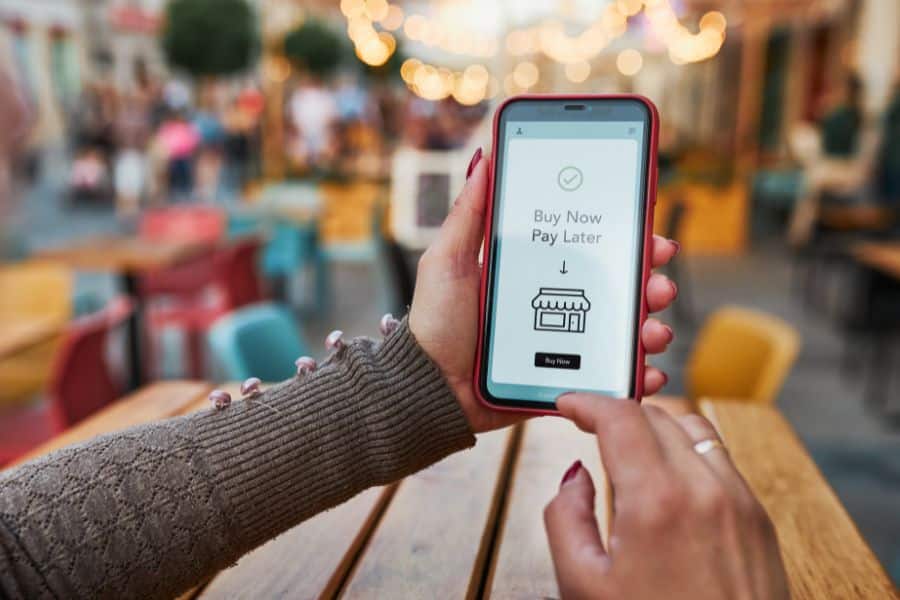
I’ll hold my hand up and say I fell into this trap a couple of months ago with a chair I just had to have. Buy Now Pay Later sounds like a sensible tool. Split that purchase into four easy instalments, often interest-free. No drama, no credit check, done.
The problem is it’s built to make things feel cheaper than they are.
When you only see the instalment amount at checkout, your brain processes the item as costing $24.99 rather than $99.96. You’re more likely to buy things you wouldn’t otherwise, and more likely to buy more of them. Research shows that people spend around 9% to 10% more on purchases when a Buy Now Pay Later option is available.
In 2025, around 25% of BNPL users are now using it to pay for groceries, which tells you this has shifted from a convenience tool into something closer to a coping strategy for people whose budgets are stretched too thin.
Nearly half of all BNPL users reported experiencing a financial problem after using these services. Around 41% have made at least one late payment in the past year. And when you’re juggling multiple instalment plans across different purchases, it’s easy to lose track of what you owe and when.
If you’re going to use Buy Now Pay Later, keep it to one plan at a time, and only for something you could also afford to pay for outright if you chose to.
The Gym Membership You’ve Only Used Once
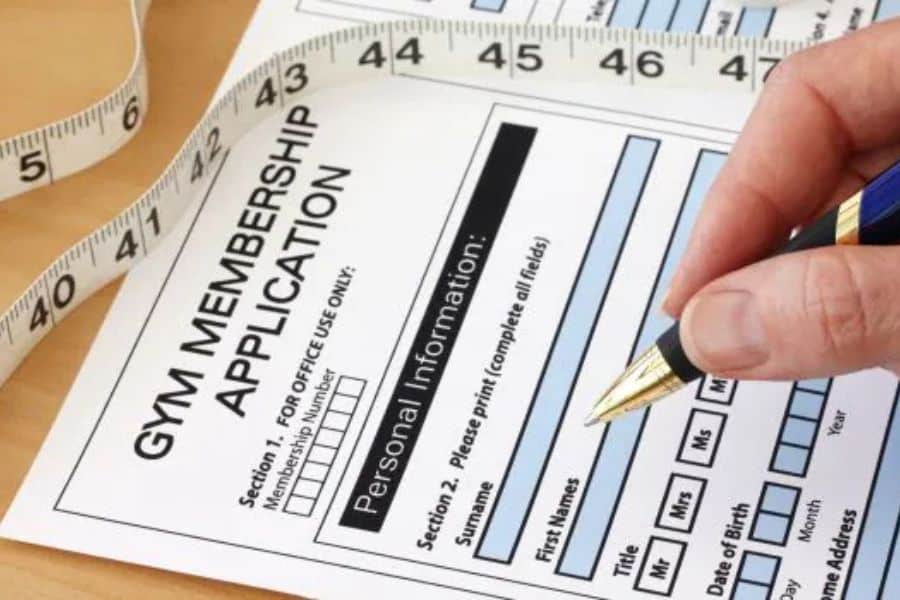
It’s the classic one, isn’t it? We all joke about it when we’re talking about saving money. January is brilliant for gym sign-ups. The good intentions are real, the motivation is high, and the new year feels like the perfect reset. Then February arrives, and life happens.
Around 67% of gym memberships go unused. Americans waste approximately $1.3 billion a year on memberships they don’t use. The average gym membership costs around $58 a month, and many people keep paying for it for months, sometimes longer, long after they’ve stopped going, because cancelling feels like admitting defeat.
If your gym membership is sitting there unused, it isn’t keeping your options open. It’s just costing you money every month.
If you do want a gym, try it on a pay-per-visit basis first, or look for gyms without long-term contracts. That way, you’re only paying for what you’re actually using.
Keeping Up With the Joneses

It was one of my mom’s favorite things to say when I was growing up. She’d tut and say I’m not trying to keep up with the Jonese. It was usually directed at the neighbor across the road who always seemed to have new curtains, cars, and pretty much everything you could think of.
We all know people who only buy new things because someone else did or because they have to have it to be trendy. It doesn’t show up as a single line item on your bank statement. It shows up everywhere, in small, almost invisible ways.
The kitchen renovation because a friend just did theirs. The upgraded phone because Apple just bought out the latest iPhone. The vacation that’s slightly out of your budget, but you didn’t want to be the only one not going.
Social comparison is built into us. Research consistently shows that people tend to increase their spending in response to the perceived wealth of people around them, regardless of their own financial situation.
The antidote is to get clearer on what you actually value. Not what looks good, not what the neighborhood average seems to be, but what genuinely matters to you. Because it’s entirely possible to spend a significant amount of money over the course of a year on things that don’t actually make you happier, just things that make you feel like you’re keeping up.
Comparison is the biggest drain of all, and the hardest one to see coming.