
Season 4 of Bridgerton has just been released, which I’m going to be diving into this weekend. So I thought it would be fun to step into Lady Whistledown’s world and find some of the locations from the series you can actually visit.
I’ll be completely honest with you. When Bridgerton first landed on Netflix back in 2020, I thought I was going to hate it. I’m a history gal, after all, and I like things to be factually correct. However, it’s safe to say I was hooked from the opening credits because I couldn’t resist taking a peek, if for no other reason than to say how awful it was.
The scandalous gossip, the steamy romance, the elaborate balls where everyone looks like they stepped out of a Jane Austen fever dream. But what really got me? Those jaw-dropping locations.
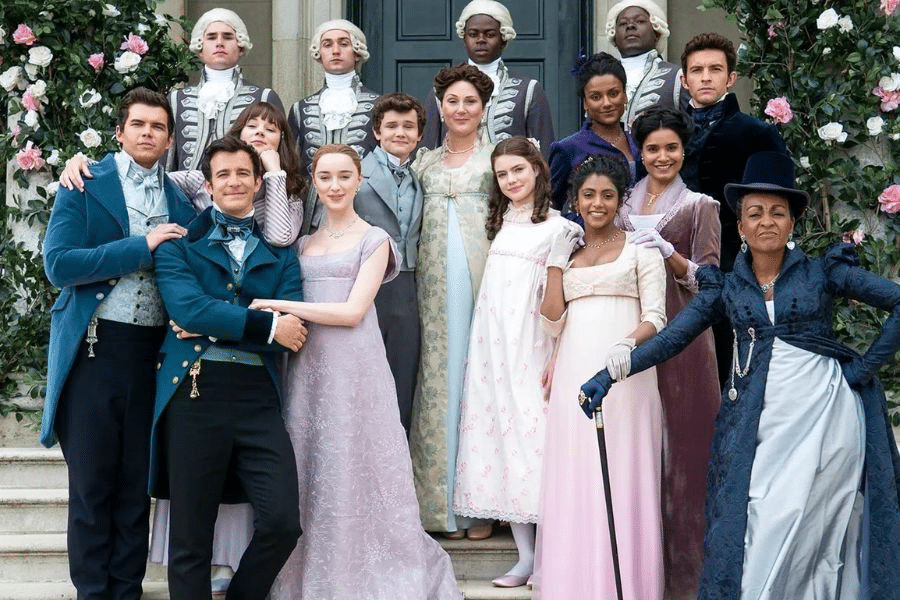
10 Bridgerton Locations You Can Visit in England
Some of these locations date back hundreds of years, with stories that rival anything Lady Whistledown could dream up. From the Georgian villa that played the Bridgerton family home to the massive Yorkshire estate where the Duke of Hastings swept Daphne off her feet, each location brings its own slice of Regency-era drama.
I’ve tracked down the 10 most spectacular filming locations from all 4 seasons you can visit in real life. So grab your finest promenade outfit and let’s dive into the real Regency England behind Bridgerton. It’s time to travel back in time.
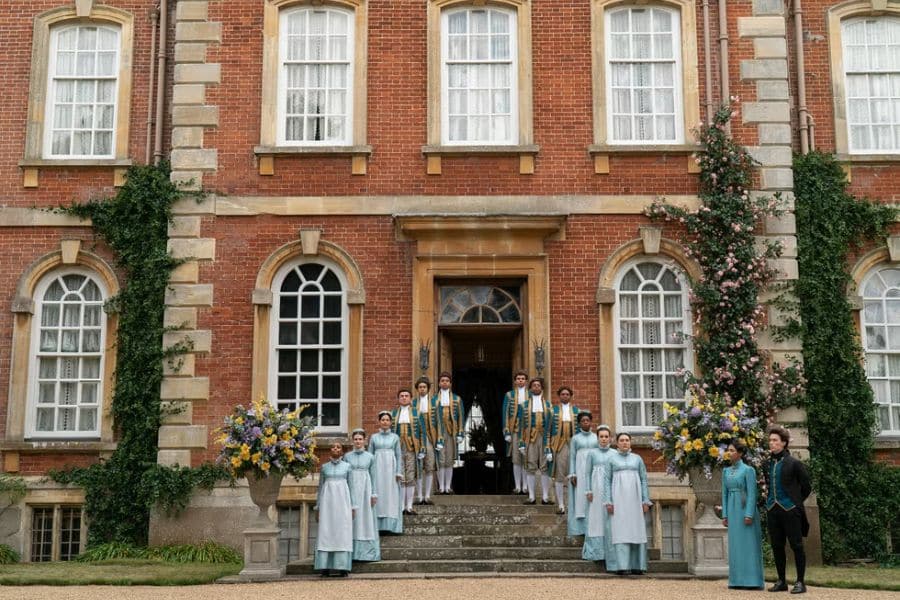
Ranger’s House, Greenwich – The Bridgerton Family Home
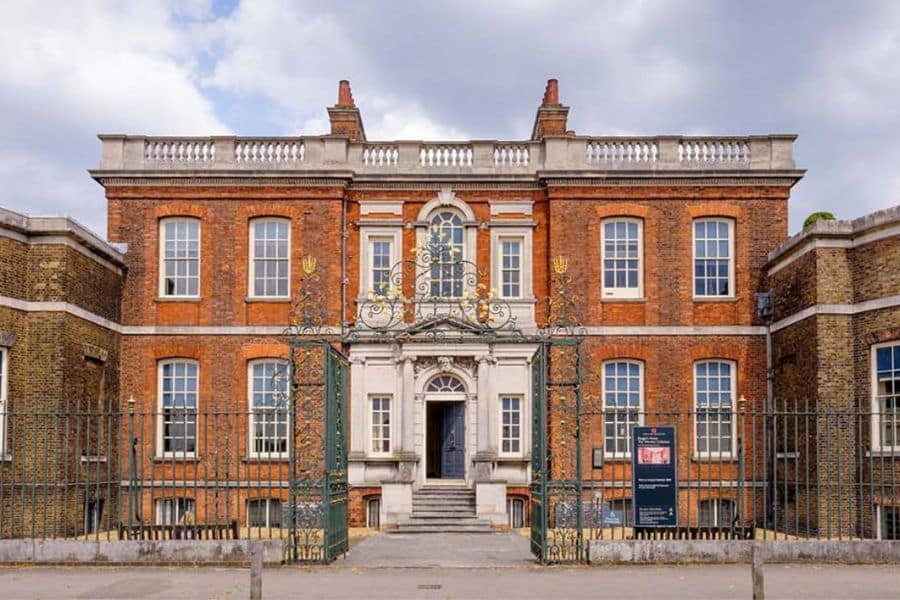
If there’s one location that screams Bridgerton, it’s the wisteria-draped mansion where the whole family lives in their London townhouse. Except that gorgeous purple wisteria cascading down the front? Completely fake. Added in post-production because apparently reality wasn’t pretty enough.
The real building is Ranger’s House, a red-brick Georgian villa sitting on the edge of Greenwich Park in southeast London, built in 1723. Back in 1813, when Bridgerton is actually set, King George III’s sister Princess Augusta lived here. So the show’s casting directors knew what they were doing when they picked it as the home for one of London’s most prominent families.
These days, Ranger’s House belongs to English Heritage and houses the Wernher Collection, an absolutely stunning art collection put together by 19th-century diamond magnate Julius Wernher. We’re talking Renaissance paintings, medieval jewelry, ancient sculptures, Italian ceramics, and enough 18th-century French furniture to make Marie Antoinette jealous. The exterior serves as the Bridgerton family’s base in every season, where all the drama, scheming, and romantic plotting begin.
How to Visit
Ranger’s House is open to visitors from April through September, Wednesday through Sunday. Adult tickets run around £10, and you can explore both the house and the art collection. It’s in Greenwich, which means you can easily combine it with other Bridgerton filming locations in the area, particularly the Old Royal Naval College just down the road. Getting there is straightforward. Take the DLR to Cutty Sark station or the train to Greenwich, then it’s about a 15-minute walk through Greenwich Park.
Castle Howard, Yorkshire – Clyvedon Castle
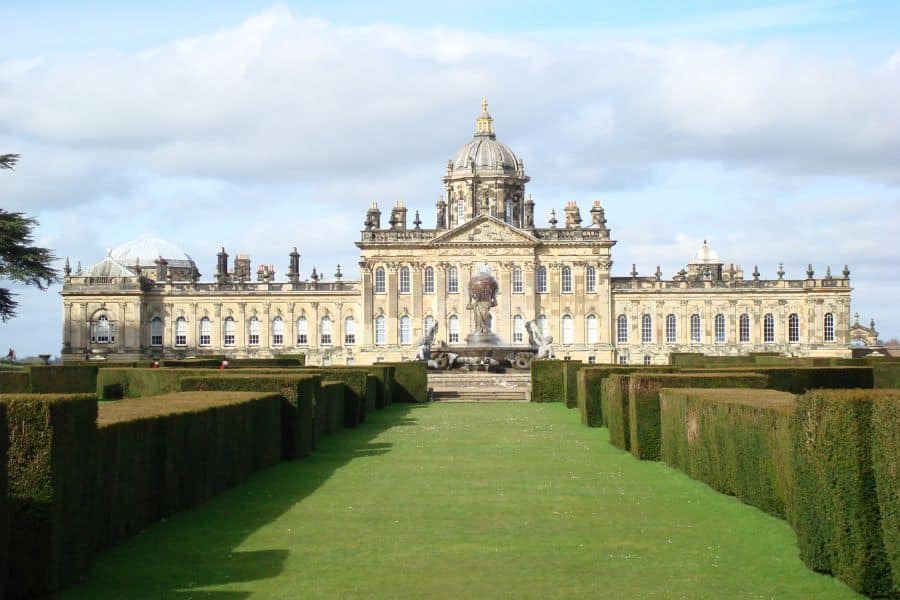
Remember that moment in Season 1 when Daphne arrives at the Duke of Hastings’ country estate, and your jaw just dropped? That’s Castle Howard, and it’s every bit as spectacular in real life as it looks on screen.
This massive baroque mansion sits about 15 miles northeast of York in the North Yorkshire countryside, and it played Clyvedon Castle, the ancestral home where Simon takes Daphne after their wedding. The show filmed the Great Hall, the stunning grounds with the Temple of the Four Winds, and those romantic garden scenes where things got decidedly steamy between the newlyweds.
Castle Howard was built between 1699 and 1712 for Charles Howard, the 3rd Earl of Carlisle, and the Howard family still owns it today. The place is absolutely enormous, sitting in over 1,000 acres of parkland designated as an Area of Outstanding Natural Beauty. If you’re a period drama fan, you might recognize it from another famous adaptation, too. This is where they filmed Brideshead Revisited, both the 1981 TV series and the 2008 movie.
The interiors are filled with paintings by famous artists, the rooms are decorated exactly as they would have been in the 18th century, and the grounds include lakes, temples, statues, a walled garden, and even a rare botanical collection in the woodland area called RayWood.
How to Visit
Castle Howard is open year-round with varying seasonal hours. The house typically opens from late March through October, while the grounds stay open longer into the winter months. Adult tickets for the house and gardens cost around £20-£25, depending on the season.
There’s a direct bus service, CastleLine, that runs from York to Castle Howard, making it easy to reach without a car. The estate has several cafes and restaurants on site, so plan to spend at least half a day here.
Syon House, London – Lady Danbury’s Ball
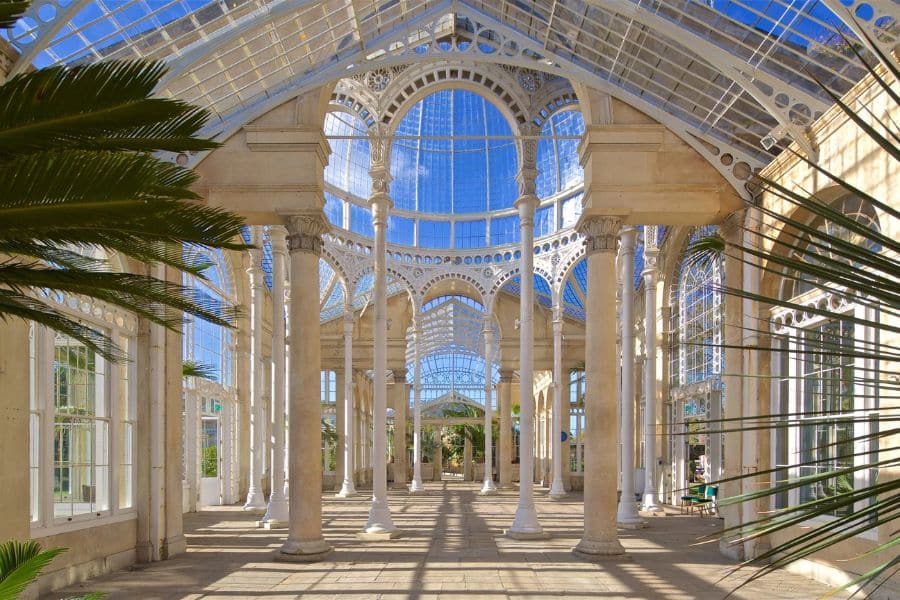
Syon House, the stunning location that served as the setting for Lady Danbury’s spectacular ball in Season 2, is one of the most breathtaking venues in the entire series.
It sits in Brentford, just outside central London in Syon Park, and it’s the London home of the Duke of Northumberland. The estate was built in the 16th century on the site of a medieval abbey. But what really steals the show is the Great Conservatory, designed by architect Charles Fowler and extensively restored in the 1980s. This is where they filmed Lady Danbury’s ball, and walking into this glass-and-iron structure feels like stepping into a botanical paradise.
The conservatory is filled with exotic plants, towering palm trees, and enough natural light to make the whole space glow. It’s easy to see why the Bridgerton production team chose it for one of the season’s most important social events, where Anthony Bridgerton was supposed to propose to Edwina Sharma but couldn’t stop looking at her sister, Kate.
Beyond the conservatory, Syon House itself is absolutely magnificent. The interiors are pure Georgian grandeur, with state rooms designed by Robert Adam in the 1760s. The house has appeared in countless films and TV shows over the years, including several James Bond movies.
How to Visit
Syon House and the Great Conservatory are open to visitors from late March through October, typically on Wednesday, Thursday, and Sunday, plus bank holiday Mondays. Adult admission runs around £13 for the house and gardens combined.
The estate is easily accessible from central London: a 30-minute tube ride to Gunnersbury station, then a short bus ride or a 20-minute walk. The 200-acre park surrounding the house is also worth exploring, with lakes, gardens, and plenty of space to imagine yourself promenading through Regency high society.
Old Royal Naval College, Greenwich – The Streets of Mayfair
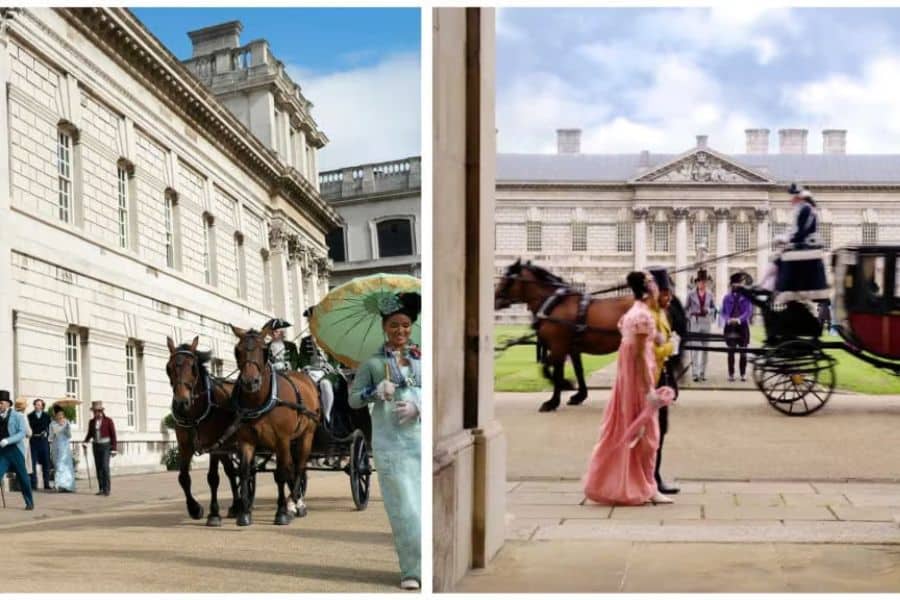
Speaking of places that work overtime in Bridgerton, the Old Royal Naval College in Greenwich might just be the hardest-working location in the entire series. This place pops up in all four seasons, plus the Queen Charlotte spinoff, playing everything from London street scenes to market squares where Lady Whistledown’s latest scandal sheet gets distributed.
The Old Royal Naval College sits right in the heart of the Maritime Greenwich UNESCO World Heritage Site, and it’s one of Britain’s most filmed heritage locations for good reason. Those grand colonnades, the sweeping Grand Square, and the elegant baroque architecture create the perfect backdrop for Regency London street life.
In Season 2, this is where Anthony agonizes over his mother’s list of eligible women, and where Eloise and Penelope walk through the market as young boys hand out Lady Whistledown’s latest gossip.
The building was designed by Christopher Wren in the late 17th century. It originally served as the Royal Hospital for Seamen, then became the Royal Naval College in 1873. These days it houses the University of Greenwich and Trinity Laban Conservatoire of Music and Dance, but large parts remain open to visitors.
The Painted Hall inside is absolutely jaw-dropping, often called Britain’s Sistine Chapel for its elaborate ceiling paintings, which took 19 years to complete. It’s also appeared in other period dramas you’ve probably seen, including The Crown, Les Misérables, and Four Weddings and a Funeral.
How to Visit
The Old Royal Naval College is free to enter and open daily year-round. The Painted Hall does charge admission, around £12 for adults, but it’s absolutely worth it. Since you’re already in Greenwich for Ranger’s House, you can easily do both locations in one day. The college is right on the River Thames, a short walk from Cutty Sark DLR station or Greenwich train station.
There are several cafes and restaurants in the area, and Greenwich Market is nearby if you want to do some shopping. Plan to spend at least an hour here, more if you want to explore the Painted Hall and grounds properly.
Hampton Court Palace – Queen Charlotte’s Residence
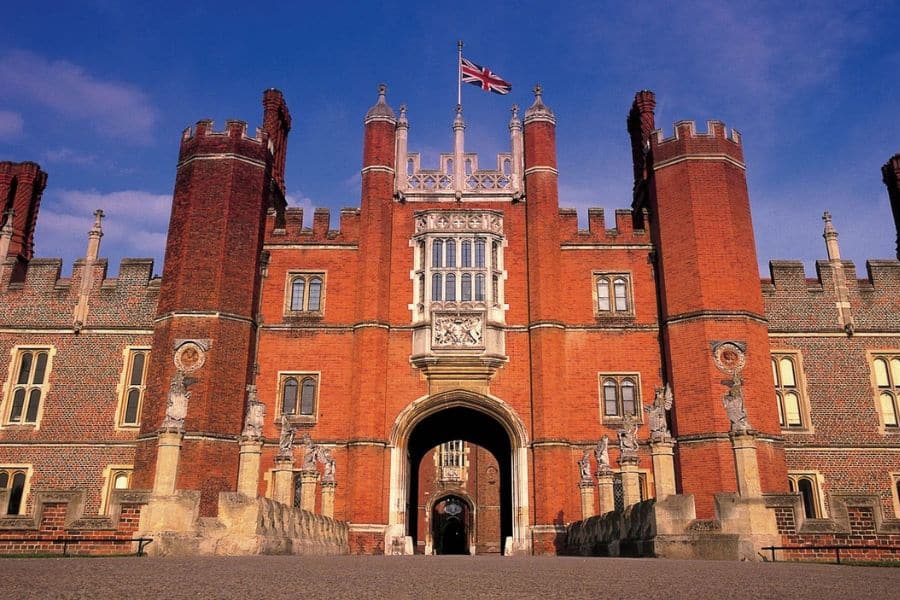
When you need a palace fit for a queen who takes matchmaking as seriously as matters of state, you call Hampton Court Palace. This magnificent Tudor palace on the banks of the River Thames served as Queen Charlotte’s residence throughout the series, and honestly, they couldn’t have picked a more perfect spot.
Hampton Court was King Henry VIII’s favorite residence, and you can feel that royal history the moment you walk through the gates. The red-brick Tudor architecture, the baroque additions from William and Mary’s reign, and the sheer scale of the place scream power and prestige. The show uses the palace exterior for shots of Queen Charlotte arriving and departing in her elaborate carriages, and various interior scenes were filmed here as well, particularly in the Queen Charlotte spinoff series.
The palace sits in Richmond upon Thames, just outside central London, surrounded by 60 acres of formal gardens and 750 acres of parkland. The gardens alone are worth the trip, with the famous maze (the oldest surviving hedge maze in Britain), the Privy Garden restored to its 1702 glory, and the Great Vine that’s been producing grapes since 1768. Walking through Hampton Court feels like traveling back in time, which is exactly why period drama producers love it so much.
Beyond Bridgerton, the palace has played starring roles in countless historical films and TV shows. The Great Hall, the Chapel Royal, the Tudor kitchens that could feed 600 people twice a day, it’s all still there exactly as Henry VIII would have known it.
How to Visit
Hampton Court Palace is open year-round, typically from 10 am to 6 pm in summer and 10 am to 4:30 pm in winter. Adult tickets are around £28 to £30, which might seem steep until you realize you could easily spend an entire day here and still not see everything. The palace is about 30 minutes from central London by train to Hampton Court station, or you can take a riverboat from Westminster Pier during the summer months.
There are several cafes on site, and the palace often hosts special events, reenactments, and exhibitions. Book tickets online in advance because this place gets busy, especially during school holidays and summer weekends.
Chiswick House, London – Romance in the Gardens
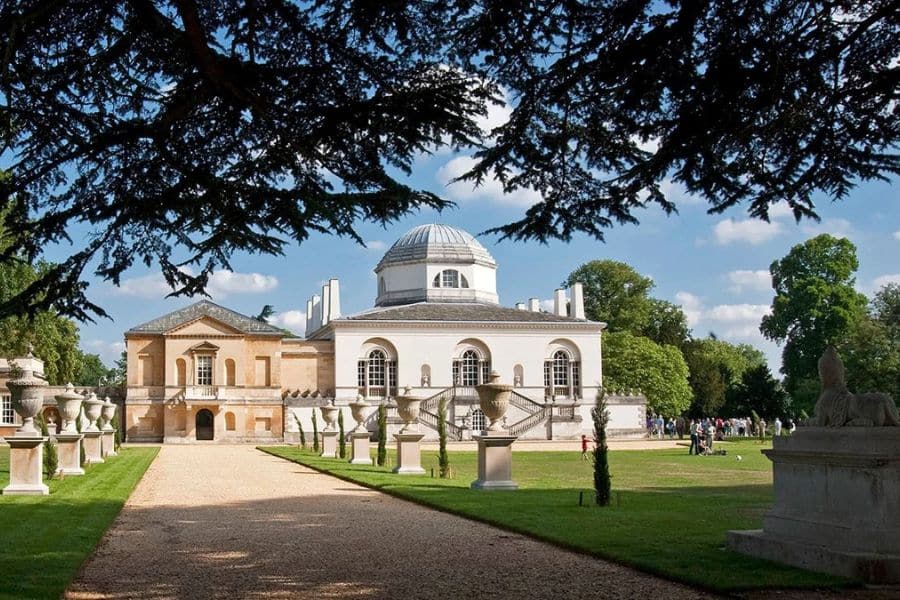
If Bridgerton has taught us anything, it’s that the most romantic moments happen in gardens. Chiswick House, an 18th-century Palladian villa in West London, provided the backdrop for some of Season 3’s most swoon-worthy scenes, and once you see this place, you’ll understand why the production team keeps coming back.
Built in 1729 by Lord Burlington, Chiswick House was designed as a temple to the arts, inspired by the architecture Burlington had seen during his Grand Tour of Italy. The villa itself is a masterpiece of symmetry and classical design, with a domed ceiling, elaborate interior decorations, and rooms that flow seamlessly from one to another.
The landscaped gardens surrounding the villa span 65 acres and are considered some of the most important in English garden history. They pioneered the English landscape movement, moving away from formal French-style gardens toward a more natural, romantic style. Picture serpentine pathways, a lake with an Italianate bridge, classical statues tucked into alcoves, and specimen trees that have been growing here for nearly 300 years.
In Bridgerton, these gardens become the setting for intimate conversations, stolen glances, and those loaded moments where characters say one thing but mean something entirely different. The villa’s architecture and the garden’s romantic atmosphere create exactly the kind of backdrop where Regency-era courtship could flourish, complete with chaperones lurking just out of earshot.
How to Visit
Chiswick House and Gardens are free to enter and open year-round, from dawn to dusk, making this one of the most accessible Bridgerton locations on the list. The house itself charges admission, around £10 for adults, and is typically open April through October on weekends and bank holidays.
Chiswick House is in West London, easily reached by tube to Turnham Green station on the District Line, then a 10-minute walk. There’s a lovely café on site, perfect for afternoon tea, and the gardens regularly host summer festivals and events.
Basildon Park, Berkshire – The Featherington Party
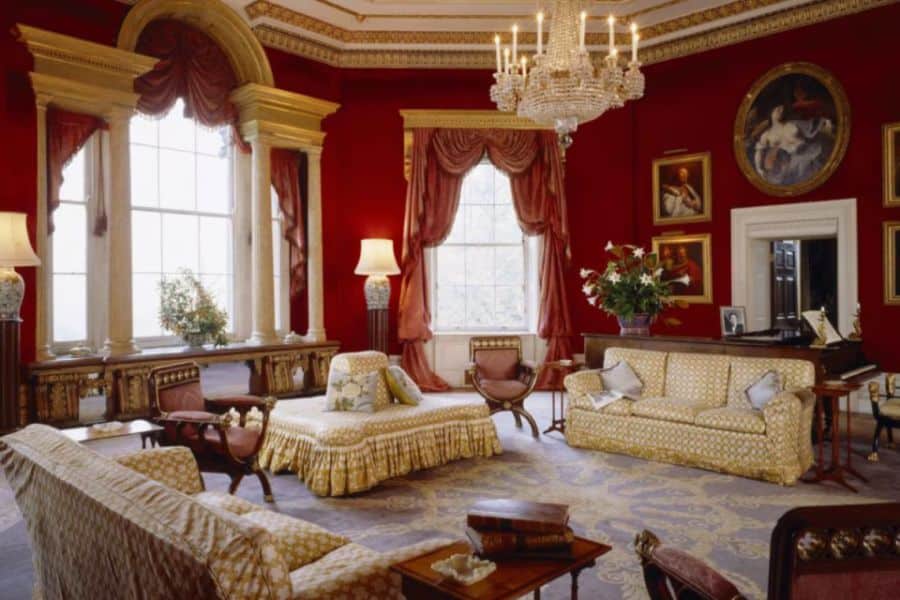
Basildon Park appears across multiple seasons in different roles. This elegant Palladian mansion in Berkshire provided the setting for the Featherington family’s lavish party in Season 2, and returned in Season 3 as the home of wealthy widow Lady Tilley Arnold.
The house was built between 1776 and 1783 for Sir Francis Sykes, who made his fortune in India with the East India Company. The Octagon Room, with its painted ceiling and floor-to-ceiling windows, is particularly stunning.
For that Season 2 party scene, the National Trust property underwent a massive transformation. The production team spent a week preparing Basildon Park for filming, bringing in around 5,000 artificial flowers to fill the rose garden with summer blooms, even though they were shooting in late October. They added greenery and foliage around the back of the house to create that lush, romantic atmosphere the show is known for. The filming took place entirely at night, from 8 pm to 5 am, with staff and volunteers working around the clock to support the production.
The Garden Room and the parterre gardens were both featured in the evening party scenes, and walking through these spaces now, you can easily imagine the Featherington girls in their bright gowns trying desperately to attract suitors while Portia schemes in the background.
How to Visit
Basildon Park is a National Trust property open from March through October, typically Wednesday to Sunday, plus bank holiday Mondays. Adult admission runs around £12, or it’s free if you’re a National Trust member. The house is near Pangbourne in Berkshire, about 7 miles from Reading. You can reach it by train to Pangbourne station, then it’s about a 3-mile walk or a short taxi ride.
The estate includes beautiful parkland walks, the walled garden, and woodland trails, so bring comfortable shoes. There’s a tea room serving lunches and cream teas, and the house often hosts special events and exhibitions.
Hatfield House, Hertfordshire – The Bridgerton Home Interior
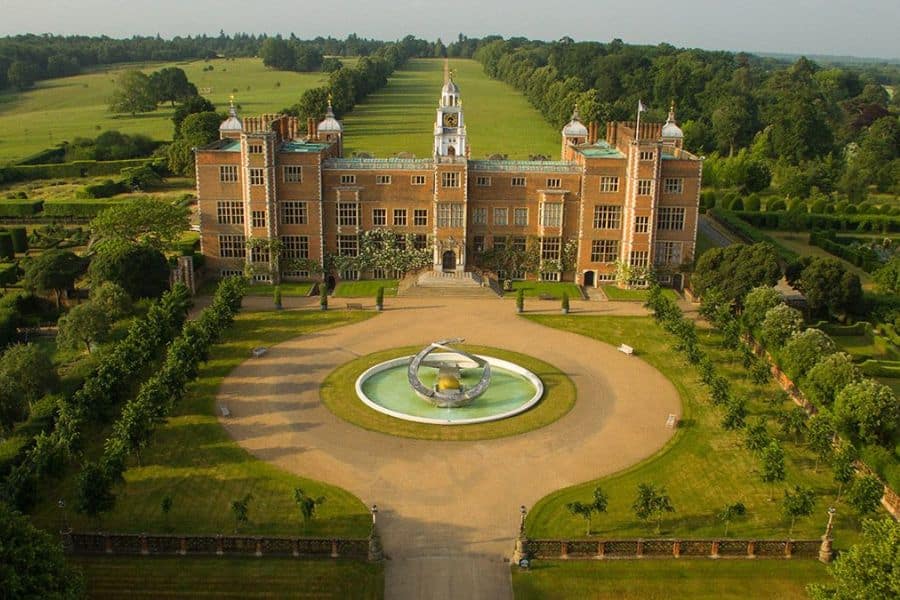
While Ranger’s House in Greenwich gives us those iconic exterior shots of the Bridgerton family home, the interiors needed something even grander. Enter Hatfield House, a Jacobean mansion in Hertfordshire that’s dripping with 400 years of history and exactly the kind of elaborate State Rooms where the Bridgerton family would actually live.
Hatfield House was used extensively in Season 2 for interior scenes of the Bridgerton London residence. Those family gatherings, the drawing room conversations where Violet Bridgerton tries to manage her chaotic brood, the elegant hallways where secrets get whispered and romances bloom, they were all filmed here.
Queen Elizabeth I spent much of her childhood at Hatfield House, and she was actually living here in 1558 when messengers arrived to tell her she’d become queen. The current house was built in 1611 by Robert Cecil, 1st Earl of Salisbury, who was Elizabeth I’s chief minister. The Cecil family still owns and lives in Hatfield House today.
The interiors are spectacular. The Marble Hall with its carved wooden screen, the Long Gallery running the length of the south front, the library, and the State Rooms filled with portraits and tapestries. Walking through Hatfield House, you can see exactly why the Bridgerton production designer chose it.
How to Visit
Hatfield House is open from late March through September, typically Wednesday to Sunday. Adult tickets run around £20 for the house, park, and gardens. The estate sits about 20 miles north of London, easily reached by train to Hatfield station (about 25 minutes from King’s Cross), then a 15-minute walk or short taxi ride to the house.
The 42-acre gardens are beautiful, with formal Jacobean designs, woodland trails, and a kitchen garden. There’s also a restaurant on site for lunch or afternoon tea. Give yourself at least 3 hours to explore properly, and if you’re visiting in summer, the garden events and outdoor theater performances are worth checking out.
Stowe Gardens, Buckinghamshire – Vauxhall Pleasure Gardens
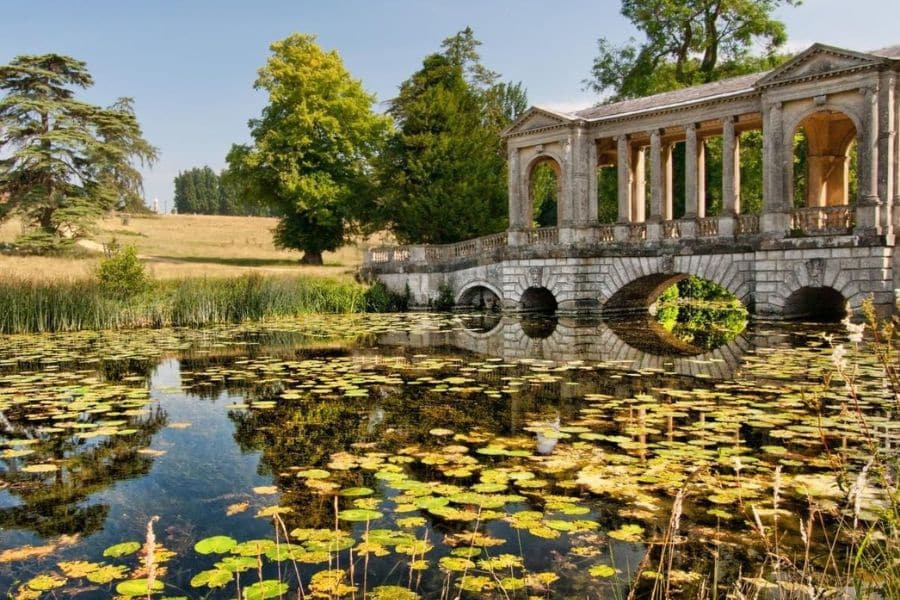
Remember that absolutely magical ball scene at the end of Season 1’s first episode, where Daphne and the Duke’s relationship suddenly shifts from fake courtship to something real? It was supposed to be Vauxhall Pleasure Gardens, the heart of Regency London’s nightlife.
The production team filmed that entire sequence at Stowe Gardens in Buckinghamshire, and they absolutely transformed the place. They built a full dance floor right in front of the Temple of Venus, constructed a two-story bandstand with musicians above and a banqueting area beneath, and brought in around 5,000 artificial flowers to make it look like a warm summer evening even though they were filming in October.
Stowe Gardens covers over 750 acres of 18th-century landscaped parkland, dotted with classical temples, lakes, and monuments. It’s owned by the National Trust now, but it was originally created by Viscount Cobham in the early 1700s as one of England’s most ambitious landscape projects. Queen Victoria visited in 1845, which tells you how significant this place has always been.
Walking through Stowe Gardens, you can see why the Bridgerton team chose it for such a pivotal scene. The Temple of Venus sits beside a serene lake, creating exactly the kind of romantic, Eden-like setting where two people pretending not to be in love would finally admit their feelings. Even without the elaborate ball setup, the gardens are stunning, with architectural follies tucked into carefully designed vistas that reveal themselves as you wander the paths.
How to Visit
Stowe Gardens is open year-round, typically 10 am to 5 pm, though hours vary seasonally. Adult admission costs around £15. The gardens are about 3 miles northwest of Buckingham, and while they’re easiest to reach by car, there are buses from Milton Keynes if you’re relying on public transport. Wear comfortable walking shoes because you’ll want to explore, and the paths can be uneven in places.
There’s a café on site, but many visitors bring picnics to enjoy on the grounds. Plan for at least 2 to 3 hours to do the gardens justice, and if you visit in spring or summer when everything’s in bloom, the experience is absolutely magical.
Wilton House, Wiltshire – The Duke’s London Residence
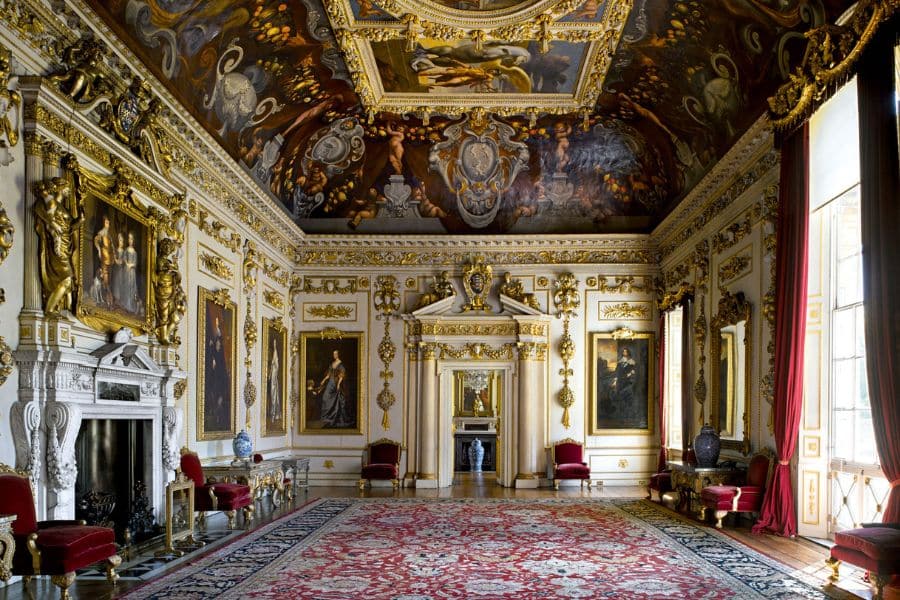
This 16th-century estate near Salisbury has been home to the Earls of Pembroke for over 400 years, and it plays multiple aristocratic residences across the series. In Season 1, Wilton House’s stunning facade doubled as the Duke of Hastings’ London townhouse, where Simon takes Daphne after their marriage.
The interior State Rooms, particularly the famous Double Cube Room with its gilded ceiling and walls covered in Van Dyck paintings, served as Queen Charlotte’s throne room. That’s where all those nerve-wracking presentations to the Queen happen, with young ladies curtseying and hoping they don’t trip over their gowns.
The Double Cube Room is considered one of the finest 17th-century interiors in England, designed by Inigo Jones and his nephew John Webb. It’s 60 feet long, 30 feet wide, and 30 feet high, creating those perfect proportions that make everything look effortlessly elegant. The room has hosted kings, queens, and prime ministers over the centuries, so having fictional debutantes present themselves here feels oddly appropriate.
The elegant gardens appear in Season 3, the State Rooms pop up whenever the production needs to convey serious aristocratic wealth, and the whole place just oozes the Regency-era sophistication the show thrives on. It’s also been in tons of other period dramas you’ve probably seen, including The Crown, Emma, and Pride and Prejudice.
How to Visit
The house itself is closed during 2026 for major renovation to the heating system, but the gardens and grounds are open.
Wilton House opens seasonally, typically from late March through October, though opening days can vary. Check their website before planning your trip. Adult tickets run around £18 for house and gardens. The estate is about 3 miles west of Salisbury, easily reached by car or local bus from Salisbury train station.
Plan to spend at least 2 to 3 hours here because you’ll want time to explore the State Rooms, wander the gardens, and probably have tea in the Old Riding School café. The gardens are particularly beautiful in spring and summer when everything’s in bloom, though autumn brings its own golden charm to the landscaped parkland.
Disclaimer: This article is for general information only and is not professional advice. It may contain affiliate links. Please see our full Editorial Policy for details.

Kylie Lang is a nationally syndicated travel journalist with bylines on the Associated Press Wire & more, a lifestyle writer, and the founder and editor of Your Lifestyle Library (yourlifestylelibrary.com). She holds a BA (Honours) in History from the University of Kent and is a member of the British Guild of Travel Writers.