
I love history. I studied it at school and have always loved knowing the stories behind the places I visit. My favorite era is the Middle Ages and the medieval period, and if I could travel back in time, it would be to the 12th century to the court of Eleanor of Aquitaine in Poitiers, France.
Living in rural France is like living in a time warp. The number of chateaux we have is unbelievable, many of them dating back over 1,000 years. But France doesn’t have the monopoly on historic places.
There are so many beautifully preserved towns and villages in Europe, all with an amazing history. Some have ramparts you can climb over, others have half-timbered buildings that have been around for 800 years and are so crooked you wonder how they’re still standing.
This list is just nine of my favorite medieval places to visit in Europe.
9 Medieval Places to Visit in Europe
These places in Europe have walls that remember Viking kings, monks who worked miracles, and merchants who built fortunes on wine and wool.
No. 1 Saint-Émilion, France

I had to start off in France as it’s where I live. I may not be French, but I now think of myself as half British and half French, as I’ve been here ten years. Saint Emilion is part of the Bordeaux wine region and is about 90 minutes from where I live. It is one of the most stunning places I’ve been to and completely takes your breath away. But what about the story?
A Breton monk named Emilion fled his hometown in the 8th century, looking for refuge. He found a limestone cave in a forest and decided to make it home. Living as a hermit, he performed so many miracles that people began traveling just to see him. When he died in 767, the monks who followed him carved an entire church from the rock where he’d lived.
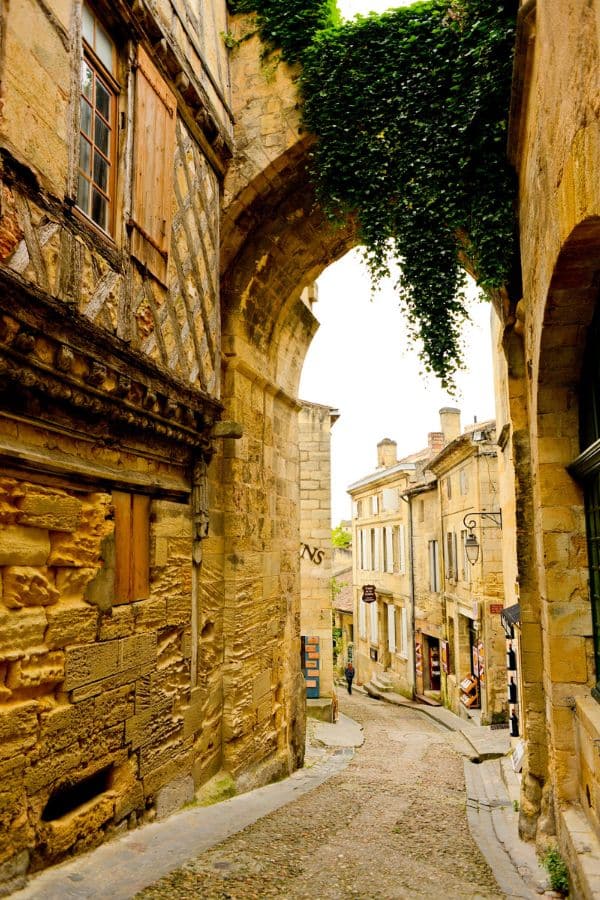
That monolithic church they built is one of the largest underground churches in Europe. They extracted 530,000 cubic feet of rock to create it, carving out a great hall 125 feet long and 66 feet wide.
The Romans planted the first vineyards here in the 2nd century, and when medieval monks weren’t carving churches, they were perfecting the wine that made Saint Emilion famous. The town sits right on the pilgrimage route to Santiago de Compostela, which meant steady traffic and plenty of reasons to build churches and monasteries.
In 1199, under English rule, Saint-Émilion received its own charter and full town rights. The narrow streets haven’t changed much in 800 years, and the UNESCO designation in 1999 means they’re staying that way. Two thousand years of winemaking history wrapped up in one perfect hilltop village, where you can still tour the underground galleries that stored wine in limestone caves.
Take the full tour of Saint-Emilion >>>
No. 2 York, England
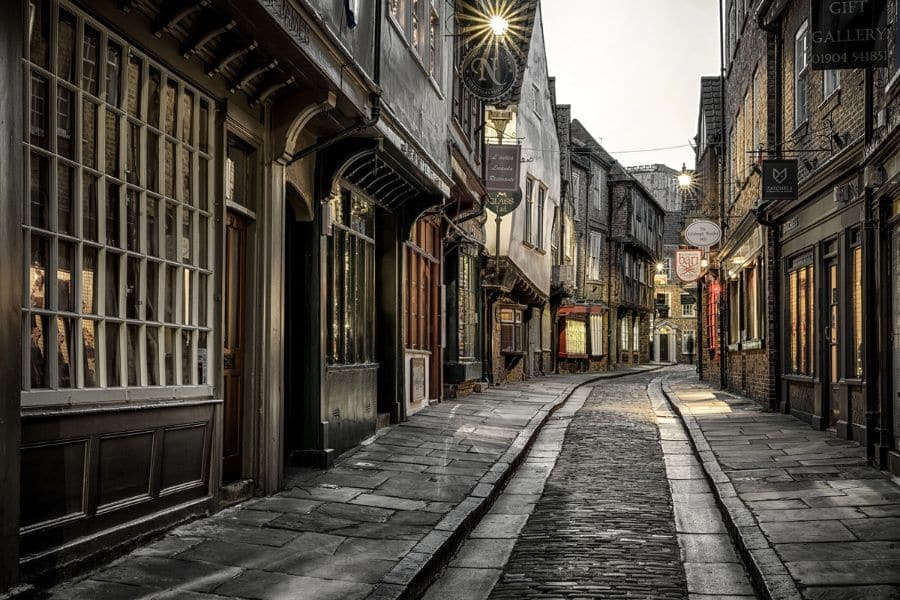
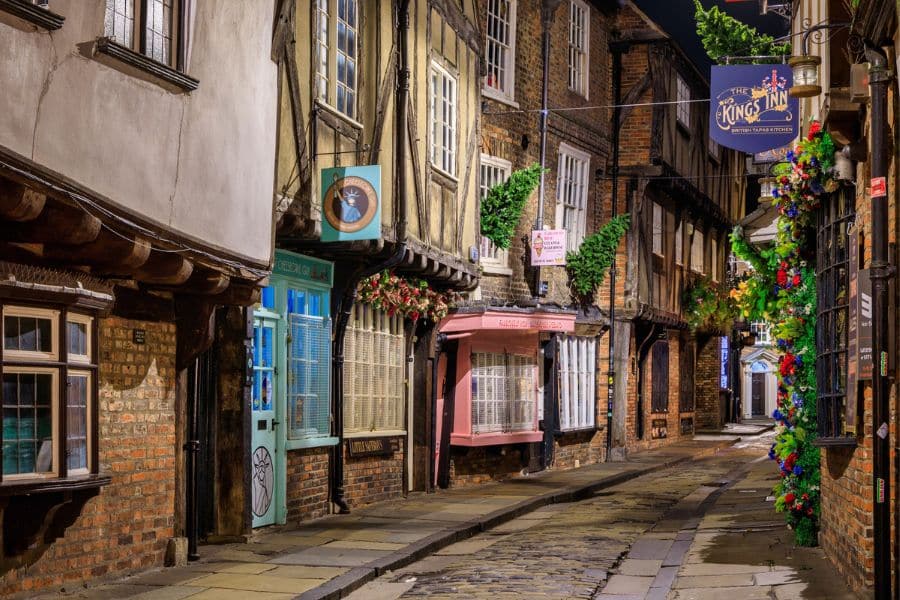
Before moving to France, I lived not far from York and used to visit regularly. A lot of it has now been pedestrianized, and some of it reminds me of Diagon Alley from Harry Potter.
The Romans founded York as Eboracum in 71 AD, planting a military fortress that would become one of their most important northern cities. The Vikings arrived in 866 and called it Jorvik. They stayed for over 200 years, turning York into a Viking trading hub and the capital of their northern kingdom.
Walk the city walls today, and you’re following paths the Romans first built, that the Vikings reinforced, and that medieval merchants expanded. The walls circle the entire old town in a 2-mile loop, and from up there, you can see exactly why everyone fought over this place. The city sits between the Ouse and Foss rivers, which meant natural defenses and perfect positioning for trade routes.
By medieval times, York had become England’s second city after London. The wool trade made people wealthy, and they spent that money building. York Minster took 250 years to complete, a Gothic cathedral so massive it dominates the skyline from every angle. The Great East Window is the size of a tennis court and holds the largest expanse of medieval stained glass in England.
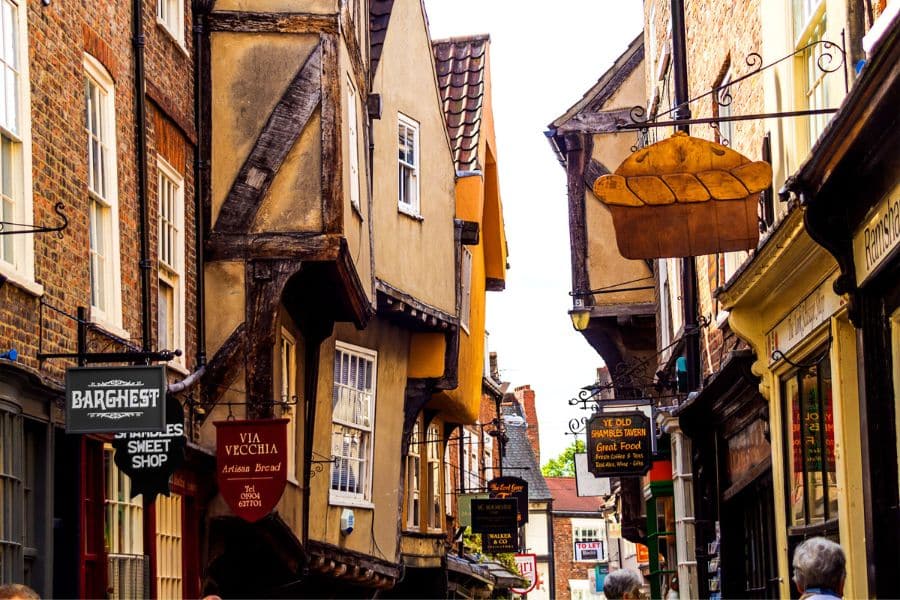
The Shambles is one of Europe’s best preserved medieval streets, where buildings lean so close together that people on opposite sides could shake hands across the gap. The street’s named after the butchers’ shambles that once lined it, and the wide windowsills were counters where they’d sell meat. These days, it’s gift shops and cafes, but the buildings haven’t changed since 1400.
Take the Ghost Walk Tour of York >>>
No. 3 Cochem, Germany
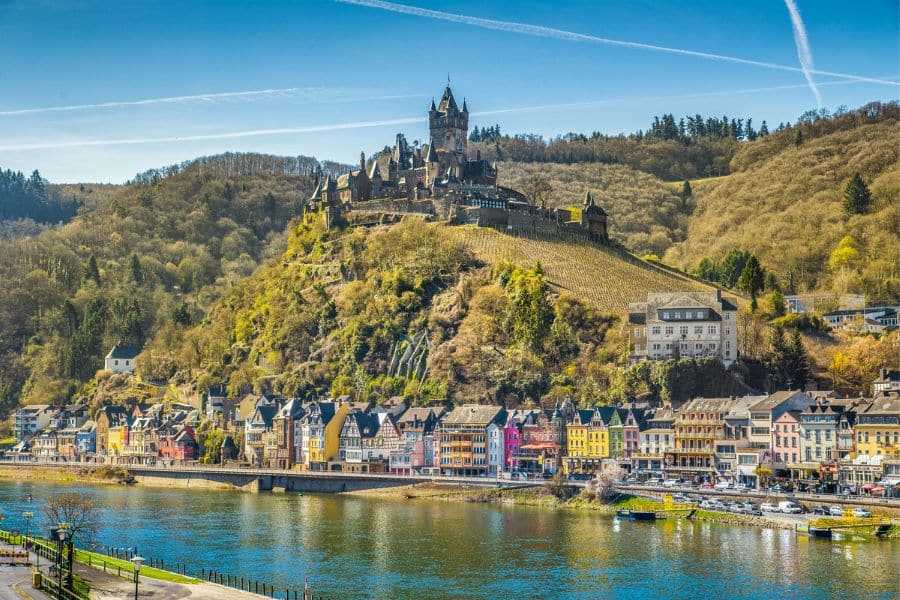
I was about 14 years old when I first visited Cochem, and it was part of the Southend Youth Orchestra. Yes, in my past I was a classical musician, and as part of the orchestra we went on tour around Germany and stayed in the stunning town of Cochem. Maybe that’s where my love affair with historic towns started, who knows.
Reichsburg Cochem towers over the Moselle Valley from a rocky crag, looking exactly like a castle from a fairy tale. It was built around the year 1000 by Palatinate Count Ezzo, and for the next seven centuries, everyone who mattered fought over it. Kings occupied it, archbishops bought it, and in 1689, French troops under Louis XIV burned it down and blew it up during the War of Palatine Succession.
For nearly 200 years, the castle sat as ruins on that hilltop until 1868, when a Berlin businessman named Louis Ravene bought what was left for 300 gold marks. He spent the next nine years rebuilding it in the neo-Gothic style that wealthy Germans loved in the 19th century. What you see now is part medieval fortress, part Romantic fantasy, and completely worth the steep walk up.

The town received its charter and rights in 1332, right around the time it built the fortifications that still stand today. Between 1423 and 1425, plague swept through and killed a chunk of the population, as it did everywhere in medieval Europe.
Cochem sits at the end of the Cochemer Krampen, a 24-kilometer stretch of the Moselle that winds through some of the most dramatic river scenery in Germany. Vineyards climb the hillsides at impossible angles, medieval villages cling to the riverbanks, and the whole valley produces Riesling that wine lovers cross oceans to taste.
The castle’s Knight’s Hall, Dining Hall, and Trophy Room show how nobles lived when the castle was at its height. On Fridays and Saturdays, they host medieval feasts where you can eat with your hands and pretend it’s 1400. During the first week of August, the whole castle becomes a medieval festival with artisans, performers, mead vendors, and stages where musicians play antique instruments.
Take a Private Walking Tour Around Cochem >>>
No. 4 Motovun, Croatia

Legends say giants built Motovun, stacking stones on a hilltop 277 meters above the Mirna River valley. People lived here in prehistoric times, building one of those ancient hillforts that dot Istria’s landscape.
The town first appears in written records in 804, mentioned in the Placitum of Rižana as Montouna. The Romans called this area Castellieri and extracted clay here for mass-producing amphorae. During the Byzantine Empire, Motovun paid almost a tenth of all the taxes collected from Istria’s entire population, which tells you something about its importance.
Venice took control in 1278 and held it until 1797, five centuries of Venetian rule that shaped everything about how Motovun looks today. The town walls date from the 13th and 14th centuries. Square towers sit at strategic points, and you enter through an inner city gate with Gothic features from the 1400s. St. Mark’s lion watches over the entrance.
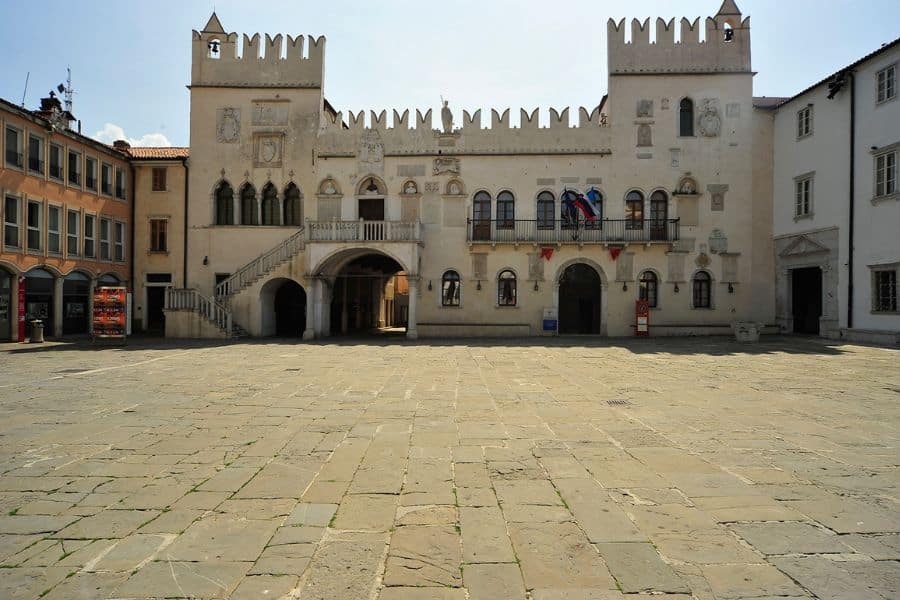
The Praetorian Palace is one of the biggest Romanesque palaces in Istria and Croatia, built when Motovun had its own status as a free commune. Inside the palace, you can still see double lancet windows with arches from the 13th century and square capitals from the 12th. The whole hilltop has 26 protected cultural monuments, making the entire town a heritage site.
These days, Motovun is famous for two things: the Film Festival that fills its streets every July with international filmmakers, and the white truffles that grow in the forest below. The Motovun Forest produces some of the finest white truffles in the world, and local hunters take their dogs out in autumn to sniff them from the soil. Restaurants here build entire menus around truffles, serving them fresh-shaved over pasta made by someone’s grandmother.
Go Truffle Hunting and enjoy a 3-course Truffle Brunch in Motovun >>>
No. 5 Siena, Italy

Siena in Italy grew up on three hills in Tuscany, founded by the Etruscans and claimed by the Romans. Medieval Siena became one of Europe’s richest cities, built on banking and trade. The Palio, that famous horse race around the Piazza del Campo, has run twice a year since 1644, but the tradition of neighborhood rivalries goes back centuries before that.
The Piazza del Campo is shell-shaped, sloping down to the Palazzo Pubblico like a medieval amphitheater. They built it in the 14th century as the civic heart of Siena, and it’s stayed that way for 700 years. The Torre del Mangia rises 102 meters from one corner of the palazzo, offering views across Tuscany that medieval watchmen used to scan for approaching armies.
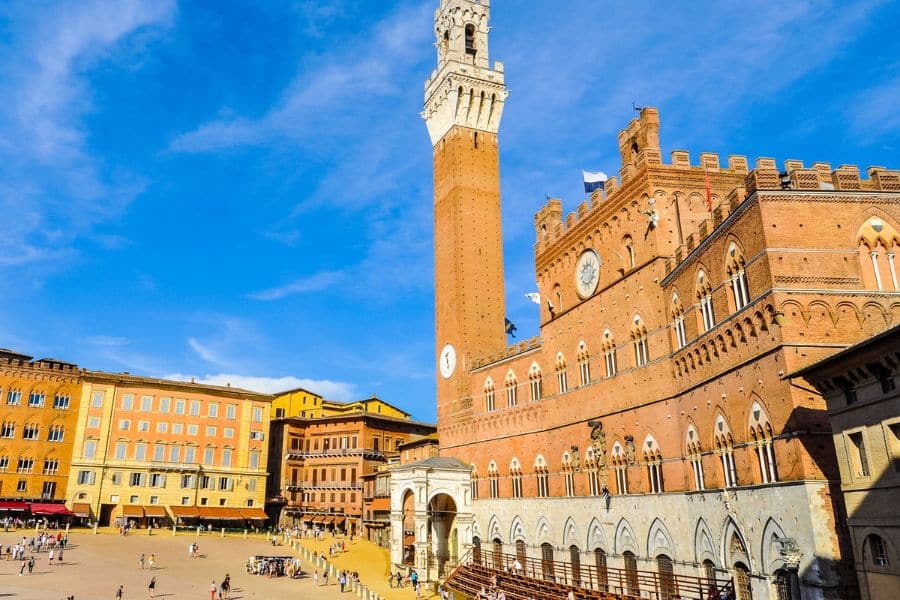
Siena Cathedral is black-and-white striped marble, Gothic and Romanesque styles mixed together in a style that only works in Italy. The floor is covered in marble panels showing biblical scenes and pagan sibyls, created by 40 different artists over 200 years. They’re usually covered to protect them, but a few months each year, they unveil the whole floor, and you can see medieval artwork.
Medieval Siena rivaled Florence for power and wealth. The two cities fought constantly, and when Florence finally won in the 16th century, Siena basically froze in time. No industrial revolution, no major rebuilding projects. The medieval city center stayed medieval, which is why UNESCO designated the whole historic center a World Heritage Site.
Take a Guided Tour with Lunch and Wine Tasting >>>
No. 6 Saint-Paul de Vence, France
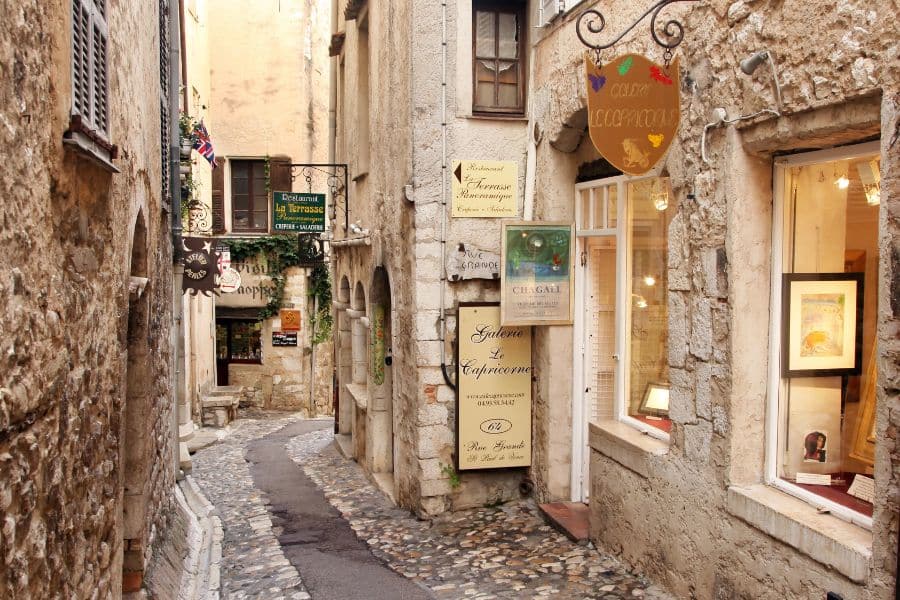
If there weren’t already a million reasons to visit the French Riviera, then Saint Paul de Vence would be top of the list. This fortified village perches on a hilltop in Provence, its ramparts dating back to the 16th century. King Francis I ordered the fortifications built after he decided Saint-Paul de Vence needed to be a defensive stronghold on the border with Savoy.
The walls they built still circle the old town completely, and you can walk the entire rampart path with views across the Mediterranean to the Alps. The village itself is older than those walls. People have lived on this hilltop since before the Romans showed up.

The medieval core grew up around the church, with narrow streets climbing between stone houses that date back centuries. Artists discovered Saint Paul de Vence in the 1920s, drawn by the light and the landscape. Marc Chagall lived here for 20 years and is now buried there. Picasso, Matisse, and Modigliani all worked in the village at various times.
The Colombe d’Or, a hotel and restaurant in the village, started accepting paintings from struggling artists as payment for meals in the 1920s. These days, the collection includes works by Picasso, Matisse, Braque, Léger, and Miró. The medieval fountain in the main square has run continuously since 1850, fed by the same spring that supplied water to the village for centuries before that.
Take a Private Tour of Saint-Paul de Vence >>>
No. 7 Edinburgh, Scotland

My nephew lives in Edinburgh, so we go quite regularly to see him, and there is something about the city that draws you in, despite how much rain it seems to get. Edinburgh’s Old Town grew up along a volcanic ridge, starting with Edinburgh Castle perched on an extinct volcano at one end and Holyrood Palace at the other. The Royal Mile connecting them is essentially the spine of medieval Edinburgh, lined with closes, narrow alleys that branch off like ribs.
The castle sits on Castle Rock, which has been fortified since at least the 12th century. St. Margaret’s Chapel, the oldest surviving building in Edinburgh, dates from 1130. The castle has seen more sieges than almost any fortification in Britain, and its strategic position meant that whoever held it controlled the city.
Medieval Edinburgh was cramped, vertical, and frequently on fire. Buildings climbed up to 11 stories, packed so tightly that crossing the street meant dodging chamber pots emptied from windows above. The closes that branch off the Royal Mile were separate neighborhoods, each with its own character and often its own crimes. Mary King’s Close, now buried beneath the Royal Exchange, was sealed up after the plague killed most of its residents in 1645.
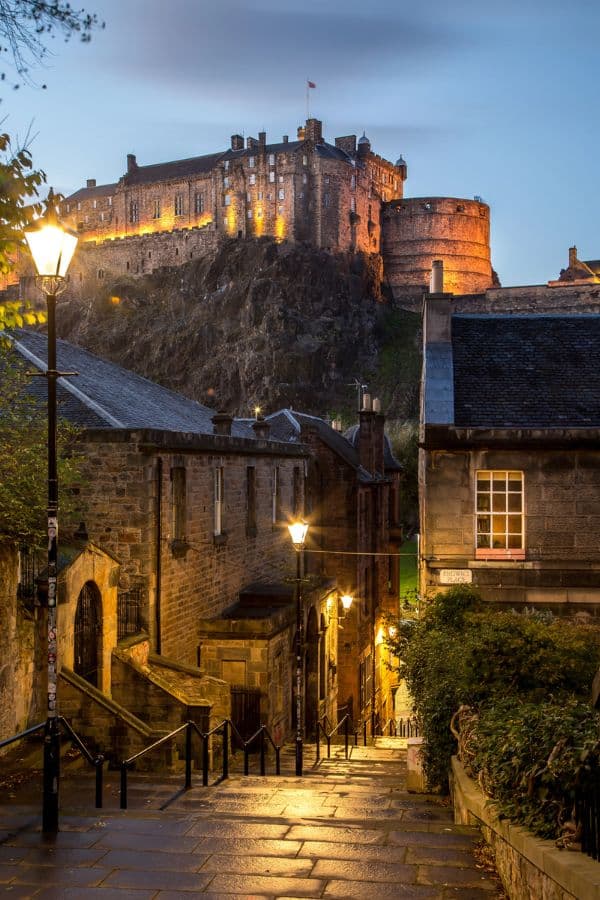
The Old Town’s character comes from those centuries of building up rather than out. The medieval street plan remains, even though many buildings were rebuilt after various fires. Gladstone’s Land shows how a wealthy merchant lived in the 17th century, with its original painted ceilings and timber arcade front.
St. Giles’ Cathedral has stood on the Royal Mile since the 14th century, though it’s been rebuilt, enlarged, and modified so many times that tracing its medieval bones takes work. John Knox preached here during the Reformation, turning Scotland Protestant and changing British history in the process.
Walking Edinburgh’s Old Town at night, when the crowds thin and the closes fill with shadows, you get a sense of what medieval Edinburgh felt like. The closes are still there, the castle still dominates the skyline, and somewhere in that maze of narrow streets, you can almost hear centuries of footsteps echoing off stone walls.
Take the Castle and Royal Mile Walking Tour >>>
No. 8 Hallstatt, Austria

I’ve had a love affair with Austria ever since I watched The Sound of Music when I was a little girl. Hallstatt clings to the shore of a lake in the Austrian Alps, squeezed between the Hallstättersee and the Dachstein mountains. People have mined salt here for over 7,000 years, making it one of the oldest continuously worked salt mines in the world. The Hallstatt culture, an early Iron Age civilization, takes its name from this place.
The village you see today is mostly medieval and baroque, buildings painted in pastels and stacked up the hillside in layers. The Lutheran church with its spire reflected in the lake is Hallstatt’s most photographed view, appearing on everything from postcards to Chinese knock-off villages. Yes, China built a full-scale replica of Hallstatt in 2012.

Salt made Hallstatt wealthy. Medieval miners worked tunnels deep into the mountain, extracting the white gold that preserved food and made fortunes. The old salt mines are now a tourist attraction where you put on mining clothes and slide down wooden chutes that miners used for centuries. The tour takes you through tunnels that date back to the Bronze Age, showing how salt mining worked when this was one of Europe’s richest sources.
The Beinhaus, or bone house, next to the Catholic church, is pure medieval practicality meeting Austrian tradition. Space in the tiny graveyard was limited, so after 10 to 15 years, they’d dig up the bones to make room for new burials. The skulls got decorated with names, dates, and flower designs, then stored in the ossuary. Over 1,200 decorated skulls are stacked there, the oldest dating back to 1720.
Hallstatt’s location meant it stayed isolated until 1890, when it finally built a road. Before that, everything came and went by boat or on foot through mountain passes. That isolation preserved the medieval character in ways that connected towns lost centuries ago.
Take the Hallstatt and Salzburg Tour >>>
No. 9 Cinque Terre, Italy
Five fishing villages cling to cliffs on the Italian Riviera, connected by footpaths that medieval villagers carved from the rocks. Monterosso, Vernazza, Corniglia, Manarola, and Riomaggiore each developed separately, protected by the terrain and accessible mainly by boat until the railway tunnel linked them in 1874.
These villages aren’t medieval in the sense of grand cathedrals and fortified walls. They’re medieval in the way fishing communities were medieval: practical, isolated, built from local stone by people who made their living from the sea. The houses are stacked vertically up the cliffs, painted in colors that helped fishermen identify their village from the water.
Vernazza has the best-preserved medieval harbor, with its castle and watchtower built to defend against Saracen pirates who raided these coasts regularly. The church of Santa Margherita d’Antiochia sits right on the harbor, built in 1318 with a Gothic octagonal bell tower that doubled as a watchtower. When pirates approached, villagers could see them coming and flee inland.
The terraced vineyards climbing the cliffs behind each village date back centuries, carved by hand into slopes so steep that harvesting means working on near-vertical terrain. The stone walls holding those terraces are dry-stacked, built without mortar in a technique that hasn’t changed since medieval times. Those walls total about 6,700 kilometers, more than the Great Wall of China.
The footpath connecting the five villages, now called the Sentiero Azzurro, was the main route between them for centuries. Medieval villagers walked it to visit neighbors, trade goods, and reach the church in the next town over. Parts of the path are ancient, carved into cliff faces and held up by stone walls that have stood for centuries.
UNESCO designated Cinque Terre a World Heritage Site in 1997, recognizing that these five villages represent a unique medieval landscape where people adapted to impossible terrain and created something beautiful in the process.
Take the Cinque Terre Tour from Florence >>>
Disclaimer: This article is for general information only and is not professional advice. It may contain affiliate links. Please see our full Editorial Policy for details.

Kylie Lang is a nationally syndicated travel journalist with bylines on the Associated Press Wire & more, a lifestyle writer, and the founder and editor of Your Lifestyle Library (yourlifestylelibrary.com). She holds a BA (Honours) in History from the University of Kent and is a member of the British Guild of Travel Writers.