
With everything going on in the world, many Americans are looking to escape to pastures new, and who can blame them? The call of the ocean in a smaller, more relaxed European town or village, packed with history and stunning architecture, is very tempting. Especially when you realize how cheaply you can live compared to many places in America.
More and more people are taking early retirement and choosing Europe as their final destination. The dream of relaxing by the sea, listening to the waves, and living that relaxed European lifestyle is extremely tempting. But is it really so affordable, or will it always be more of a dream than a reality?
It all comes down to where you look. If you know where to go, there are many gorgeous seaside villages just waiting to be discovered, where $3,000 a month goes a long way and you’ll be sipping coffee overlooking the ocean before you know it. These 12 European towns have all that and more, and a great expat lifestyle for those willing to take the plunge.
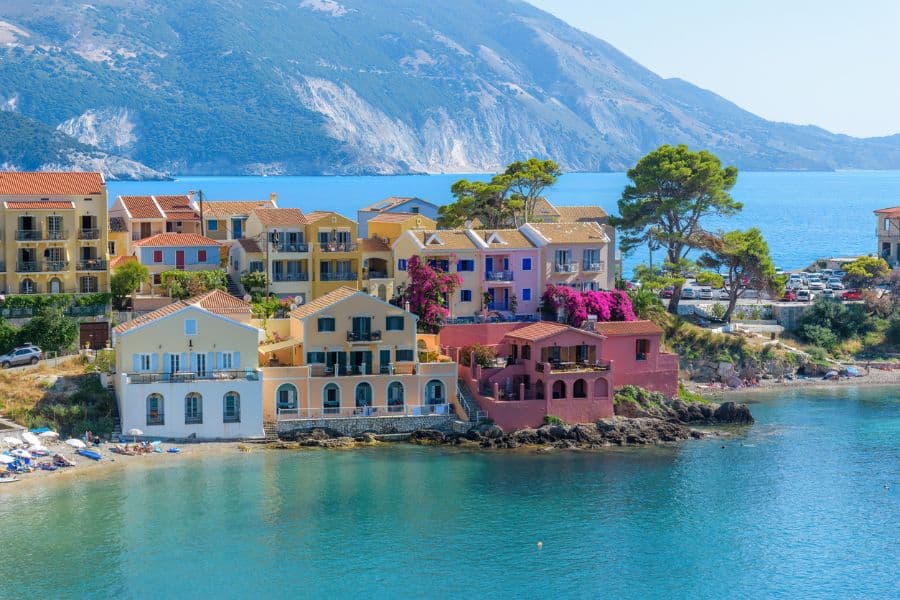
12 European Coastal Villages Where Americans Can Live For Less
If you’re dreaming of retiring in Europe, these villages have everything you need to live for less in a beautiful place. Ready to take a virtual road trip through Europe with me? Let’s discover those stunning coastal villages that are calling you from afar.
Collioure, France
I’m starting with France as that’s where I’ve relocated to, and I love life here. Collioure sits on the Mediterranean coast in the south of France, just a short drive from the Spanish border. Life here revolves around the sea.
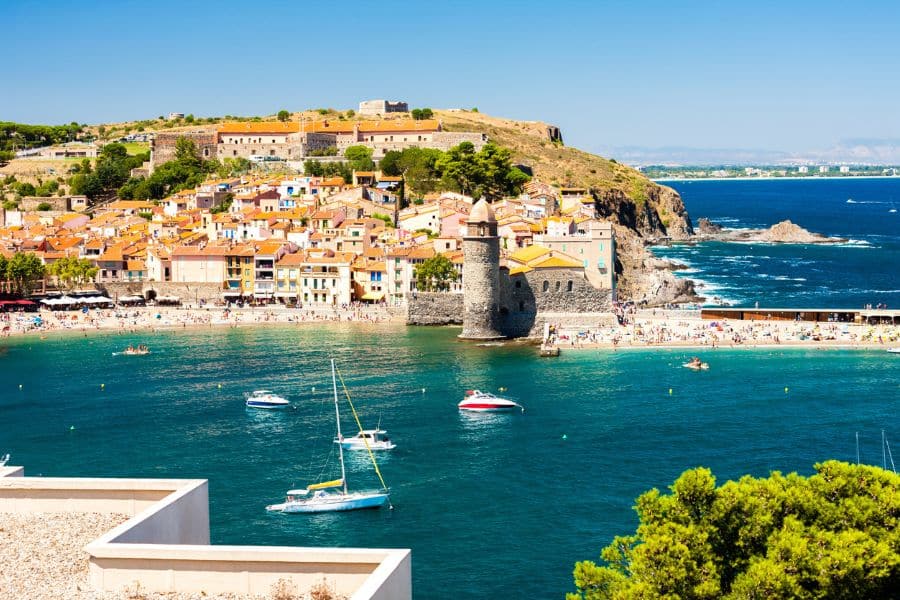
Imagine spending mornings walking along the waterfront, afternoons people-watching at café tables, and evenings with a glass of local wine as fishing boats return to the harbor. The pace is slower with everything within walking distance.
Collioure’s story has always been tied to its strategic position on the Mediterranean. The Kings of Majorca built the Château Royal in the 13th century, and later it was expanded by Vauban, Louis XIV’s famous military engineer. The town was also one of the last strongholds of the Kingdom of Majorca before it was absorbed into France. In the early 1900s, Matisse and Derain spent a summer in this area painting, which sparked the Fauvist art movement.
- Nearest Airport: Perpignan (30 minutes by car), with Barcelona about two hours away
- Budget Breakdown: ~$900 rent (1BR near coast), ~$350 groceries, ~$150 utilities, ~$450 dining/entertainment, ~$250 healthcare
- Best Visa for Retirees: The VLS-TS Visitor Visa (long-stay visitor visa)
- Weather: Mild winters around 50°F, hot summers averaging 80–85°F, over 300 days of sunshine per year
Tavira, Portugal
Tavira sits on the Algarve’s eastern coast, about half an hour from Faro. The River Gilão cuts through the town, crossed by the old Roman bridge that locals still use today. You can shop for seafood and produce at the Mercado da Ribeira, take the ferry across the lagoon to Ilha de Tavira for its long sandy beach, and spend evenings in Praça da República, where outdoor restaurants spill into the square. The town is walkable, and markets, festivals, and the flow of the river set the rhythm.
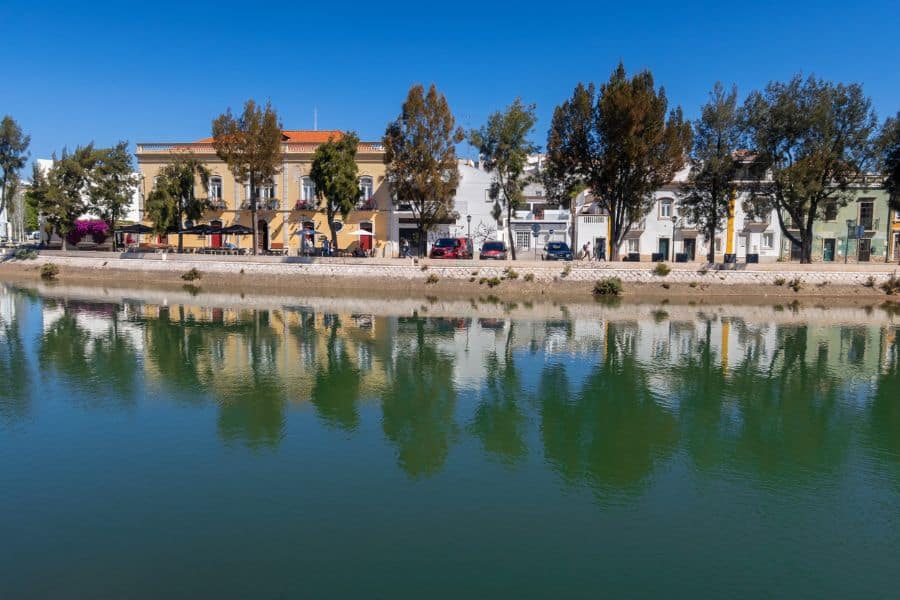
Tavira’s history goes back to the Phoenicians, who settled here around the 8th century BC. It later grew under the Moors, who built fortifications and left their mark on the architecture. After the Christian reconquest in the 13th century, Tavira became one of Portugal’s busiest ports, sending ships to North Africa during the Age of Discovery. Today, remnants of this past are still visible in the medieval castle walls and the town’s thirty-plus churches.
- Nearest Airport: Faro (30 minutes by car or train)
- Budget Breakdown: ~$750 rent (1BR near coast), ~$300 groceries, ~$120 utilities, ~$400 dining/entertainment, ~$200 healthcare
- Best Visa for Retirees: Portugal D7 visa, popular with retirees who can show a stable income
- Weather: Mild winters averaging 55°F, hot, dry summers around 85°F, with plenty of sunny days year-round
Nerja, Spain
Nerja sits on Spain’s Costa del Sol, about an hour east of Málaga. The town is known for the Balcón de Europa, a seaside promenade that juts out over the cliffs with sweeping views of the Mediterranean. I used to live near here when I was younger, and it is a gorgeous place where life is just so easy.
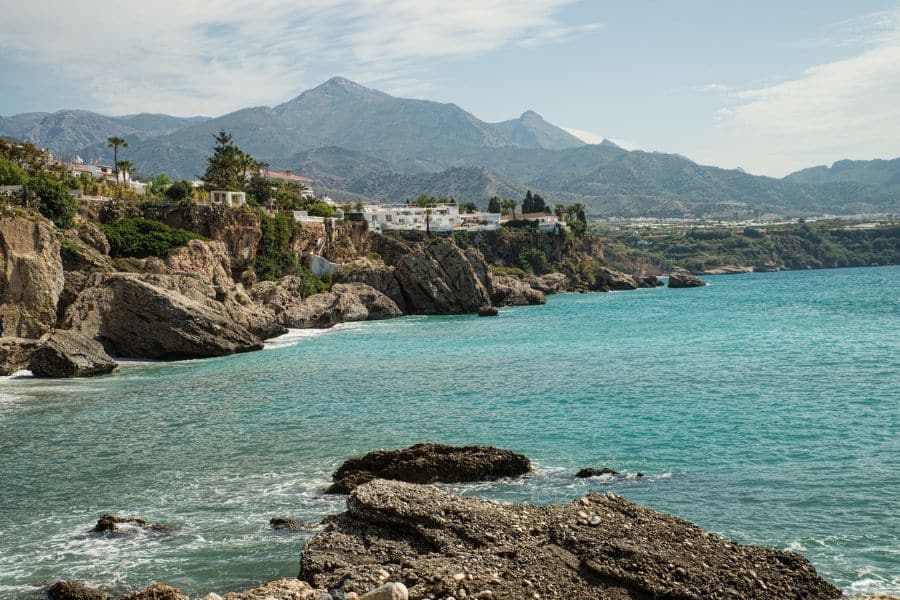
Living here means swimming at Burriana Beach, exploring the narrow lanes filled with tapas bars, and hiking in the nearby Sierra de Almijara mountains. Retirees often join walking groups or take day trips by bus to nearby whitewashed villages like Frigiliana.
Nerja’s history stretches back to prehistoric times, made famous by the discovery of the Cuevas de Nerja in 1959, where cave paintings over 40,000 years old were found. During Moorish rule, it was a center for silk production, and traces of that era remain in the layout of the old quarter. In the 20th century, the town transformed from a farming community into a coastal destination, though it has kept its older core of white houses and cobbled streets.
- Nearest Airport: Málaga-Costa del Sol (1 hour by car or bus)
- Budget Breakdown: ~$800 rent (1BR near coast), ~$300 groceries, ~$120 utilities, ~$400 dining/entertainment, ~$200 healthcare
- Best Visa for Retirees: Spain non-lucrative visa, suited for those with passive income
- Weather: Winters are mild at 55°F, summers reach 85–90°F, very low rainfall and lots of sun
Monopoli, Italy
Monopoli stretches along the Adriatic coast in Puglia, about 40 minutes south of Bari. The heart of the town is its old fishing port, where brightly painted boats still bob in the water. You can swim at Cala Porta Vecchia, a small beach tucked against the old city walls, or walk the seafront promenade that runs past rocky coves. Evenings center around Piazza Garibaldi, where locals gather at outdoor cafés before heading into the narrow alleys for fresh seafood.
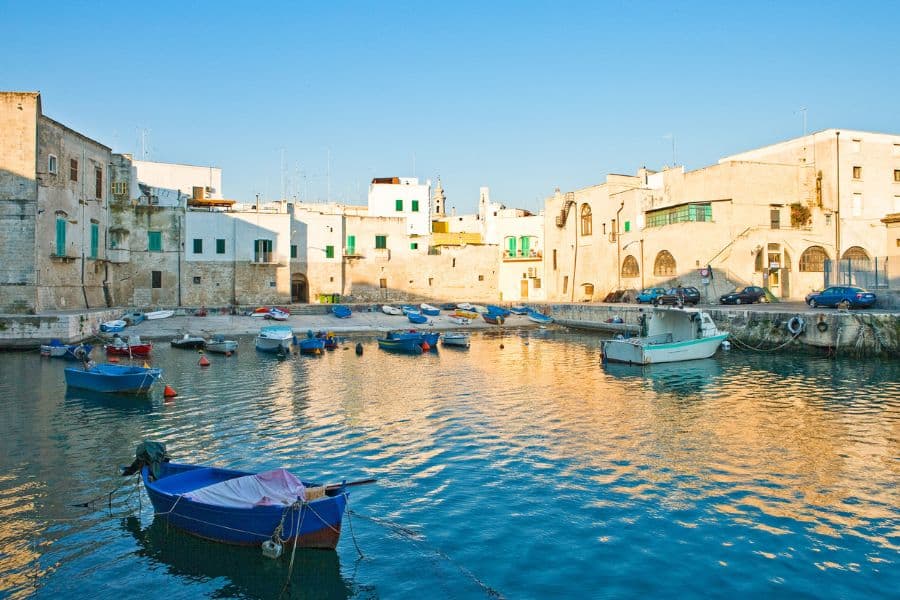
The city has been inhabited since ancient times, first by the Greeks and then by the Romans, who valued its harbor. During the Middle Ages, it was under the control of the Normans and later the Venetians, leaving behind fortified walls and watchtowers that still ring the coastline. The Castello Carlo V, built in the 16th century to guard against Ottoman attacks, remains a landmark above the sea.
- Nearest Airport: Bari Karol Wojtyła (40 minutes by car or train)
- Budget Breakdown: ~$850 rent (1BR near coast), ~$300 groceries, ~$130 utilities, ~$400 dining/entertainment, ~$200 healthcare
- Best Visa for Retirees: Italy’s elective residency visa, for those with a steady income and savings
- Weather: Winters average 50°F, summers are warm at 85°F, dry sunny days are common with sea breezes keeping heat manageable
Chania, Crete, Greece
Chania sits on Crete’s northwest coast, about 40 minutes from the island’s capital of Heraklion by road. The Old Venetian Harbor is the focal point, with its 16th-century lighthouse and waterfront lined with tavernas. You can swim at Nea Chora Beach just west of the harbor, or take a short drive to Seitan Limania, a dramatic cove framed by cliffs. Hiking the Samaria Gorge is a favorite weekend trip, and ferries from the port make it easy to reach other parts of Greece.
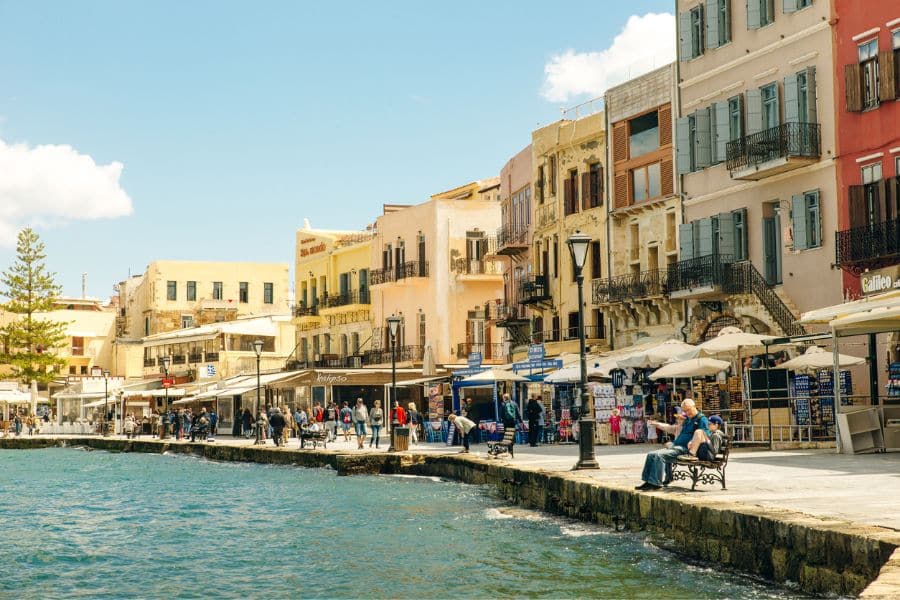
The city’s history reflects the many powers that ruled Crete. It began as the ancient Minoan settlement of Kydonia, one of the most important cities of Bronze Age Crete. The Venetians fortified Chania in the 13th century and left the harbor that still defines the town today. The Ottomans followed in the 17th century, building mosques and baths, some of which still stand.
- Nearest Airport: Chania International Airport (20 minutes by car)
- Budget Breakdown: ~$700 rent (1BR near coast), ~$300 groceries, ~$120 utilities, ~$400 dining/entertainment, ~$200 healthcare
- Best Visa for Retirees: Greece financial independence visa, for those with a stable income
- Weather: Mild winters around 55°F, hot summers averaging 85–90°F, long dry season from May through September
Šibenik, Croatia
Šibenik lies on Croatia’s Dalmatian coast between Split and Zadar, with a maze-like old town that climbs up from the sea. You can swim at Banj Beach, which has a direct view of the city’s fortresses, or take a boat to the islands of the Kornati National Park nearby. The stone streets are filled with cafés, and evenings often end in the main square in front of the cathedral. Day trips to Krka National Park, with its waterfalls, are just a short drive inland.
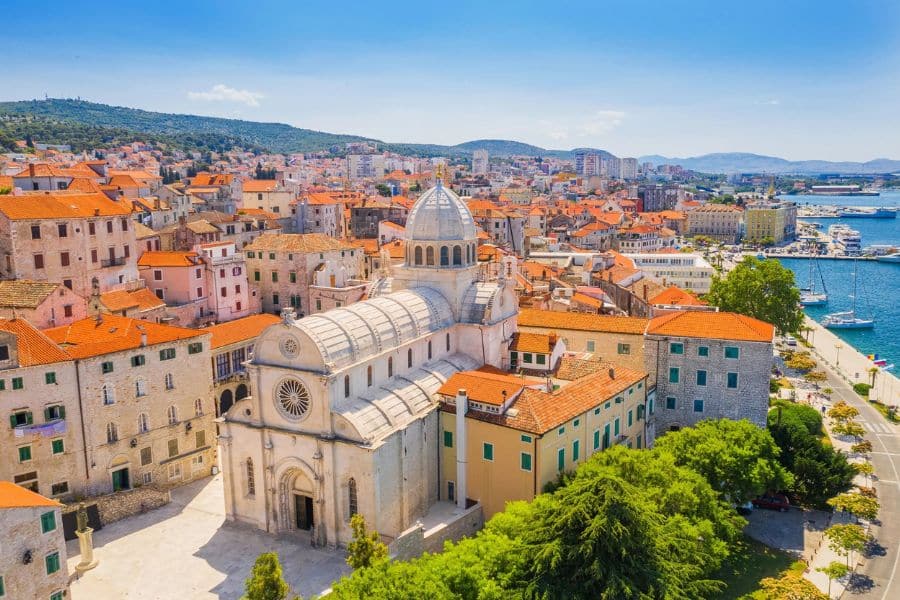
Šibenik was first mentioned in the 11th century and developed into a Croatian royal town before falling under Venetian control in the 15th century. Its most famous monument is the Cathedral of St. James, built entirely from stone in the 1400s and now a UNESCO World Heritage Site. The city’s fortresses, built by Venetians to guard against Ottoman attacks, still ring the hills. Šibenik’s long maritime history is visible in its shipyards and harbors, which once launched trading vessels across the Adriatic.
- Nearest Airport: Split (1 hour by car) or Zadar (1 hour by car)
- Budget Breakdown: ~$700 rent (1BR near coast), ~$280 groceries, ~$120 utilities, ~$350 dining/entertainment, ~$200 healthcare
- Best Visa for Retirees: Croatia digital nomad visa, available to non-EU citizens with income from abroad
- Weather: Winters are cool at 45–50°F, summers reach 85°F, sunny and dry with occasional coastal storms in autumn
Marsascala, Malta
Marsascala curves around a long bay on Malta’s southeastern coast, once a fishing village and now a quieter alternative to the island’s busier towns. The promenade stretches along the waterfront, perfect for daily walks, with plenty of spots to stop for coffee or fresh seafood. You can swim at St. Thomas Bay, a sandy beach just outside the center, or explore the rocky coves used by locals. Valletta is about 25 minutes away by bus, so museums, theaters, and ferries to Sicily are close at hand.
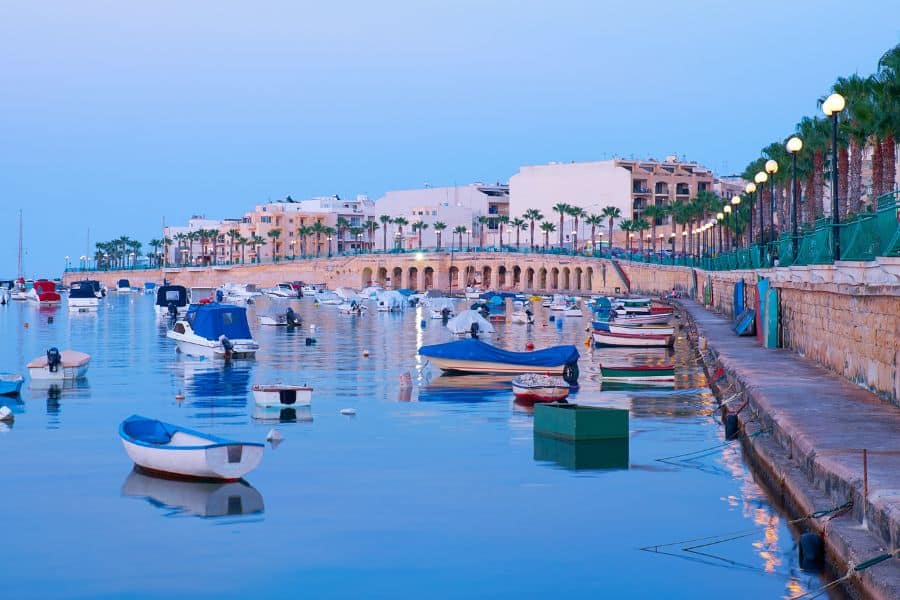
Marsascala’s history is tied to fishing and defense. The Knights of St. John built watchtowers along the coastline in the 17th century, including the still-standing St. Thomas Tower, to guard against Ottoman raids. For centuries, the town remained small, supplying fish to larger settlements. Only in the 20th century did it begin to grow into a residential town, though the fishing boats still anchored in the harbor keep its roots visible.
- Nearest Airport: Malta International Airport (15 minutes by car)
- Budget Breakdown: ~$950 rent (1BR near coast), ~$320 groceries, ~$130 utilities, ~$400 dining/entertainment, ~$220 healthcare
- Best Visa for Retirees: Malta retirement visa program, available to non-EU citizens meeting income requirements
- Weather: Winters average 55°F, hot dry summers reach 90°F, over 300 sunny days a year
Herceg Novi, Montenegro
Herceg Novi sits at the entrance to the Bay of Kotor, about an hour from Dubrovnik across the border. The town climbs up steep hills, with stairways linking the seafront promenade to leafy squares higher above. Spend mornings walking along the five-kilometer Pet Danica promenade that runs beside the water, afternoons swimming at Žanjice Beach, or take a boat to the Blue Cave, and evenings enjoying seafood restaurants along the marina. The old town has winding streets filled with cafés and a lively daily market selling local produce.
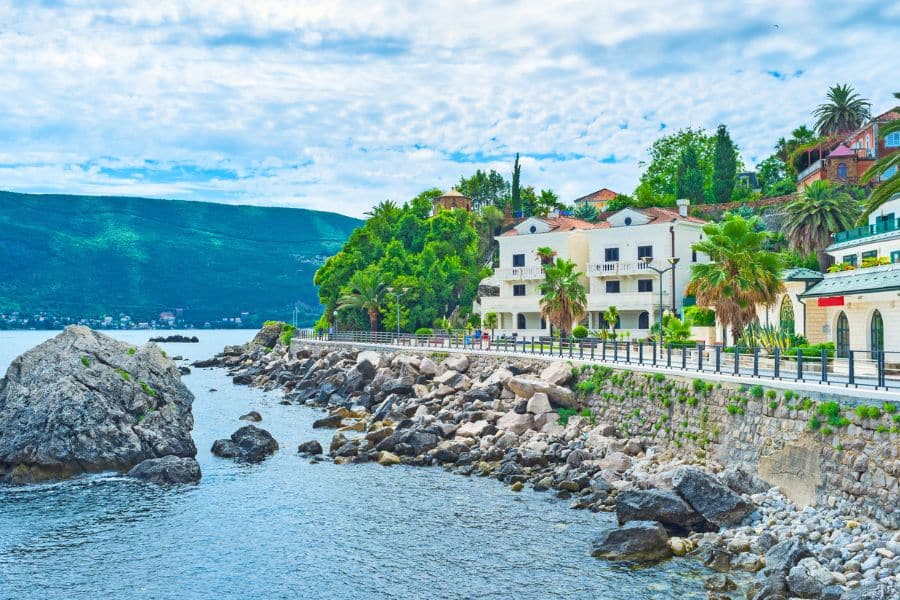
Founded in the late 14th century by the Bosnian king Tvrtko I, Herceg Novi quickly became an important trading port. Over the centuries, it was ruled by the Ottomans, Venetians, and Austrians, each leaving their mark in fortresses, churches, and narrow streets. The Kanli Kula fortress, once used as a prison, now serves as an open-air theater with views across the bay.
- Nearest Airport: Tivat (40 minutes by car) or Dubrovnik (1 hour by car)
- Budget Breakdown: ~$650 rent (1BR near coast), ~$280 groceries, ~$120 utilities, ~$350 dining/entertainment, ~$180 healthcare
- Best Visa for Retirees: Montenegro temporary residence permit, available for those who can show sufficient income or savings
- Weather: Mild winters around 50°F, warm summers averaging 85°F, with spring and autumn bringing plenty of sunny days
Sarandë, Albania
Sarandë sits on Albania’s southern Ionian coast, directly across from Corfu, with ferries linking the two in under an hour. The town stretches along a sweeping bay lined with pebble beaches and a lively promenade. Daily life might include swimming at Mango Beach, walking up to Lekuresi Castle for views over the sea, and shopping for olives, honey, and fresh fish at the town market. Day trips are easy, whether it’s a bus ride to the UNESCO site of Butrint or a boat tour to the Ksamil Islands.
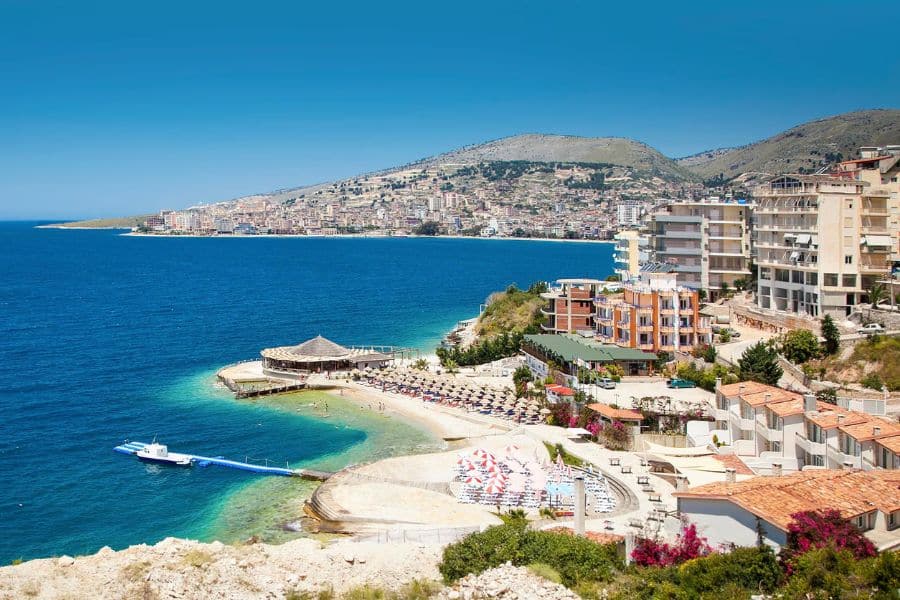
Sarandë’s history goes back to antiquity, tied closely to the Greek settlement of Onchesmos that once stood here. Later, the Romans and Byzantines used the area for trade and defense. The 16th-century Lekuresi Castle still stands above the bay, built by the Ottomans to guard against Venetian incursions. In recent decades, Sarandë has transformed from a small fishing town into a coastal resort, with its ancient and Ottoman layers still visible alongside modern hotels and cafés.
- Nearest Airport: Corfu International (1 hour by ferry), Tirana International (4.5 hours by car)
- Budget Breakdown: ~$500 rent (1BR near coast), ~$250 groceries, ~$100 utilities, ~$300 dining/entertainment, ~$150 healthcare
- Best Visa for Retirees: Albania offers a retirement residence permit for non-EU citizens who can show pension income
- Weather: Mild winters around 55°F, hot summers averaging 85–90°F, with long dry spells from May through September
Piran, Slovenia
Piran sits on a small peninsula along Slovenia’s Adriatic coast, just a short drive from both Trieste and Croatia. The old town is a maze of narrow Venetian-style streets that spill into Tartini Square, the central plaza named after the composer Giuseppe Tartini, who was born here. Enjoy swimming at Fiesa Beach, walking the coastal path to Portorož, or sitting at cafés along the harbor. The town is compact and walkable, with most daily needs just steps away.
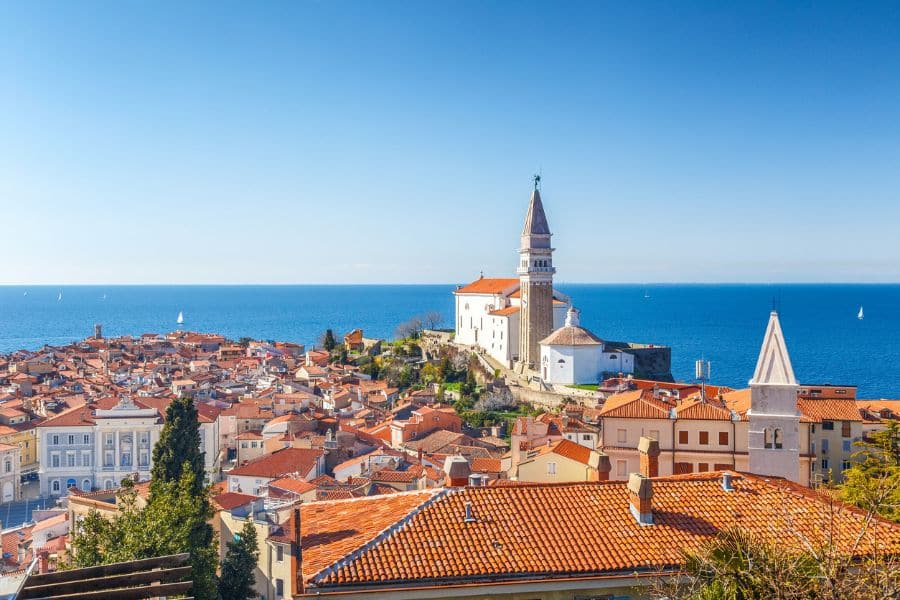
Piran’s history is closely tied to Venice, which controlled the town for centuries. The Venetian influence is clear in its architecture, from the Gothic windows to the city walls that still crown the hillside. The Church of St. George, perched above the town, reflects Piran’s maritime past with its views stretching across the Adriatic. Salt production was also central to its economy, and the nearby Sečovlje Salt Pans remain both a working site and a reminder of how this small town once thrived.
- Nearest Airport: Trieste (45 minutes by car) or Ljubljana (1.5 hours by car)
- Budget Breakdown: ~$850 rent (1BR near coast), ~$300 groceries, ~$120 utilities, ~$350 dining/entertainment, ~$200 healthcare
- Best Visa for Retirees: Slovenia temporary residence permit for financially independent foreigners
- Weather: Mild winters around 45°F, warm summers averaging 80°F, with a mix of sunshine and sea breezes year-round
Paphos, Cyprus
Paphos lies on the southwest coast of Cyprus, with a long seafront promenade lined with cafés and beaches within walking distance of town. Retirees often spend mornings at Coral Bay, one of the area’s most popular beaches, or stroll the Kato Paphos harbor where fishing boats sit beside restaurants. The town is easy to get around on foot or by local bus, and weekends can be filled with trips into the Troodos Mountains or exploring the wineries inland.
The city’s history reaches back to antiquity, and it is closely linked with the legend of Aphrodite, said to have risen from the sea nearby. During Roman times, Paphos became the island’s capital, leaving behind villas with intricate mosaics that can still be seen today.
The medieval Paphos Castle, built by the Byzantines and later rebuilt by the Lusignans and Ottomans, still stands guard at the harbor. The UNESCO-listed archaeological sites make Paphos one of the most historically rich towns on the Mediterranean.
- Nearest Airport: Paphos International (20 minutes by car)
- Budget Breakdown: ~$800 rent (1BR near coast), ~$320 groceries, ~$130 utilities, ~$350 dining/entertainment, ~$220 healthcare
- Best Visa for Retirees: Cyprus retirement residency permit for non-EU citizens who can show sufficient income
- Weather: Mild winters around 55°F, hot summers reaching 90°F, with sunshine almost year-round
Honfleur, France
As we started with France, we’re finishing with France and one of my favorite villages in northern France. Honfleur sits on the Normandy coast where the Seine River meets the English Channel. The Vieux Bassin is the center of life, with its 17th-century harbor lined by tall slate-fronted houses.
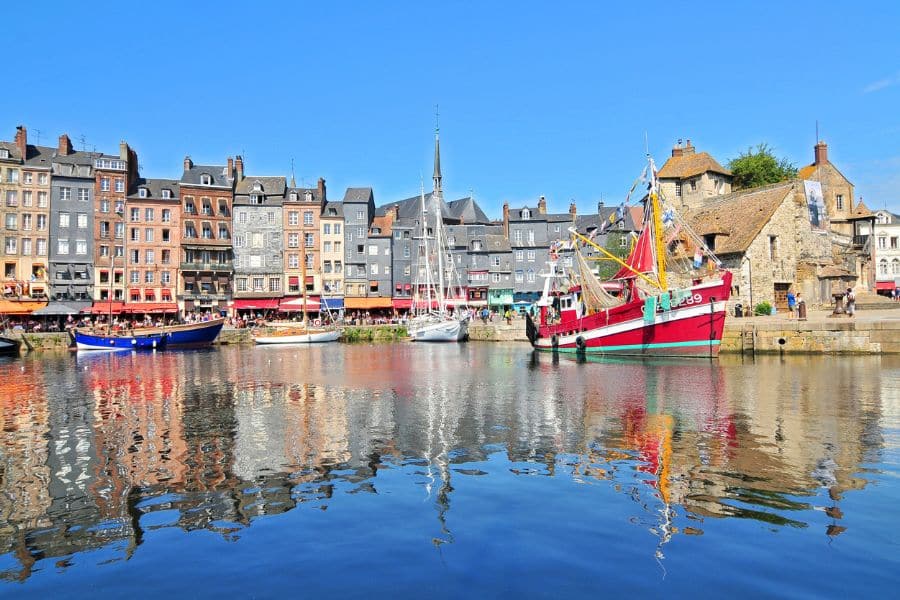
Retiring here means mornings at the Saturday market in Place Sainte-Catherine, afternoons at Butin Beach just a short walk from town, and weekends driving to Étretat to see its white chalk cliffs or to Deauville for its wooden boardwalk and horse races.
Honfleur was a fortified port in the Middle Ages and played an important role in controlling trade along the Seine. In the 15th century, expeditions left from here to explore Canada, including Samuel de Champlain’s voyage that led to the founding of Quebec. Centuries later, the town became known for its art. Eugène Boudin, born in Honfleur, invited Monet to paint the harbor, helping spark the Impressionist movement.
- Nearest Airport: Deauville-Normandie (20 minutes by car), with Paris Charles de Gaulle about two hours away
- Budget Breakdown: ~$850 rent (1BR near coast), ~$350 groceries, ~$130 utilities, ~$400 dining/entertainment, ~$250 healthcare
- Best Visa for Retirees: The VLS-TS Visitor Visa (long-stay visitor visa)
- Weather: Cool and damp winters around 40°F, mild summers averaging 70°F, frequent rain but pleasant sea breezes